Travel Date: Sunday, May 5, 2024
Paris is best seen on foot, and although we hadn’t exactly planned it, we were able to take advantage of our one Sunday in the city to walk and walk and walk.
Our original intention that day had been to visit the Musée D’Orsay, which offers free admission to everyone on Sundays. However, the Musée was “sold out” of free tickets so we weren’t able to visit. Turns out that even when tickets are free, you still need to book them in advance to secure an entry time – which we had not done because we didn’t know it was necessary. So NB: if you want a free ticket to the Musée D’Orsay, book it in advance online. (I’m sure this tip is applicable to other museums and galleries as well.)
From the museum, we walked down to the Quai D’Orsay. From there, we made our way past several landmarks and bridges along the Left (south) Bank of the Seine to the Eiffel Tower, then crossed a bridge and walked back up the Right Bank. Later we made our way by subway to Place Pigalle, where we checked out the Moulin Rouge and marvelled at the dozens upon dozens of sex shops in the area. While I imagine there are some economic advantages to putting all of these outlets (for which the French term is “sex-shops”) in the same part of the city (reduced costs for advertising, shipping, signage, etc.) due to economy of scale or something, I can only thank the powers-that-be that Paris hasn’t used the same kind of organizational model for its patisseries.

Rive Gauche
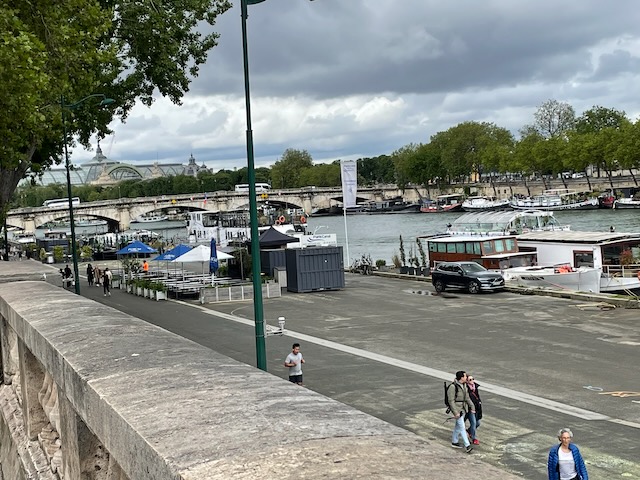
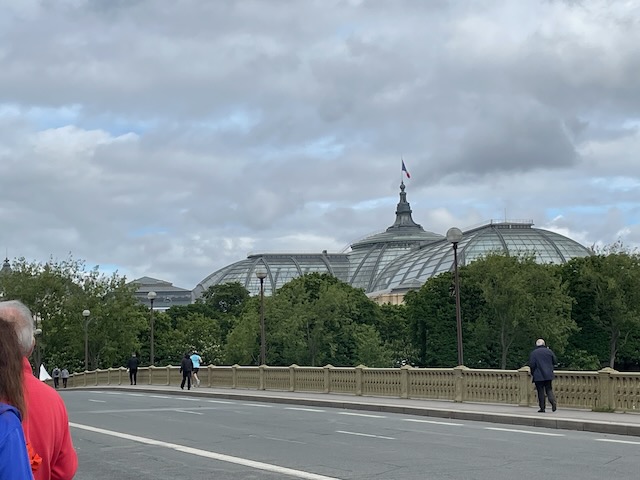
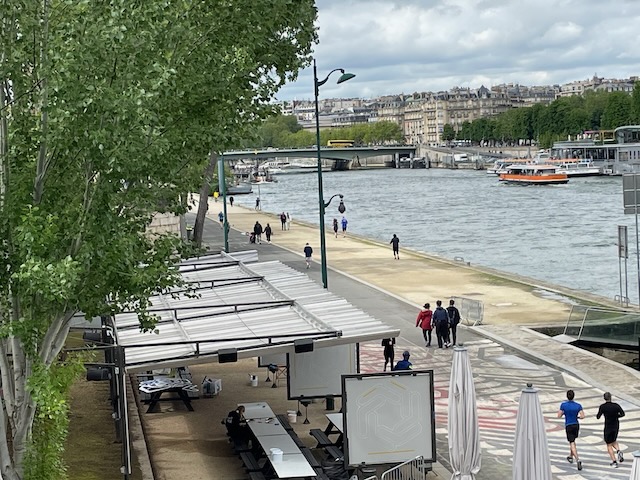
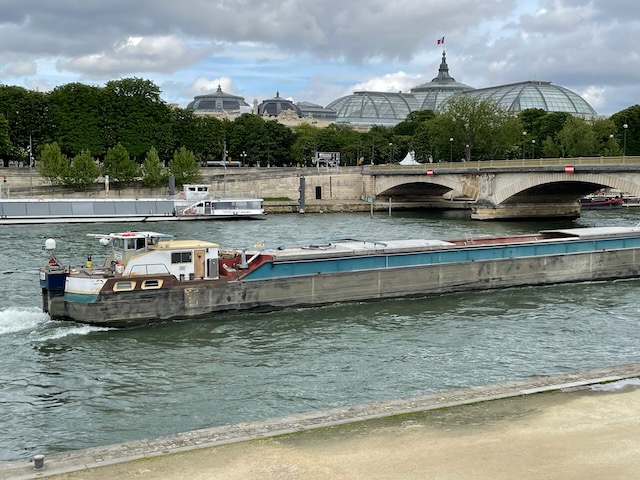
Our stroll down the Left Bank took us (for the second time) past the National Assembly and the Pont Alexandre III, and offered views across the river of Right Bank attractions, including the Grand Palais and some of the buildings that border the Tuilleries Garden.
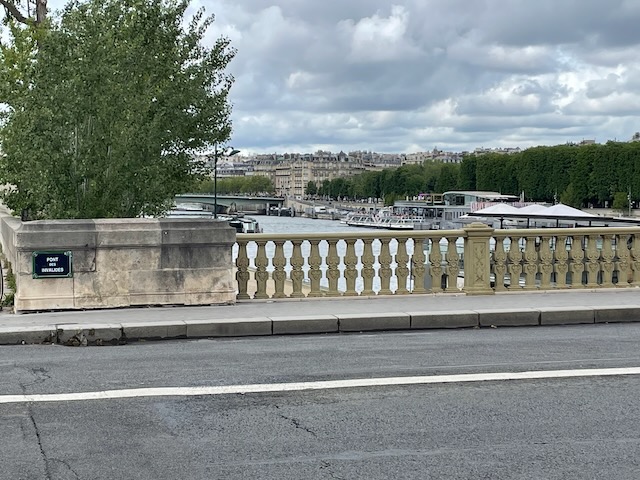
In the last volume of his novel, Marcel Proust mentions how, one evening during a blackout early in the first World War, soon after the clocks had been turned forward in the Spring, he stood not far from the Pont des Invalides on the Left Bank and looked across the Seine at the Trocadero. As I had hoped to do before I even went to France, I was able to replicate that experience (albeit in the daytime and not during a war). It was a small thing, but it pleased me.
The Trocadero, which we saw only from a distance, is a neighbourhood in the 16th arrondissement on the north (right) bank of the Seine, almost directly across from the Champs de Mars and Tour Eiffel. The Palais du Trocadéro was built on the Chaillot Hill for the World’s Fair in 1867. It was shaped like a huge concert hall, featured an enormous pipe organ (since moved to Lyon but still in use), and was named after a battle won by France in Spain. The building did not prove popular and it was partially demolished and then rebuilt in time for another World’s Fair, in 1937, at which time it was renamed Le Palais de Chaillot. The grounds include gardens, fountains and an underground aquarium, and I have added it to my “to do” list for next time.


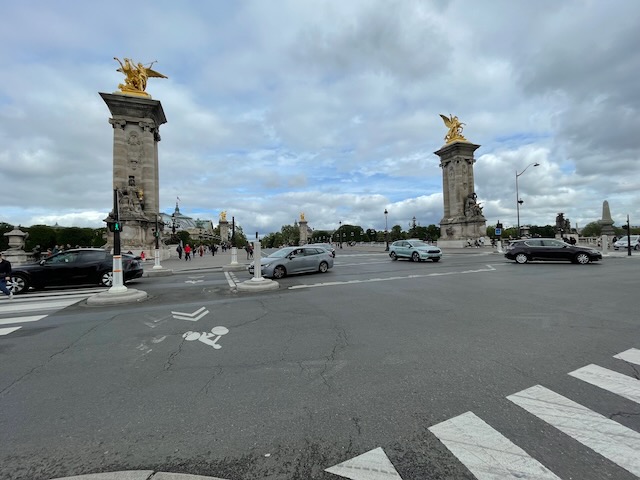


“The Hôtel des Invalides, commonly called Les Invalides, is a complex of buildings in the 7th arrondissement of Paris, France, containing museums and monuments, all relating to the military history of France, as well as a hospital and an Old Soldiers’ retirement home, the building’s original purpose” (Wikipedia). On July 17, 1879, Parisian rioters ransacked the Hôtel for guns and ammunition before storming the Bastille.

The Eiffel Tower
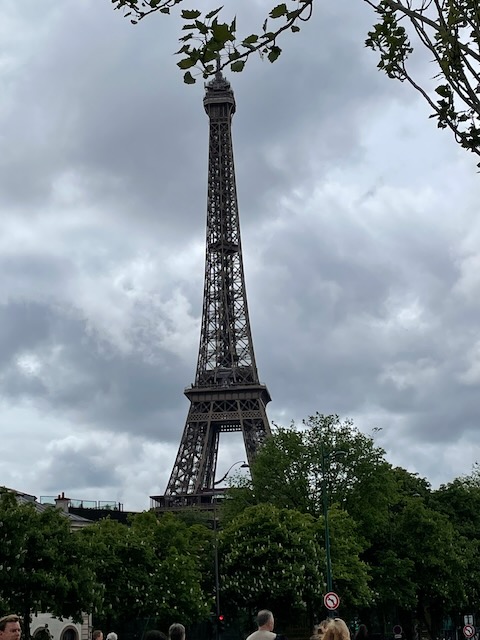
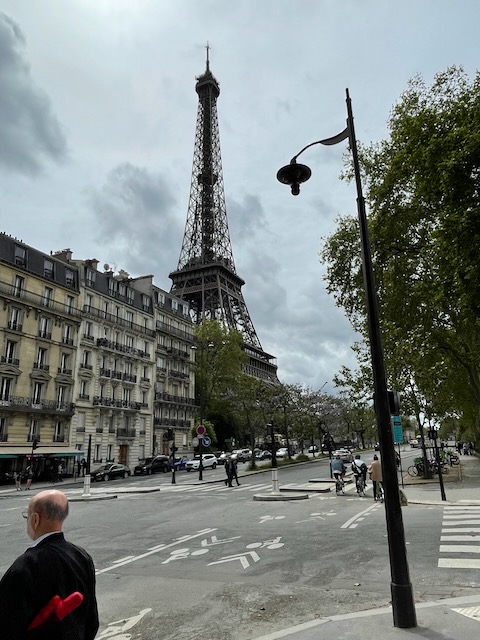


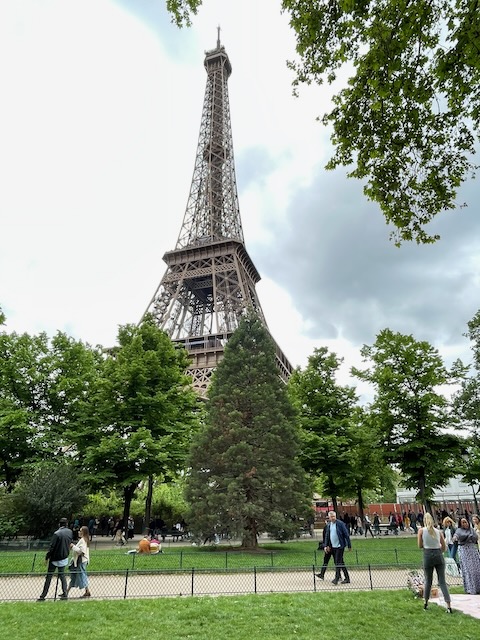

From Wikipedia: “The Eiffel Tower is a wrought-iron lattice tower on the Champ de Mars in Paris, France. It is named after the engineer Gustave Eiffel, whose company designed and built the tower from 1887 to 1889. Locally nicknamed ‘La dame de fer‘ (French for ‘Iron Lady’), it was constructed as the centerpiece of the 1889 World’s Fair, and to crown the centennial anniversary of the French Revolution. Although initially criticised by some of France’s leading artists and intellectuals for its design, it has since become a global cultural icon of France and one of the most recognisable structures in the world.”
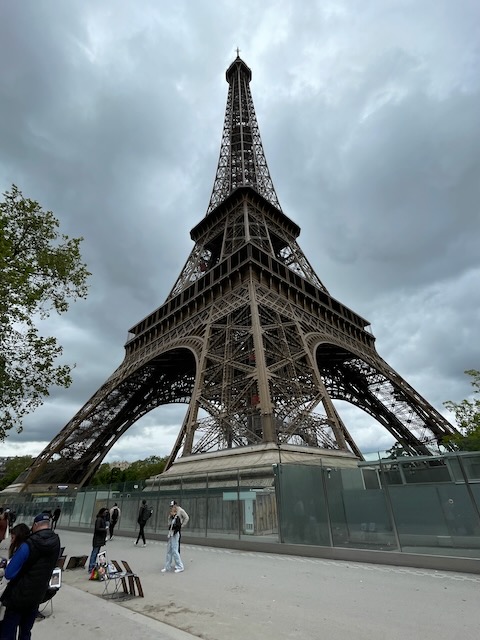


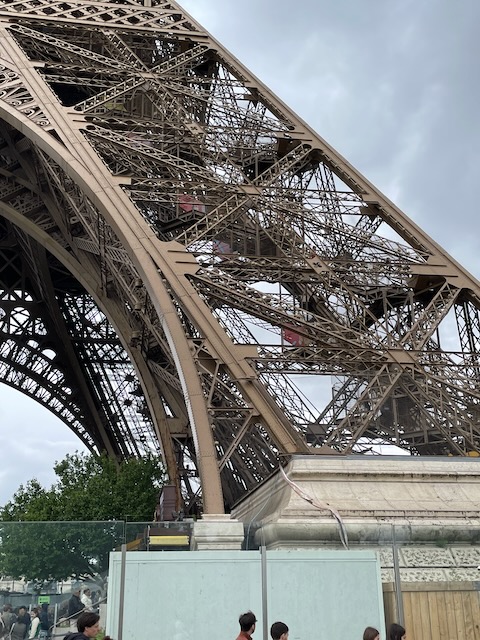
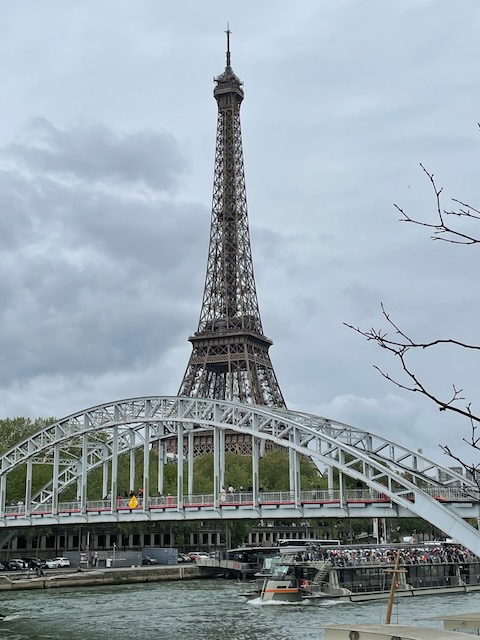
When you actually see the Eiffel Tower in real life, you cannot stop taking photos of it. Or at least, I couldn’t. I have about 200 photos of the Eiffel Tower.
Rive Droite


Place Pigalle and the Moulin Rouge
In the middle of a night shortly before we went to France, the famous windmill atop the famous Moulin Rouge fell off. It had not been reattached when we visited, so we had to make do with a Moulin Rouge cassé. Moulin Rouge is one of my favourite movies, so it was a real treat to visit the neighbourhood and the entryway to the facility, windmill or no windmill.
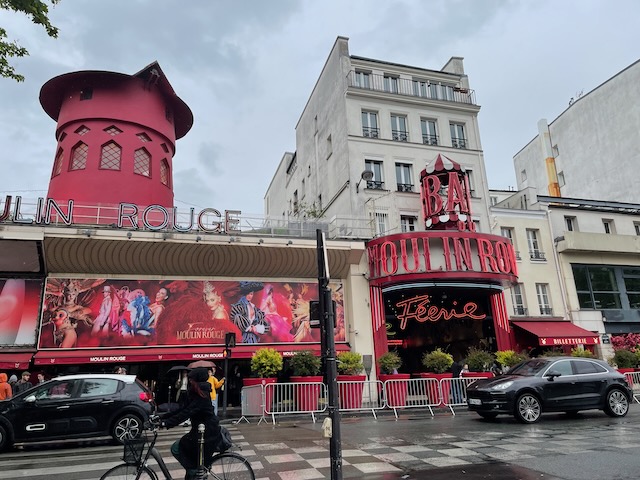

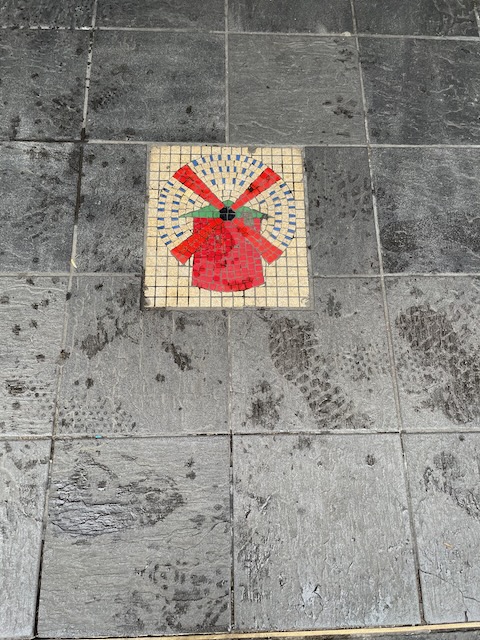

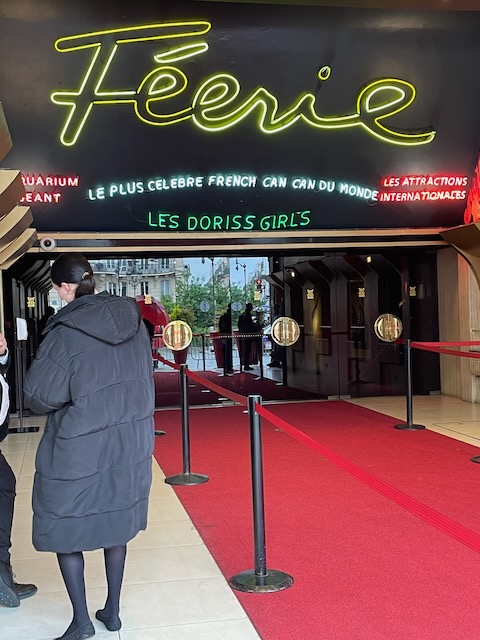

We did not attend any shows inside the Moulin Rouge but I got a few photos of what visitors might have expected to spend, and to see.


Discover more from I'm All Write
Subscribe to get the latest posts sent to your email.
 I'm All Write
