Category Archives: Paris

London, etc. and Paris, 19: Finishing strong – Cimetière Père Lachaise, and Montmartre

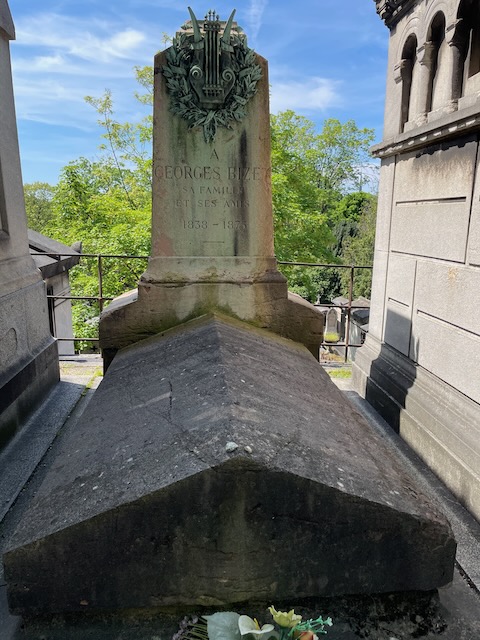
We spent most of the last day of our travels in a cemetery: but what a cemetery it was! The list of famous people who are buried at Cimetière Père Lachaise in the 20th Arrondissement seems endless, and the temptation to go visit “just one more,” and then “just one more” again, is overwhelming. There are authors, musicians, scientists, philosophers and more. Notable figures about whom most of us have heard for our entire lives turn out to have been real people who came to their inevitable ends one way or another and were laid to rest in Paris.

We walked until we could walk no more and barely scratched the surface (as it were), but even then we only left because as closing time approached, an official came along with a very large and very loud handbell, which she rang as she started herding everyone toward the exit gates. Begging for sympathy because you just had to visit one more grave was pointless. The bell ringers (probably necessarily) have hearts as stony as the monuments. (It’s not just me. See this post, “TERRIBLE STAFF – beware of the bell ringer,” on TripAdvisor.)

We spent about five hours wandering about this beautiful 44-hectare (110-acre) property, as do nearly 3.5 million other visitors every year. I am very grateful to my friend Jacqui Dumas who urged us to visit this place, and gave us other excellent tips that helped make the entire trip to Paris very special.

The cemetery is named after the long-time confessor of Louis XIV, Père Français de La Chaise, who had lived on this property for many years. It was was established in 1804 by Napoleon, who “had declared during the Consulate that ‘Every citizen has the right to be buried regardless of race or religion'” (Wikipedia).

As you will notice from the photos, Père Lachaise is a “garden cemetery” and the grounds are stunning and wonderfully maintained. It would be a superb place to wander or to sit and read a book even if one weren’t surrounded by reminders of some of the most interesting and notable people in history.

As well as graves of the famous and not so famous, the huge property includes a crematorium and a columbarium, as well as French war graves, memorials from both world wars, and an ossuary containing the bones of 2500 French soldiers who were killed in the siege of Paris during the Franco-Prussian War (1870-1871).

Probably the most visited grave is that of Jim Morrison, lead singer of The Doors, who died of a drug overdose in Paris in 1971 and allegedly wanted to be buried at Père Lachaise in order to be near one of his literary heroes, Oscar Wilde. Morrison’s original grave in the cemetery was disturbed and vandalized by Morrison “fans” so often, as were other graves nearby (collateral damage), that Parisiens were outraged. In 1990, the gravesite was dismantled – even the headstone had to be demolished – and a new one with barriers around it took its place.

Morrison fans visiting the grave often stick chewing gum to a tree, now wrapped in bamboo, near the grave. I was unable to discover the reason for this tradition.

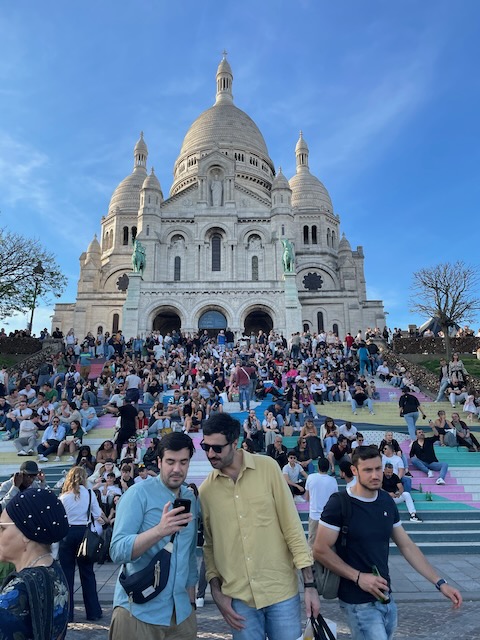
After we had worn out our legs and feet at the Cimetière Père Lachaise, we realized that we’d better check out Montmartre, the 130m-high hill in north-central Paris, because we were leaving Paris the next day and wouldn’t have another chance. We did not intend to walk to the top, but when we got there… well, you know how it is with mountains. It was there, so up we went.

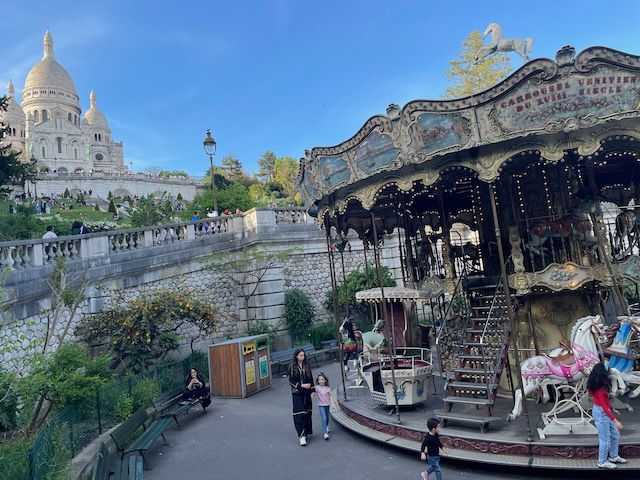
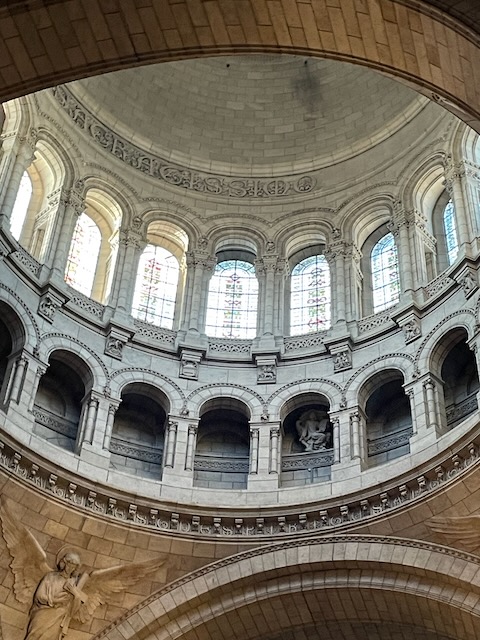
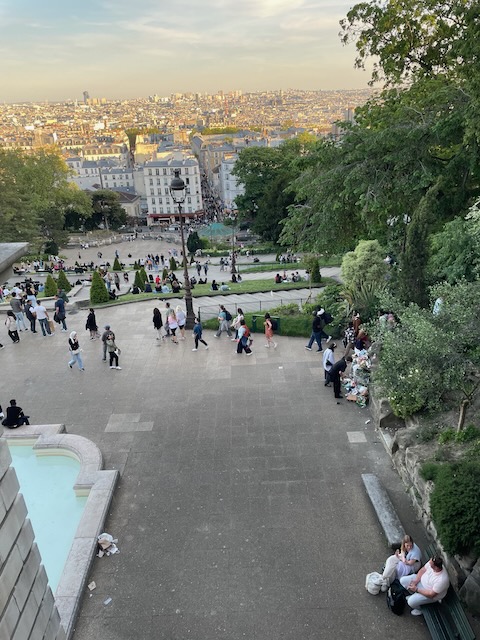
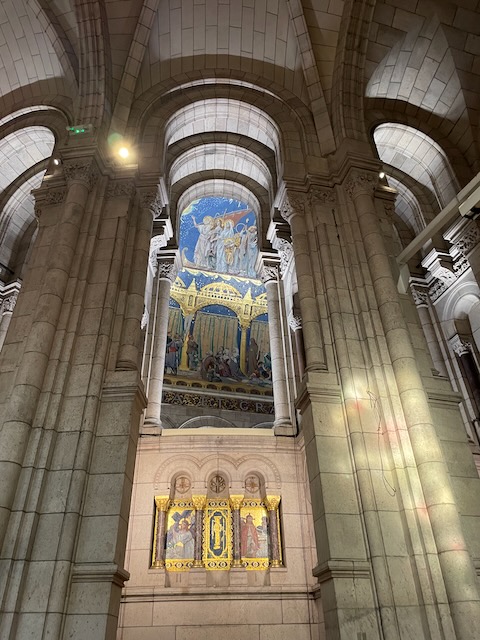
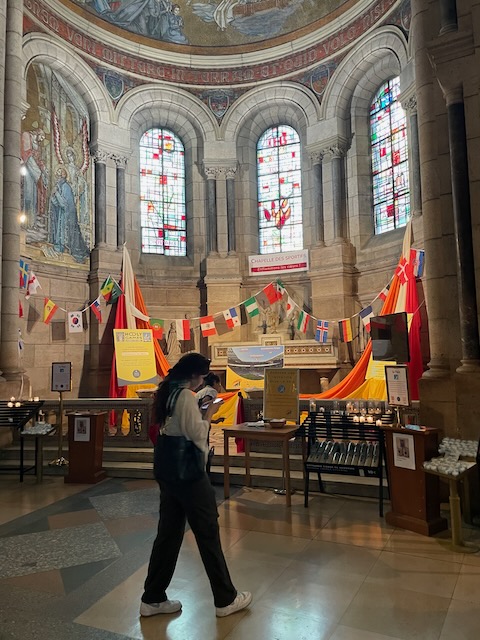
We toured the beautiful Sacre Couer Basilica which stands on the top of the hill, and then went out to look at the view of the city before making our way back down. We had to pick our way very carefully among people who were seated everywhere on the steps and the grass, enjoying the evening, chatting with one another and enjoying performances by buskers.

When we reached the bottom of the hill again, we discovered that, just a few feet away from where we had begun our climb, there was a funicular that we could have taken to the top, avoiding all those stairs.
Video of the View

By the time we had dinner and finally got back to our hotel, we had walked 16,500 steps or 11.62 km We were certainly ready to put our feet up, but it had been a perfect day and a perfect way to end our trip to Paris.

Walking back down from Montmartre towards our hotel

London, etc. and Paris, 17: Versailles!

Travel Date: Wednesday, May 8, 2024

In the past few days I have written at some length about how I have wished that I had learned more about the history of France in general and the French Revolution in particular before I went to France, rather than after I returned to Canada, so that I’d have had a greater appreciation for the historical significance of several of the sites we visited. Among these were the Champs de Mars, a large green space southeast of the Eiffel Tower, where Bastille Day was first celebrated on July 14 1790 to mark the first anniversary of the storming of the Bastille and where the first major massacre of the Revolution occurred, and Place de la Concorde, which was the location of many of the 17,000 public beheadings that took place during the Reign of Terror.

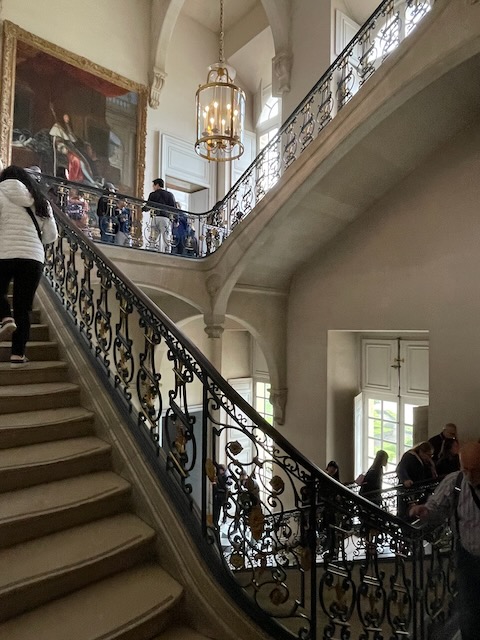
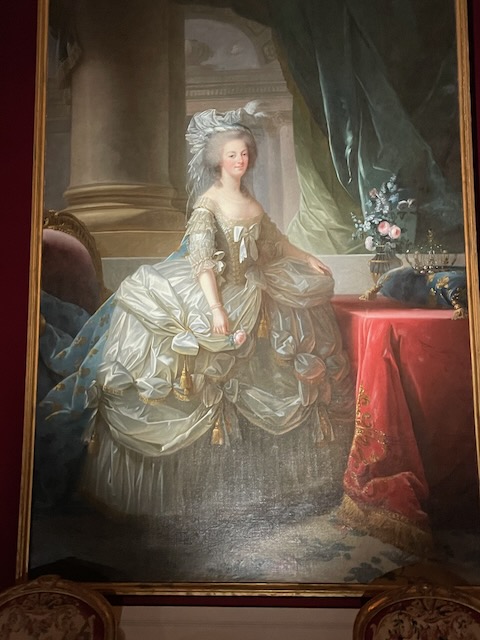
The Palace at Versailles also played a central role in the French Revolution. The primary impetus for the Revolution, which ultimately lasted for more than ten years and expanded from a civil uprising to involve several neighbouring countries, was the terrible social and economic circumstances in which most French people were living, largely due to the onerous tax burden that the “ancien regime” (“old order”) imposed on them. The economy was on the verge of collapse but in the meantime, King Louis XVI (a popular king) and his wife Marie-Antoinette (not as despicable as her reputation would have it, from what I have now read) were living with their son the Dauphin and other relatives in the most luxurious conditions imaginable. One early, unsuccessful attempt to quell the fomenting unrest took place at the Royal Tennis Court at Versailles in 1789, and it was from Versailles that the king and queen were moved to the Tuileries Castle in Paris and thence to prison and after that to their own public executions.

I highly recommend Hilary Mantel’s novel A Place of Greater Safety and the French Revolution podcast episodes of The Rest is History for fascinating in-depth explorations of this decade in French history – which did not go well at all but ultimately did lead to a democracy in France that has lasted till this day (and which we desperately hope will continue).

Where I was going with that draft, now revised to become this draft, was to draw comparisons between the social and economic conditions in France that precipitated the overthrow of the monarchy, then the failure of one replacement system of government after another, with conditions that are contributing to the popularity of far-right movements around the world today. But I decided that whole line of thought was too depressing, and also that it would take me weeks to research my argument to the extent that I could support it with citations, so (you’ll be relieved to hear) I’ve decided to just show you some of the many photos we took when we went to Versailles and toured the chateau. ‘ll leave you to crawl down the rabbit holes that lead to political parallels if you so desire.

.

Versailles palace , which is now a UNESCO World Heritage Site, was built originally as a hunting lodge in 1623 by Louis XIII, and expanded to its current massive size by Louis XIV. It was the latter Louis who moved the seat of the French government from Paris to Versailles (no. I will not mention Mar-a Lago here), and it was at Versailles where Louis XVI was living when all hell broke loose.

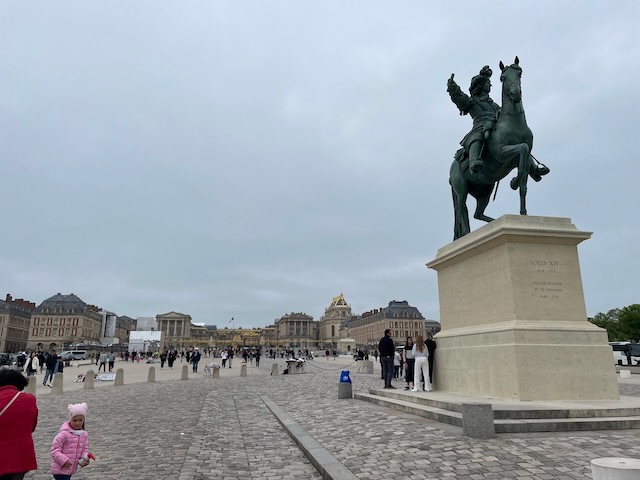
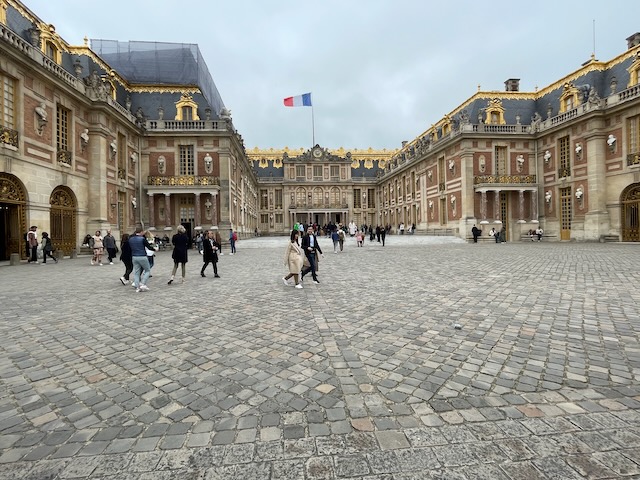
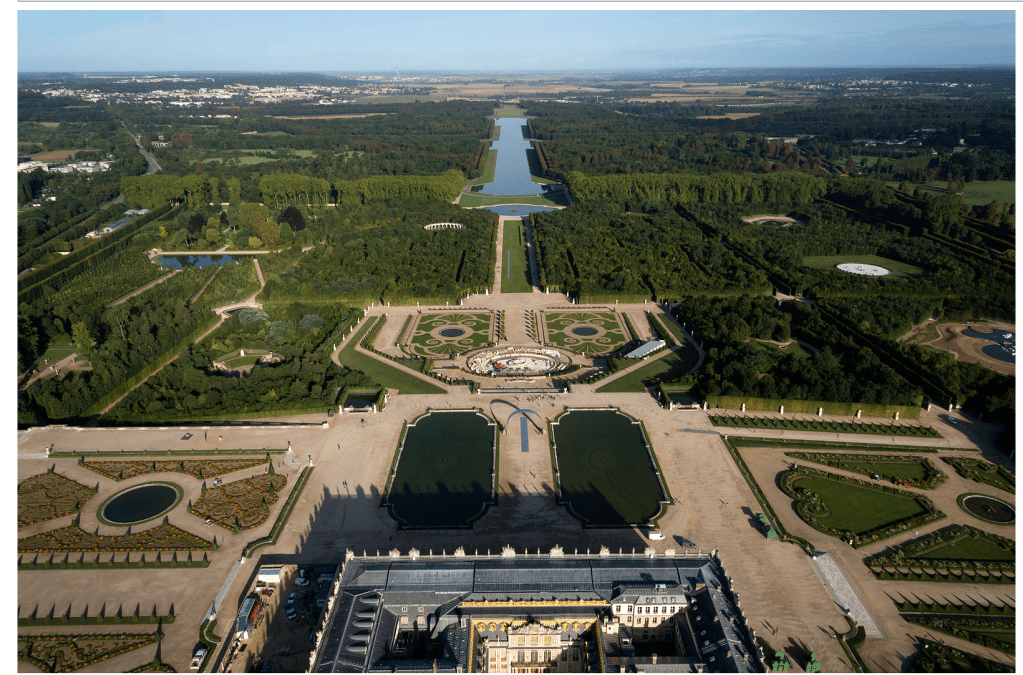
Today “The palace is owned by the government of France […]. About 15,000,000 people visit the palace, park, or gardens of Versailles every year, making it one of the most popular tourist attractions in the world” (Wikipedia). The Versailles experience begins as soon as you board the train that carries visitors along the 10.7 k route from Paris.

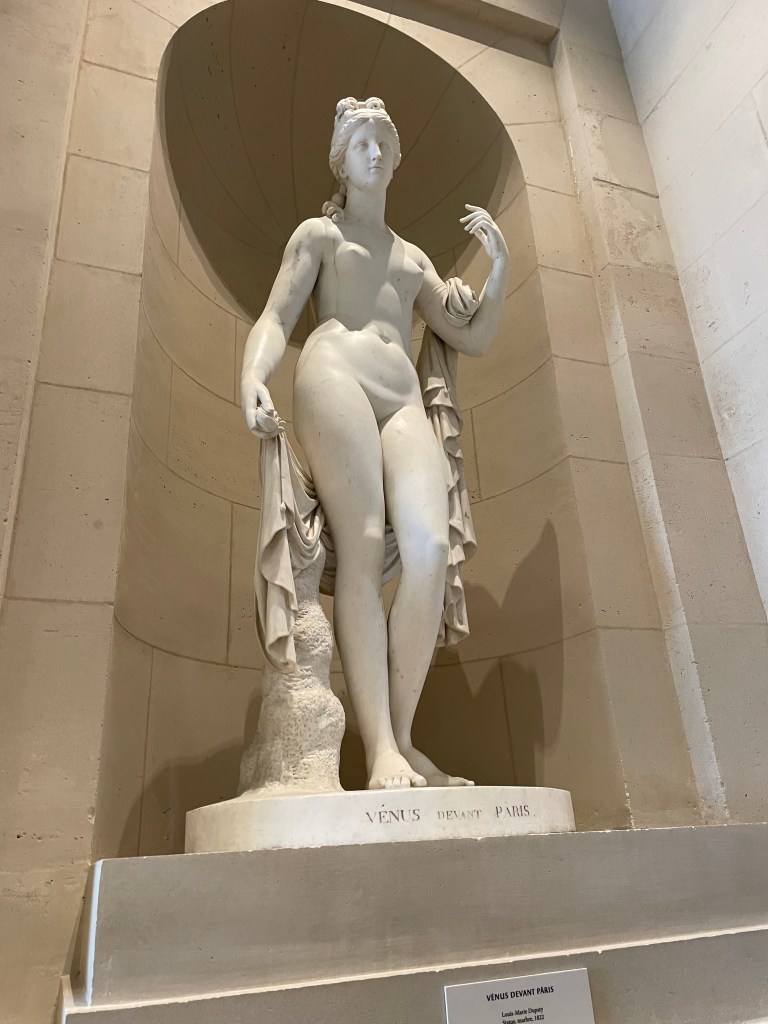
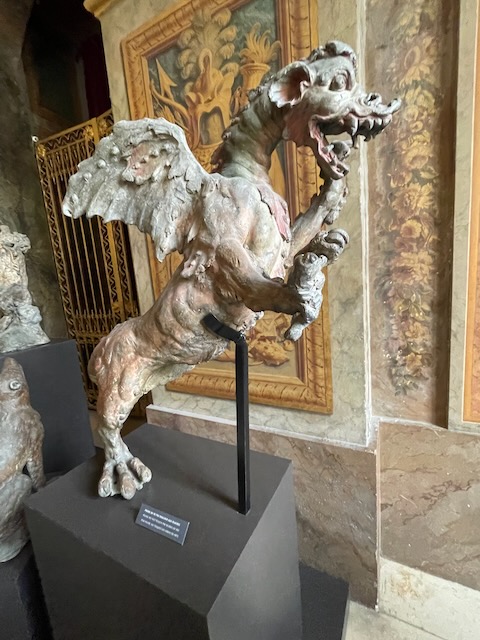
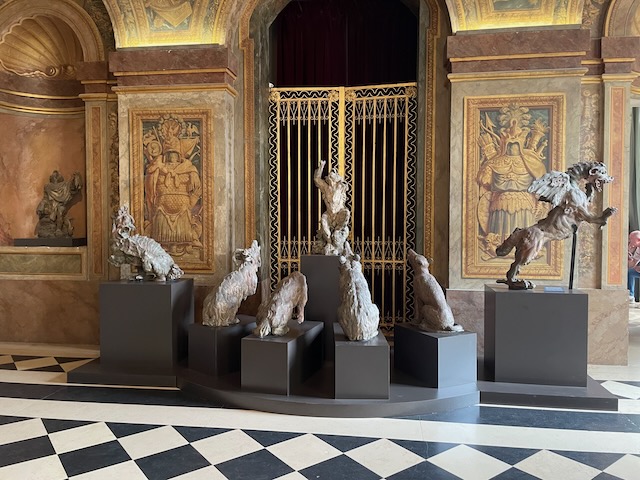
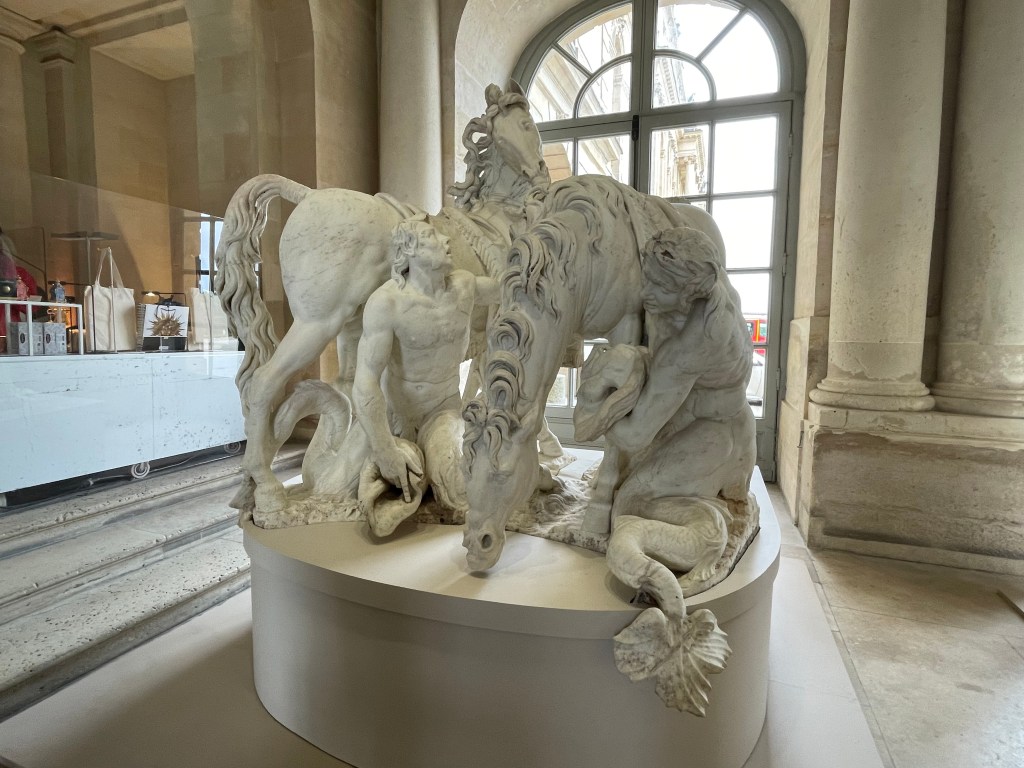
We saw sculptures in nearly every room of the palace, some strangely attractive and some really breathtaking. In the former category are the statuary shown in first four images below, which were formerly fountains with water spewing from their mouths and heads. The last two photos are of more classical statues, made from white Carrara marble. They date from the mid-1600s.

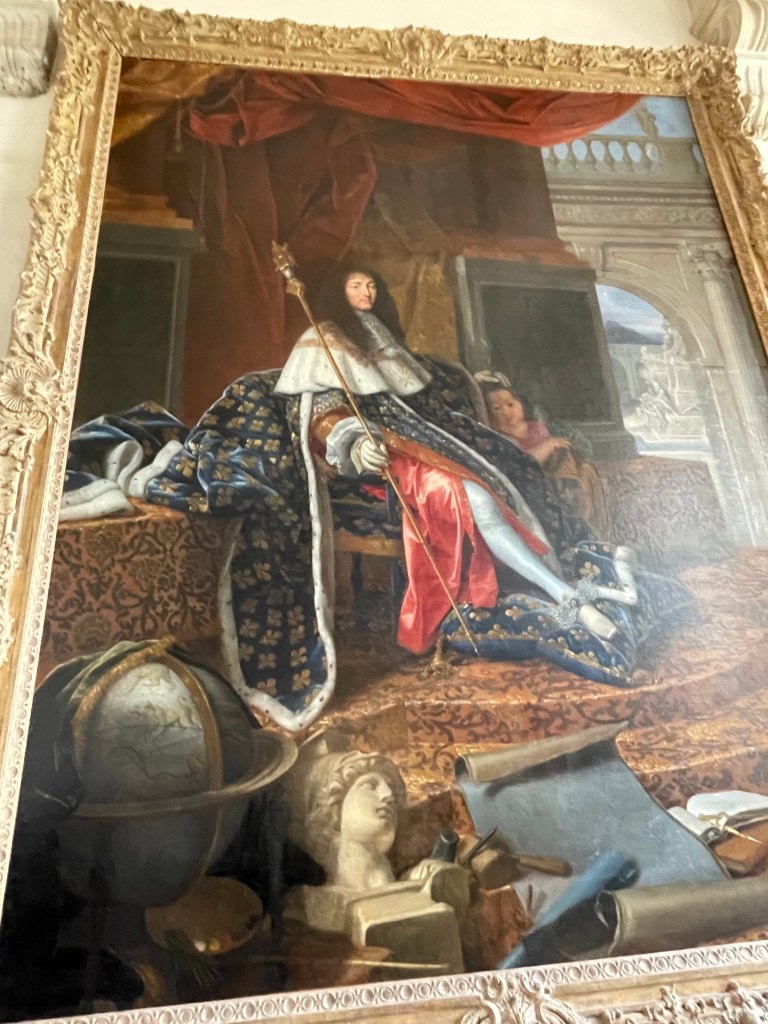
We visited the royal family chapel, which was larger and more ornate than many free-standing churches I’ve been in. There were also a lot of interesting paintings in the palace, not only hanging on the walls but also decorating the ceilings.

Versailles today is a museum. Not all of the art we saw would have been there during the reign of Louis XVI; some of the works were created long after he was relieved of his regal responsibilities.

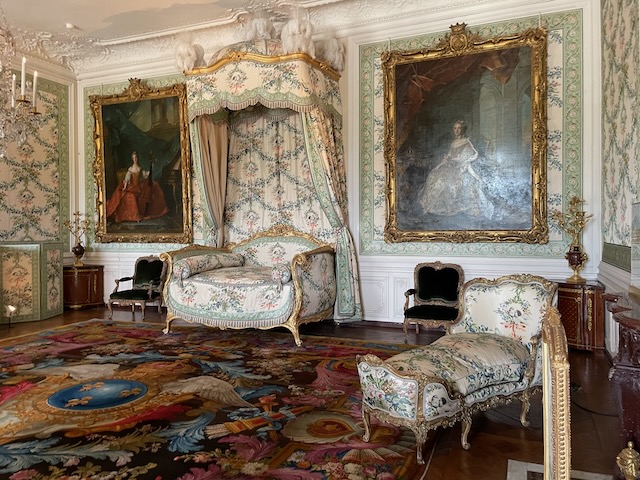
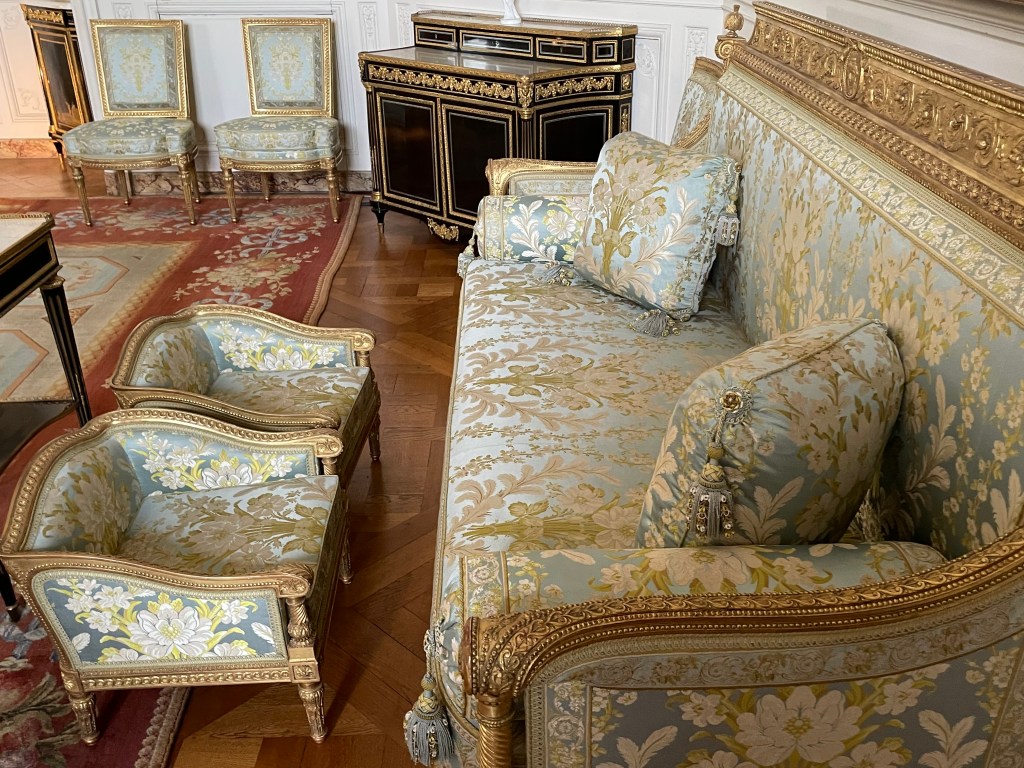
The state rooms of the king and queen, including their private bedchambers, extended through nine or ten large rooms. Here is a sample:

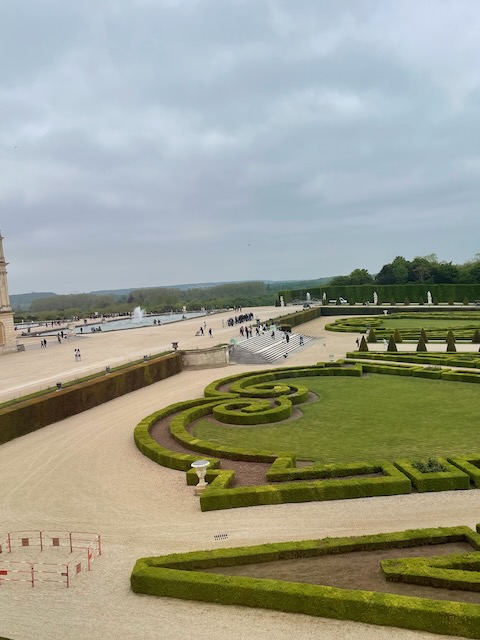
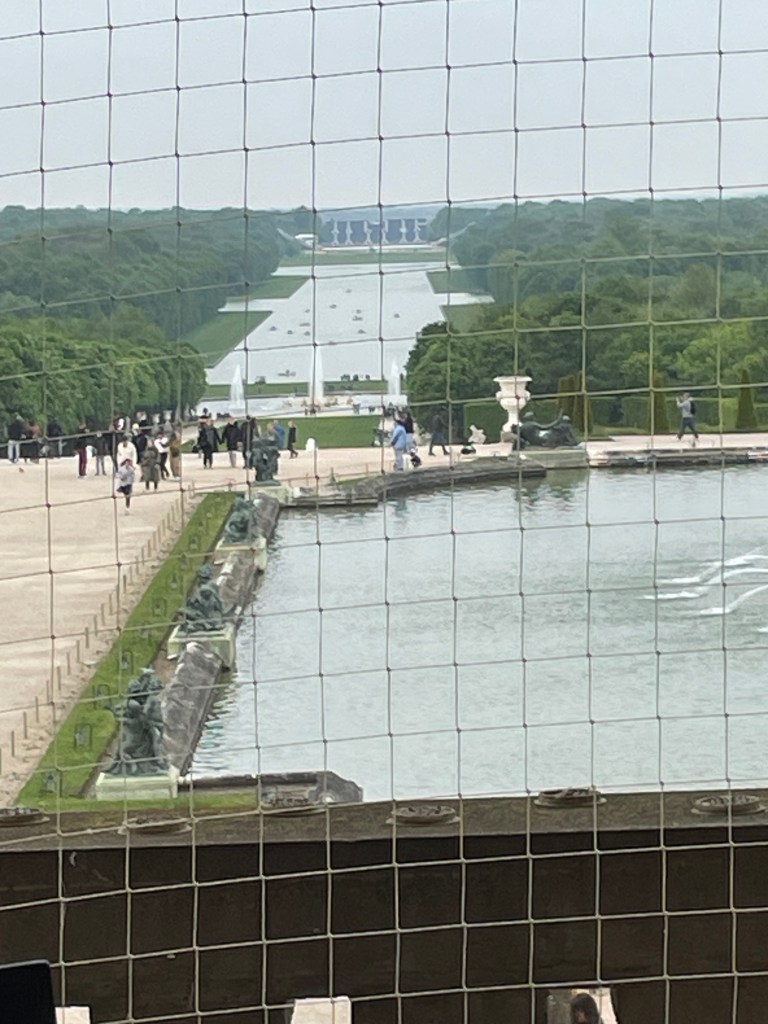
We saw the famous gardens at Versailles through many of the windows in the rooms we visited, but we ran out of time and energy before we could wander around outside

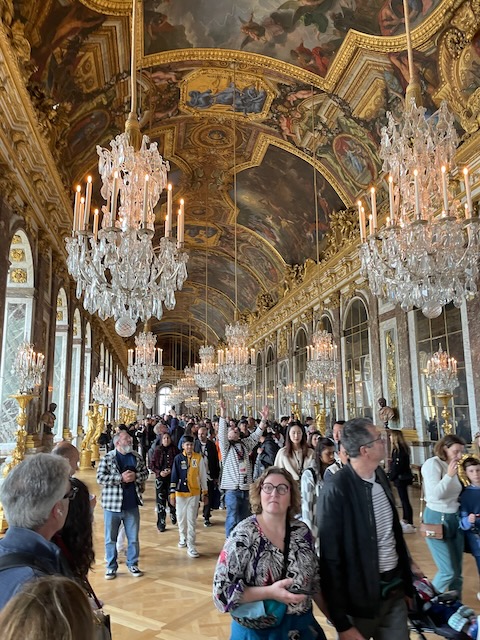
The Treaty of Versailles which ended the first world war was signed in the Hall of Mirrors on June 28, 1919.

.

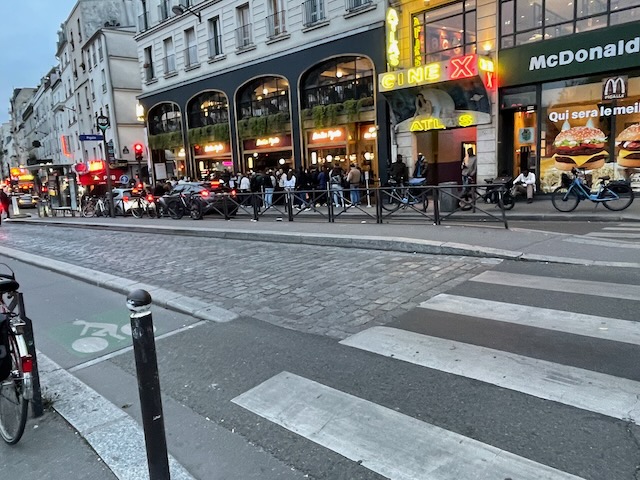
After returning to Paris, we decided to eat dinner at Bouillon Pigalle restaurant. We had seen the long lines waiting outside this restaurant a few days previously and had become interested in eating there, but it seemed to have no accessible system for taking reservations. We decided that waiting in line must be worth it, since so many other people were doing that. The line is so long that it runs down the whole block and around the corner. Thanks to a special agreement between the restaurants, there is a break in the line in the middle so that patrons of the McDonald’s next door can get to their destination.

The wait was worth it, as it was so often on this trip. Le Bouillon Pigalle serves delicious French food in a very efficient manner, where patrons sit close to one another and orders are taken almost as soon as you’ve been seated. But the system works: there is no sense of being rushed, the food is excellent, and the price is reasonable.

London, etc. and Paris, 16: The Musée d’Orsay (worth the wait!), and Shakespeare and Company

Travel Date: Tuesday, May 7, 2024

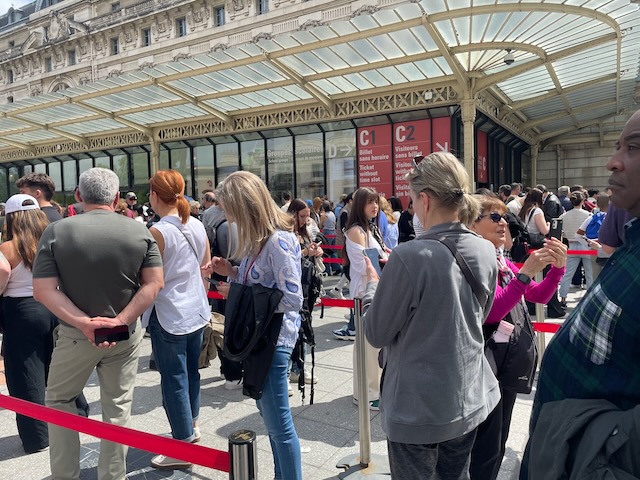
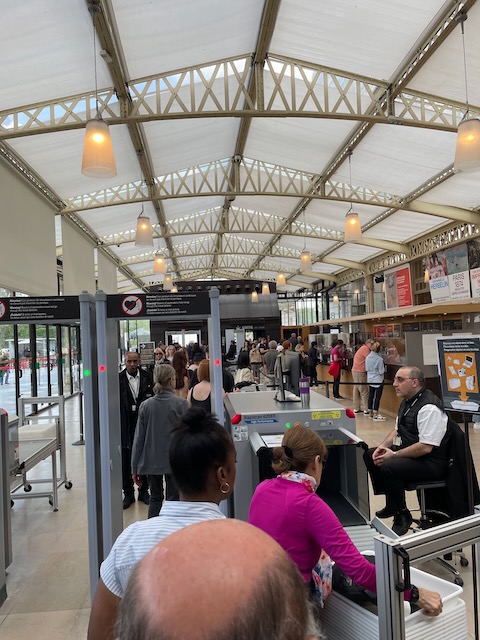
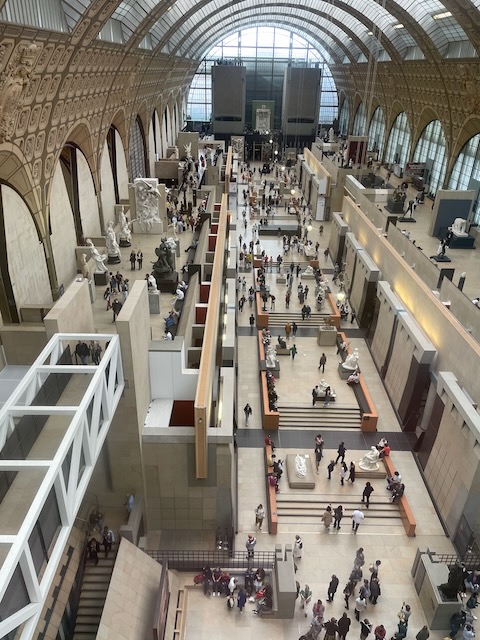
With our acts finally together, by which I mean with timed tickets purchased in advance, we finally gained admission to the Musée d’Orsay. What a splendid facility it is! The museum is housed in a former train station and it becomes clear from the moment you step inside that a former train station, particularly one with a lot of light available from arched ceilings, is an excellent location for a world-class art collection.

The original Gare d’Orsay was a notable achievement, having been built to accommodate and welcome the thousands of people who came by train to visit Paris for the Universal Exhibition of 1900.

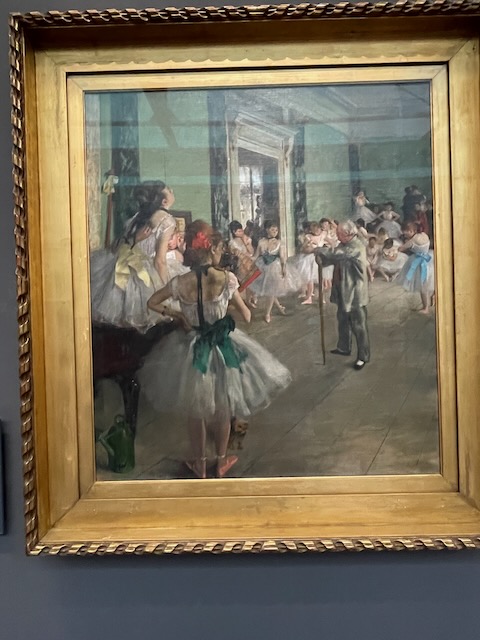
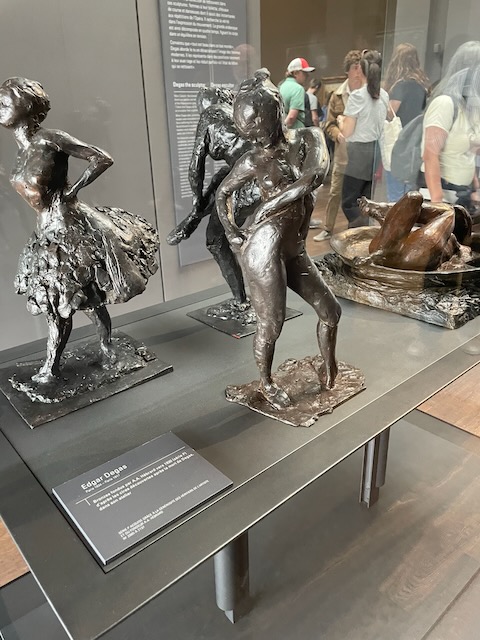
The collection on display at the facility today includes art that ranges from the Revolutionary Era in the late 1700s to the early years of the 20th century. In total, 140,000 works are located here, including “paintings, sculptures, drawings, objets d’art, photographs – and the world’s finest collection of impressionist and post-impressionist paintings” (d’Orsay signage).

Upon entry, visitors are greeted by magnificent overviews of the museum, where art is not confined to the galleries.

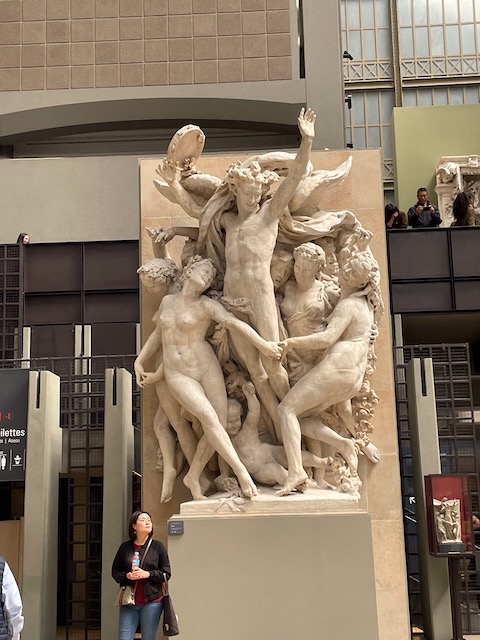
Of course, there are separate galleries as well, containing some of the most famous paintings and sculptures in the world. I find it a genuine thrill to see the original of a famous work of art, or even of an artist I haven’t known too much about before. Standing in front of the canvas or the sculpture gives me a sense of connection with the artist that always makes me feel like going someplace and writing something. It’s rejuvenating.

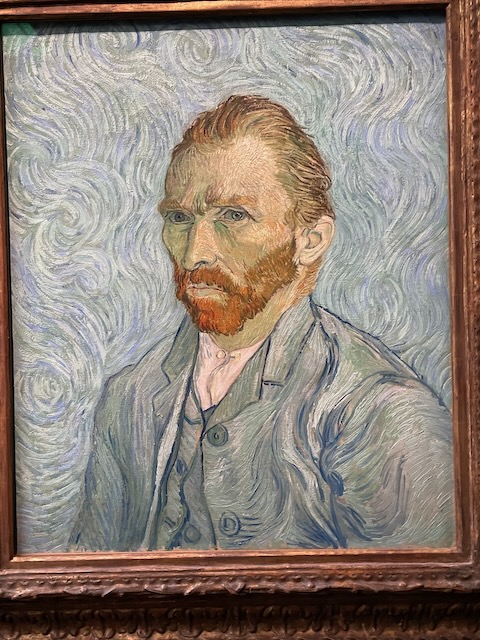
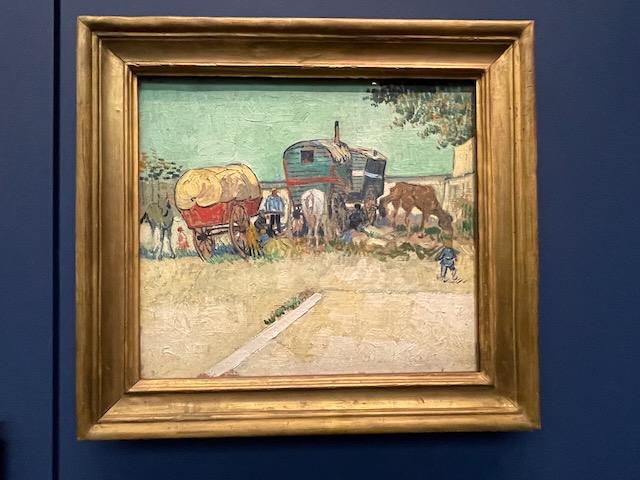
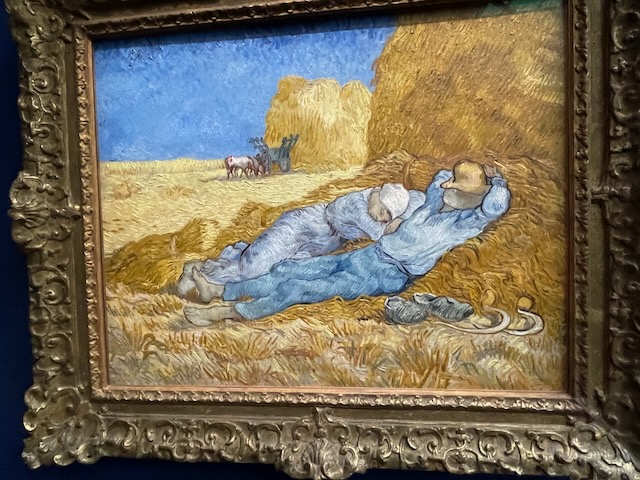
And there are so many well- known Van Goghs at the Musée d’Orsay: all splendid and impressive! I was particularly enchanted by the painting titled “The Church at Auvers.” It looks like something out of a Tim Burton film.

And there were Cézannes….

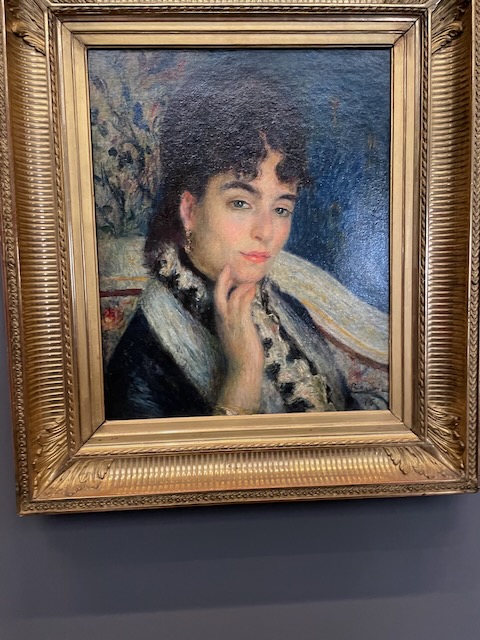
And Renoirs!

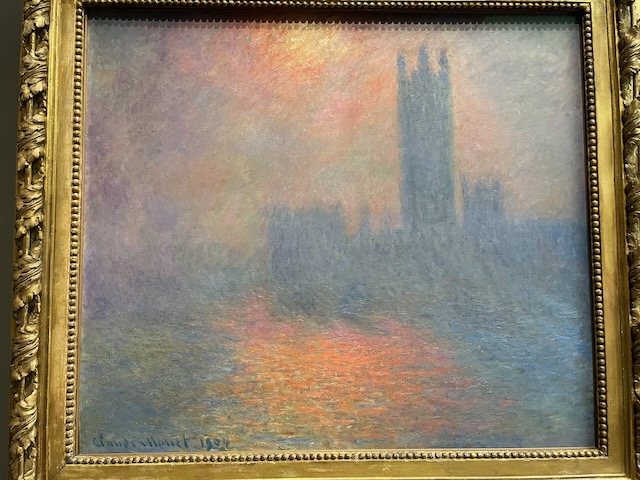
And Monets!

And many others.

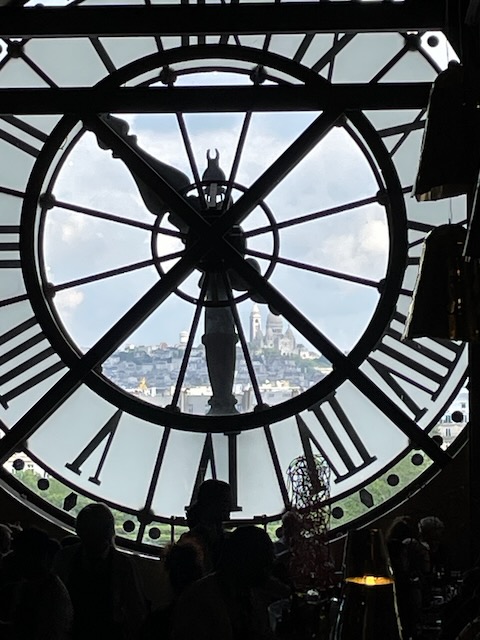
The Musée d’Orsay has three eating facilities, one of which – the Cafe Campana on the fifth floor – offers a view across the Seine towards Montmartre through its famous window clock.

Some of the most interesting sculptures were outside the museum. These two were created in 1878.

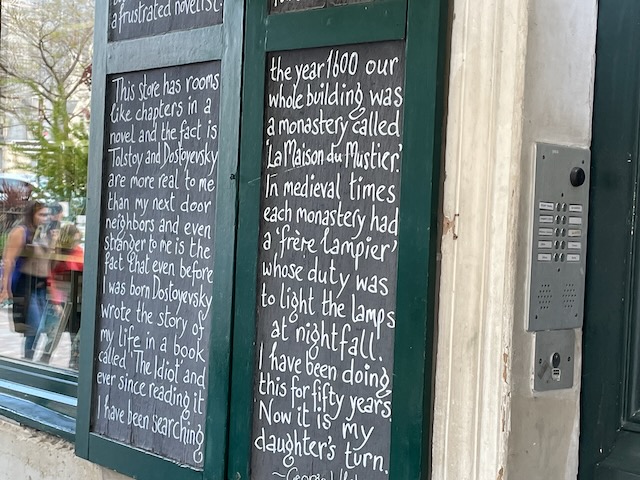
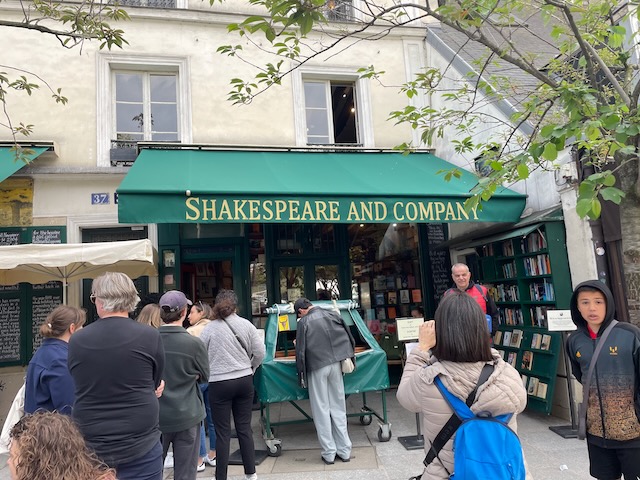
After we left the Musée d’Orsay, we made our way to one of the most famous English-language bookstores in the world: Shakespeare and Company. The shop opened in 1951 and remains a must-see destination for readers and writers – particularly anglophones – who visit Paris. Taking photos inside is not permitted, so if you haven’t done so already, you’ll just have to go there and see the place yourself. It is a warren of delights for booklovers.

This photo, which I found on the page of the Shakespeare and Company website that is devoted to the fascinating history of the shop and the story of its founder, looks as though it was taken decades ago, but the store has the same feel and look today.

“I created this bookstore like a man would write a novel, building each room like a chapter, and I like people to open the door the way they open a book, a book that leads into a magic world in their imaginations.”

— George Whitman

Since I’ve come home I’ve read a lovely work of fiction – The Paris Novel by Ruth Reichl – that is set in part at Shakespeare and Company. The online blurb describes it as “Named a must-read for spring 2024 by Eater, Oprah Daily, Chatelaine, Brit+Co and Everything Zoomer. A dazzling, heartfelt adventure through the food, art, and fashion scenes of 1980s Paris—from the New York Times bestselling author of Save Me the Plums and Delicious!” It is a sensory delight and a fine adventure, and I recommend it.

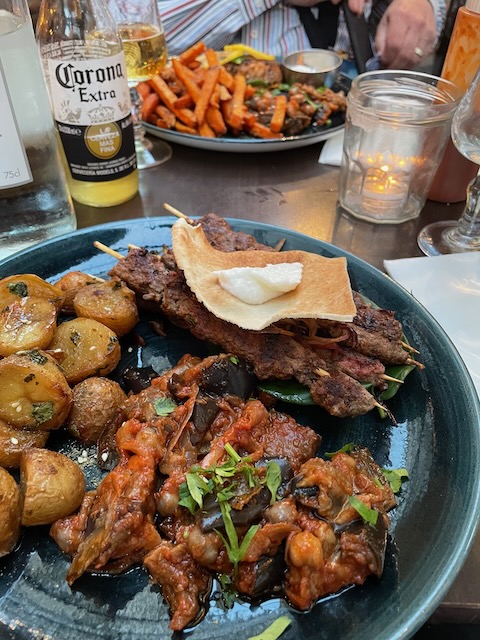
We finished our day of cultural meanderings with another excellent Lebanese dinner at Chez Sofia, near our hotel.

London, etc. and Paris, 12: Le Louvre, including a brief audience with Mona Lisa

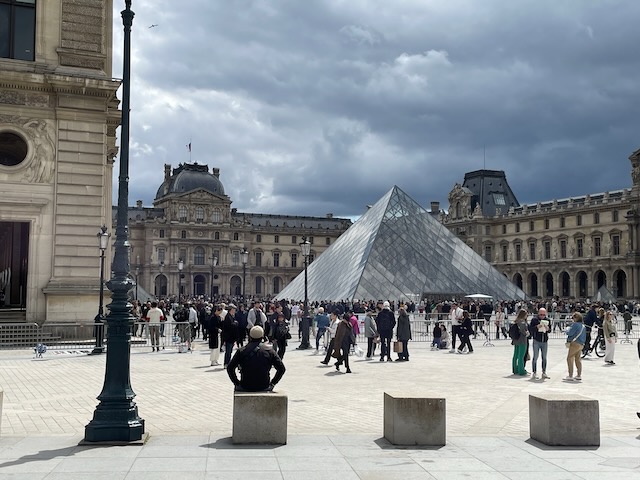
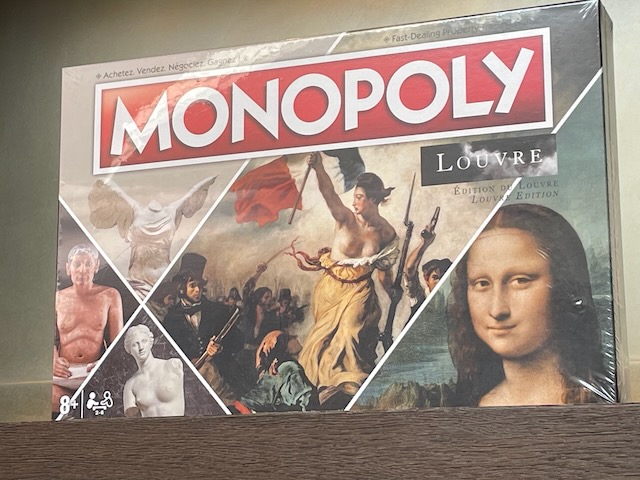
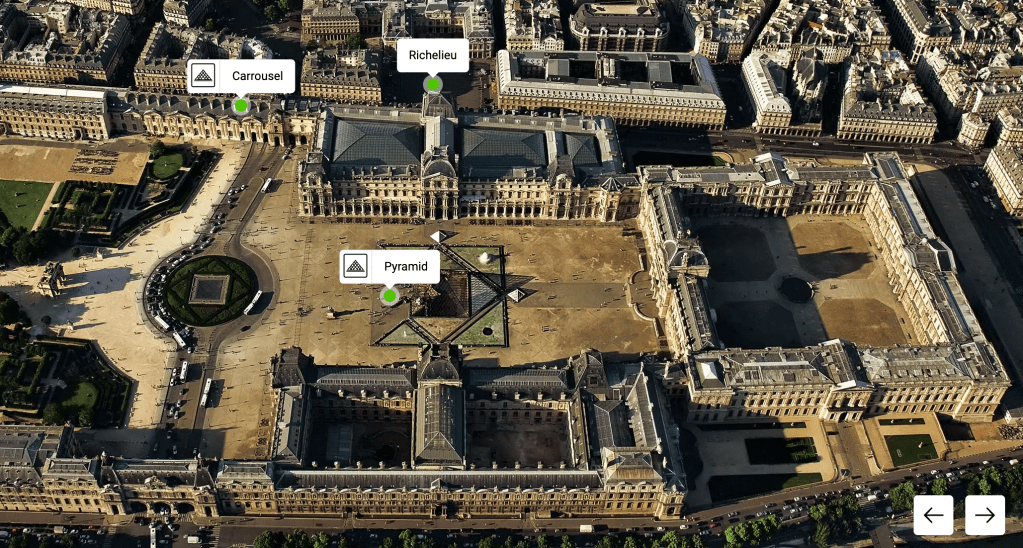
Since this post is mainly about a visit to an enormous museum (652,300 square feet, to be exact)1, there are quite a lot of photos in it. They depict only a few of the hundreds of paintings and sculptures I saw during our visit to Le Musée du Louvre in Paris that compelled me to take photos of them to ensure that I would never forget them. (Hah.) In the long run, of course, it was more time-consuming to figure out which photos to leave out of this blog post than it would have been to include them all, but I have done my best to cull and whittle; what is left is what you get.

.

In a shopping centre near Le Louvre we came across a public washroom that I thought must be an extension of the gallery itself. It turned out to have a more commercial intent: it was a promotional display by a paper company called Renova, which describes itself as selling “The Sexiest Paper on Earth” – a claim that is almost as engaging as the display itself.

Once we got to the actual art, I was immediately attracted by a painting of Joséphine, first wife of Napoleon I. It was completed just before the annulment of their marriage six years in, by which point she had failed to provide him with an heir. In contrast to the usual formal portrait of a member of nobility, she has chosen to be seated and to look away. Who can blame her?

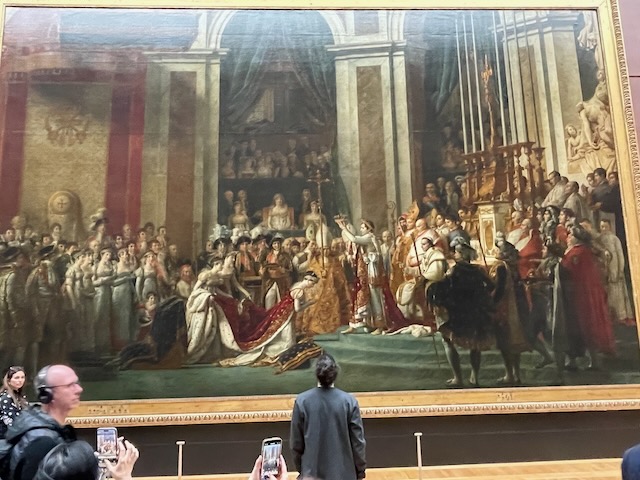
The last two photos in this set are of a painting of an event that took place in happier (?) days: The Consecration of the Emperor Napoleon and the Coronation of the Empress Joséphine in Notre-Dame Cathedral on 2 December, 1804. Since Napoleon essentially crowned himself, I saw this painting as a chilling but eminently plausible long-term strategy of a certain gilt-and-pomp-loving candidate in the 2024 U.S. presidential election.

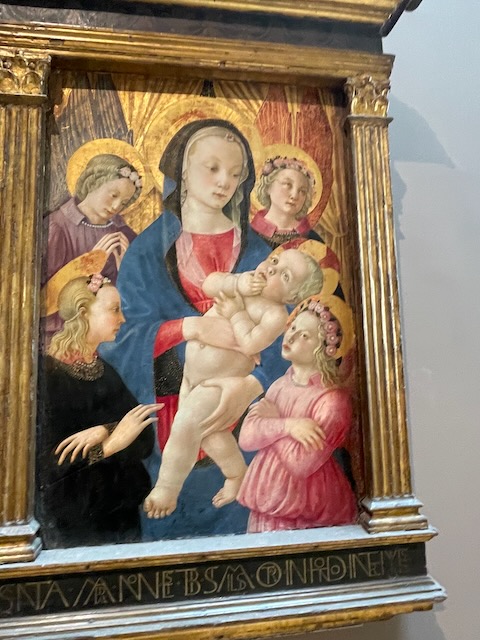
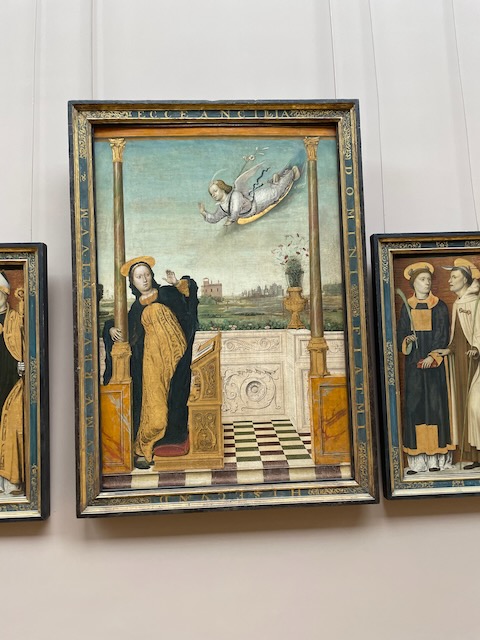
I am always impressed by the effect religious enlightenment and enthusiasm (or perhaps the fear of God) have had on the artistic initiatives of some of the world’s most noted visual artists and musicians. There were many outstanding examples of such works at the Louvre, although mythology was the source of inspiration for many artists too.

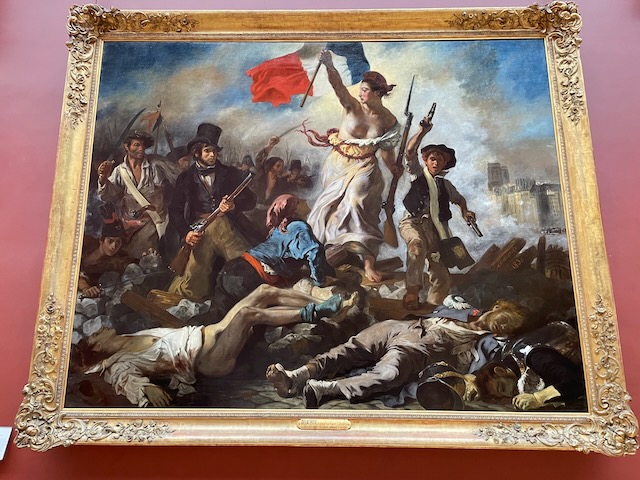
I liked the Delacroix paintings (below) very much, perhaps because of the immensity of their scale and subject matters.

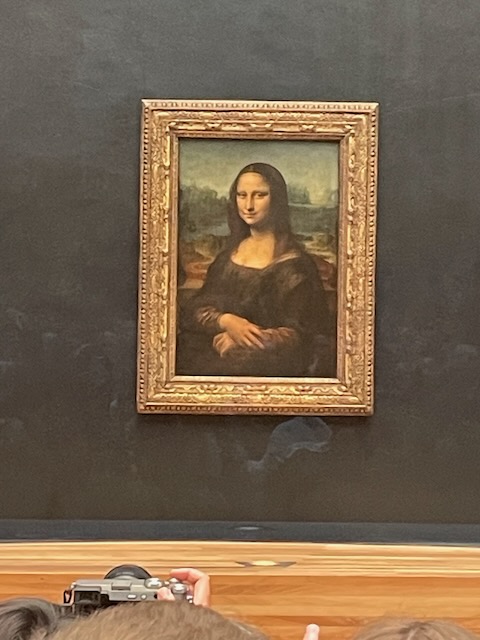
And at long last we got to see the Mona Lisa. The Louvre runs a very tight ship when it comes to what is likely the most famous work of art in its collection: After joining a carefully corralled group, we inched forward for about half an hour until we finally reached the wooden railing that separated us from the Da Vinci masterpiece. There, three uniformed staff members gave us maybe a minute to get our unobstructed photos before they hustled us out of the room.

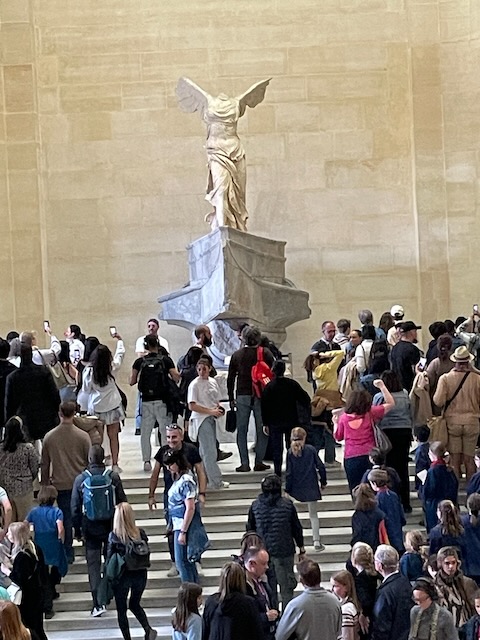
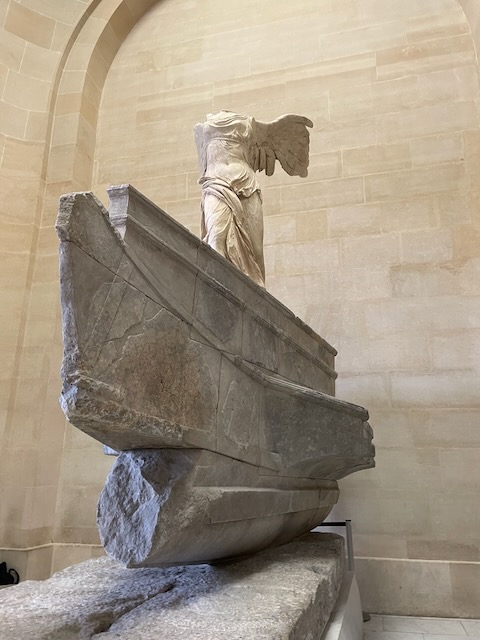
I think my favourite installation at The Louvre was the magnificent Winged Victory of Samothrace, which is “a votive monument originally found on the island of Samothrace, north of the Aegean Sea. It is a masterpiece of Greek sculpture from the Hellenistic era, dating from the beginning of the 2nd century BC” (Wikipedia). I could have gone back to the gallery again and again just to look at that sculpture.

After departing the Louvre we decided to tour the Palais Garnier, one of the homes of the Paris Opera. We were unable to gain admission because it was almost closing time, which is probably just as well as we were fairly tired by then. Later in the week, we did see the building, a masterpiece of baroque architecture. As you will see in a later post, it was worth making a second attempt.

Near our hotel, a lovely plaza (Place Gustave Toudouze) offered four or five restaurants with different types of cuisine, including French, Italian and Indian. We enjoyed the food at the Lebanese restaurant Chez Sofia so much we went back again later in the week. (I even wrote a positive review online.)

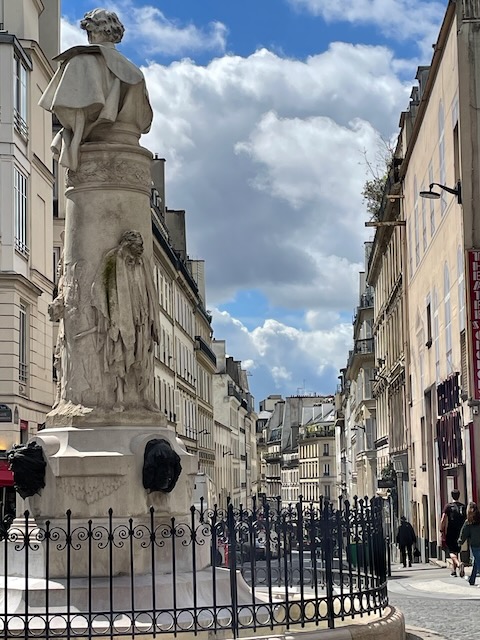
Here are a few other photos of the area near our hotel.

  1. This aerial photo of The Louvre, which I found on the museum’s website, gives a sense of how massive the complex really is ↩︎

London, etc. and Paris, 11: “I Love Paris… when It Drizzles.”

On Thursday morning, after settling in to our new, improved quarters and checking out the neighbourhood, we set out to discover Paris. (Arnie had been to France in the 1970s, but I had never been before.) It was still raining, but for the most part the rain was a fine drizzle so it didn’t interfere with our stroll.

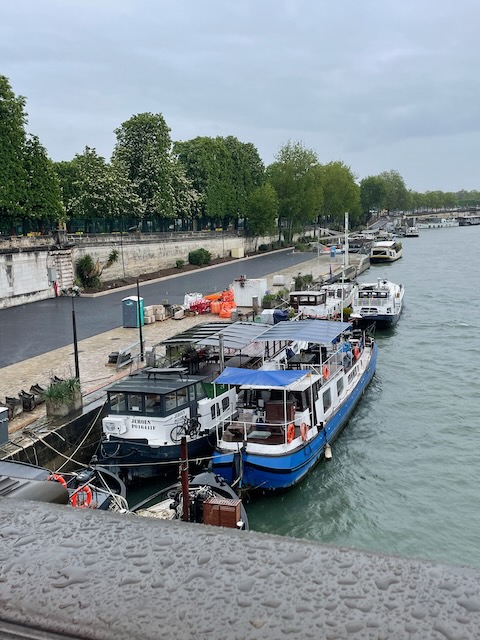
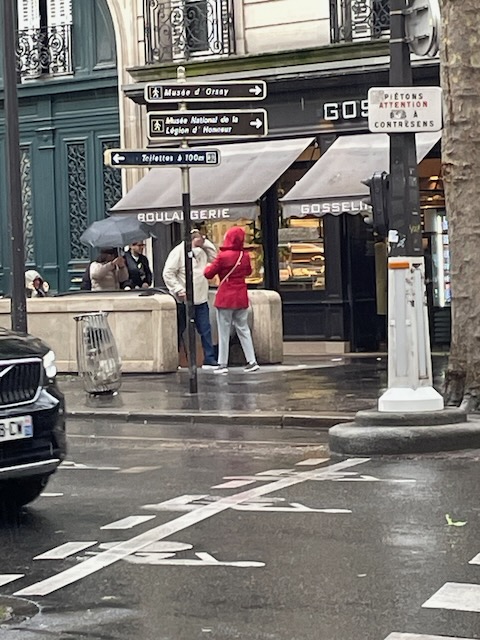
After consuming a bowl of French onion soup at one of the many small cafés that edge the streets of Paris (because of course we did. Very tasty), we took the Métro to the south side of the Seine, emerging near the Quai D’Orsay, and began to walk west along the Left Bank/ Rive Gauche. First we passed the Assemblée Nationale, which is France’s lower House of Parliament, the upper being the Senate.

France, like most democracies, has three branches of government: legislative, executive, and judicial. The President (currently Emmanuel Macron), a position for which an election is held every five years, appoints the Prime Minister (normally the head of the party with the most seats); the Prime Minister and his or her deputies make up the Government. I understand that elected representatives whose politics are on the left sit on the left side of the PM in the Assemblée, and those whose politics are on the right sit on the right. Seems sensible.

(Please click on a photo for a better look. If you are reading this as an email, click “Read on Blog” (at the top of the email) to see larger versions of the photos.)

The French electoral system is somewhat confusing to an uneducated outsider (as are most countries’ electoral systems, come to think of it. Autocracies and dictatorships are easier to understand: rulers like Nicolás Maduro in Venezuela just retain control of everything, no matter what the voters decide they want). The French system of government is additionally confusing since France is a founding member of the European Union, so some of its legislative functions now fall under the purview of the European Commission.

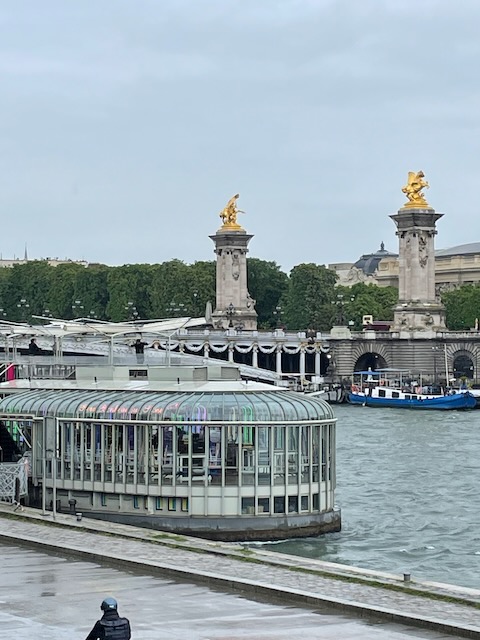
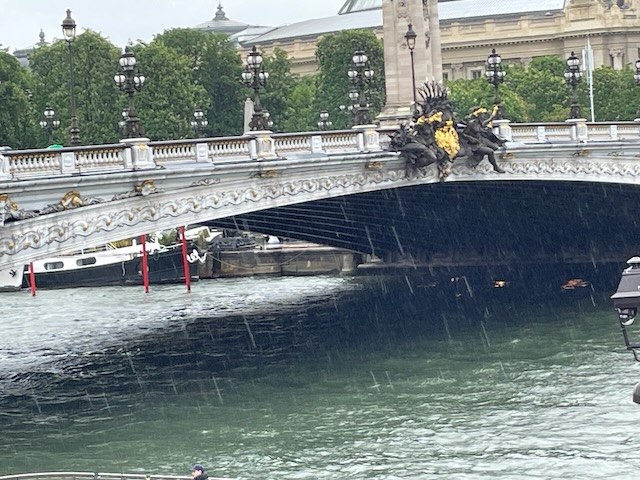
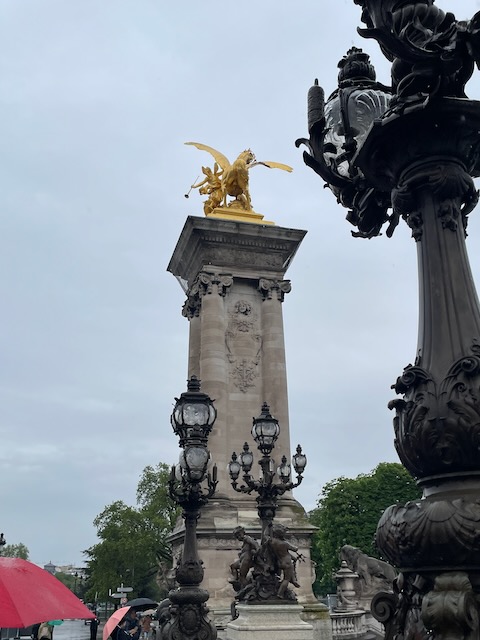
We continued along the Left Bank until we reached the Pont Alexandre III. From Wikipedia, I learned that “[This] Beaux-Arts style bridge, with its exuberant Art Nouveau lamps, cherubs, nymphs and winged horses at both ends, was built between 1896 and 1900. It is named after Tsar Alexander III of Russia, who had concluded the Franco-Russian Alliance in 1892. His son Nicholas II laid the foundation stone in October 1896. The style of the bridge reflects that of the Grand Palais, to which it leads on the right bank.” (Well said, Wikipedia.)

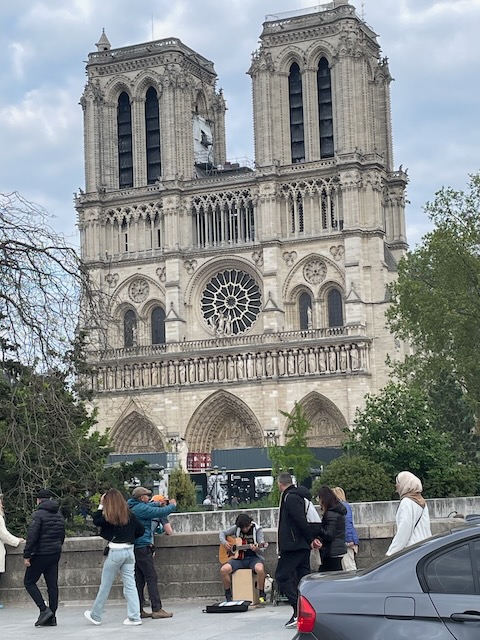
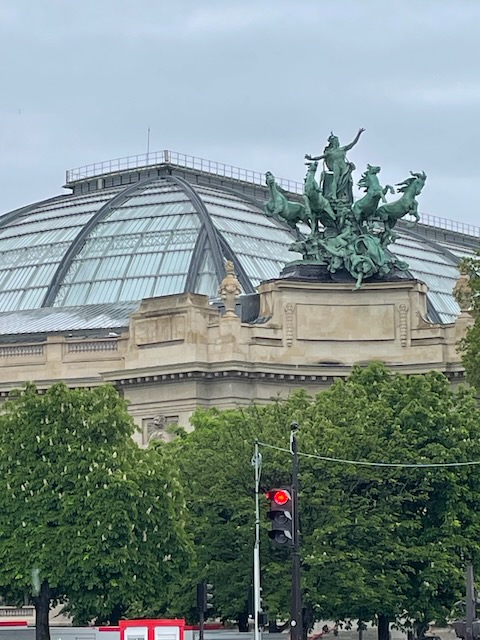
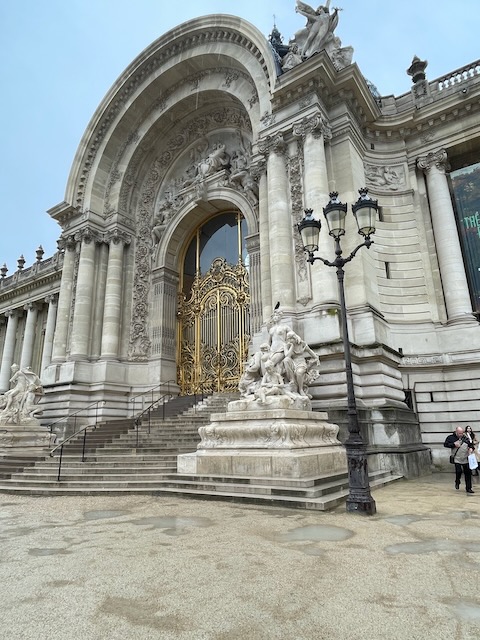
The Grand Palais was closed for renovations when we were there, but would reopen temporarily for the Olympics in August. (The fencing and taekwondo events were held there.) The full site will reopen to the public in 2025. The Grand Palais is an exhibition hall, museum and historic site dedicated to French art, and it sounds as though it is quite spectacular. We’ll have to go back to investigate it (and Notre-Dame Cathedral, of course, which was still closed for restoration following the terrible fire in 2019).

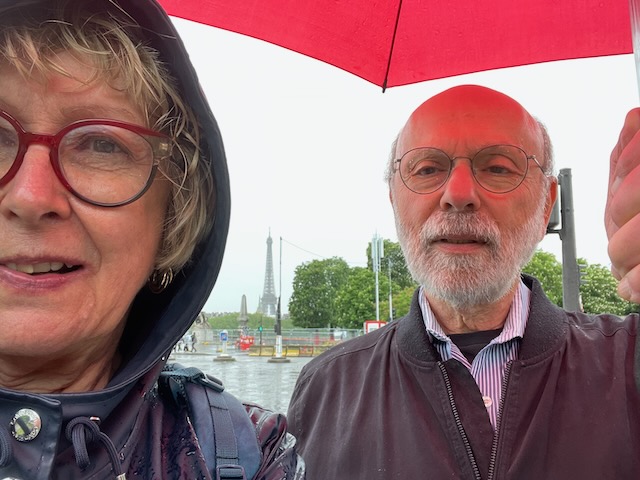
We kept catching sight of the Eiffel Tower and since I couldn’t get over the fact that we were actually IN Paris looking at THE ACTUAL Eiffel Tower (of which I have owned a small replica since my sons visited the city in about 1992), I kept taking photos of it. As a result, I now have about 200 photos of the Eiffel Tower. I will not post them all.

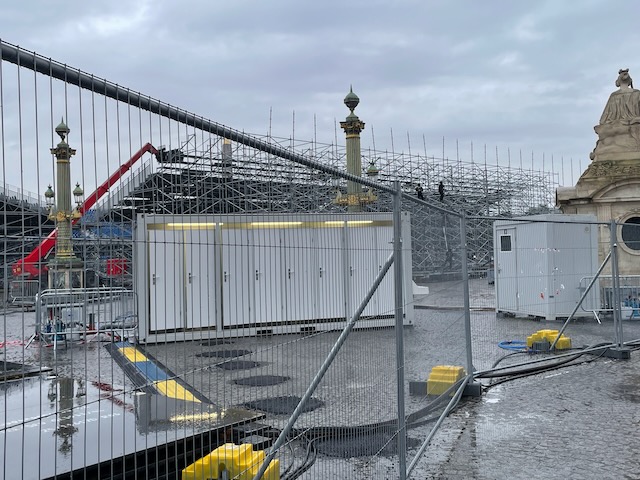
After walking in front of the Grand Palais we took a right turn and headed up the Champs-Elysées to the Place de la Concorde, the largest square in Paris, where there was a lot of activity going on to prepare for the upcoming Olympics. The Place Concorde was the site of the BMX freestyle, breaking, skateboarding and 3X3 basketball events and as the photos illustrate, a lot of temporary seating was being created when we were there.

As we walked, I spent a lot of time just marvelling to myself that I was actually on the Rive Gauche, walking by the Quay D’Orsay, crossing the Seine, catching glimpses of the Eiffel Tower, standing in the Place de la Concorde. It was both magically surreal and exactly as I had expected it would be: a perfect combination. It also made me think that if you read enough books and see enough films set in a certain location (or point in history, I suppose), it is almost as good as visiting it.

Almost, but not quite.

_________________

Addendum

Did you know that “I Love Paris” was written by Cole Porter and published in 1953? It’s been “covered” by just about everyone – notably Bing Crosby, Andy Williams, Ella Fitzgerald, Doris Day, Dean Martin, Frank Sinatra and Screamin’ Jay Hawkins. It’s a short song, but long enough to become an ear worm.

London, etc. and Paris, 10: Paris Greets Us with Thunderbolts, Hail and a Bus Station from Hell

It costs about £30 (C$50) and takes approximately 8.5 hours to get from London to Paris on a bus. (This includes the cost of the ferry the bus drives onto in order to cross the English Channel). It costs about £125 (C$221.25) to travel from London to Paris through the “Chunnel” on a train. It costs about £80 (C$140) to fly from London to Paris.
Partly because of the cost, partly because we had no deadlines, and partly because I wanted to see the English Channel as we crossed it, we took the bus.

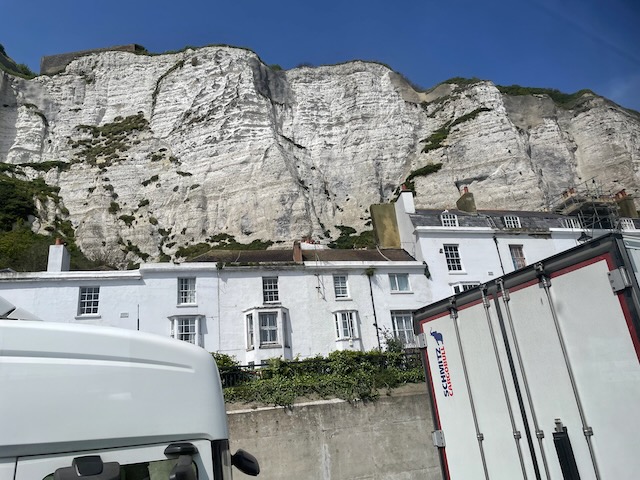
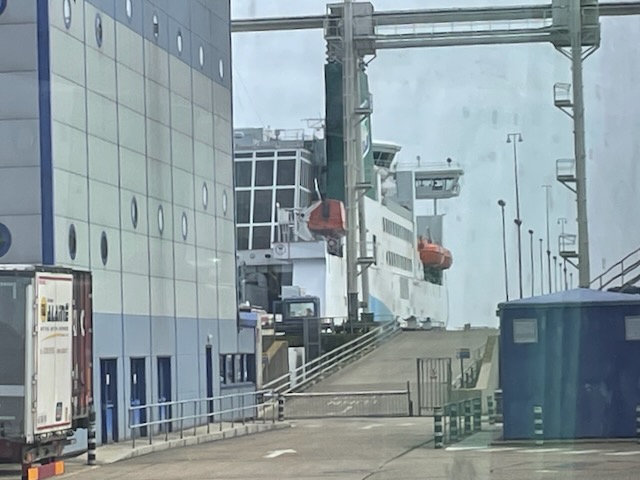
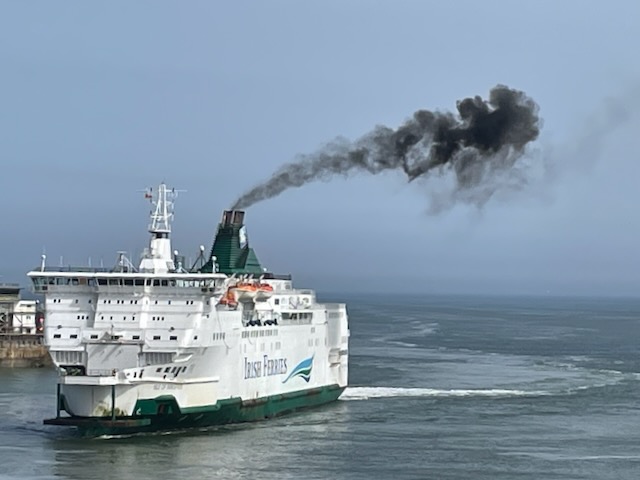
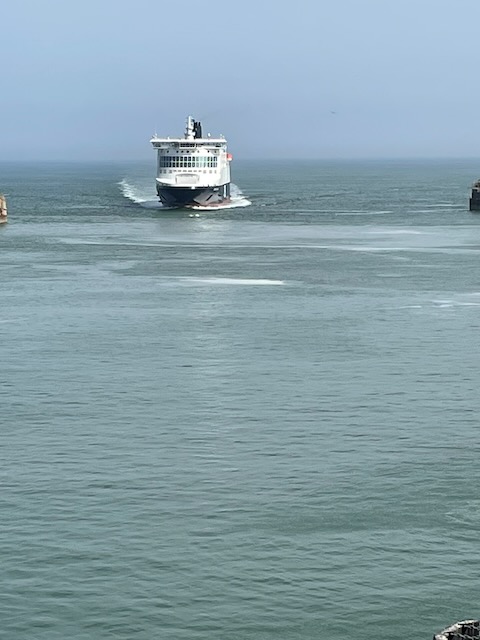
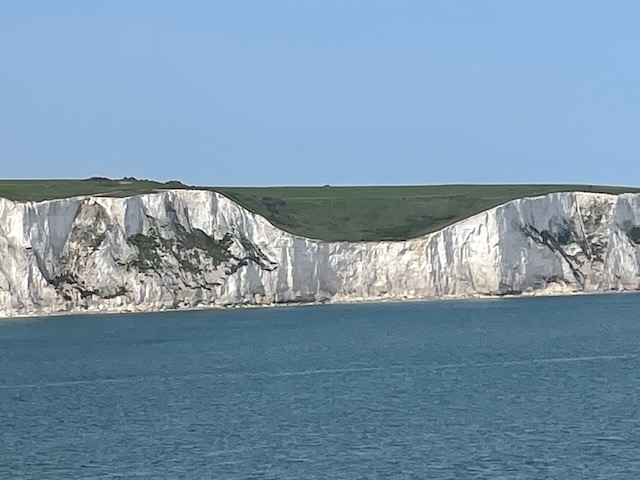
We had been warned that a rough crossing could be a nauseating experience or worse, but we were fortunate to make our trip to France on a wonderfully calm day. This was the second time we’d been to Dover, but we had much better views of its white cliffs this time, particularly after the ferry left the dock.

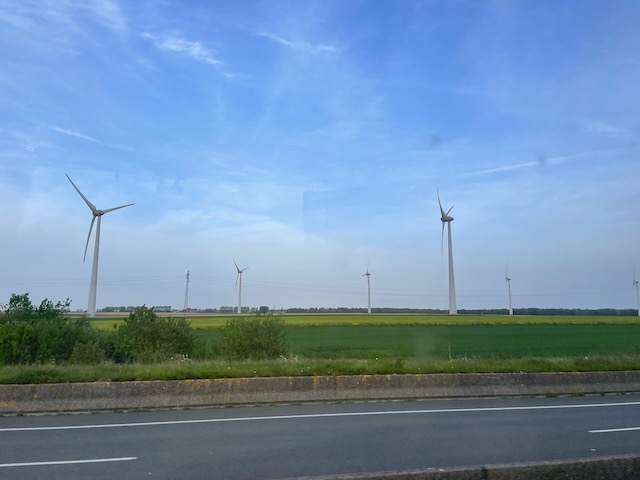
The actual crossing by ferry takes about 2.5 hours, and the trip was calm and picturesque. We arrived in Calais to find le temps there as pleasant as the weather had been in England. As we drove between Calais and Paris, I tried to get my brain around the fact that I was actually in France for the first time in my life. Since I was a young teenager, I’ve been studying French, reading books by French authors, watching French films, learning some French history, and envying absolutely everyone who got to be in France while I did not, so perhaps it is not difficult to understand why I found the experience almost unreal. As we travelled through the French countryside (where , by the way, I noticed happily – as I had in Germany a year or two before – that there are a lot of wind farms), I peered eagerly toward the horizon for my first sight of Paris.

But le temps had other ideas. The skies grew dark with clouds as the night fell, and as we reached Paris, a monstrous storm let loose. The torrent of hail and rain was intensified by near-constant flashes of lighting and crashing thunder. The bus, being largely a metal object, intensified the sound of the hailstones clattering down upon us, and I felt as though we were in a tin bucket – fortunately one with a lid on it, and windows.
I’m including a couple of the videos I took after the bus had pulled over to the side of the road, to wait for the worst to pass.
All hail breaks loose.

All of this meteorological excitement meant that we arrived at Paris’s Bercy Seine bus station a couple of hours later than scheduled, after ten at night. Delayed buses and storms be damned, all the service staff were heading home on time. Loiterers were being shooed out of the waiting room and asked to stand on the platforms until their connecting buses arrived. The lights in the office areas were extinguished, and doors and windows that might provide access to any useful information were securely locked.

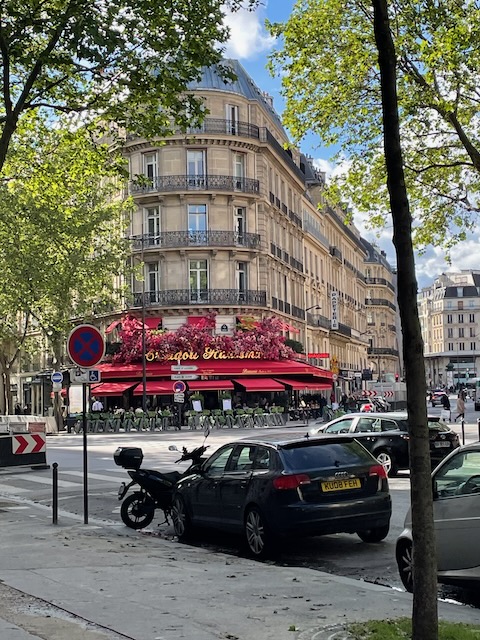
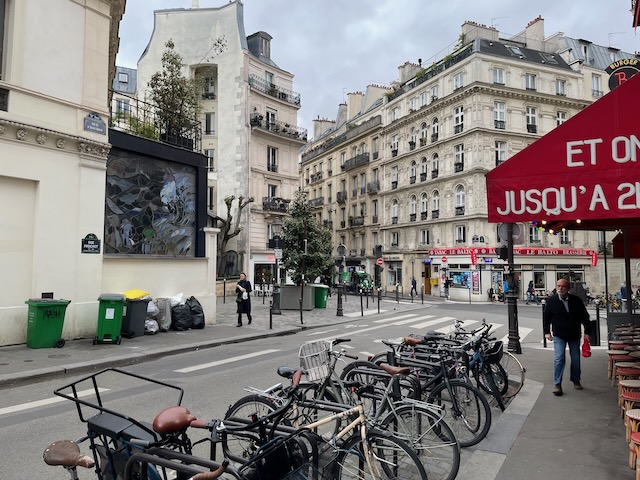
At first sight, the streets of Paris were not how I’d imagined them

Not being entirely fluent in French (not bad, but not fluent), we had some serious difficulty trying to figure out where to leave the building in order to find a ride to our hotel. We asked other travellers on the platform where the exit was, but those who did understand our questions and gesticulations all seemed to be waiting for connecting buses and didn’t know any more than we did about the layout of the station.

Several days later, when I finally had some time to try to figure out where we had gone wrong with la Gare Bercy Seine, I discovered that our challenges were not entirely due to our inadequacies in French (although our fellow-sufferer was also from Toronto, so maybe it’s a Canadian thing to expect that there be signage). On Trip Advisor I came across a review by “Oyster Boys” entitled “Flixbus Station at Bercy Seine in Paris is the Bermuda Triangle!!!!” Turns out its authors had had the same experience as we did, only in reverse: they’d been trying to leave Paris to go to Brussels when they’d encountered the mysteries of the Gare from Hell. “Finding the Flixbus station is like looking for the North Korean nuclear missile site,” they wrote. “You can’t find it. It’s almost as if they don’t want you to find it. It’s hidden underground inside a park….yes a park full of trees and some kind of playground full of graffitis…. It’s like walking into the abyss of the underworld. There’s no sign that says it’s a bus station. You just have to walk to a park with no sign to lead you to the entrance. I could see people circling around the park looking for the station.”

The only exit we could find opened into the aforementioned park. As we peered through the ongoing downpour we noticed that past the park, a couple of city blocks away, there was a street with cars on it. Although the worst of the storm had passed, we knew we were about to get very wet, but we had little choice. So off we went toward the street where we could call an Uber, dragging our suitcases through the park’s puddles as we walked.

After being tricked once by a non-Uber driver who convinced us he was an Uber driver, and then shouting at him until he returned us to the original meeting spot and let us out of his vehicle, and after finally connecting with our actual Uber driver (yes. I know. Check the license plate. We won’t forget again), we were dropped off after midnight at our small hotel – on one of those wonderful Paris streets I’d come so far to see. It was no longer raining, and the reflections of the street lights glinted on the wet stones and pavement.

However, the day was not quite over. We had to wake someone up inside the hotel in order to be let in and register. Our third-floor room, it turned out, was only a few feet larger than the double bed, but we were exhausted: we’d figure out how to manage the unpacking of the suitcases in the morning. I plugged my power bar into the wall so I could recharge my phone and my watch, and promptly plunged the entire hotel into darkness.

After Arnie went down to confess my sin, and received a small lecture from the night manager, we heard a caretaker (or most likely the manager himself) open a door just outside our room, and fiddle around with things a bit. Suddenly the lights came on. We turned them out and went to sleep.

The next morning we got up and looked around, now even more fully aware of how much time we might need to spend just to figure out how to sort our stuff so that we could get at it when we needed it, and still have enough floor space to get from the bed to the bathroom and to the doorway to the hall. But after a superb petit déjeuner in the downstairs breakfast room (it included fruit, eggs, sausages, bacon, croissants, real coffee, pain chocolat and more, and was included in the price of our room), we went to the desk to ask about something else, and the person who was then on duty said, “Hey. You guys are here for an extended stay. Wouldn’t you like a larger room?”

The next thing we knew we were in a main-floor “suite,” at no additional cost (a very small suite, but it had a very large bathroom and a hallway and a window to the patio outside and lots of room for suitcases).

And so, as it turned out, May 1 was the only truly difficult day on our entire trip. We had other moments of frustration (getting lost in the subway system, for example, which happened several times in Paris, as it had in London), but despite their reputation, every Parisian we encountered was helpful and friendly (aside from one or two who worked in booths at the Métro, see above), and no day that followed was anything like the day we went from London, England to Paris, France.

And even that one day had caused us only a few hours of grief. After that, we were in Perfect Paris, which was all that I had ever dreamed it would be, and more.