Tag Archives: Asturias

Spain 9: We Visit the Cleanest City in the World, and then the Perfect Place for Lunch: Oviedo and Luarca

The City of Oviedo, the capital of the autonomous community of Asturias, is notable for several reasons: 1) it was established in the 8th Century, and offers distinctive opportunities to see Romanesque and later medieval architecture; 2) it is the site of more than one hundred open-air statues; 3) it is considered an important stop by pilgrims travelling to Santiago de Compostela (our next destination, too) ; and 4) it may be the cleanest city on the planet.
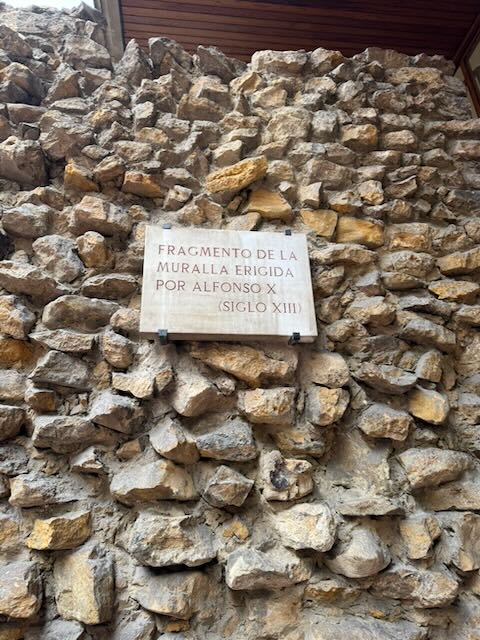
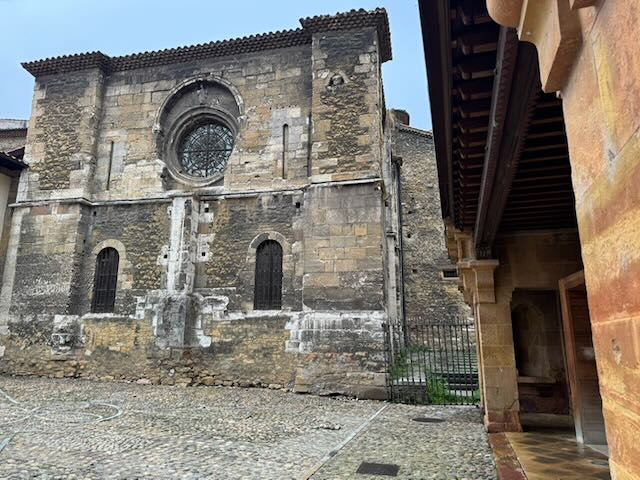
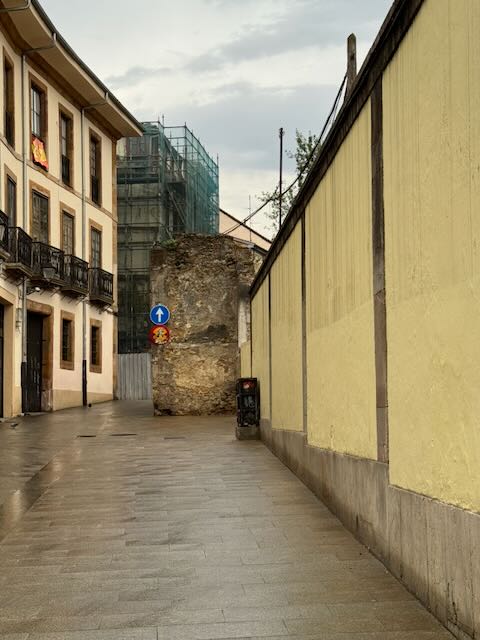
It was an intermittently rainy morning when we set out on our tour of Oviedo. Our local guide, a very interesting and enthusiasatic fellow, pointed out the Muralla Medieval de Oviedo, the largest remaining section of the city walls that were commissioned by Alfonso X in about 1260; they protected the city for centuries.
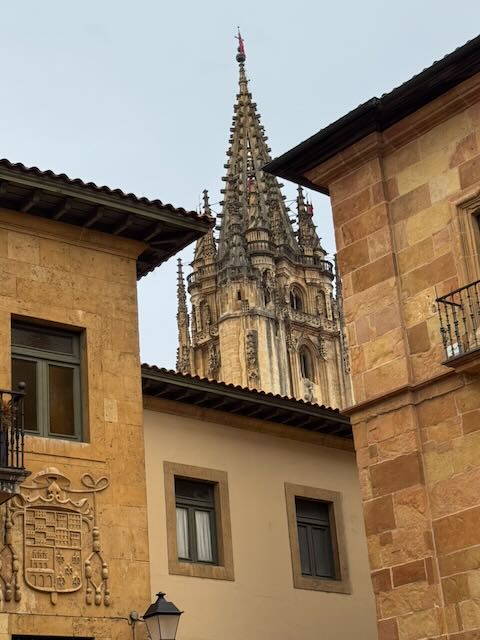
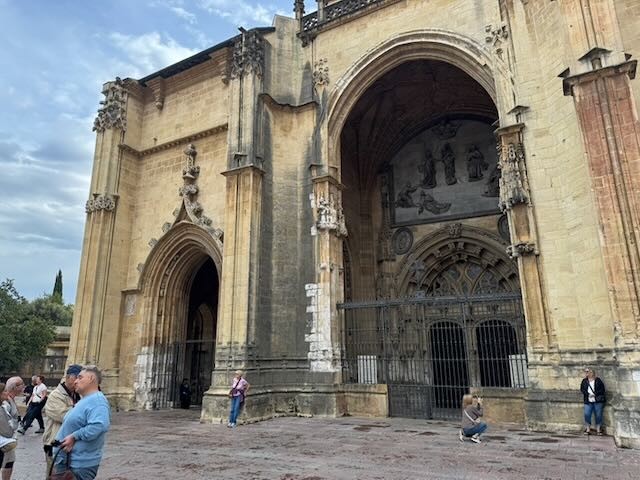
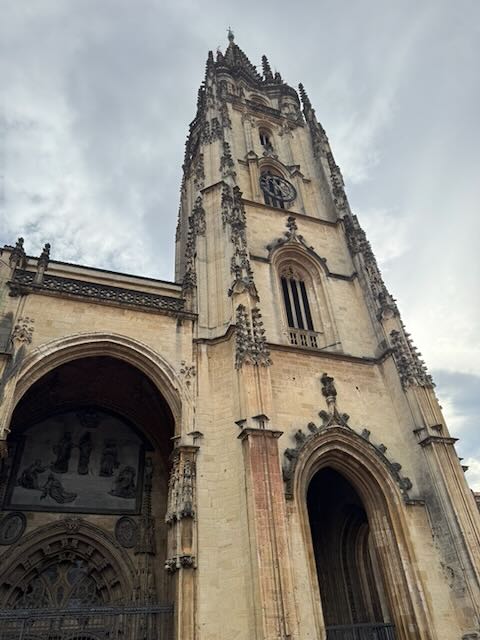
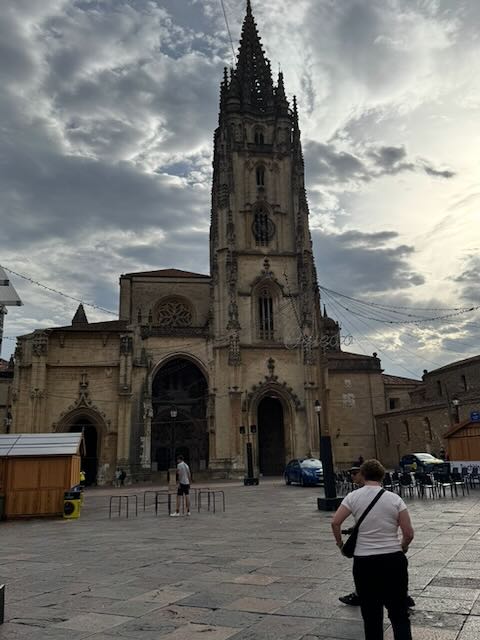
The Catedral de San Salvador (Basilica of the Holy Saviour) looms over everything in the centre of Oviedo. Within it is the Cámara Santa, a small chapel designated a UNESCO World Heritage Site, that was built in 840 CE by King Alfonso II of Asturias to house the “Shroud of Oviedo,” a bloodstained piece of cloth thought to have been wrapped around the head of Jesus Christ after he died.
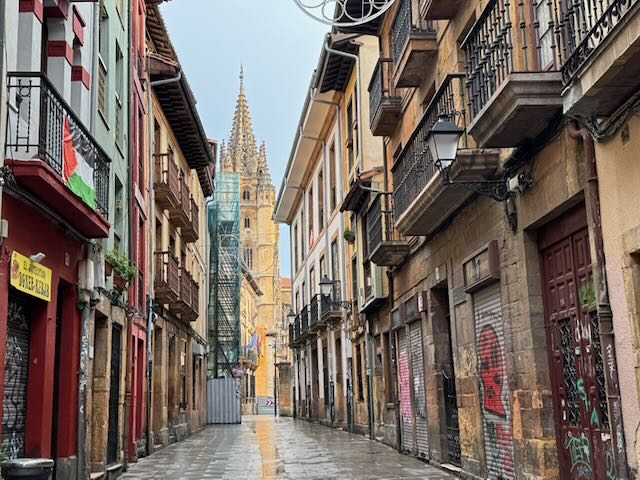
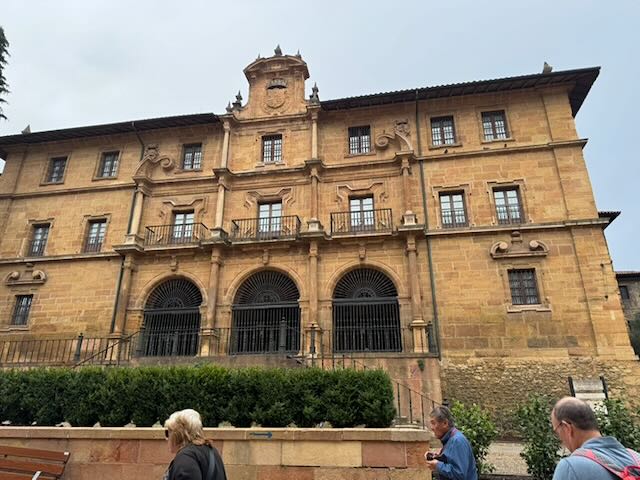
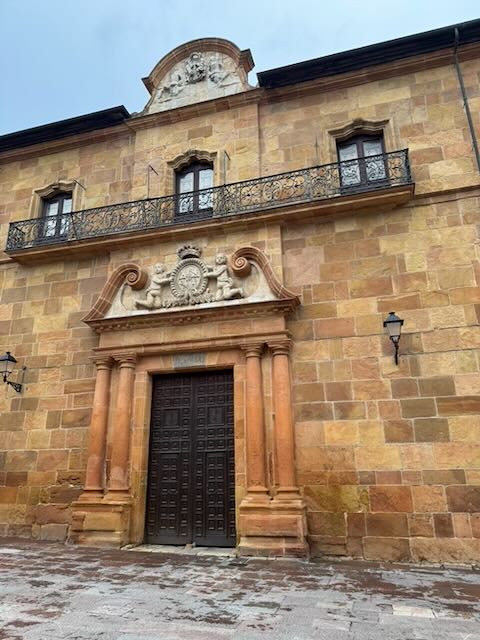
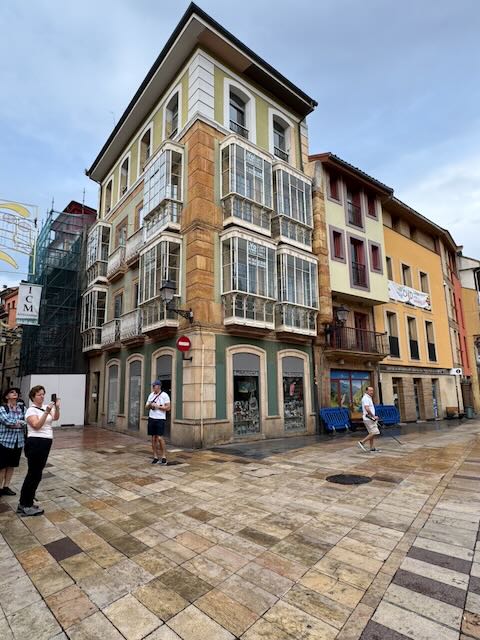
The Bishop’s Run Square (Corrada del Obispo) is a trapezoid-shaped plaza surrounded by some of the city’s most architecturally significant buildings, including the Episcopal Palace and the Gothic cloister of the cathedral (which is topped with a Baroque façade). The square’s name dates as far back as the 13th century, when it was a courtyard or “run” behind the bishop’s house. Over centuries, many buildings that frame it have been destroyed by fires, demolished, replaced and/or rebuilt – some of the renovations having taken place as recently as 1956.
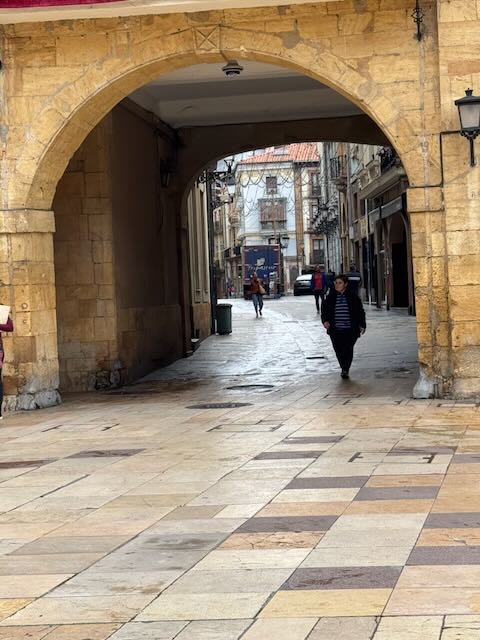
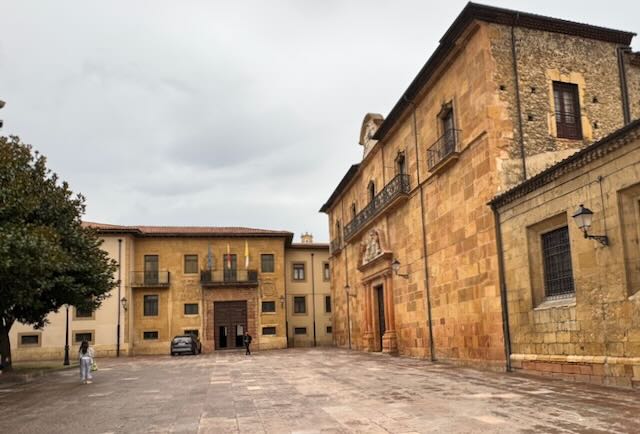
“Visitors are immediately drawn to the Alms Gate, a magnificent Baroque portal leading into the cathedral cloister. Built between 1730 and 1733 by Francisco de la Riva Ladrón de Guevara, its Tuscan columns, medallions, and heraldic shields remain a highlight of the square’s regal character. Directly opposite is the House of the Dean Payarinos, constructed in 1900 in an eclectic, neoclassical style by Juan Miguel de la Guardia.” GPSMyCity For many decades, aid was handed out to the needy at the Alms Gate (Puerta de la Limosna).
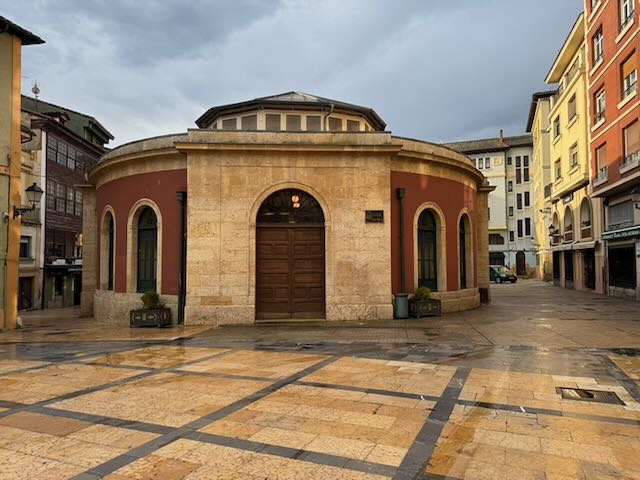
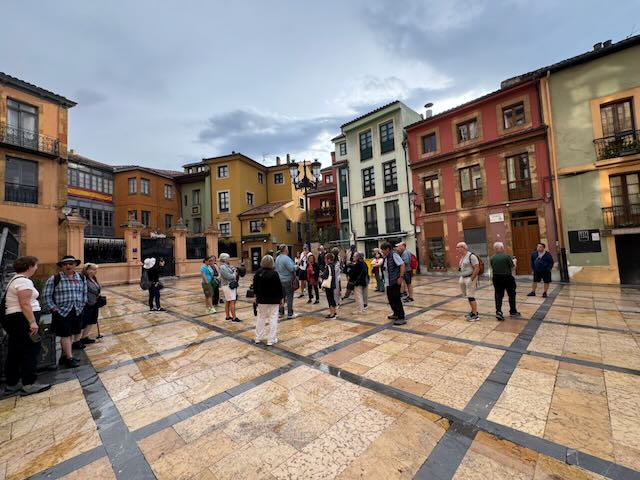
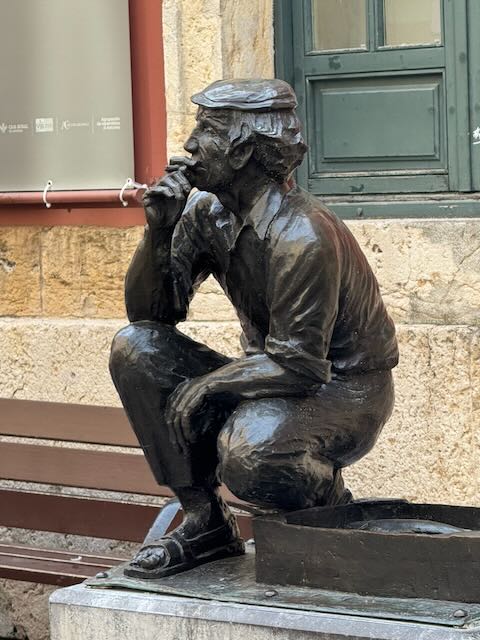
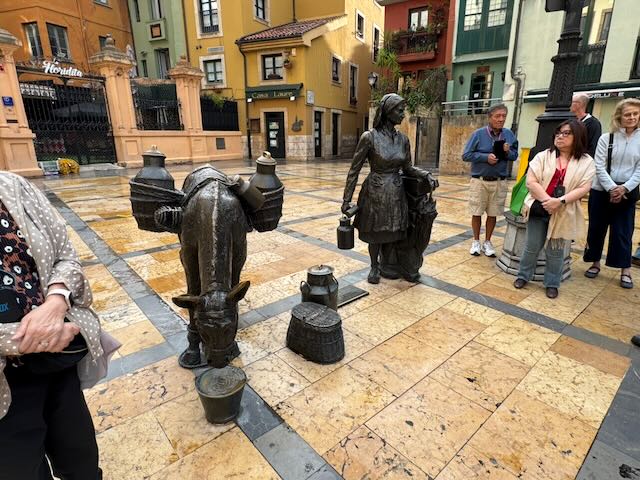
Trascollores Square is home to many of the city’s famous sculptures, including two notable bronze monuments, both created in 1996: “La Lechera” (The Milkmaid) by artist Manuel García Linares and “El Vendedor de Pescado” (Fish Seller) by José Antonio García Prieto, which pays tribute to the historical fishing trade in the square. There is also a life-sized bronze sculpture of actor, writer and director Woody Allen, who filmed part of Vicki Christina Barcelona in Oviedo.
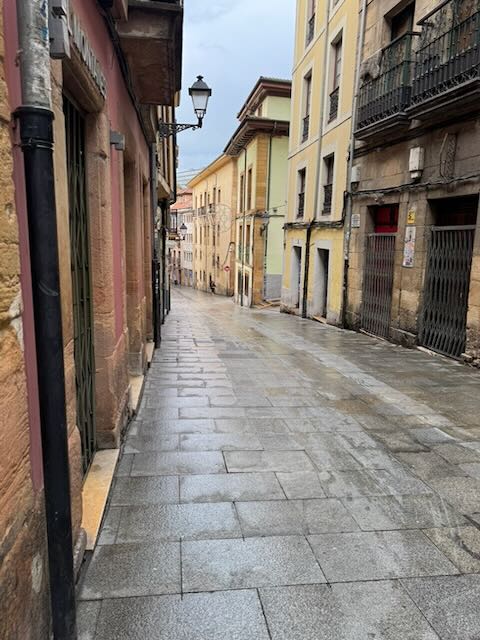
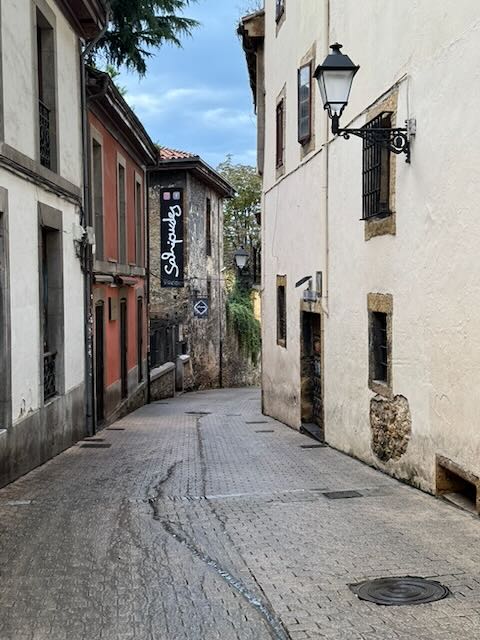
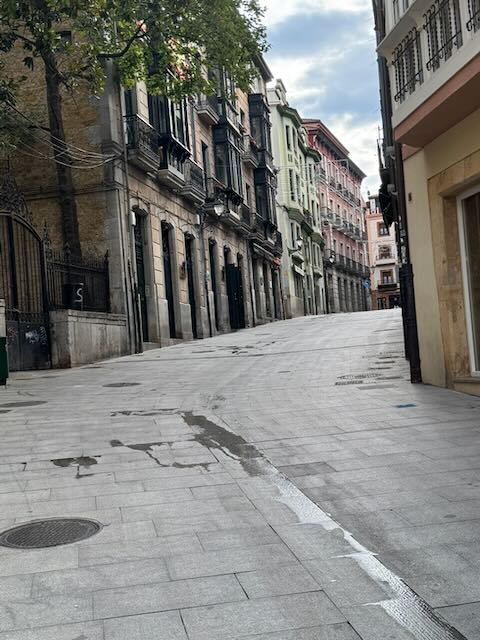
Oviedo is widely recognized as one of the cleanest cities in Spain and Europe, often winning awards for its sanitation efforts. Promotional materials tell us that the city’s reputation for cleanliness “is driven by a combination of intense municipal cleaning schedules, significant financial investment, and strong civic pride.” Indeed, the cleaning schedule means that the streets are cleaned and hosed down every day, and waste bins are often hidden to help convey the message that the people of the city make no garbage.

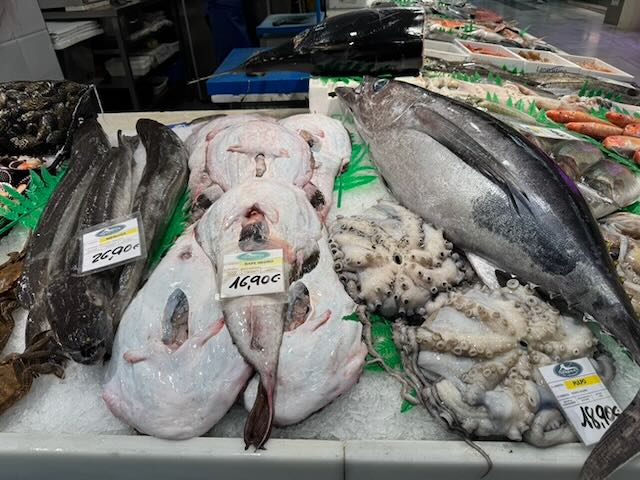
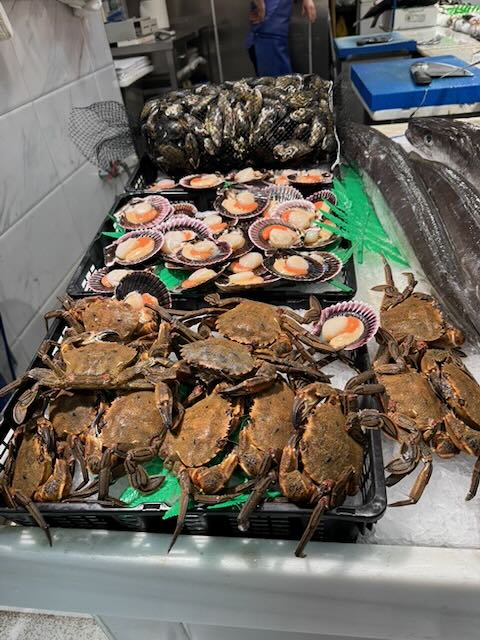
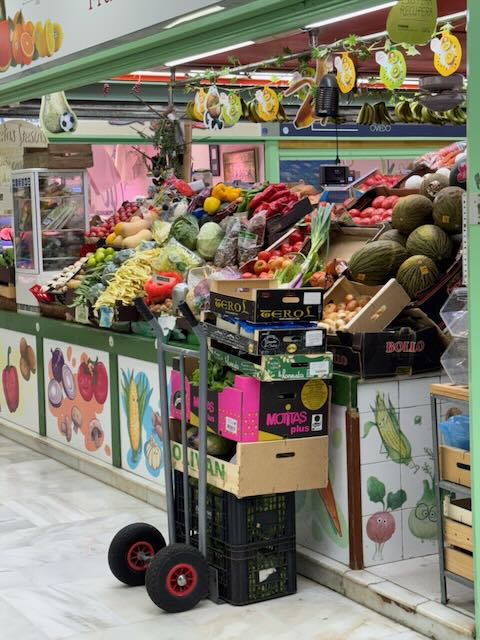
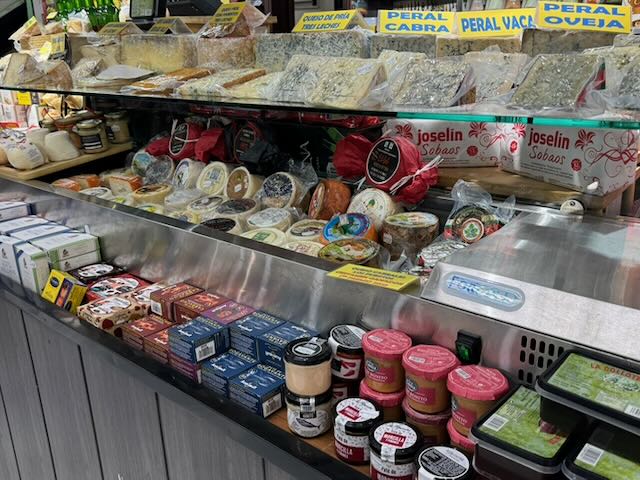
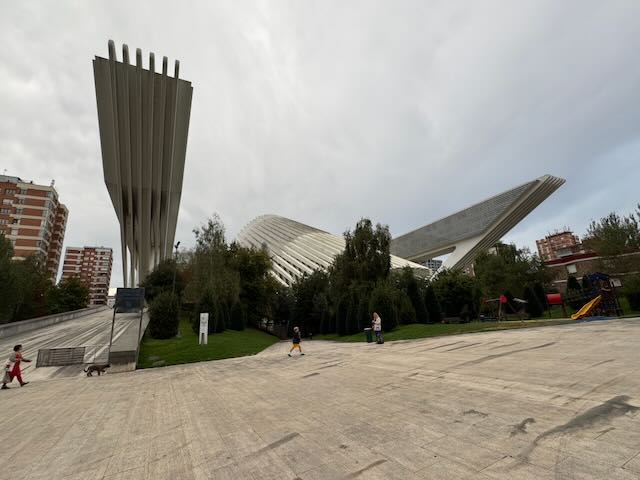
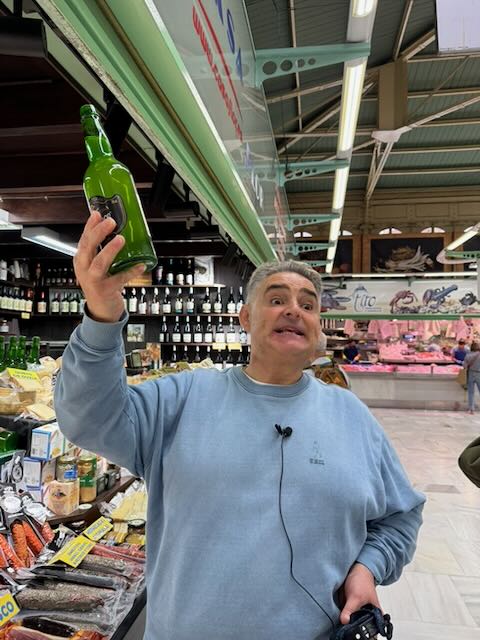
Oviedo may be known for its historic architecture, but we actually began our tour at a very modern building: the Palacio de Exposiciones y Congresos Ciudad de Oviedo (Oviedo Exhibition and Congress Centre), a distinctive facility designed by architect Santiago Calatrava, which opened in 2011. Our local tour guide also took us through the sumptuous city market.
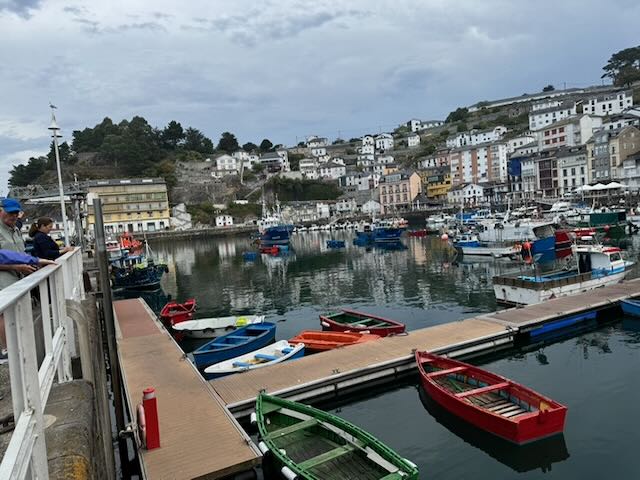
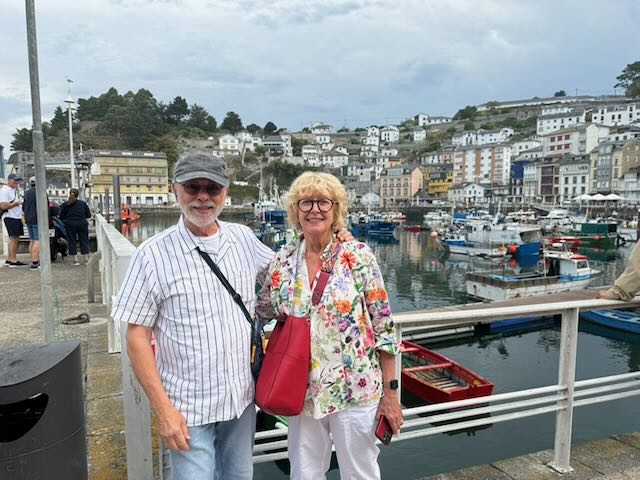
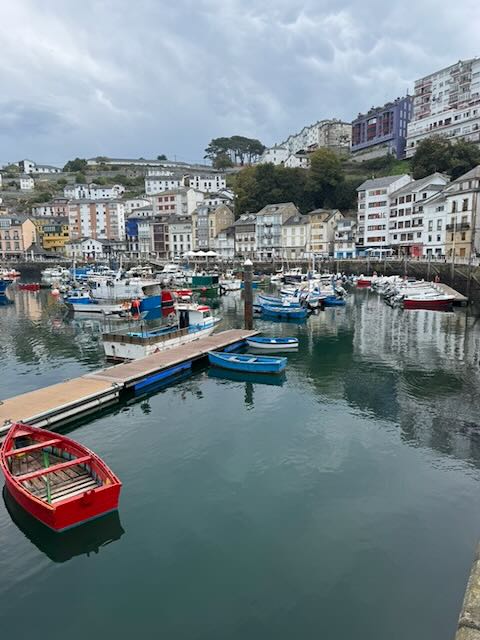
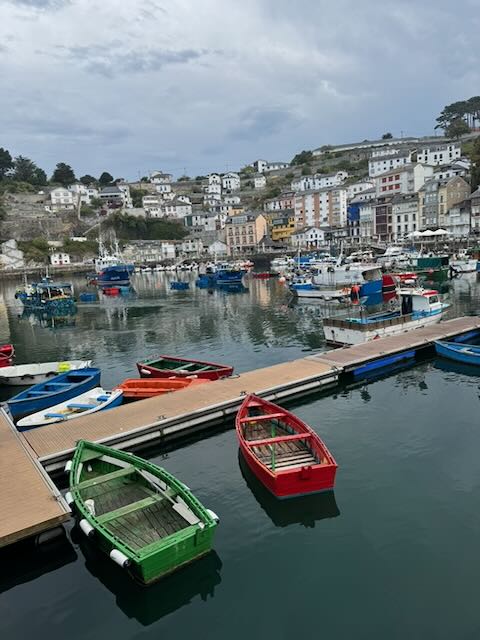
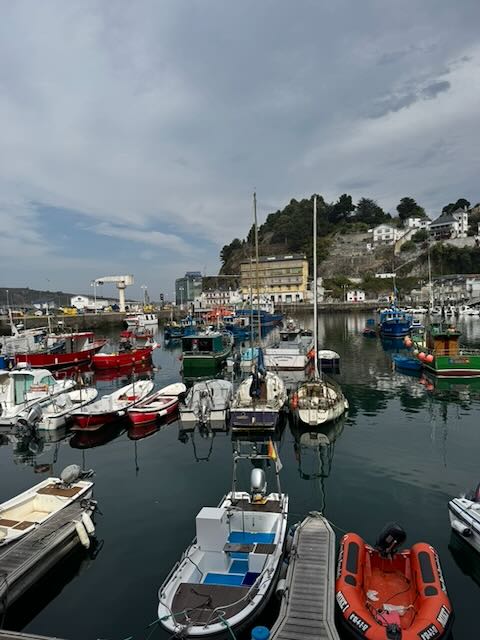
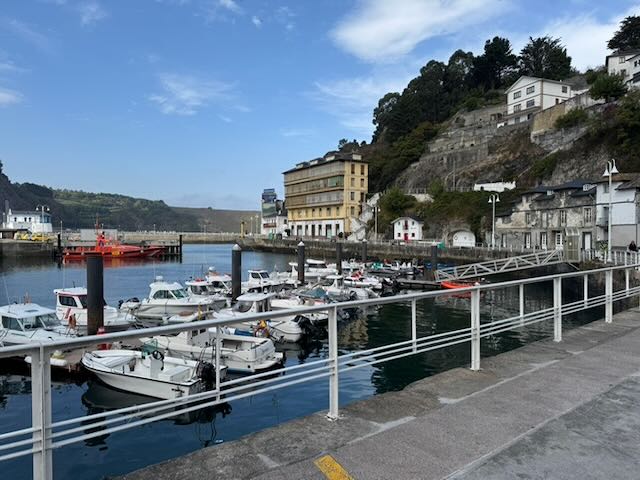
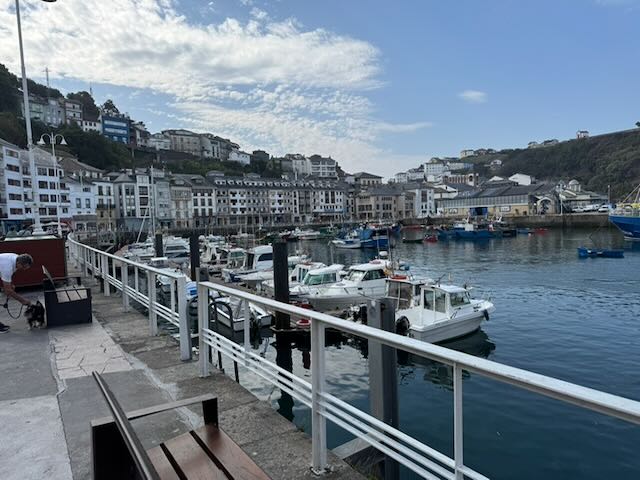
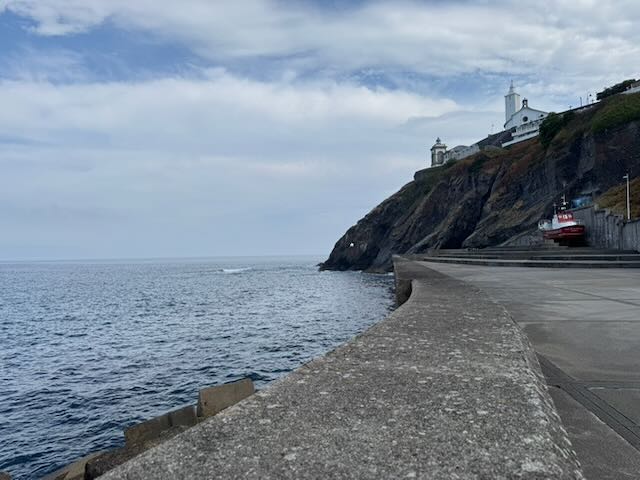
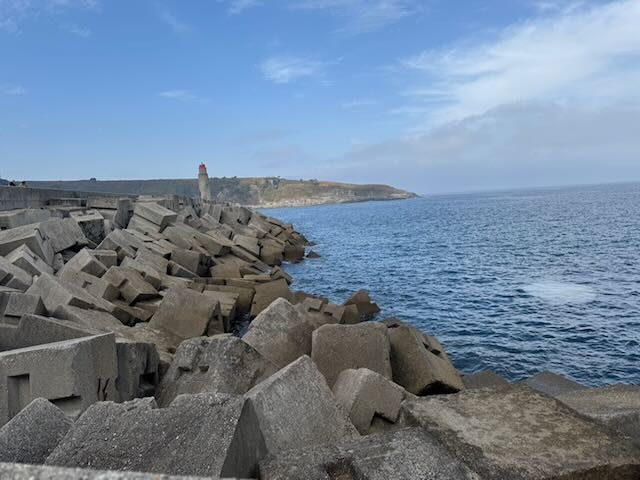
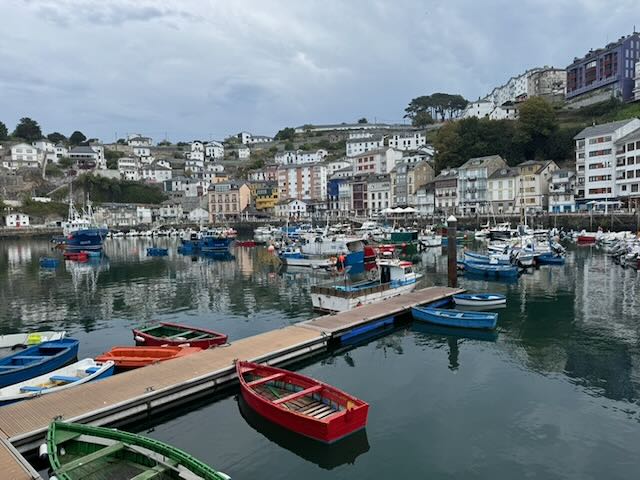
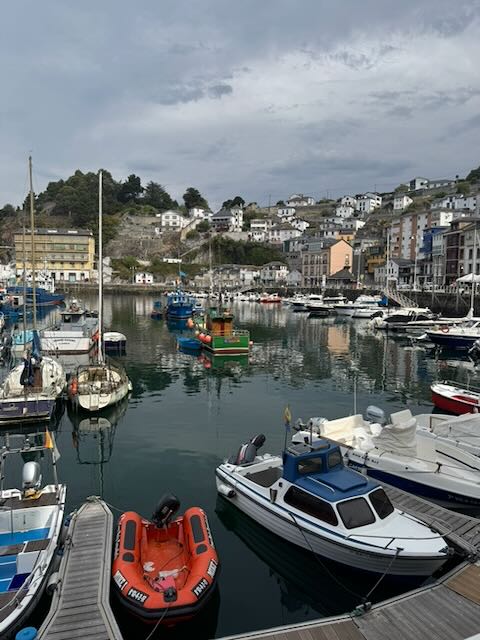
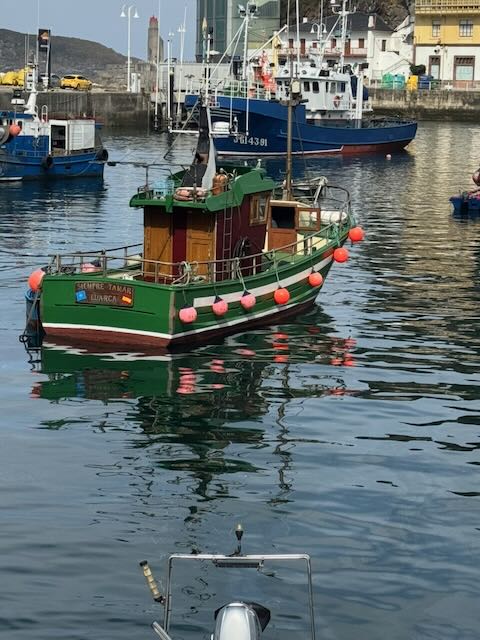
Luarca is a lovely fishing village about an hour west of Oviedo, the pleasures of which are best conveyed by photos rather than words. “Picturesque” does not even begin to describe it. We had lunch in one of the lovely restaurants along the harbourfront, then wandered around the harbour to the breakwater.
Spain 8: A Grotto and a Cider Tasting

Travel date: Thursday, September 18, 2025 (Part 2)

(A note to those who receive my posts by email: please visit the blog itself for better views of images.)

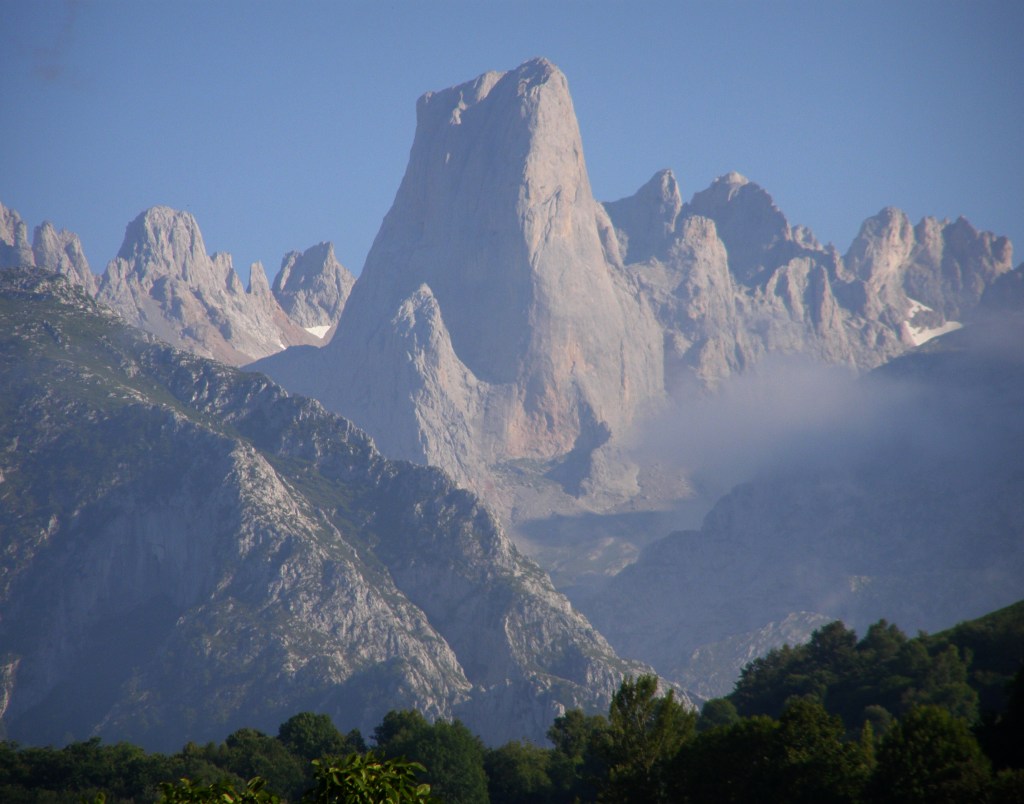
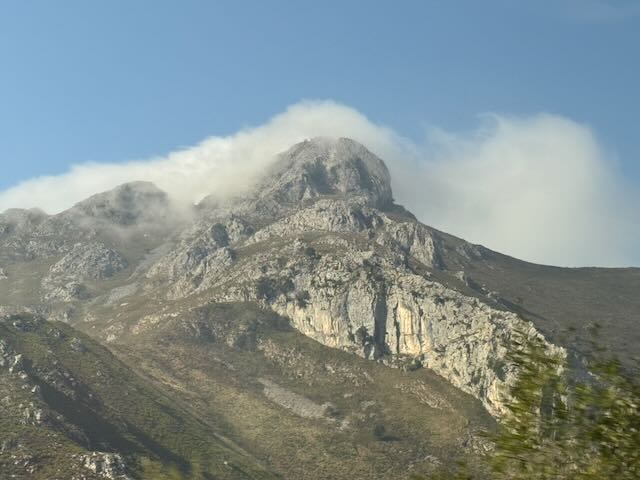
We left Bilbao at around noon on Thursday, September 18 (2025). Our destination for the day was the city of Oviedo, and the highway curved around the Bay of Biscay, which extends across the northern coast of Spain. Within an hour or so, the Picos de Europa came into view. This limestone mountain range is small by mountain-range standards – about 650 km2, and only about 40 km east to west and 12.5 km north to south. The Picos (Peaks) include three limestone massifs, the most rugged of which reaches an elevation of 2650 m. The Picos de Europa, which are mostly contained within a national park of the same name, attract thousands of hikers, kayakers and other outdoors enthusiasts every year.

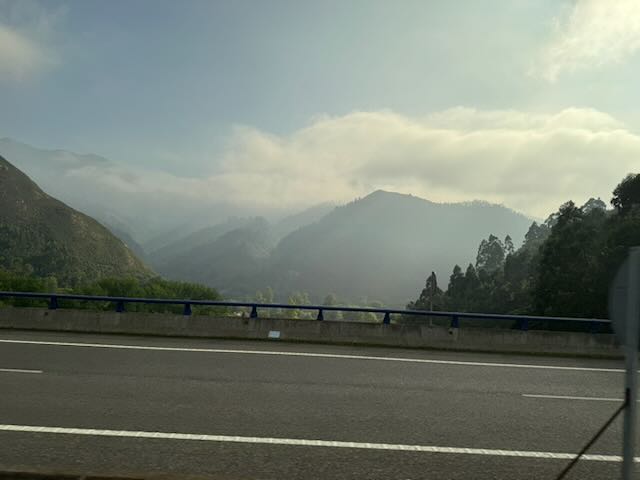
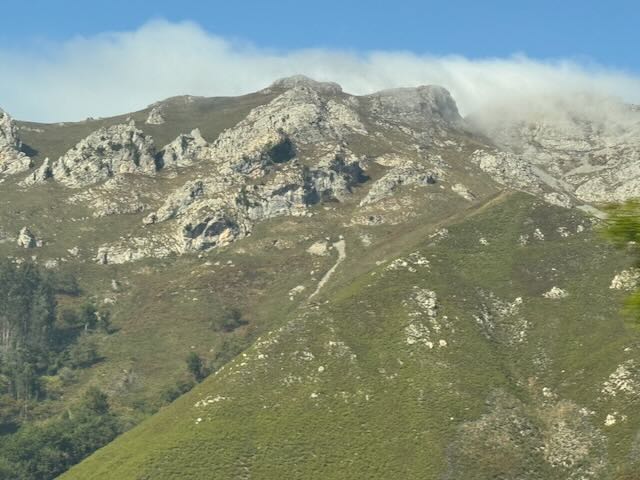
Since the highway taken by our tour bus followed the coast of the Bay and the Picos are about 20 km south of the coast, we did not have a chance to see the breathtaking vistas of the range that are described in the travel guides – high meadows where cattle graze, lakes that sparkle, and rivers that plunge down rock faces etched with gorges as they fall toward the sea.

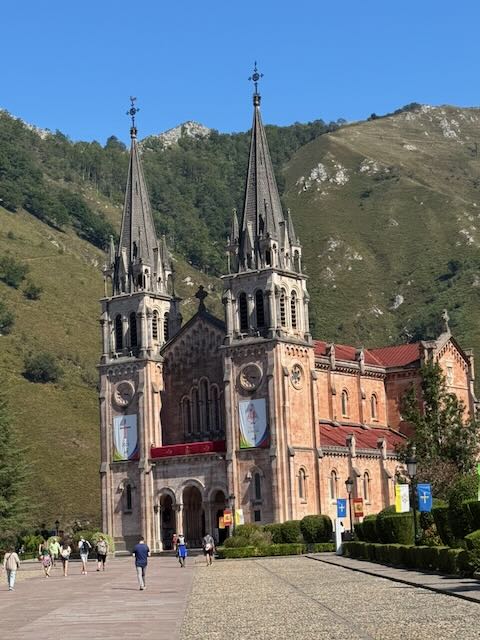
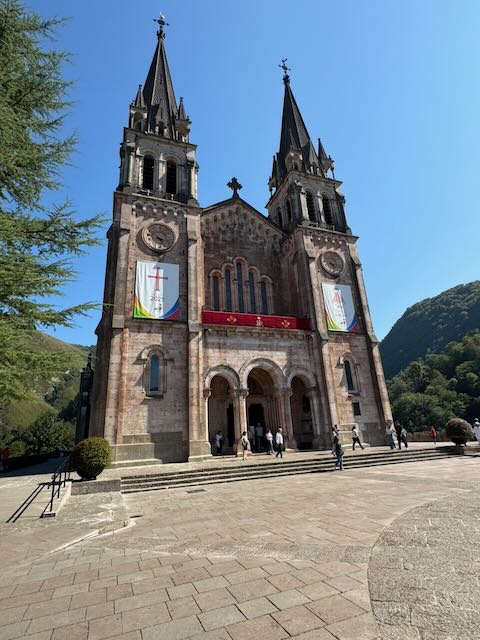
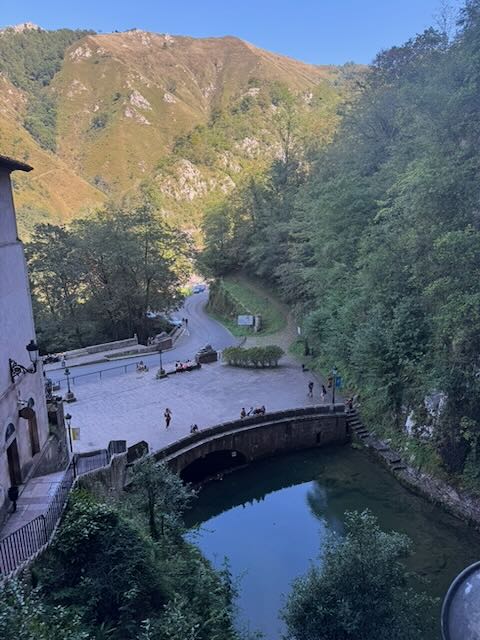
After driving past fishing villages and market towns along the coast, we reached the sanctuary of Our Lady of Covadonga, which features a beautiful cathedral and an intriguing network of caves. The “Lady” to whom the name of the site refers is the Virgin Mary, who is the patron saint of the autonomous region of Asturias where the sanctuary is located. The Virgin Mary and the Immaculate Conception are also the devotional focus of the “Marians” a fraternal order that was established in Poland in the 17th century, and now has communities around the world, including in Covadonga.

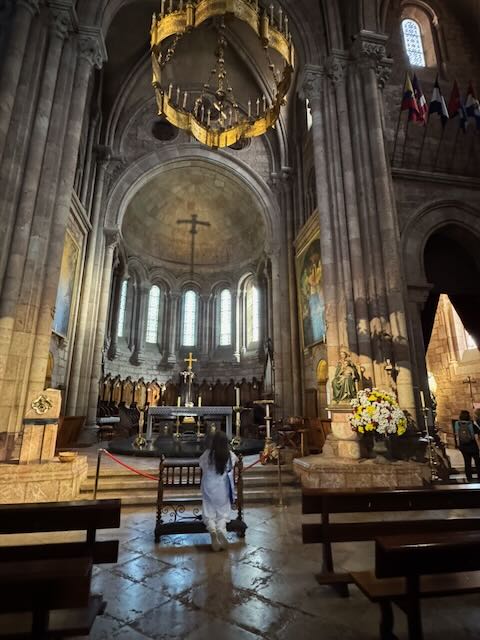
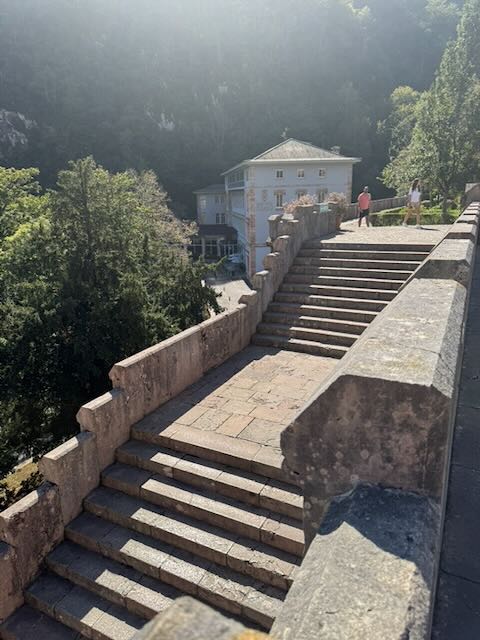
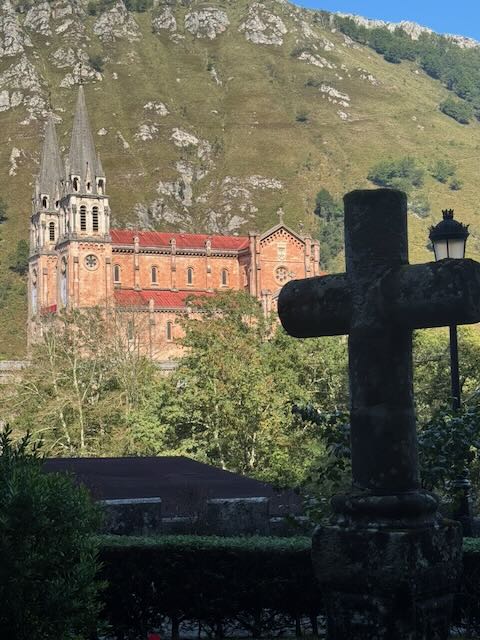
The Basílica de Santa María la Real de Covadonga was designed in the Neo-Romanesque style, and the exterior is pink limestone. It was completed and consecrated in 1901. It is lovely, and its elegance is amplified by its beautiful mountain setting.

According to legend, in 722 AD a Visigoth nobleman named Don Pelayo (Pelagio of Asturias) and a band of Christians set out to vanquish the Muslim overlords who ruled the area at the time. A massive Moorish force was sent to defeat them and the small group of rebels ended up in the caves at Covadonga. There, they found a statue of Mary that a hermit had hidden. Pelayo prayed to her, and as a result of her intercession, the arrows and stones the Moors were aiming at the small Christian group started to turn around and hit the attackers instead. As a result of this battle, Asturias became the only region of Spain that was able to remain independent of Islamic Rule.

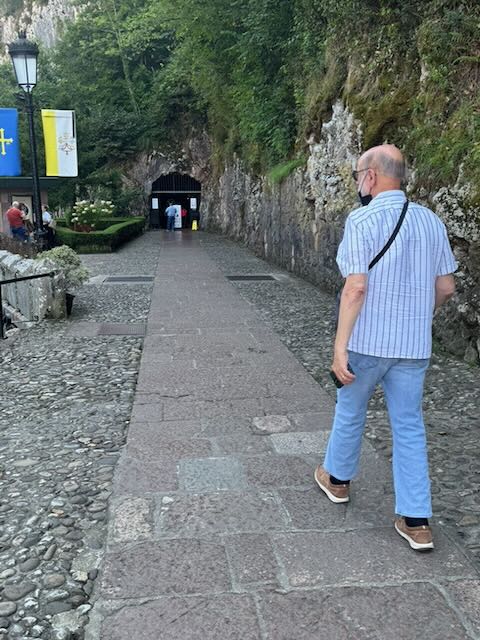
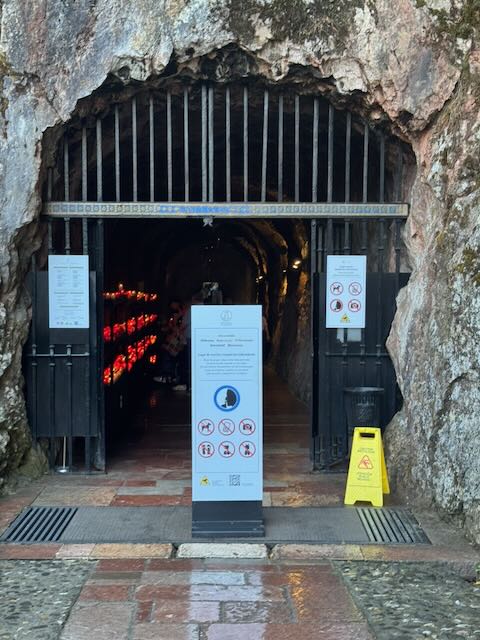
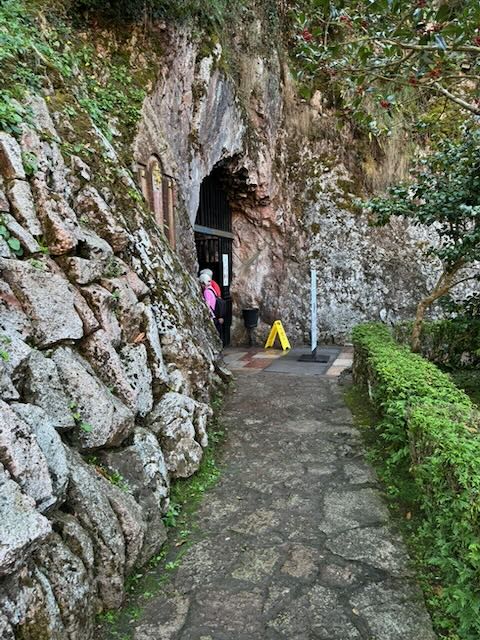
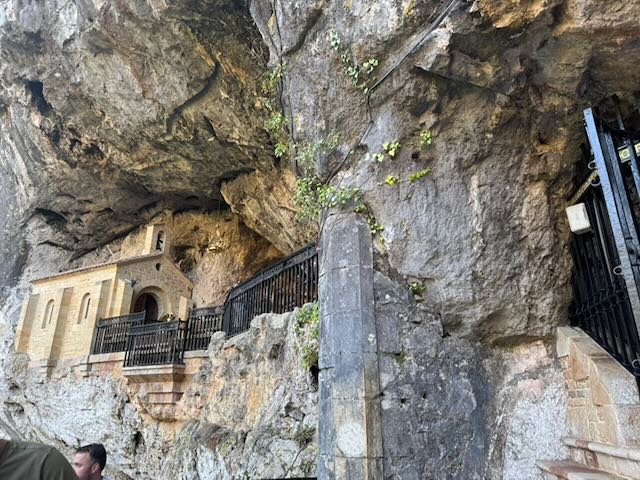
The Holy Cave is a grotto carved into the cliffside where the miracle-making statue of the Virgin Mary (which has a pet name of “La Santina”) is housed. Visitors are not permitted to take photos inside the grotto, but as you will guess from the photos I did take, it is a lovely, peaceful experience to walk past the hundreds of votive candles lining the walkway and deeper in the cool cave area that leads to the statue. Several sections are outfitted with pews and other kinds of seating to accommodate small services and individual meditations.

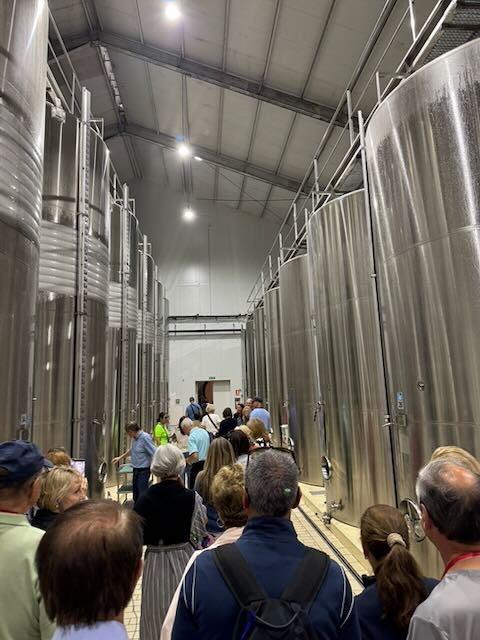
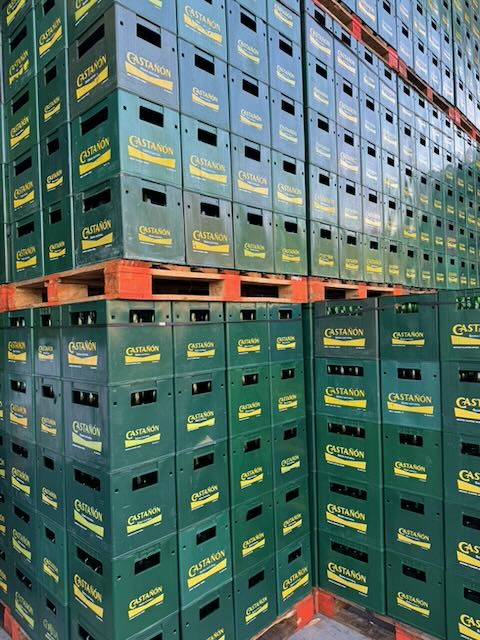
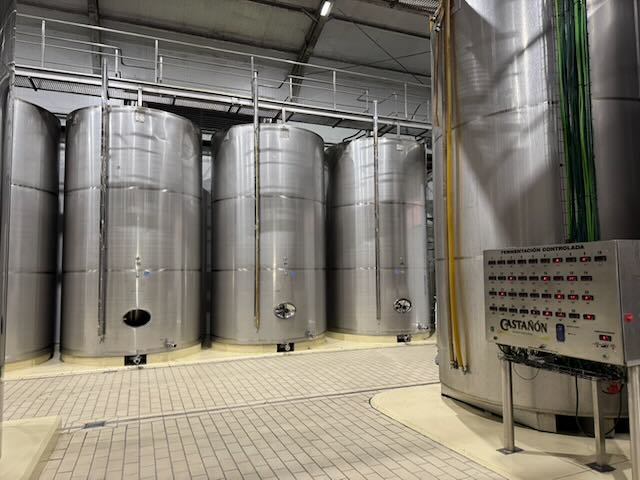
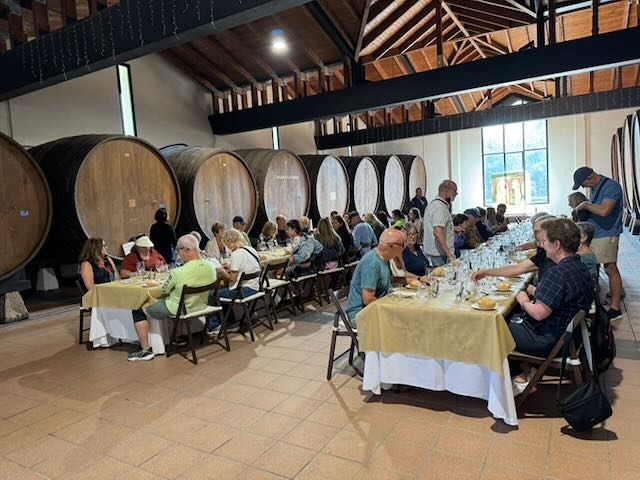
Our final stop of the day was at a cider mill owned for nine decades by the Castañón family. There, we were treated to a tour of the facility, a cider tasting, and a lovely regional-traditional meal including fava beans, chorizo and cheese.

The area’s Tourism information site humbly (?!) declares that “Asturian cider isn’t just any drink, it’s the lifeblood of a culture, the pulse of a land. Its low alcohol content and its totally natural fermentation make it a drink of conviviality, with a strong social and gastronomic spirit that has taken it to the top of the Asturianía. When it’s poured, we’re witnesses to a hypnotic choreography. And as the stream crashes against the glass, the cider comes alive, and there’s no turning back. We drink without hesitation… it’s light, effervescent, and fuels conversation, joy and laughter. From this point on, time’s marked by empty bottles.”

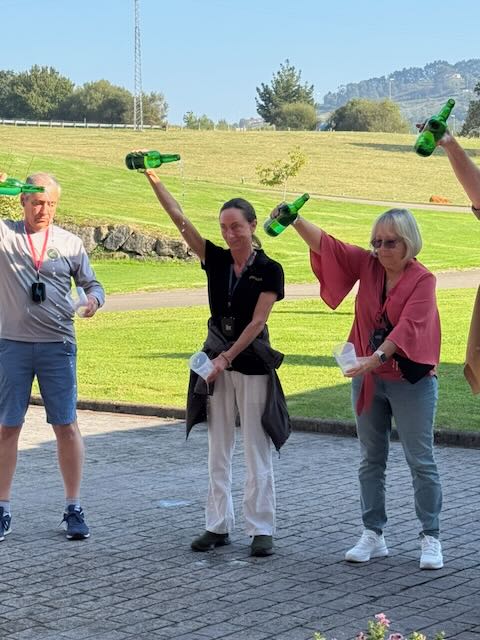
I was intrigued by what we learned and saw on our tour of the facility – from the correct way to pour cider (from a height), to the harvesting and fermentation process (which involves no added sugar) and the enormous vats of cider, from which the cider is bottled and shipped to markets all over the world. The Castoñons’ is one of the largest mills in the region.

After dinner, the bus at last took us to our hotel in Oviedo. It seemed a very long time since we had left San Sebastian headed for the Guggenheim in Bilbao, but it had only been twelve hours!