Travel date: Thursday, September 18, 2025 (Part 2)
(A note to those who receive my posts by email: please visit the blog itself for better views of images.)
Picos de Europa
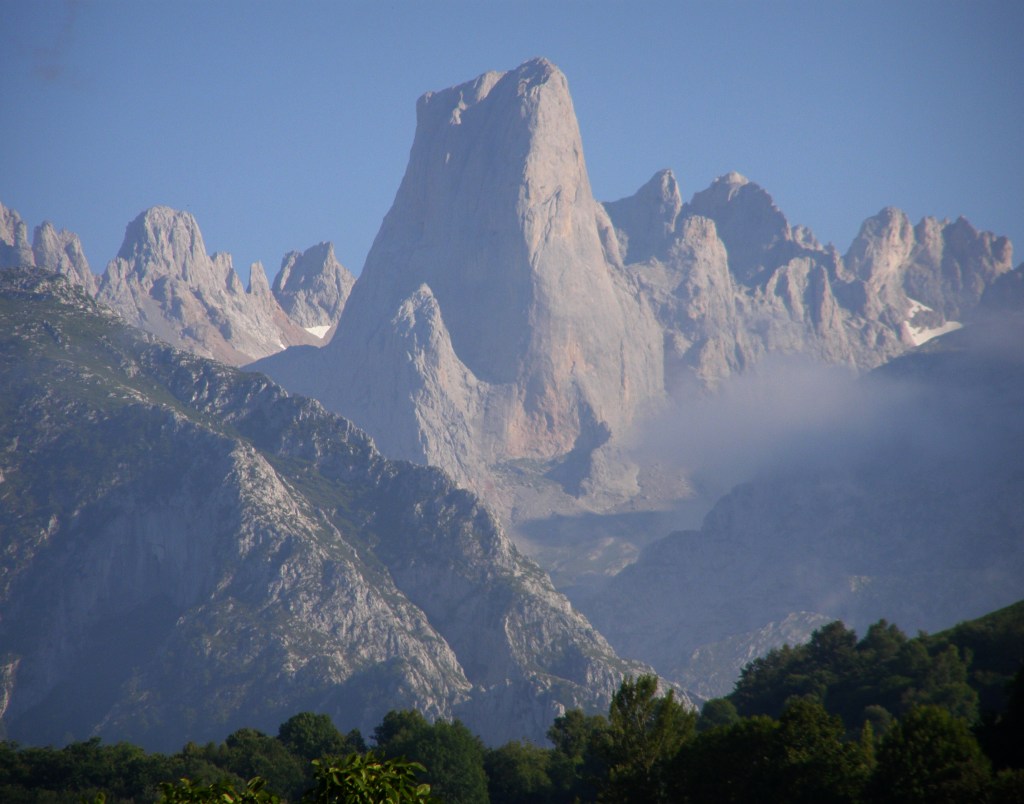
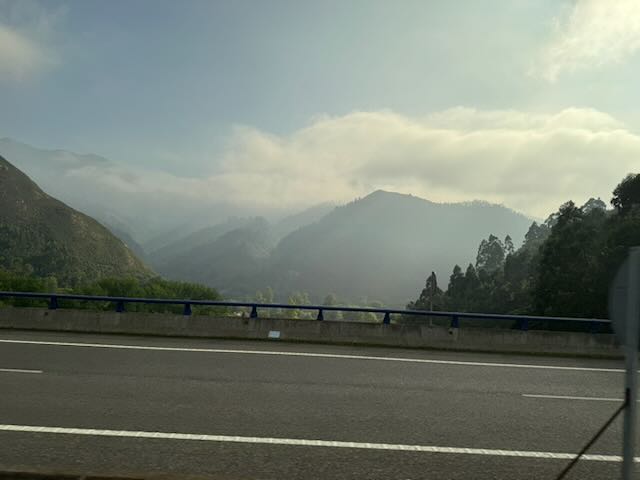
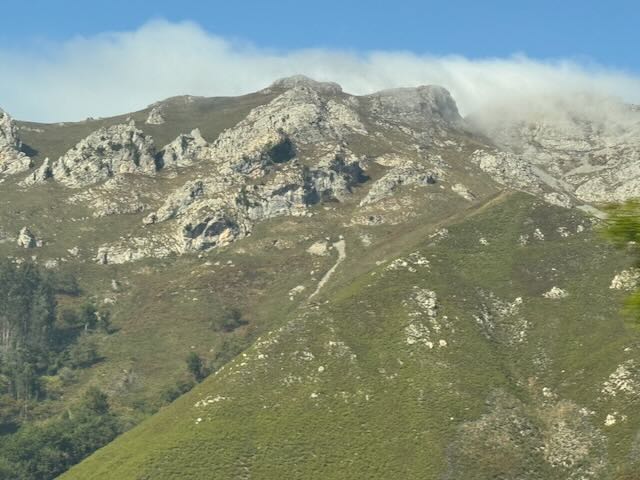
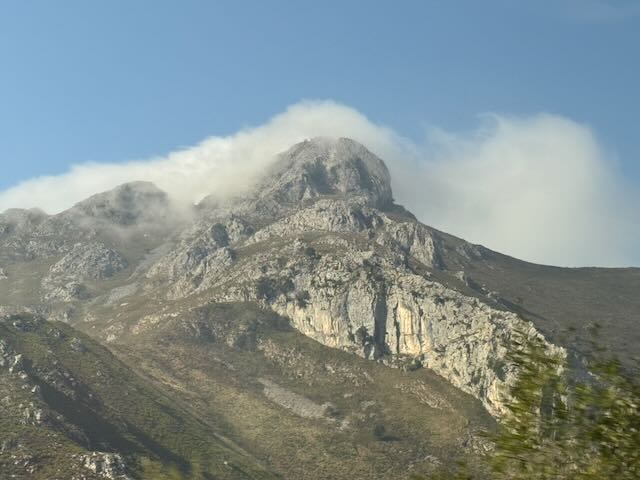
We left Bilbao at around noon on Thursday, September 18 (2025). Our destination for the day was the city of Oviedo, and the highway curved around the Bay of Biscay, which extends across the northern coast of Spain. Within an hour or so, the Picos de Europa came into view. This limestone mountain range is small by mountain-range standards – about 650 km2, and only about 40 km east to west and 12.5 km north to south. The Picos (Peaks) include three limestone massifs, the most rugged of which reaches an elevation of 2650 m. The Picos de Europa, which are mostly contained within a national park of the same name, attract thousands of hikers, kayakers and other outdoors enthusiasts every year.
Since the highway taken by our tour bus followed the coast of the Bay and the Picos are about 20 km south of the coast, we did not have a chance to see the breathtaking vistas of the range that are described in the travel guides – high meadows where cattle graze, lakes that sparkle, and rivers that plunge down rock faces etched with gorges as they fall toward the sea.
A Grotto with a History
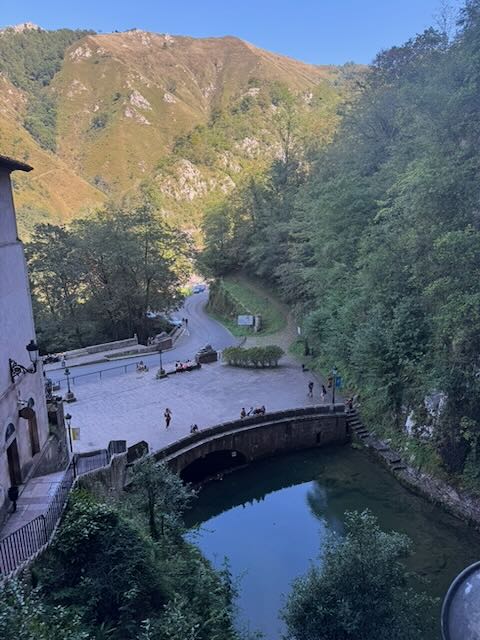
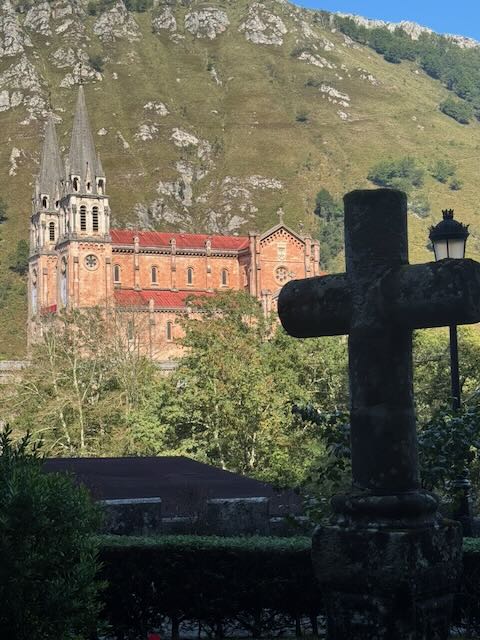
After driving past fishing villages and market towns along the coast, we reached the sanctuary of Our Lady of Covadonga, which features a beautiful cathedral and an intriguing network of caves. The “Lady” to whom the name of the site refers is the Virgin Mary, who is the patron saint of the autonomous region of Asturias where the sanctuary is located. The Virgin Mary and the Immaculate Conception are also the devotional focus of the “Marians” a fraternal order that was established in Poland in the 17th century, and now has communities around the world, including in Covadonga.
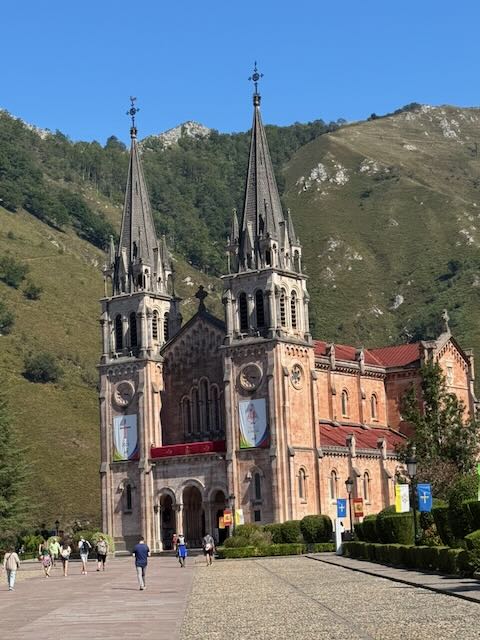
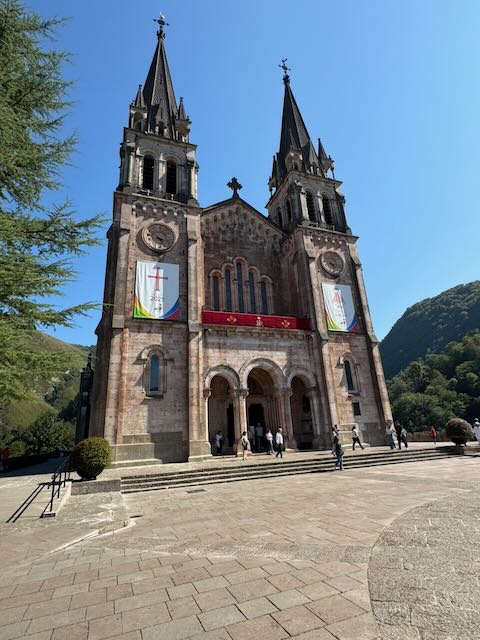
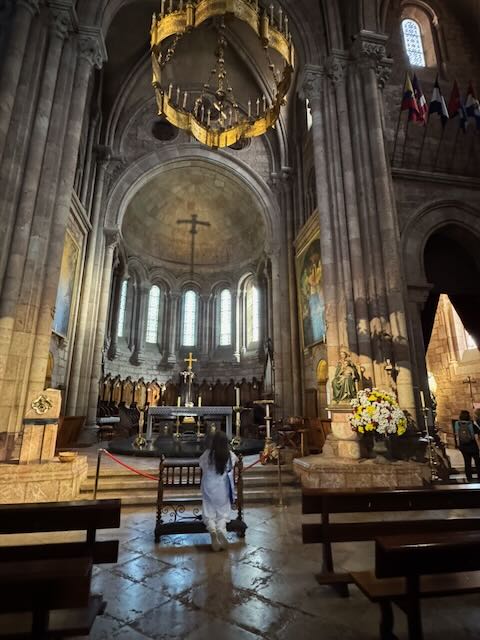
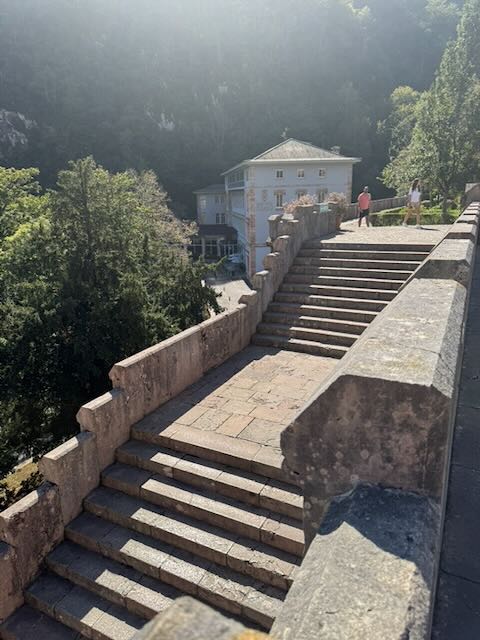
The Basílica de Santa María la Real de Covadonga was designed in the Neo-Romanesque style, and the exterior is pink limestone. It was completed and consecrated in 1901. It is lovely, and its elegance is amplified by its beautiful mountain setting.
According to legend, in 722 AD a Visigoth nobleman named Don Pelayo (Pelagio of Asturias) and a band of Christians set out to vanquish the Muslim overlords who ruled the area at the time. A massive Moorish force was sent to defeat them and the small group of rebels ended up in the caves at Covadonga. There, they found a statue of Mary that a hermit had hidden. Pelayo prayed to her, and as a result of her intercession, the arrows and stones the Moors were aiming at the small Christian group started to turn around and hit the attackers instead. As a result of this battle, Asturias became the only region of Spain that was able to remain independent of Islamic Rule.
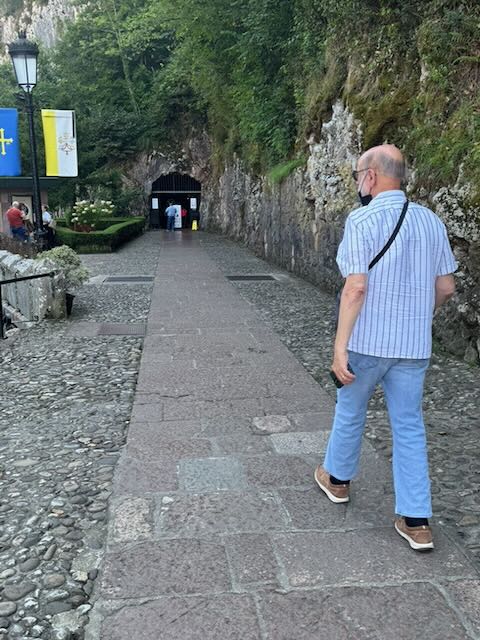
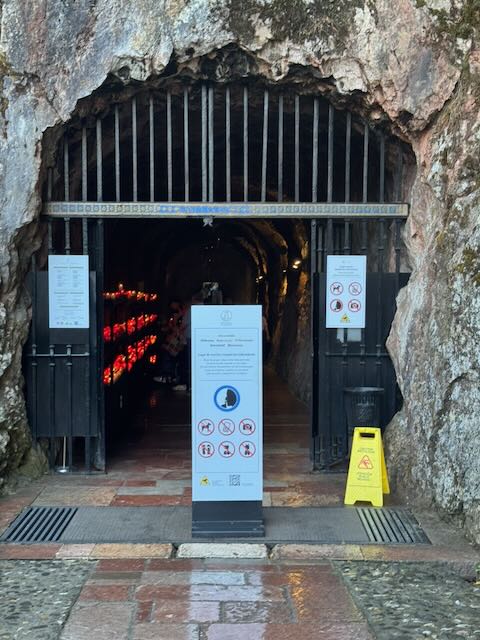
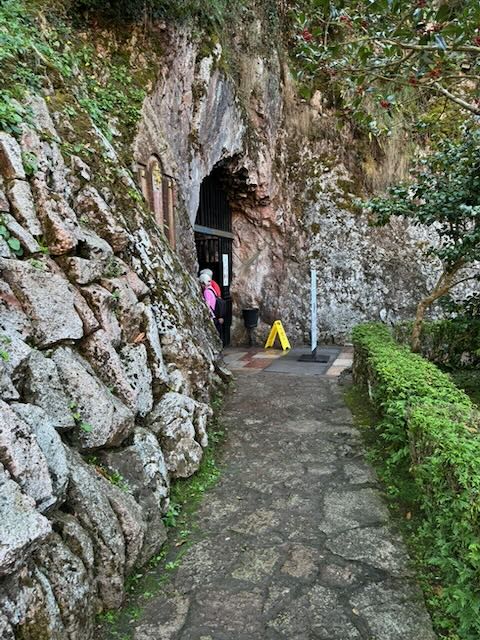
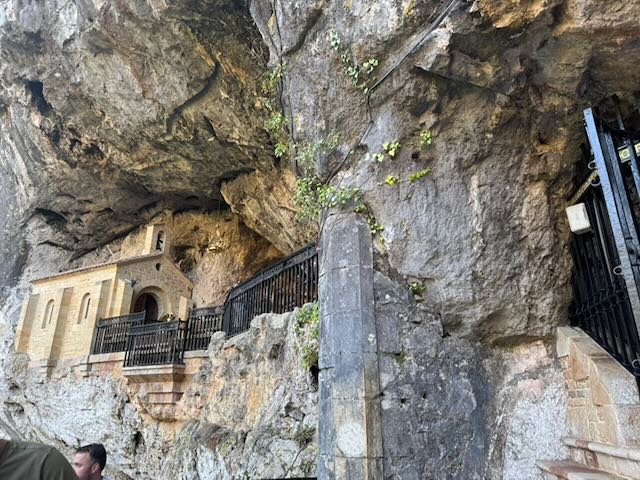
The Holy Cave is a grotto carved into the cliffside where the miracle-making statue of the Virgin Mary (which has a pet name of “La Santina”) is housed. Visitors are not permitted to take photos inside the grotto, but as you will guess from the photos I did take, it is a lovely, peaceful experience to walk past the hundreds of votive candles lining the walkway and deeper in the cool cave area that leads to the statue. Several sections are outfitted with pews and other kinds of seating to accommodate small services and individual meditations.
A Cider Mill
Our final stop of the day was at a cider mill owned for nine decades by the Castañón family. There, we were treated to a tour of the facility, a cider tasting, and a lovely regional-traditional meal including fava beans, chorizo and cheese.
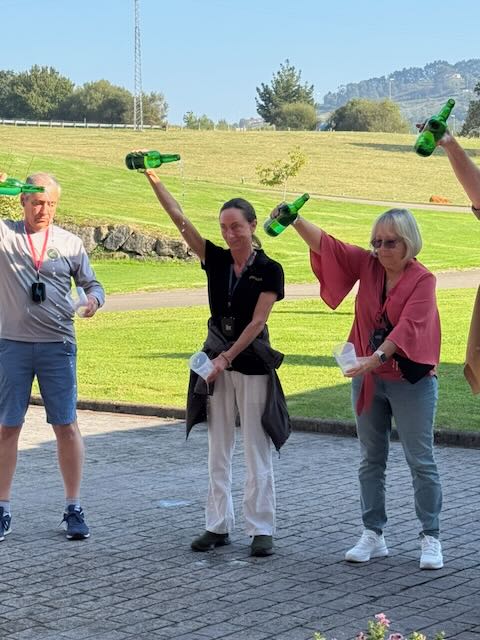
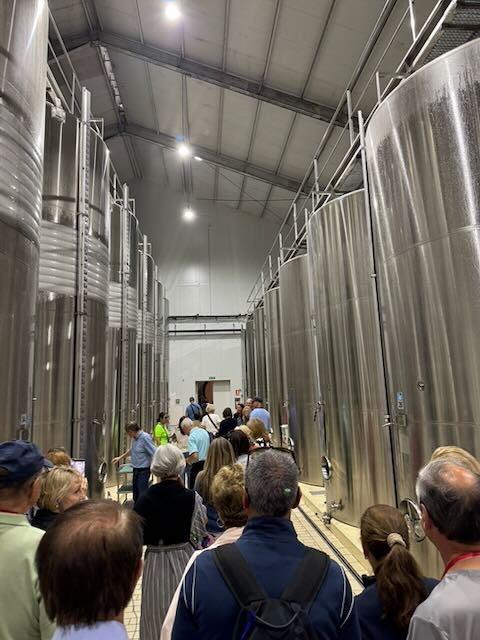
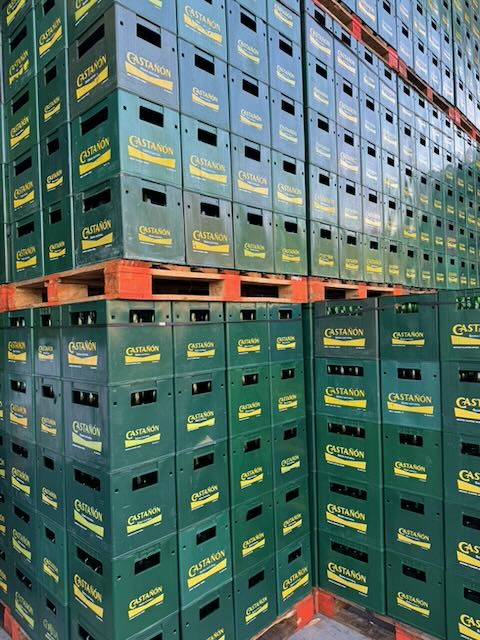
The area’s Tourism information site humbly (?!) declares that “Asturian cider isn’t just any drink, it’s the lifeblood of a culture, the pulse of a land. Its low alcohol content and its totally natural fermentation make it a drink of conviviality, with a strong social and gastronomic spirit that has taken it to the top of the Asturianía. When it’s poured, we’re witnesses to a hypnotic choreography. And as the stream crashes against the glass, the cider comes alive, and there’s no turning back. We drink without hesitation… it’s light, effervescent, and fuels conversation, joy and laughter. From this point on, time’s marked by empty bottles.”
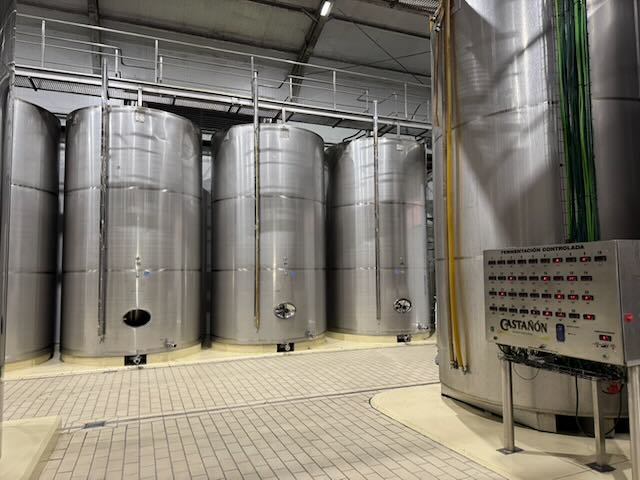
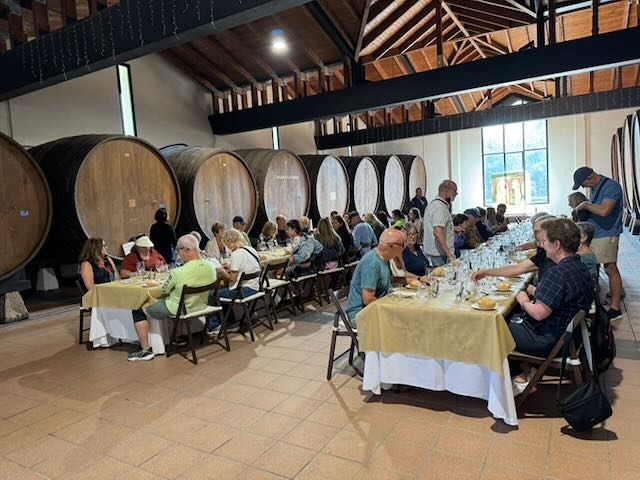
I was intrigued by what we learned and saw on our tour of the facility – from the correct way to pour cider (from a height), to the harvesting and fermentation process (which involves no added sugar) and the enormous vats of cider, from which the cider is bottled and shipped to markets all over the world. The Castoñons’ is one of the largest mills in the region.
After dinner, the bus at last took us to our hotel in Oviedo. It seemed a very long time since we had left San Sebastian headed for the Guggenheim in Bilbao, but it had only been twelve hours!
 I'm All Write
