
Travel Date: Wednesday, May 1, 2024
It costs about £30 (C$50) and takes approximately 8.5 hours to get from London to Paris on a bus. (This includes the cost of the ferry the bus drives onto in order to cross the English Channel). It costs about £125 (C$221.25) to travel from London to Paris through the “Chunnel” on a train. It costs about £80 (C$140) to fly from London to Paris.
Partly because of the cost, partly because we had no deadlines, and partly because I wanted to see the English Channel as we crossed it, we took the bus.
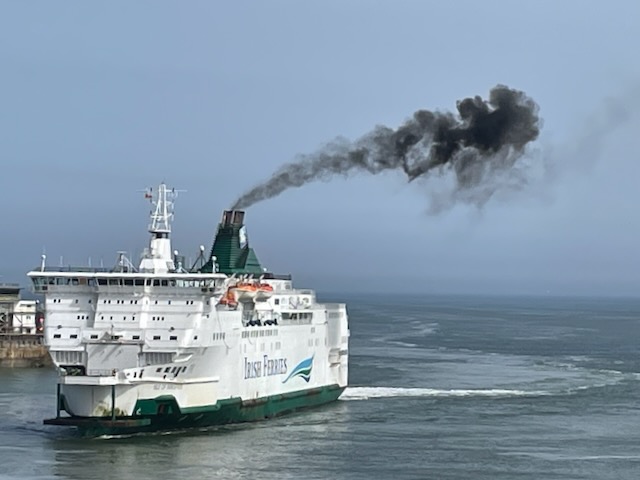
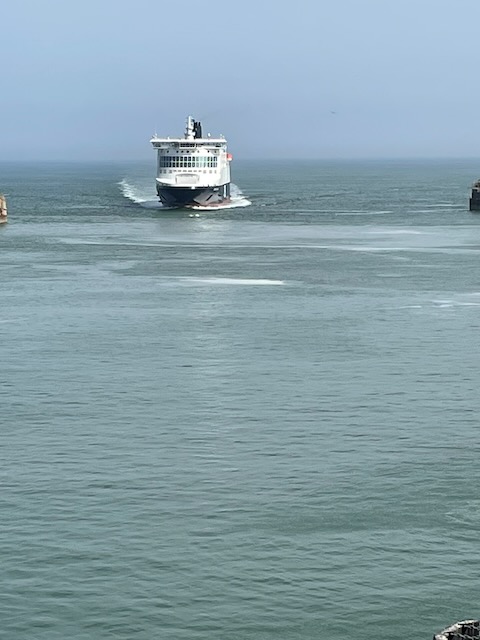
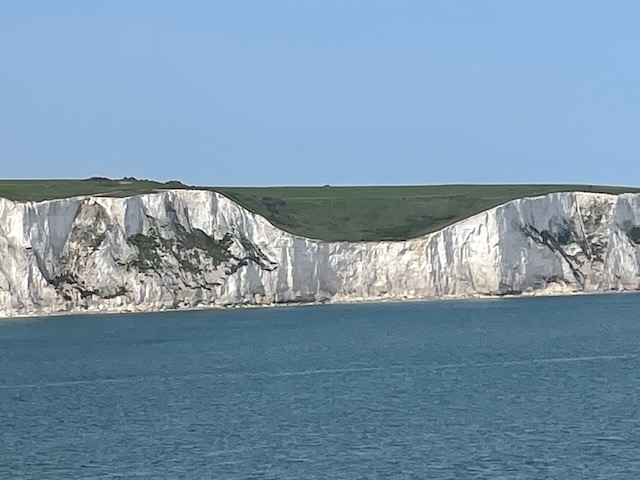
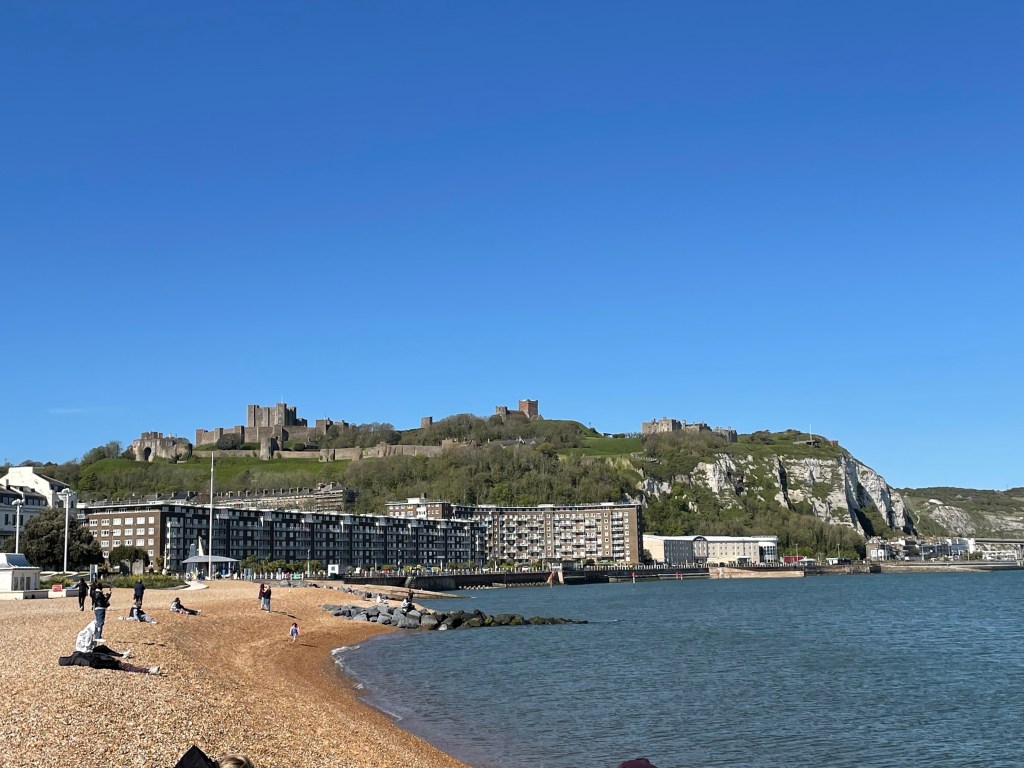
We had been warned that a rough crossing could be a nauseating experience or worse, but we were fortunate to make our trip to France on a wonderfully calm day. This was the second time we’d been to Dover, but we had much better views of its white cliffs this time, particularly after the ferry left the dock.


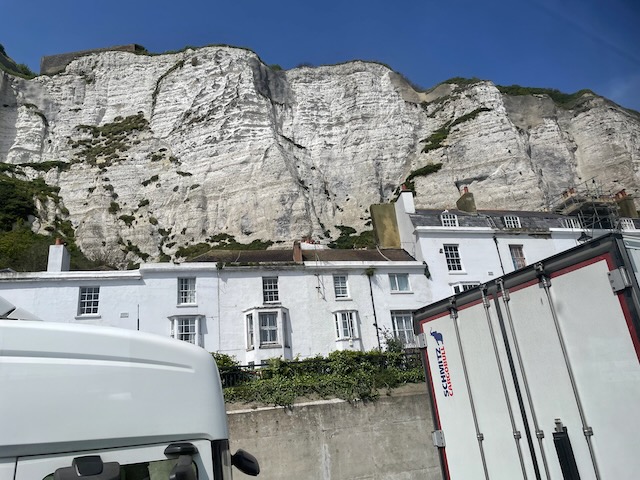

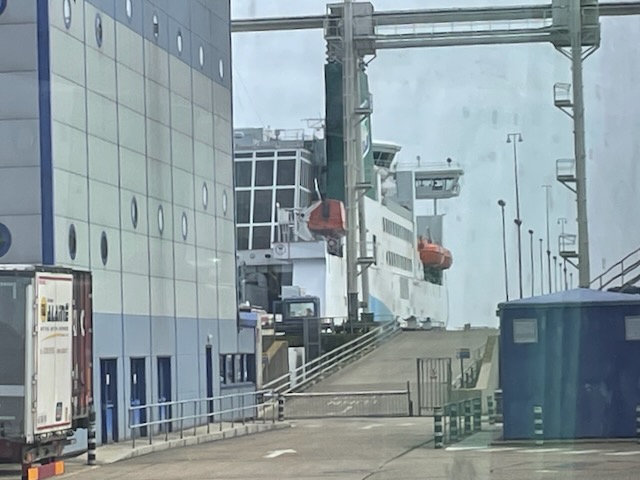
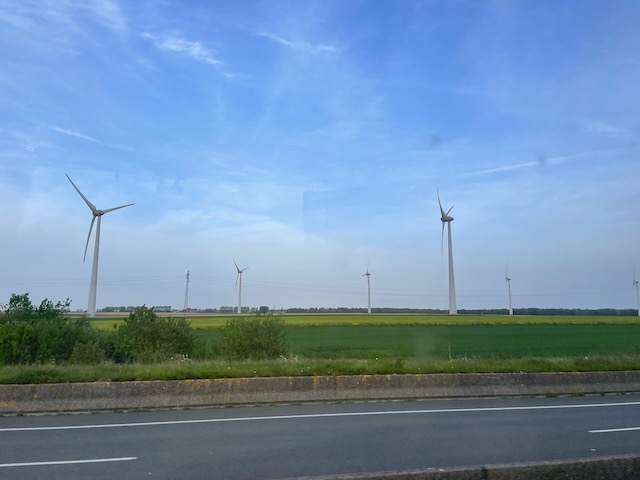
The actual crossing by ferry takes about 2.5 hours, and the trip was calm and picturesque. We arrived in Calais to find le temps there as pleasant as the weather had been in England. As we drove between Calais and Paris, I tried to get my brain around the fact that I was actually in France for the first time in my life. Since I was a young teenager, I’ve been studying French, reading books by French authors, watching French films, learning some French history, and envying absolutely everyone who got to be in France while I did not, so perhaps it is not difficult to understand why I found the experience almost unreal. As we travelled through the French countryside (where , by the way, I noticed happily – as I had in Germany a year or two before – that there are a lot of wind farms), I peered eagerly toward the horizon for my first sight of Paris.




The Storm
But le temps had other ideas. The skies grew dark with clouds as the night fell, and as we reached Paris, a monstrous storm let loose. The torrent of hail and rain was intensified by near-constant flashes of lighting and crashing thunder. The bus, being largely a metal object, intensified the sound of the hailstones clattering down upon us, and I felt as though we were in a tin bucket – fortunately one with a lid on it, and windows.
I’m including a couple of the videos I took after the bus had pulled over to the side of the road, to wait for the worst to pass.
The Station
All of this meteorological excitement meant that we arrived at Paris’s Bercy Seine bus station a couple of hours later than scheduled, after ten at night. Delayed buses and storms be damned, all the service staff were heading home on time. Loiterers were being shooed out of the waiting room and asked to stand on the platforms until their connecting buses arrived. The lights in the office areas were extinguished, and doors and windows that might provide access to any useful information were securely locked.
Not being entirely fluent in French (not bad, but not fluent), we had some serious difficulty trying to figure out where to leave the building in order to find a ride to our hotel. We asked other travellers on the platform where the exit was, but those who did understand our questions and gesticulations all seemed to be waiting for connecting buses and didn’t know any more than we did about the layout of the station.
Several days later, when I finally had some time to try to figure out where we had gone wrong with la Gare Bercy Seine, I discovered that our challenges were not entirely due to our inadequacies in French (although our fellow-sufferer was also from Toronto, so maybe it’s a Canadian thing to expect that there be signage). On Trip Advisor I came across a review by “Oyster Boys” entitled “Flixbus Station at Bercy Seine in Paris is the Bermuda Triangle!!!!” Turns out its authors had had the same experience as we did, only in reverse: they’d been trying to leave Paris to go to Brussels when they’d encountered the mysteries of the Gare from Hell. “Finding the Flixbus station is like looking for the North Korean nuclear missile site,” they wrote. “You can’t find it. It’s almost as if they don’t want you to find it. It’s hidden underground inside a park….yes a park full of trees and some kind of playground full of graffitis…. It’s like walking into the abyss of the underworld. There’s no sign that says it’s a bus station. You just have to walk to a park with no sign to lead you to the entrance. I could see people circling around the park looking for the station.”
The only exit we could find opened into the aforementioned park. As we peered through the ongoing downpour we noticed that past the park, a couple of city blocks away, there was a street with cars on it. Although the worst of the storm had passed, we knew we were about to get very wet, but we had little choice. So off we went toward the street where we could call an Uber, dragging our suitcases through the park’s puddles as we walked.

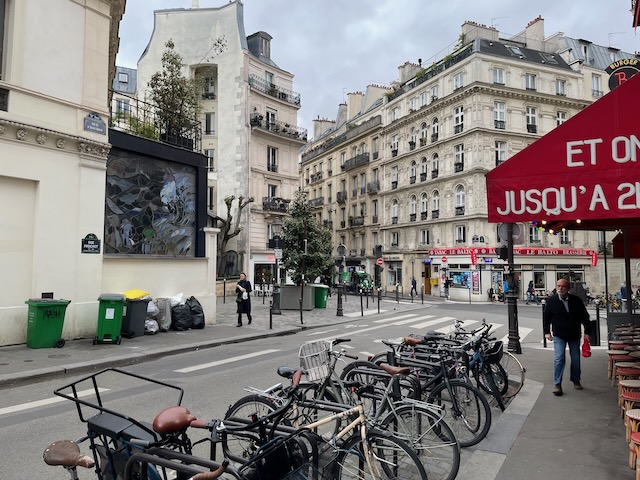
After being tricked once by a non-Uber driver who convinced us he was an Uber driver, and then shouting at him until he returned us to the original meeting spot and let us out of his vehicle, and after finally connecting with our actual Uber driver (yes. I know. Check the license plate. We won’t forget again), we were dropped off after midnight at our small hotel – on one of those wonderful Paris streets I’d come so far to see. It was no longer raining, and the reflections of the street lights glinted on the wet stones and pavement.
However, the day was not quite over. We had to wake someone up inside the hotel in order to be let in and register. Our third-floor room, it turned out, was only a few feet larger than the double bed, but we were exhausted: we’d figure out how to manage the unpacking of the suitcases in the morning. I plugged my power bar into the wall so I could recharge my phone and my watch, and promptly plunged the entire hotel into darkness.
After Arnie went down to confess my sin, and received a small lecture from the night manager, we heard a caretaker (or most likely the manager himself) open a door just outside our room, and fiddle around with things a bit. Suddenly the lights came on. We turned them out and went to sleep.
The next morning we got up and looked around, now even more fully aware of how much time we might need to spend just to figure out how to sort our stuff so that we could get at it when we needed it, and still have enough floor space to get from the bed to the bathroom and to the doorway to the hall. But after a superb petit déjeuner in the downstairs breakfast room (it included fruit, eggs, sausages, bacon, croissants, real coffee, pain chocolat and more, and was included in the price of our room), we went to the desk to ask about something else, and the person who was then on duty said, “Hey. You guys are here for an extended stay. Wouldn’t you like a larger room?”
The next thing we knew we were in a main-floor “suite,” at no additional cost (a very small suite, but it had a very large bathroom and a hallway and a window to the patio outside and lots of room for suitcases).
And so, as it turned out, May 1 was the only truly difficult day on our entire trip. We had other moments of frustration (getting lost in the subway system, for example, which happened several times in Paris, as it had in London), but despite their reputation, every Parisian we encountered was helpful and friendly (aside from one or two who worked in booths at the Métro, see above), and no day that followed was anything like the day we went from London, England to Paris, France.
And even that one day had caused us only a few hours of grief. After that, we were in Perfect Paris, which was all that I had ever dreamed it would be, and more.

























 I'm All Write