The next destination on our Northern Spain tour was San Sebastián (“Donostia” in Basque), where we would spend two nights. My mind was already immersed in the area because as the bus carried us from one city to another, I’d been reading Homeland by Fernando Aramburu, translated from the Spanish (in which language the novel is called Patria) by Alfred MacAdam. Set in an imaginary small Basque town in the hills near San Sebastián, Homeland’s other major setting – the city itself – provides a real-life anchor for the novel.
...On the road between Pamplona and San Sebastián
I liked Homeland very much (more on both it and the Basques below), but it did not prepare me for the beauty of the city.
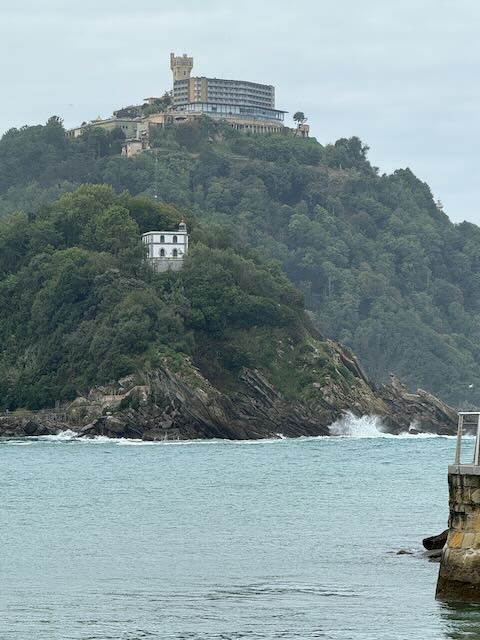
Monte Igueldo
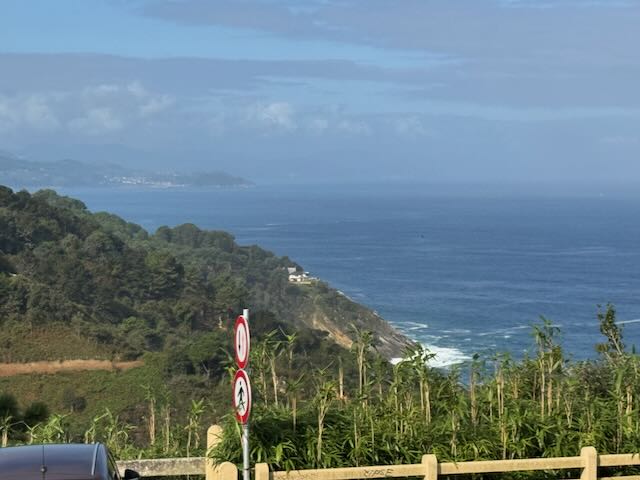
Our first stop was the Monte Igueldo Amusement Park, which overlooks San Sebastián from atop a high hill to the east of it. The park opened with a funicular and a ballroom in 1912, and it has been offering rides and other family-friendly activities ever since. We arrived before the park was open for the day, so it was wonderfully quiet. We were able to hear the breaking of the huge waves from the Bay of Biscay on the rocks below.
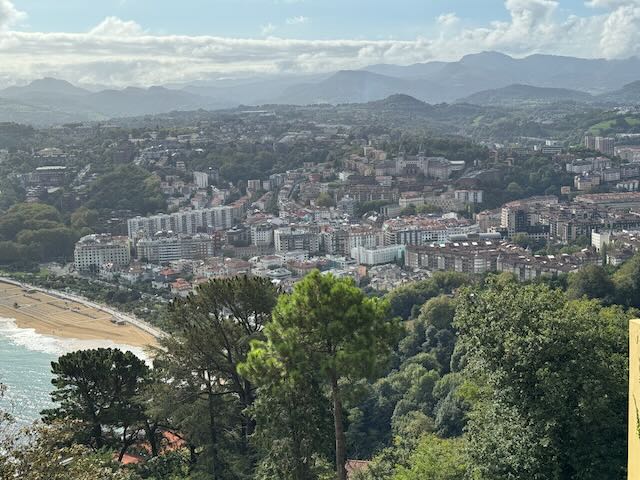
...San Sebastián from aboveSailboats in the harbourLooking north at the Bay of Biscay
The Bay of Biscay below Monte Igueldo
Panorama
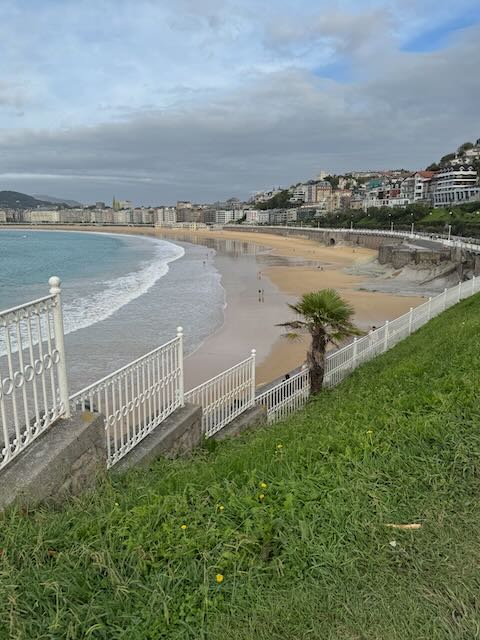
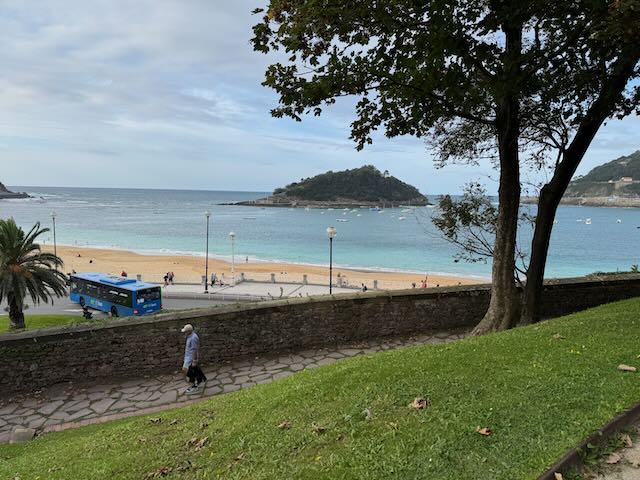
Thanks to Aramburu’s novel, I did immediately recognized the lovely curve of Playa de la Concha, the shell-shaped beach that is one of San Sebastián’s most celebrated features and, not far from shore, Santa Clara Island, which provides the city with shelter from ocean storms.
Santa Clara Island..
The city and the beach are as lovely close up as they are from far above.
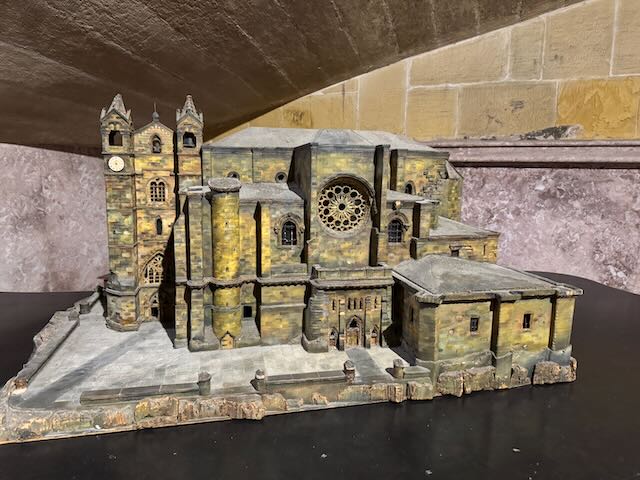
Maria Christina HotelIn Gipuzkoa PlazaBasilica de Santa Maria del CoroWater Fountain Model of the Church of San Vicente MártirInterior San VicentePlaza de la ConstitutiónThe plaza was historically used as a bullfighting ring, and the numbers indicate spectator boxes, not room numbers
Maria Christina and Mirador
One of the most cherished figures in San Sebastián history is Maria Christina Henriette Desideria Felicitas Raineria of Austria (her family called her Christa; 1858–1929). As the second wife of Alfonso XII (1857-1885), she became queen consort in 1879. She had two daughters almost immediately (1880 and 1882), but she was encouraged by her husband and his family to try again in the hope that she would produce a son. This she did, but the boy was not born until after his father died – at the age of only 28 – in 1885. Maria Christina was queen regent from the time of Alfonso’s death until her son (Alfonso XIII) came of age in 1902.
Maria Christina was a member of the Habsburg dynasty, the huge and ultimately massively inbred family that reigned in one way or another from the middle ages to the early modern era over more land than any other royal family in the world has ever done. (I am now reading a book about them. One thing always leads to another.) Their domain included massive territories in Europe (including the Holy Roman Empire and Spain) but also several countries in the New World. Maria Christina, who apparently – unlike many of her cousins – did not suffer from any of the disabilities that can arise from all that inbreeding, gave up her Habsburg rights upon her marriage to Alfonso, who was more interested in producing his own heir than in extending the Habsburg line.
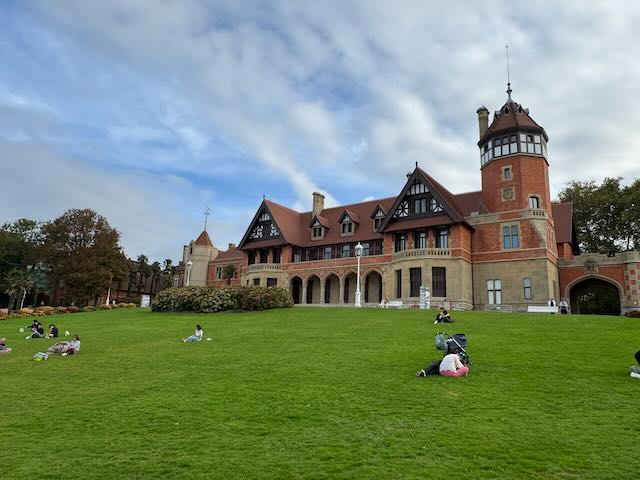
Like me, Maria Christina fell in love with San Sebastián the first time she saw it. She ultimately purchased seafront property and had a summer residence built there, named Miramar, to which she returned for 40 summers. Since the city fell in love with her, too, a hotel, a bridge, and a lot of other things are named after her. (That last part did not happen to me.)
MiramarView from MiramarSanta Clara Island as seen from Miramar.
One of the signs at Miramar says:
“[…]They enjoyed their stay in San Sebastian to such an extent, with sea air and country strolls, Jai Alai games and fireworks, and especially the tranquillity of a city with scarcely any protocol, that she expressed interest in returning the following year.” […] “Her affable nature earned her the affection of the city’s inhabitants and she even grew familiar with the Basque language. She was the best ambassador the city could have, and there was no cause in San Sebastián that she did not support in [the capital] Madrid.”
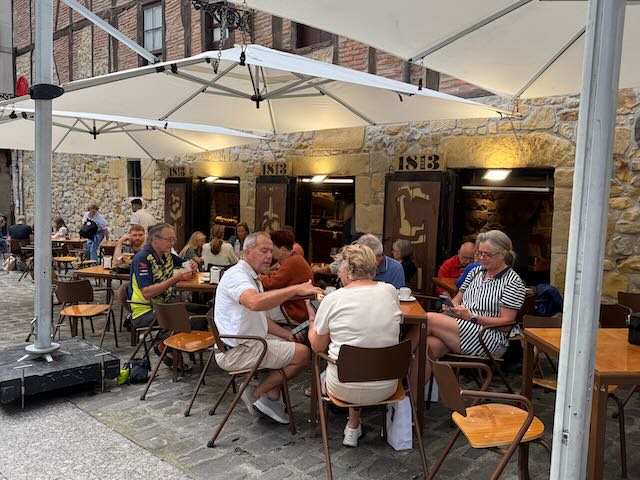
Seafood offerings in a market Pelota is a fast and dangerous game l with a ball that has been played in the Basque region since the 1300sLovely spot near the main square, where we had lunchWire ArtEach September, San Sebastián hosts an international film festival.
The Basques
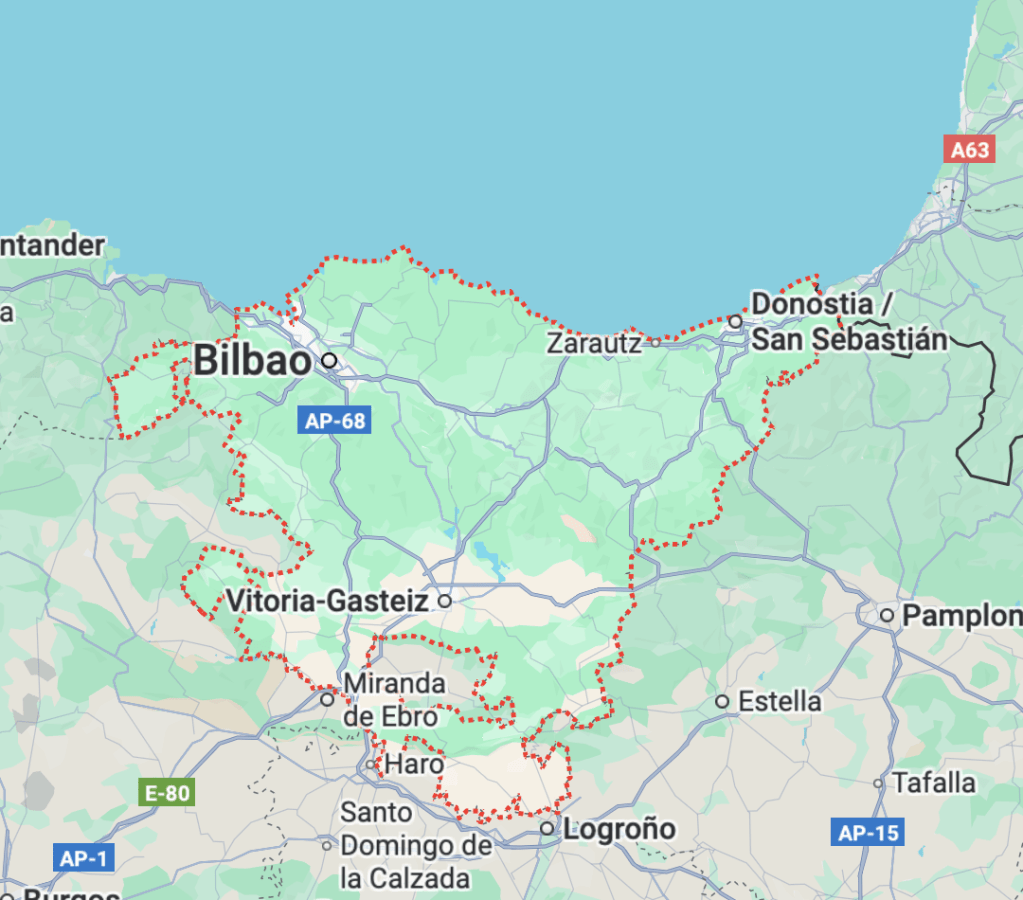
“Euskadi” is the official name for the Basque Autonomous Community in Spain, which includes the provinces of Álava, Biscay, and Gipuzko. San Sebastián is the capital of the province of Gipuzko. Approximately 500,000 people live in the metropolitan area of Donostia (San Sebastián), 180,000 in the city itself, and approximately half of these people identify as Basque.
For centuries, the Basques had a distinct culture in parts of Spain and France, with their own customs and language; in fact, the Basque language has no known connection with any other language in the world. The Basque region was independent until the 19th century but as the governments of France and Spain attempted to suppress and assimilate the group, Basque resistance grew. During the Franco regime, the situation intensified when the dictatorship focused efforts on complete elimination of the Basque language, culture and political activity. (“During the Spanish Civil War, Nazi German Luftwaffe carried out the bombing of Guernica (Gernika) on behalf of Franco’s forces in 1937 — a traumatic event that symbolized the brutal repression of Basque identity.” Wikipedia)
I had heard of the Basques on the news during the long period of conflict between the Basque National Independence Movement (Euskadi Ta Askatasuna, or ETA) and the governments of Spain and France. The period of active resistance lasted from 1959 through 2011, and resulted in the deaths of more than 800 people. (Visit Wikipedia for information.) The ETA was declared a terrorist organization for many years by several countries due to its armed guerrilla tactics. It was not until democracy had come to Spain that Basque Country was granted the status of “nationality,” in 1978. On 20 October 2011, ETA announced a “definitive cessation of its armed activity.”
Basque region of SpainBasque region of France
Basques (most of whom were not involved in actual revolutionary activities) continue to take deserved pride in their language, cuisine and culture, their heritage and history. The language is now taught in schools and it is estimated that nearly half of the residents of the Basque region speak it, often fluently.
Homeland: A Novel
The primary characters in Homeland are Bittori and Txato, a couple living in a small Basque town who are lifelong friends with another couple, Miren and Joxian. The bonds between the families are torn apart when Txato is murdered by the ETA, an organization that Miren and Joxian’s son Joxi Mare has recently joined. These four characters are all sympathetic and wonderfully delineated, as are Bittori and Txato’s adult children Xabier (a doctor in San Sebastian) and Nerea, a business woman who has lived for several years in London, and also Miren and Joxian’s younger son, Gorka. All of their lives and relationships have been badly damaged by the murder, and their situation and its implications demonstrate the kind of effect the conflict had on actual families who lived in the region during the uprising.
Now that I’ve read it, I have recommended Homelandto others several times, and for a variety of reasons. On one level it is a domestic drama set in a time of political conflict, and its specific insights into the uprising in the region at the time. Homeland was a best-selling novel in Spain and was made into a very popular tv series. The novel was described by the Dublin Literary Award, for which it was nominated in 2011, “A work of nearly unbearable suspense […] a searing examination of truth, reconciliation, and coming to terms with history.”
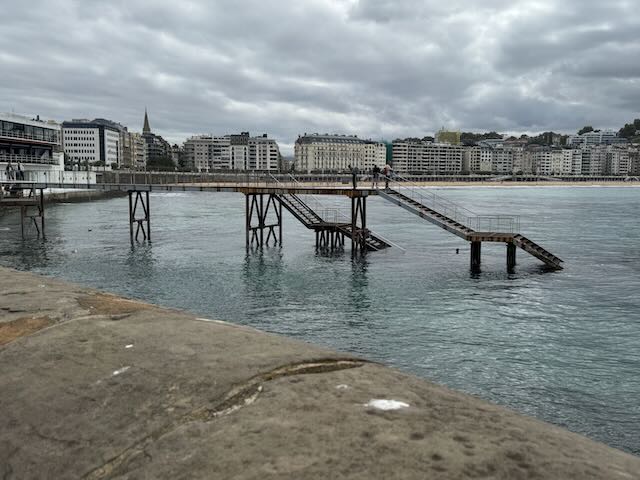
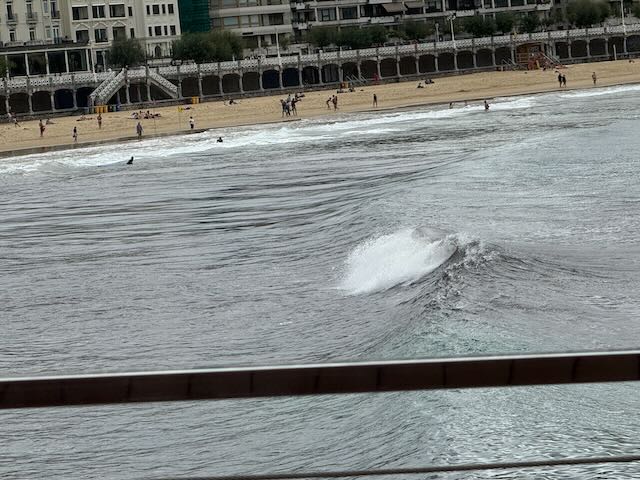
San Sebastián HarbourMullet, I think..There were surfers at La Concha beach.















 I'm All Write