
Travel date: Thursday, September 18, 2025 (Part 1)
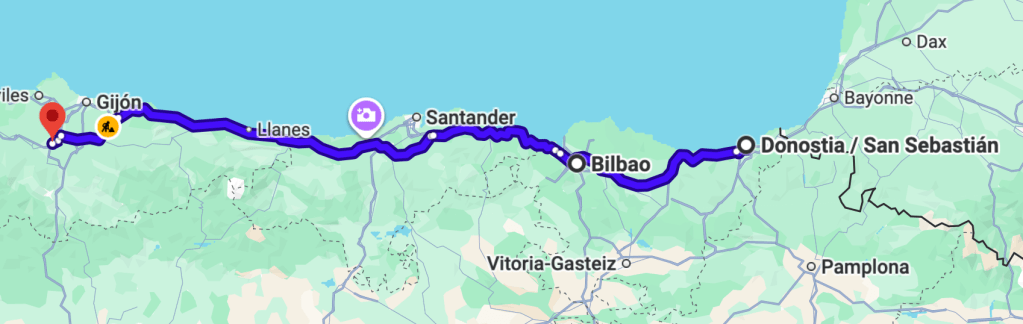
After a laid-back couple of days enjoying extraordinarily beautiful seascapes, we were challenged with a jam-packed itinerary on September 18 that took us all the way from San Sebastián to Oviedo, also on the Bay of Biscay. We did so much on September 18 that I’ve divided the day into two posts.
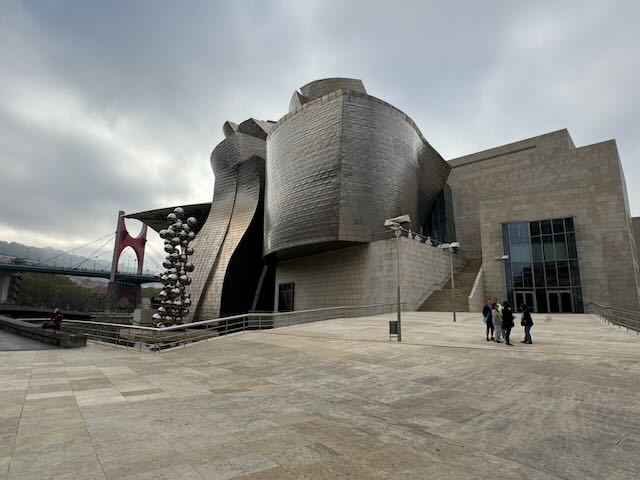
Our first stop was the Guggenheim Museum in Bilbao. Seeing Frank Gehry’s masterpiece has been on my “bucket list” since I first heard about it, decades ago, and is one of the reasons we went on a tour of Northern Spain rather than Southern Spain (or anywhere else) last year.
Bilbao, in the Basque autonomous region in the northeast of Spain, was once a thriving centre for the metallurgical and naval industries, but it fell into economic decline in the 1980s due to the petroleum crisis and the trade dynamics created by Spain’s having joined the European Union. Bilbao, Spain’s fifth-largest “municipal agglomeration,” is located on a tidal estuary formed where the Nervión and Ibaizabal rivers join – 16 km inland from the Bay of Biscay. Major flooding of the estuary in 1983, combined with social unrest and a dwindling population (from 433,000 in 1981 to 372,000 in 1991), led to the Basque Administration’s search for strategies to revitalize Bilbao. The members of the Administration conceived the idea of requesting assistance from the Solomon R. Guggenheim Foundation in New York City to build a contemporary art museum that they hoped would turn the fortunes of the city around, by attracting tourists and commerce.
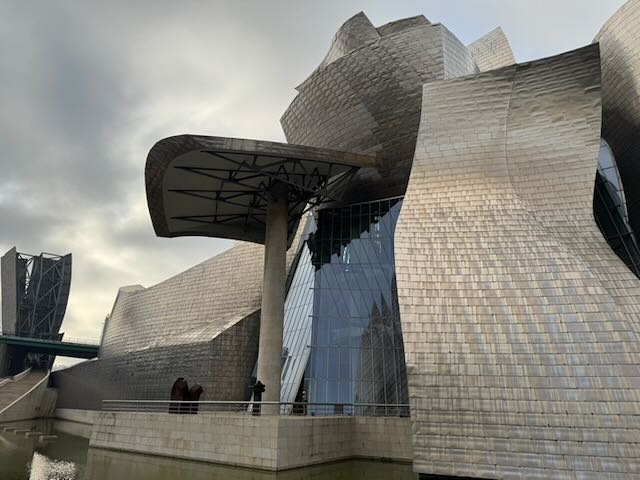
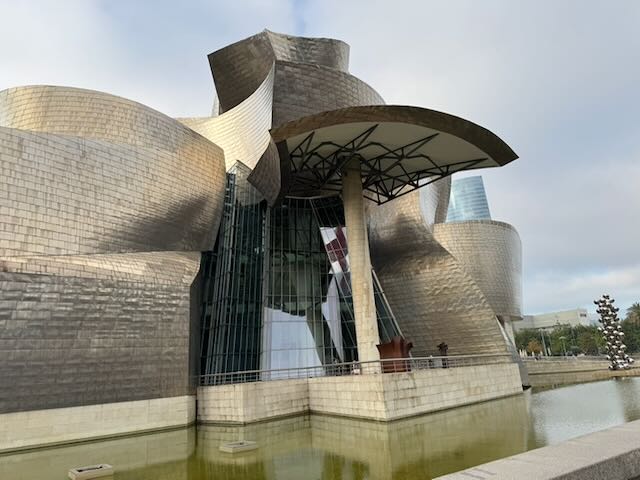
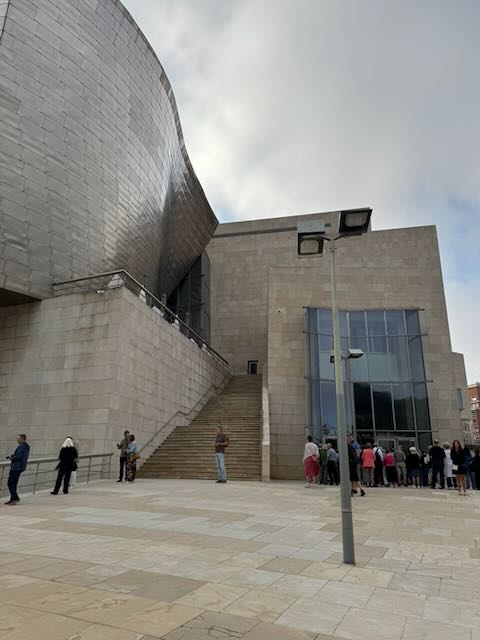
Within six months of receiving approval for the museum’s construction, the Administration and the Guggenheim Foundation had selected Frank Gehry as lead architect for the project. Gehry (1929 to 2025), a Canadian by birth, was already well respected as an architect before he started work on the Bilbao project, and following that achievement he created several magnificent structures in other places (including the Dancing House in Prague, the Marqués de Riscal Hotel south of Bilbao, and the Walt Disney Concert Hall in Los Angeles). However, the museum in Bilbao is considered by many to be his master work.
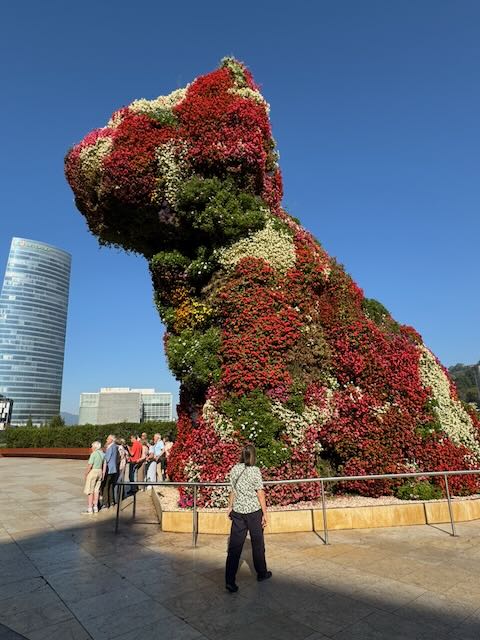
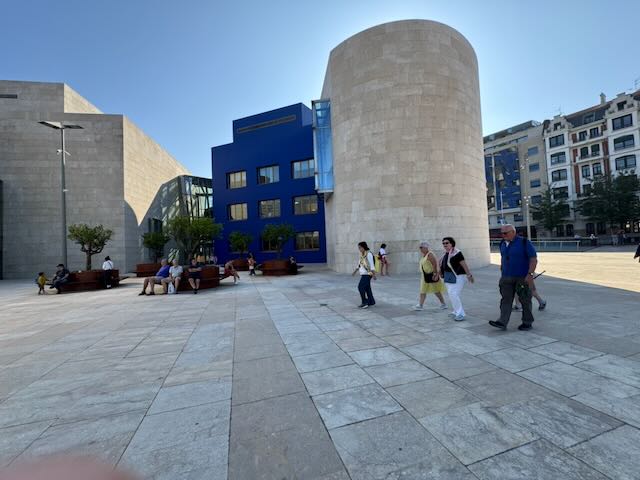
.
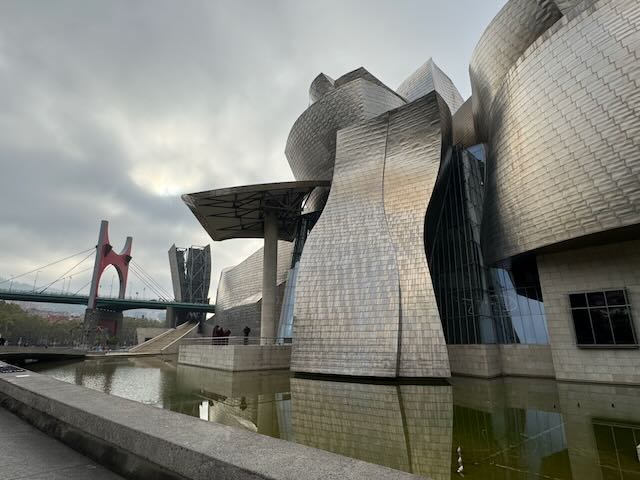
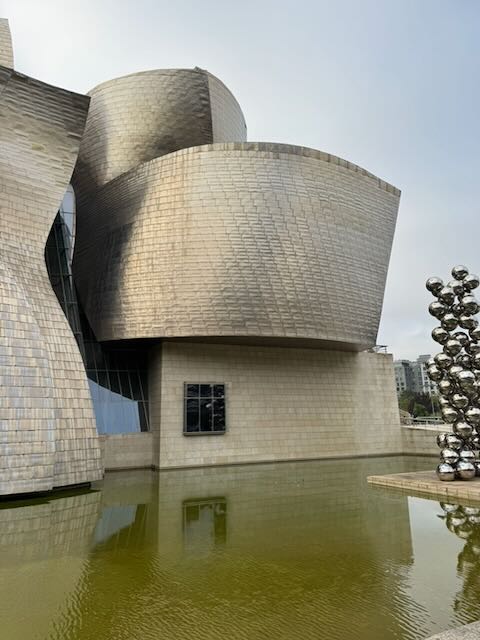
What is distinctive about the Bilbao Guggenheim is its very complex shape, which is as much a work of art as it is a functional building. Due to Bilbao’s location and its industrial history, Gehry formed the gallery from shapes that are reminiscent of sailing vessels and evoke the area’s history with the metallurgical industry. He used titanium to finish the exterior curved walls, and limestone for the vertical walls. He also made extensive use of glass and steel.
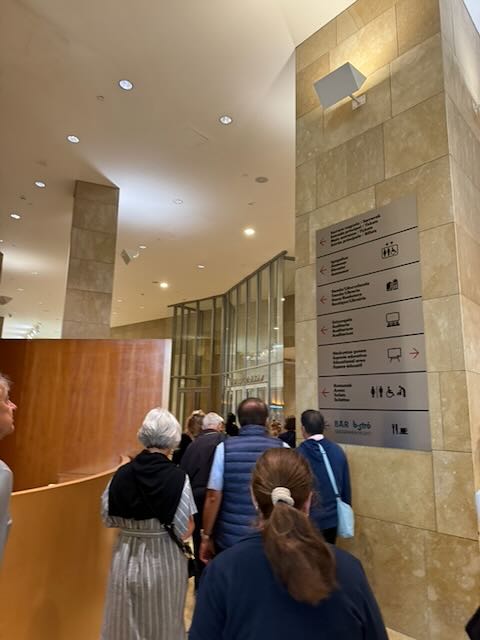
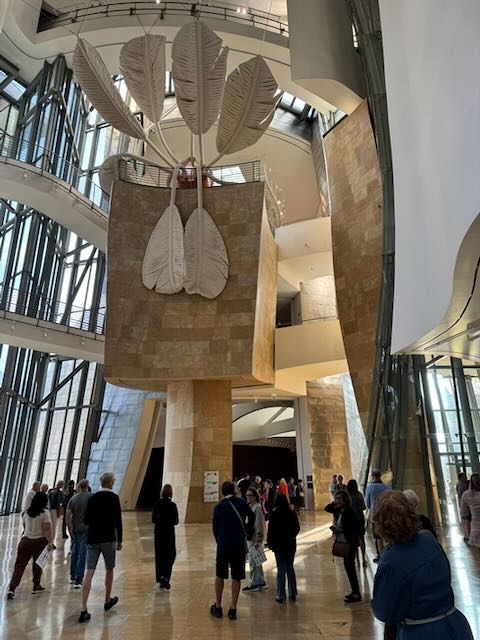
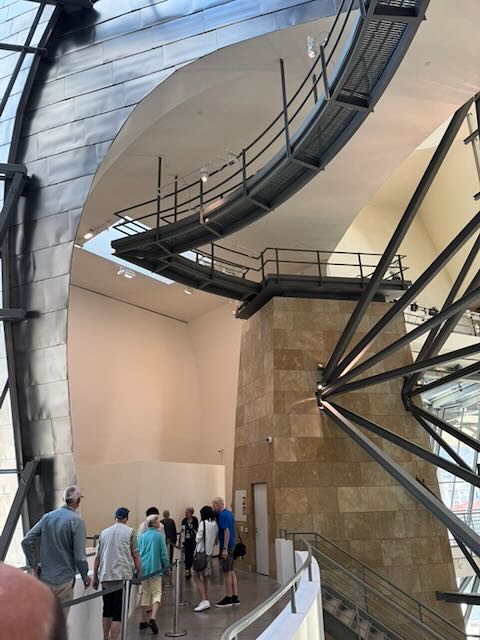
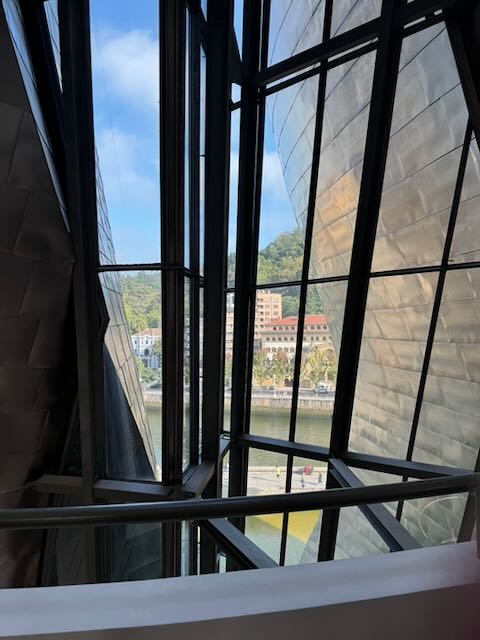
Gehry designed the many curves of the building using a computer program called CATIA, which until then had been used primarily in the aviation industry. The choice of titanium – non-corrosive and light-weight – for the “skin” allows the curvilinear aspects of the building to glow with light and glint like the scales of a fish, even on the gloomiest days. Overall, thirty-three thousand very thin titanium panels, each 80 x 115 cms, overlap like the shingles on a house.
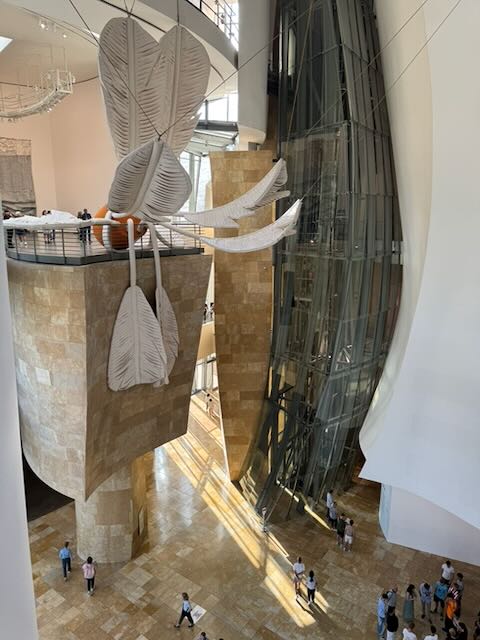
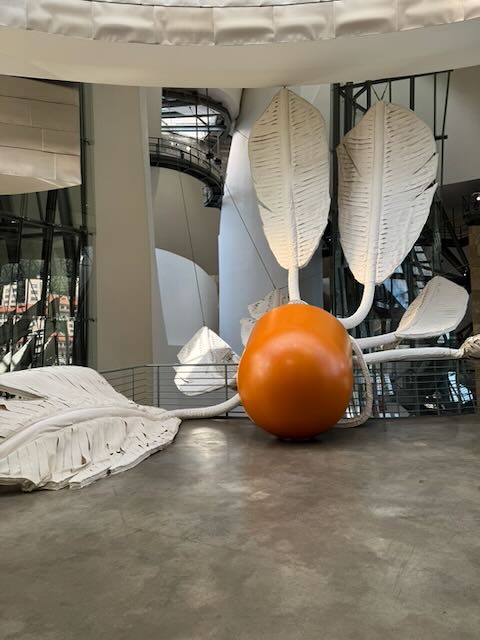
The interior of the museum is remarkable as well – due primarily to its wide open spaces. The walls themselves have been created to bear the weight of the building and its roof, which obviates the need for complex support systems. There are three floors in the museum and 20 galleries, including one of the largest exhibition spaces in the world – the ArcelorMittal Room, which is 2,768m2 and is designed for huge art installations. Some of the smaller galleries are conventional in design; others are irregular. The highest and most notable feature of the museum’s interior is the Atrium which, due to the ingenious use of glass and skylights, is filled with natural light.
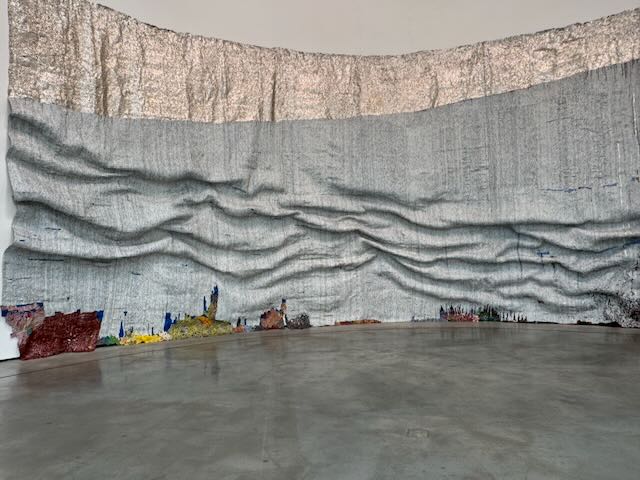


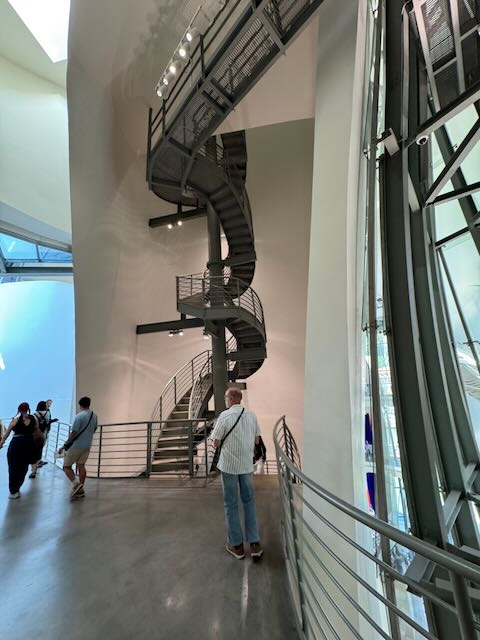
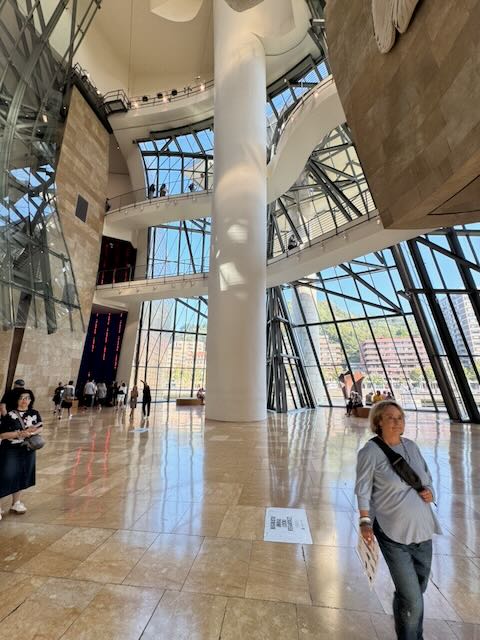
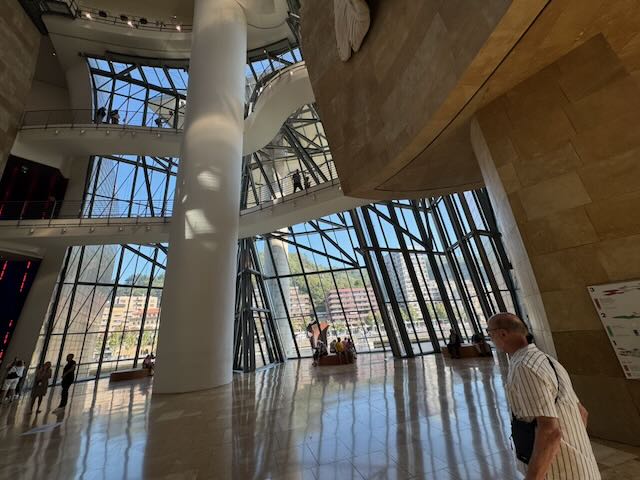
The Guggenheim Bilbao took four years (1993 to 1997) to build, and the Basque Administration’s strategy actually worked: the museum transformed the city. The galleries offer visitors works by world-renowned contemporary artists (Jean-Michel Basquiat, Yves Klein, Jeff Koons, and Andy Warhol are among those in the permanent collection), and attracts more than a million tourists a year. Most visitors, if they are anything like me, come to see the museum itself perhaps even more than they do the art within. Today Bilbao is a major tourism and commercial centre, and Frank Gehry’s magnificent facility has attracted many other world-class architects to build other unique structures in or near the city.
We had only a couple of hours to tour the magnificent facility and while we did a quick overview of the inside galleries and some of the art, we spent most of our time outside, and in the Atrium, admiring Gehry’s astonishing work of architectural genius. I would have relished another few hours or even several days in Bilbao, but I’m delighted I got to see the facility at least once!
 I'm All Write
_-_panoramio.jpg)