Travel date: Tuesday, April 23, 2024
On our first full day in London, we headed down to the City (did you know that the area of the actual City of London is only one square mile? The rest of the megalopolis is made up of 32 boroughs). The Underground stop where we resurfaced (not coincidentally named “Monument”) was located right next to the memorial to the Great Fire of London. Between September 2 and September 5, 1666, this blaze destroyed “13,200 houses, 87 parish churches, The Royal Exchange, Guildhall and St. Paul’s Cathedral” (London Fire Brigade). The conflagration may also have brought an end to the Great Plague, but that is just a theory; many think the plague was already drawing to a close when the fire broke out. Whatever the case, it is clear that for most Londoners, 1666 was not a good year.


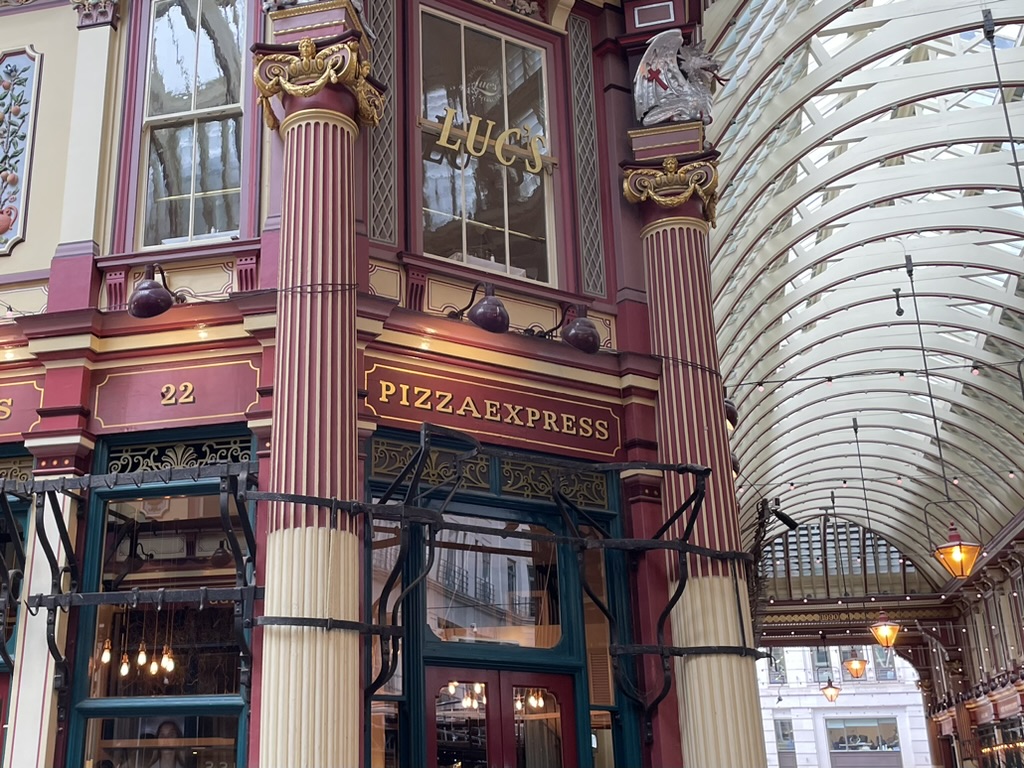
Our actual destination on that morning was the Leadenhall Market, which was used for the filming of the Diagon Alley scenes in the first Harry Potter movie. It is a fun market to walk around, and our visit was made even more interesting by the presence of two mounted police officers on beautiful horses, and a group of men in costume who were there to celebrate the Feast Day of St. George.
April 23, the presumed anniversary of St. George’s death, is celebrated not only in England but in several other countries and cities that have claimed St. George as their patron saint.




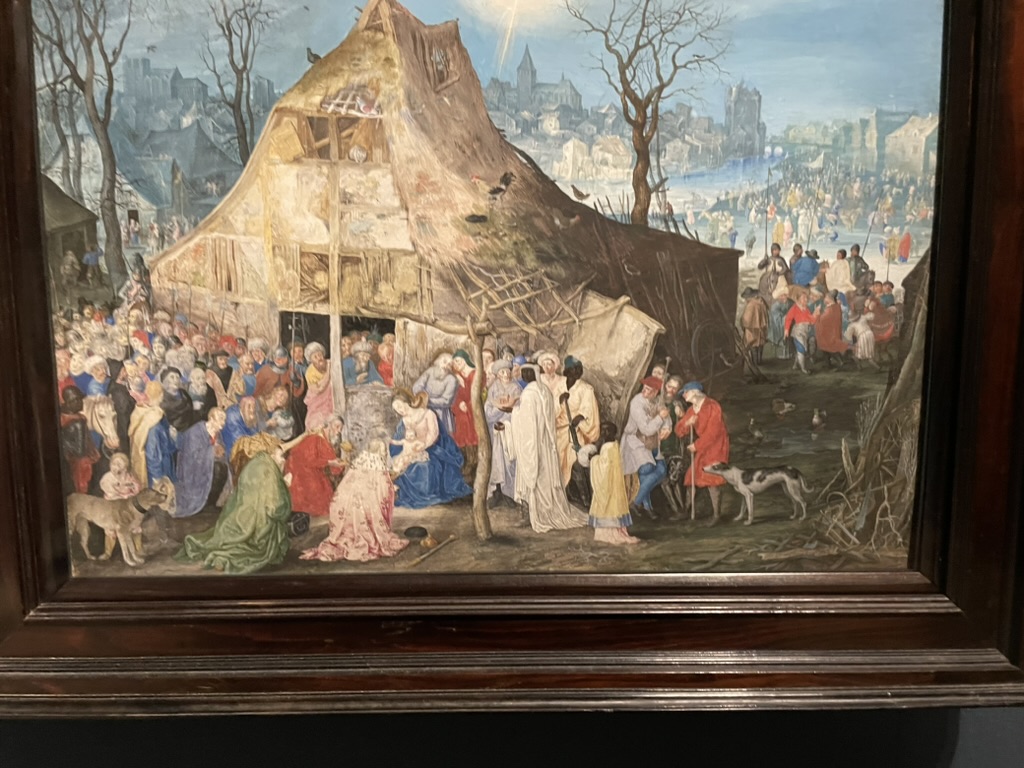
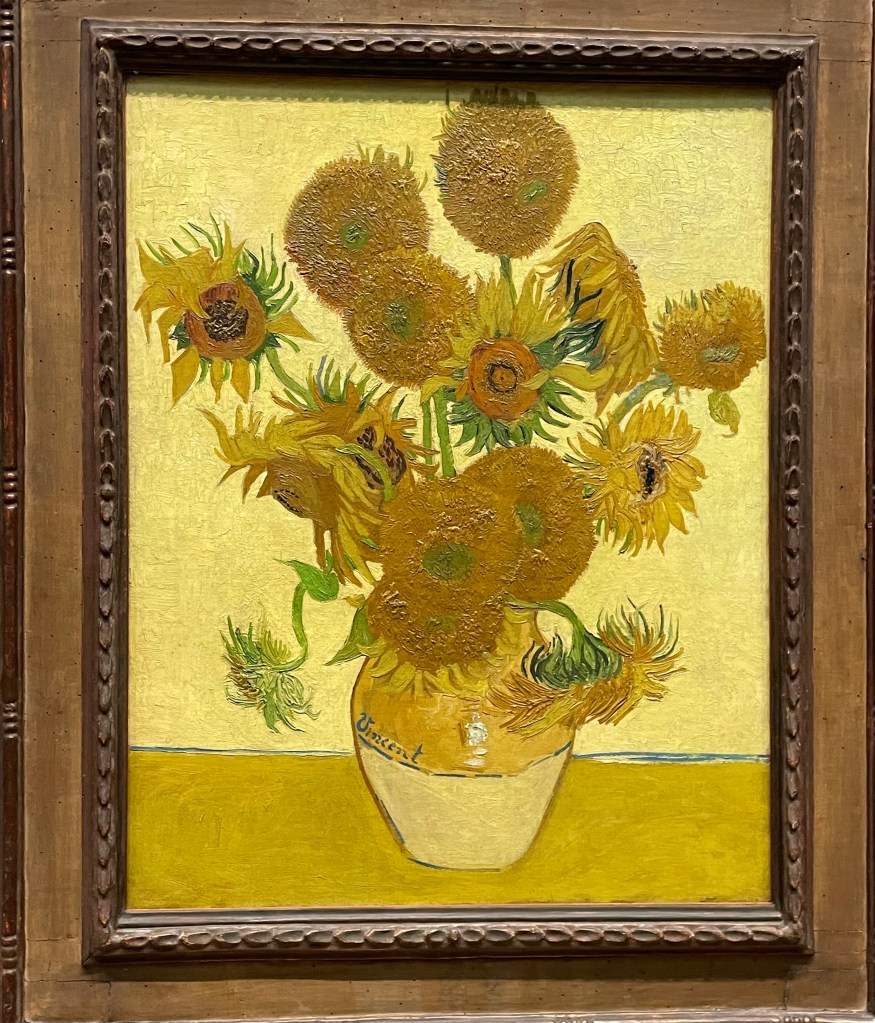
After a second short trip on the Underground, we reached Westminster where we stopped briefly at the Church of St. Martin in the Fields before heading in to The National Gallery. There, we were particularly interested in a special exhibition entitled The Last Caravaggio, which included just two paintings, rare related documents, and explanatory text. Caravaggio’s last painting is “The Martyrdom of St. Ursula” and another of his later works, “Salome receives the Head of John the Baptist” was also on display. (This was of additional interest to us as we were going to see the Strauss opera Salome when we got to Paris). A lot of North Americans have become a bit obsessed with the works of Michelangelo Merisi da Caravaggio (1571-1610) after watching the outstanding recent Netflix series Ripley, and it seemed that patrons of the National Gallery were similarly intrigued: the line to get into the small exhibition extended down a corridor and then a long stairway to the lower floor of the gallery, and then along another hallway for a considerable distance. Everyone was very patient, and the line moved relatively quickly.


We took in paintings by a few other artists while we were at the National Gallery, then walked through Trafalgar Square and out onto Whitehall.





There we ran into another, much larger group of St. George’s Day enthusiasts, already well into their cups at 4 p.m. or whatever it was and growing rowdier by the minute, surrounded by police officers on foot and horseback, and vans containing dozens more. We saw people being arrested and heard the whiz of beer bottles before they crashed into the pavement, so after taking a few photos we decided to move on. A woman I spoke to outside a restaurant confirmed my suspicion that the crowd of drinkers was mainly far-right protestors who are mad at the government, rather than average citizens celebrating the feast of England’s patron saint.


At the end of Whitehall we found Big Ben (aka “The Great Bell of the Great Clock of Westminster”), shiny and magnificent after its four years of being cleaned and repaired (2017 to 2021), and we caught our first sight of the famous “London Eye” or Millennium Wheel. If we’d felt the urge to go for a ride on it, which we didn’t, we’d have needed to invest at least £42 each, or about $70 Canadian. I’m sure it was worth that much if a person were so inclined, as the capsules look to be quite spacious, the wheel moves quite slowly, and the views at the top must be splendid.


 I'm All Write