Travel Date: Monday, April 29, 2024
I can’t think of a better way to have spent our last day in London than with two long-time friends.
We began our day by making the familiar trek from our hotel to Paddington Station, and I found I was feeling nostalgic in advance for the neighbourhood where we’d felt so at home (and eaten so well) for the past ten days. We emerged from the underground at Mansion House station, walked past St. Paul’s Cathedral and then across the Millennium Footbridge to the south side of the Thames. There, at the entrance to Shakespeare’s Globe Theatre, we met Nancy Mattson – whom I’ve known since both of us lived in Edmonton, many decades ago – and her British-born husband Michael Bartholemew-Biggs. We were amazed to learn that they had never done the Globe tour before, although they had seen many plays at the theatre. We were all in for a treat.


The original Globe Theatre was built in what is now the Borough of Southwark by Shakespeare’s theatre troupe in 1599, but the building was destroyed by fire in 1613. A second Globe opened a year later on the same site, but it closed along with all the other theatres in London in 1642 when, at the start of the first English Civil War, “lascivious Mirth and Levity” and other unhealthy states of mind that might be incurred if one attended a play were officially deemed incongruous with the spirit of the times.
“Shakespeare’s Globe,” the newest incarnation of Shakespeare’s theatre, opened in 1997. It is located 500 feet away from the original, but the design is very much the same. Our well spoken young guide related intriguing structural details about the original theatre, how both players and patrons were accommodated there, and how the theatre’s attributes (and drawbacks, such as the lack of a roof over those standing in front of the stage) had been reproduced in the current building. We wore headsets and our guide spoke quietly into the microphone so we wouldn’t disturb a rehearsal for Much Ado about Nothing that was taking place on the colourfully decorated stage. It was an excellent and interesting tour.


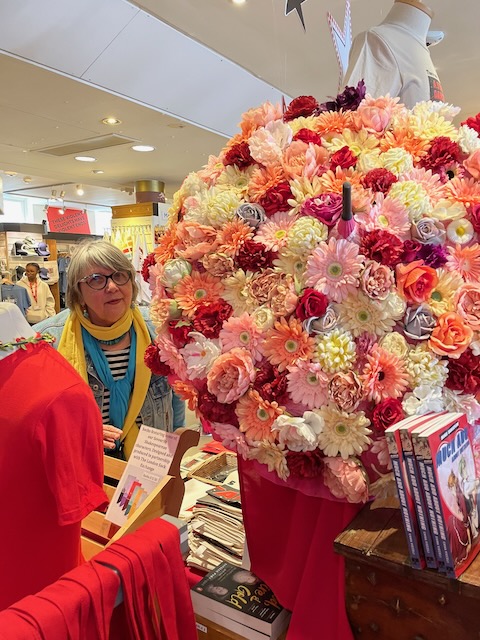
After checking out some displays in the lobby, and giving the gift shop a quick look (Note the umbrella: so charming, but how would you manage it on the Tube, especially if it got wet?), we walked over to Tas Pide, a middle-eastern/Turkish restaurant that Nancy and Michael knew. The food was outstanding.



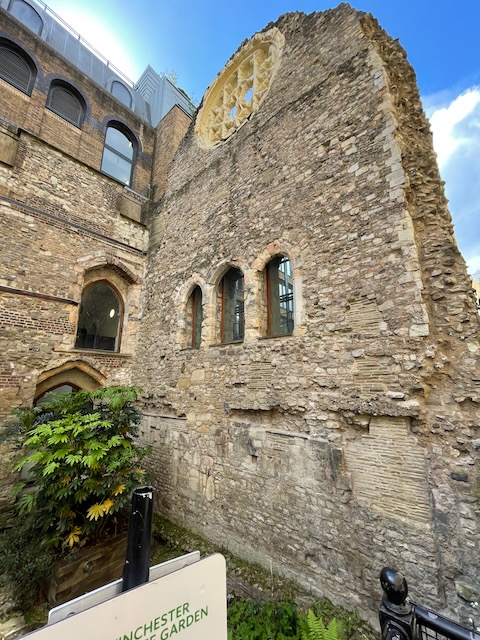
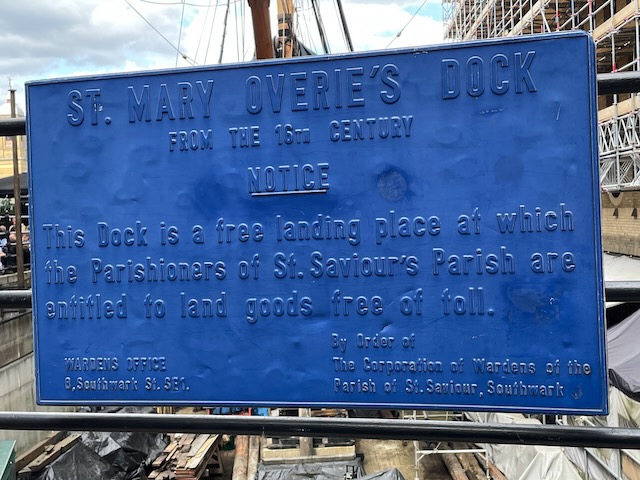
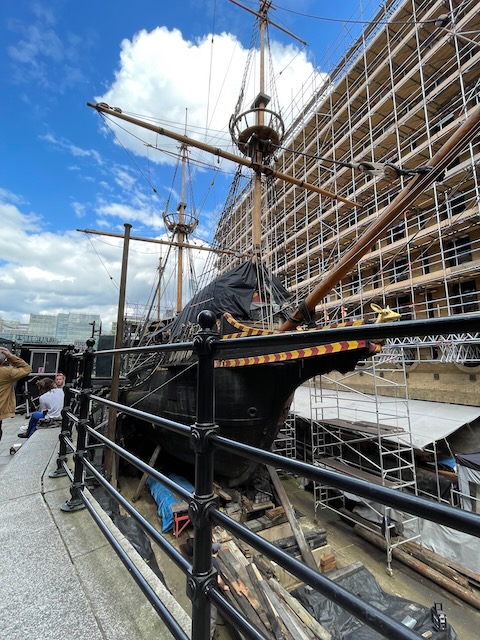
Our route from the Globe to Tas Pide and then back to the Tate Modern – our final destination for the day – took us past a number of interesting sights along the waterfront in Southwark, including: the original site of Globe playhouse; a museum in honour of The Clink; the remains of 12th-century era Winchester Palace, which includes the rose window from its Great Hall – one of the remaining pieces of the original structure that was mostly destroyed by fire in 1814 – and its lovely medieval-themed garden; a replica of the Golden Hynde; St. Mary’s Overie’s Dock; and Dirty Lane. The British have a definite talent for giving names to things.


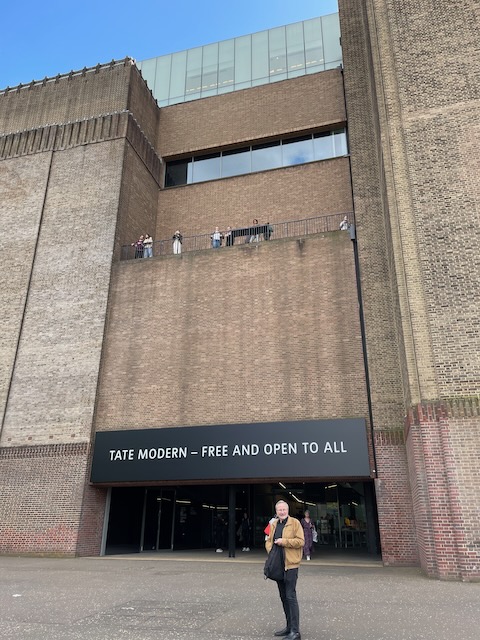
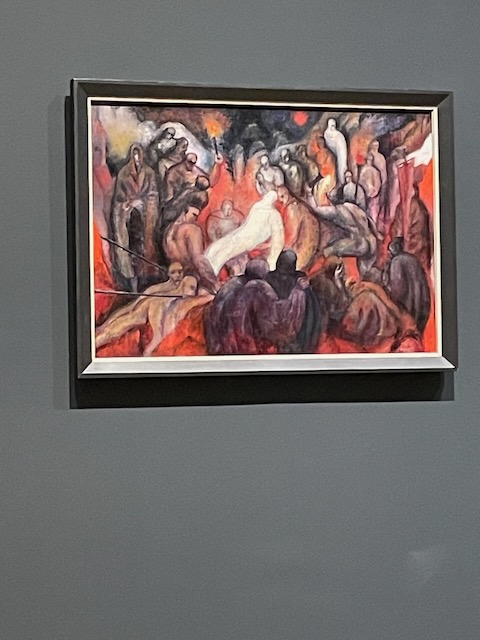
We saw a fabulous exhibition at the Tate Modern: The Expressionists: Kandinsky, Münter and the Blue Rider. The Blue Rider [Der Blaue Reiter] was a group of avant-garde artists in Munich at the start of the 20th century. Gabriele Münter and Wassily Kandinsky were two of its founding members. The Expressionists intended through art to portray emotions and responses to real and spiritual experiences, as opposed to creating realistic depictions of objects and scenes. Their works often featured distorted forms and bold colours.
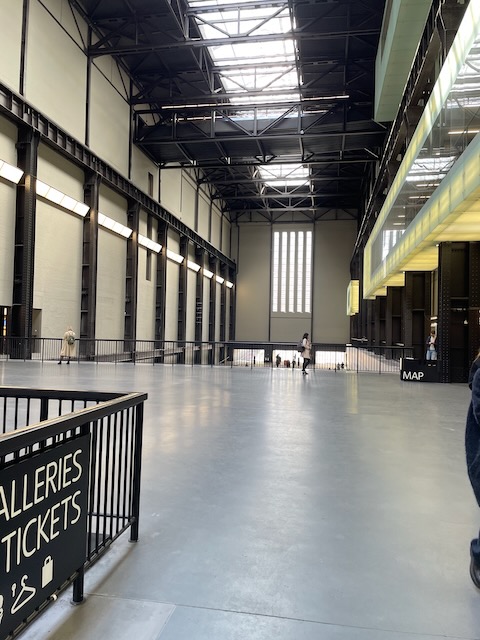


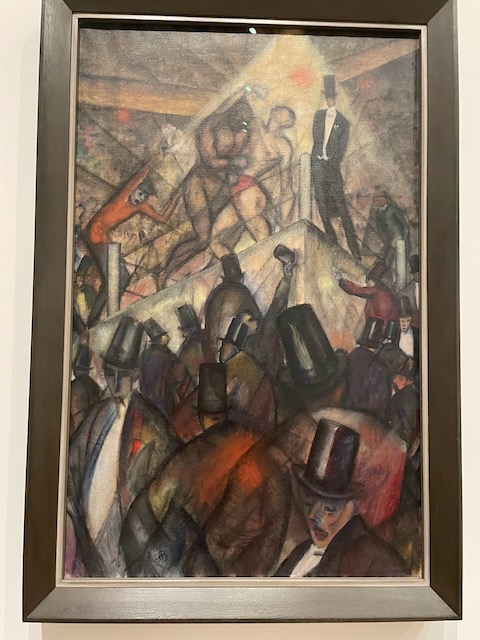
The show was huge. Before long, my feet were causing me serious grief so I wasn’t able to enjoy the pieces near the end as much as I had the ones at the beginning. (Nor, as you will note, was I too particular about how I was holding my phone as I snapped photos of the works of art.) If we’d been in London longer, I’d have gone back a second time so I could have absorbed more than I did. I’d had no idea how much I liked Expressionist art!
Most of the artworks in this show were created in the first decade of the 20th century.


Nancy Mattson and Michael Bartholomew-Biggs are both poets, and in my next post I’ll be taking a side trip from this travelogue to profile their most recent books. Each poet has a distinctive voice, but both works are accessible, intelligent and eloquent. Stay tuned.
 I'm All Write