Nancy Mattson’s Vision on Platform 2 (2018) and Identified Flying Objects (2024) by Michael Bartholomew-Biggs (both published by Shoestring Press)
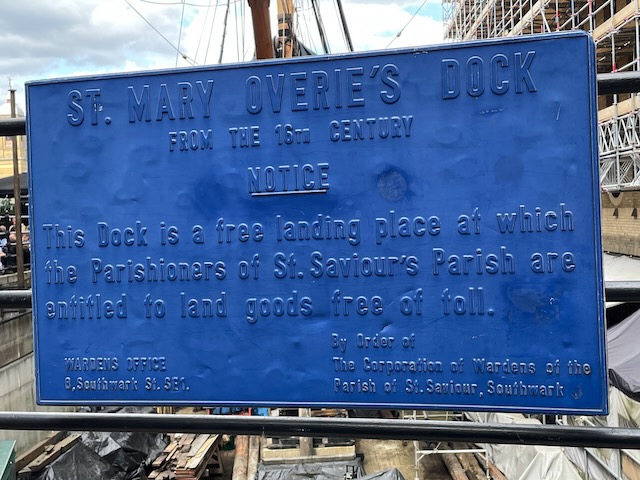
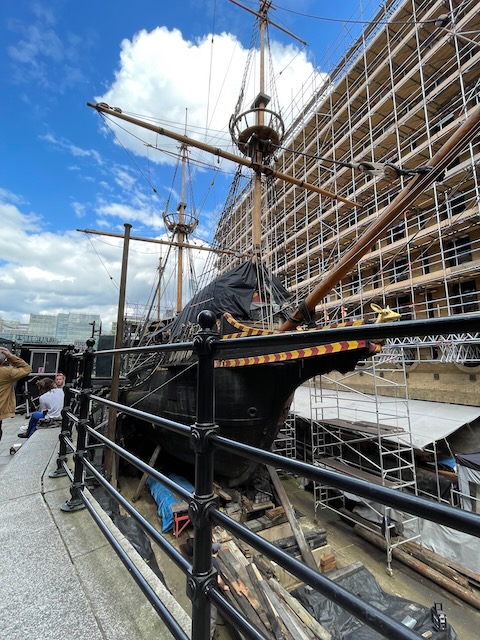
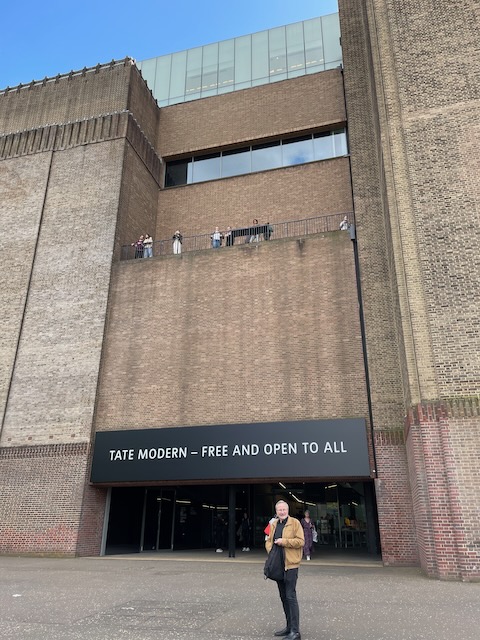
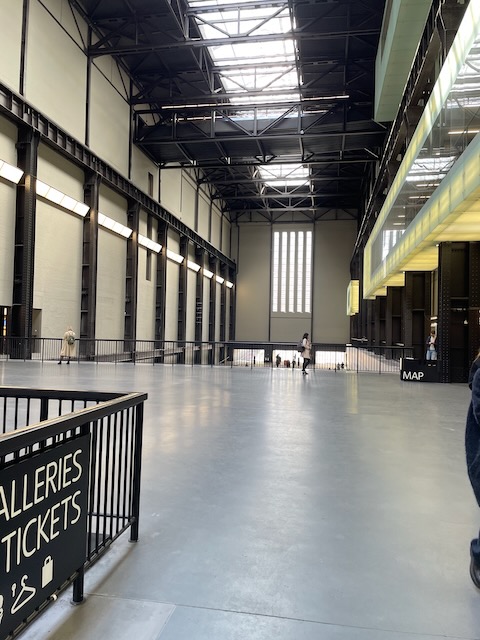
I’m taking a little detour from my travelogue here to talk about two books of poetry that were written by two long-time friends who we met up with while we were in London, and with whom we enjoyed a fine lunch, a tour of Shakespeare’s Globe and an exhibition at the Tate Modern. I have been fortunate to acquire the most recent collection by each of them, and I thought I’d tell you a bit about their work. Poets never get the attention they deserve, and both of these poets deserve attention.
Vision on Platform 2

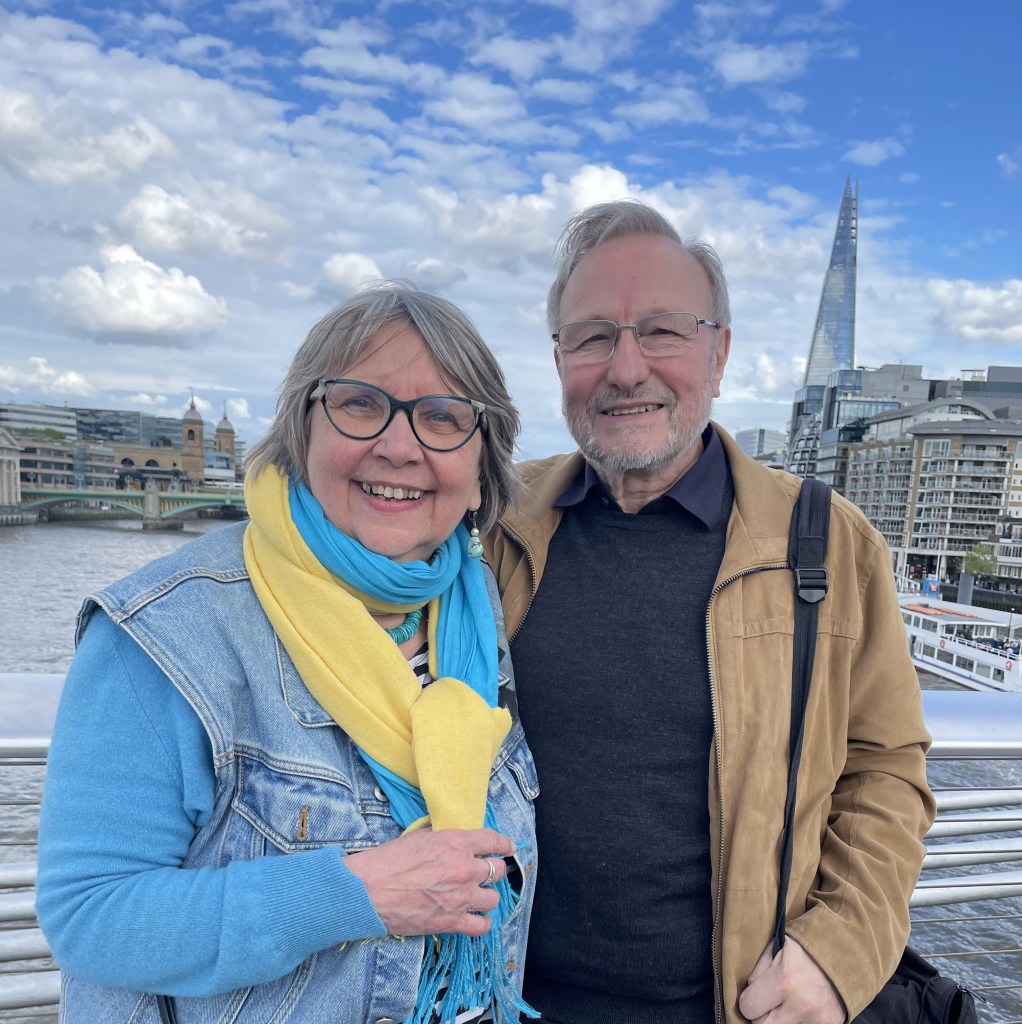
Nancy Mattson’s fourth collection of poems, Vision on Platform 2, reflects the varied background of the poet: of Finnish heritage, she was born in Winnipeg and grew up in Alberta and Saskatchewan. She raised a family in Edmonton before moving to London in 1990.
Nancy writes insightfully from the places she knows so well, moving easily among them – introducing us to Finnish words, recalling the Edmonton house where she grew up, nudging memories to life in those of us who’ve also spent time on the prairies – ranging from picking (and eating) wild saskatoons and raspberries, to walking down streets of stuccoed houses, to attending shows by the touring hypnotist/illusionist Reveen.
Nancy’s keen eye and astute word magic also evoke the pleasures she finds in living in London, travelling around Great Britain, and visiting abroad. She finds the remarkable in the familiar (“Pared from a baby’s fingernail / the sickle moon begins the winter’s solstice”) while also reminding us of the joys of singular experiences, such as comparing notes on new motherhood with a much younger woman, met by happenstance, who was pushing her young baby in a carriage along the street. The lovely title poem describes the day the poet sat across the tracks from seven nuns who were waiting for a train under the sign at Seven Sisters Underground Station in Tottenham. (Online there is a photo another traveller took that day! Fun.)
Behind the sharp images and lovely stories at the forefront of her poems, Nancy maintains a soft focus on larger issues – on art, and myth, on the passage of time and the changes it brings to our lives and to the world around us. (“…I am thirsty for the dustbowl of my youth.”) Some of the poems are meditations and reflections (e.g., “Threads for a Woman Priest”) or describe unexpected and charming connections and experiences (“Shadows in Hadleigh”).
Nancy’s poems are engaging in a concrete sense even when they head off into the mystical. Above all there is the language and the insight — intelligent and lovely.
Identified Flying Objects

Michael Bartholomew-Biggs has taken an intriguing approach with his sixth collection of poems, Identified Flying Objects. With a few exceptions, each poem is followed by a quote from The Book of Ezekiel, and the relevant quote casts new light on the poem that has come before it. A poem about a possibly awkward moment the poet witnessed (“Family Occasion”) is followed by Ezekiel 18:2, “The fathers have eaten sour grapes, and the children’s teeth are set on edge.” Now the reader gains new insights and perspectives: not only from the Ezekiel quote, but also from the fact that the poet has chosen that particular verse to accompany this poem. (Wheels within wheels, as it were.)
Once I had recognized the pattern, I found myself holding part of my mind outside of the reading of each poem to wonder what intriguing comment from Ezekiel Michael was about to offer us. It often felt like a conversation had begun, or – as Michael himself suggests in the Foreword – even an argument: between Michael and Ezekiel, but now including us as well.
Identified Flying Objects is a highly engaging collection, one that offers us Michael’s delightful facility for finding the perfect word (“The whitewash would be bad enough – / smeared across that tumbled wall / of crumbling mortar, mildewed stones / and sliding down in clotting dribbles / varicose as old men’s veins” [“Whitewash”]) but also raises deeper questions that the reader finds herself mulling over later.
One poem that got me mulling – this one not because of a philosophical or social issue, but because it raised a conundrum that tied my brain in knots – is called “In the Fitting Room.” It begins “The mirror switches left and right without transposing / top and bottom – same as always but today / you note this perpendicular discrepancy….”. I have been gnawing over this “perpendicular discrepancy” since I read the poem: I understand perfectly well why it is true but I also cannot understand why it is true at all.
_____
I have no doubt that I’d have enjoyed both of these books of poetry even if I hadn’t known their authors. But there was an extra pleasure in coming across a poem from time to time in both collections when I was fairly sure the poets were writing about each other.
Thank you for your work, my friends. I am delighted to have read it.
_____








 I'm All Write