Travel Date: Friday, May 3, 2024
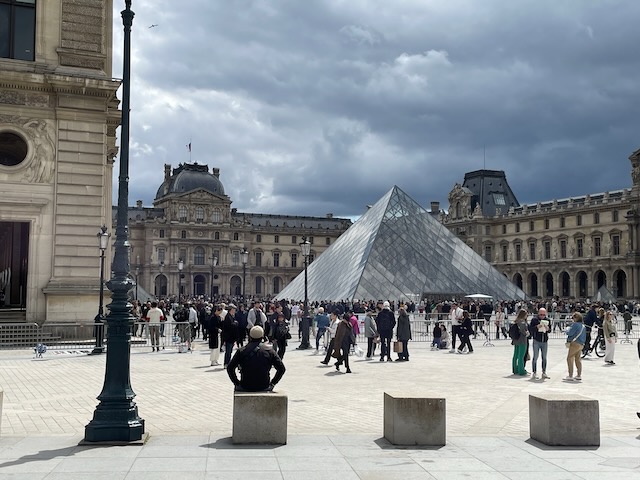
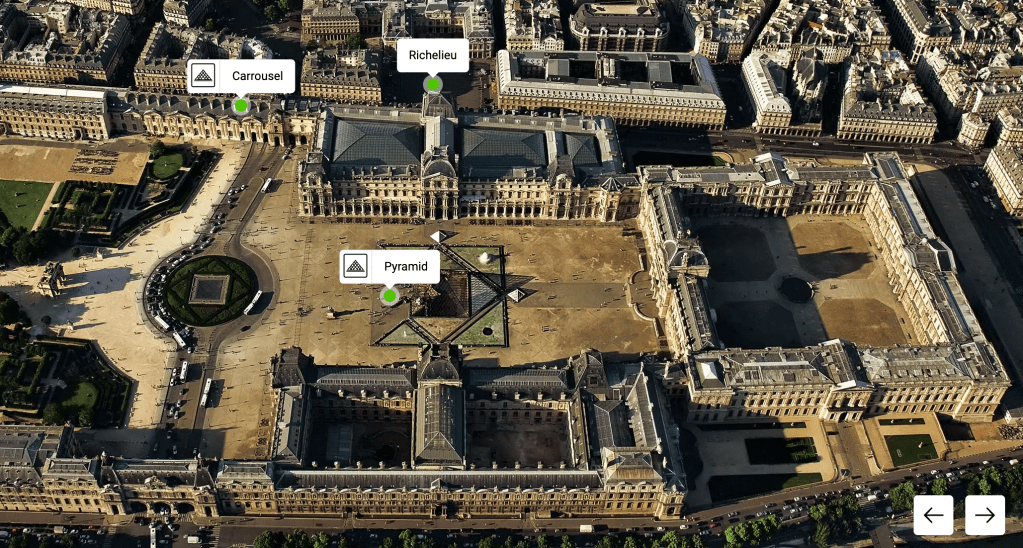
Since this post is mainly about a visit to an enormous museum (652,300 square feet, to be exact)1, there are quite a lot of photos in it. They depict only a few of the hundreds of paintings and sculptures I saw during our visit to Le Musée du Louvre in Paris that compelled me to take photos of them to ensure that I would never forget them. (Hah.) In the long run, of course, it was more time-consuming to figure out which photos to leave out of this blog post than it would have been to include them all, but I have done my best to cull and whittle; what is left is what you get.
.
In a shopping centre near Le Louvre we came across a public washroom that I thought must be an extension of the gallery itself. It turned out to have a more commercial intent: it was a promotional display by a paper company called Renova, which describes itself as selling “The Sexiest Paper on Earth” – a claim that is almost as engaging as the display itself.
Once we got to the actual art, I was immediately attracted by a painting of Joséphine, first wife of Napoleon I. It was completed just before the annulment of their marriage six years in, by which point she had failed to provide him with an heir. In contrast to the usual formal portrait of a member of nobility, she has chosen to be seated and to look away. Who can blame her?
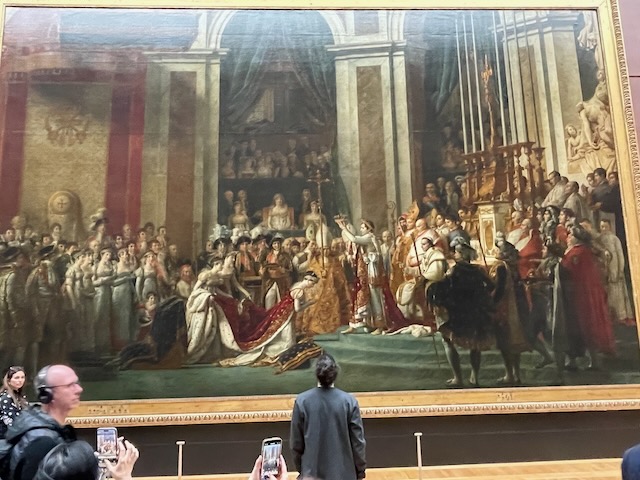
The last two photos in this set are of a painting of an event that took place in happier (?) days: The Consecration of the Emperor Napoleon and the Coronation of the Empress Joséphine in Notre-Dame Cathedral on 2 December, 1804. Since Napoleon essentially crowned himself, I saw this painting as a chilling but eminently plausible long-term strategy of a certain gilt-and-pomp-loving candidate in the 2024 U.S. presidential election.





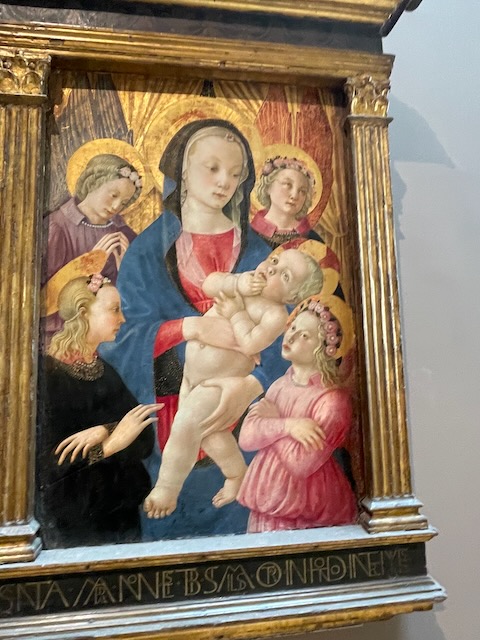
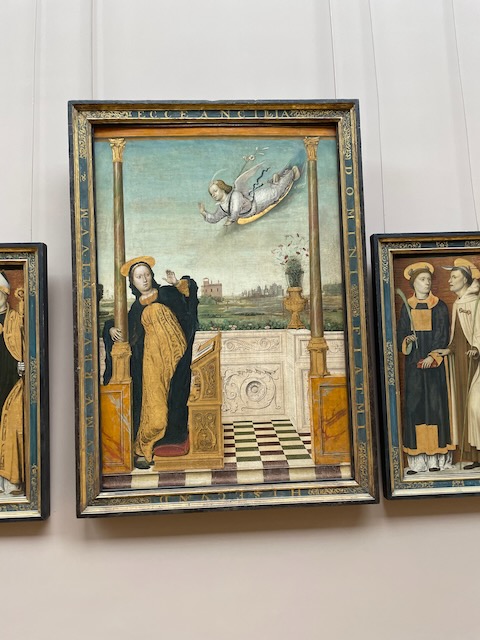
I am always impressed by the effect religious enlightenment and enthusiasm (or perhaps the fear of God) have had on the artistic initiatives of some of the world’s most noted visual artists and musicians. There were many outstanding examples of such works at the Louvre, although mythology was the source of inspiration for many artists too.






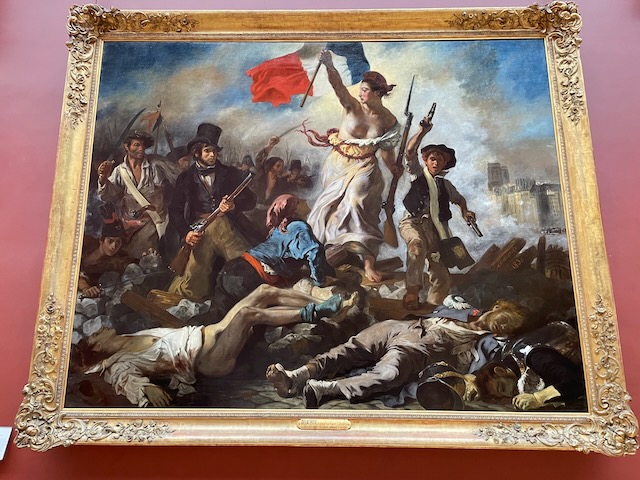
I liked the Delacroix paintings (below) very much, perhaps because of the immensity of their scale and subject matters.
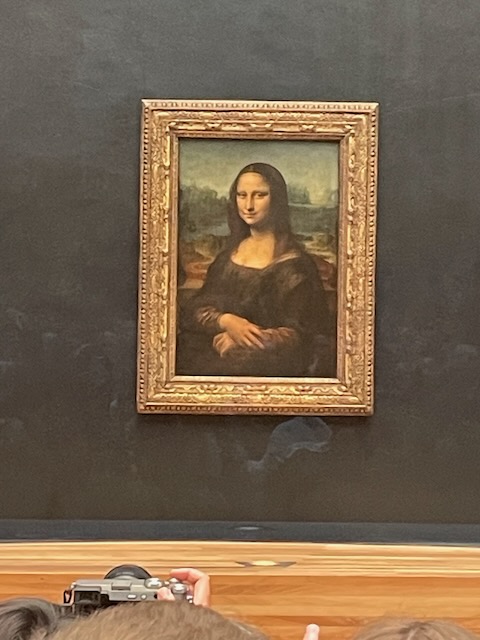
And at long last we got to see the Mona Lisa. The Louvre runs a very tight ship when it comes to what is likely the most famous work of art in its collection: After joining a carefully corralled group, we inched forward for about half an hour until we finally reached the wooden railing that separated us from the Da Vinci masterpiece. There, three uniformed staff members gave us maybe a minute to get our unobstructed photos before they hustled us out of the room.






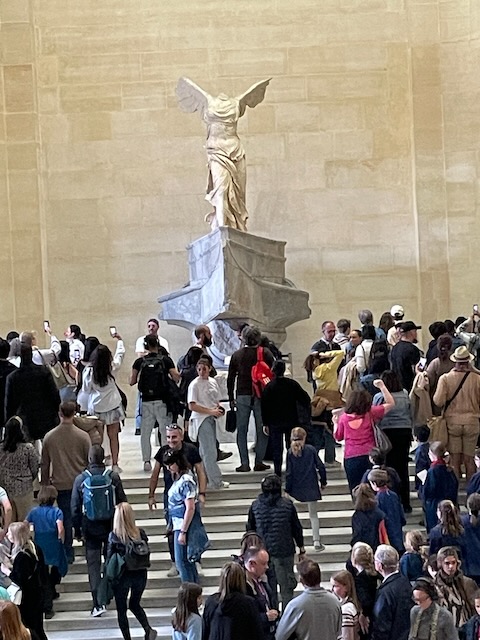
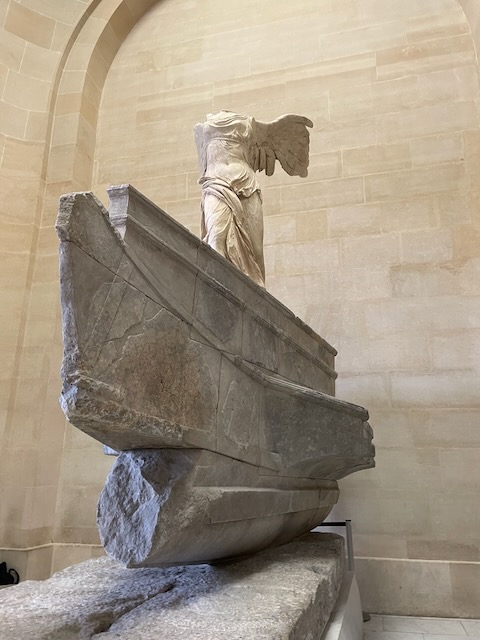
I think my favourite installation at The Louvre was the magnificent Winged Victory of Samothrace, which is “a votive monument originally found on the island of Samothrace, north of the Aegean Sea. It is a masterpiece of Greek sculpture from the Hellenistic era, dating from the beginning of the 2nd century BC” (Wikipedia). I could have gone back to the gallery again and again just to look at that sculpture.


After departing the Louvre we decided to tour the Palais Garnier, one of the homes of the Paris Opera. We were unable to gain admission because it was almost closing time, which is probably just as well as we were fairly tired by then. Later in the week, we did see the building, a masterpiece of baroque architecture. As you will see in a later post, it was worth making a second attempt.


Near our hotel, a lovely plaza (Place Gustave Toudouze) offered four or five restaurants with different types of cuisine, including French, Italian and Indian. We enjoyed the food at the Lebanese restaurant Chez Sofia so much we went back again later in the week. (I even wrote a positive review online.)
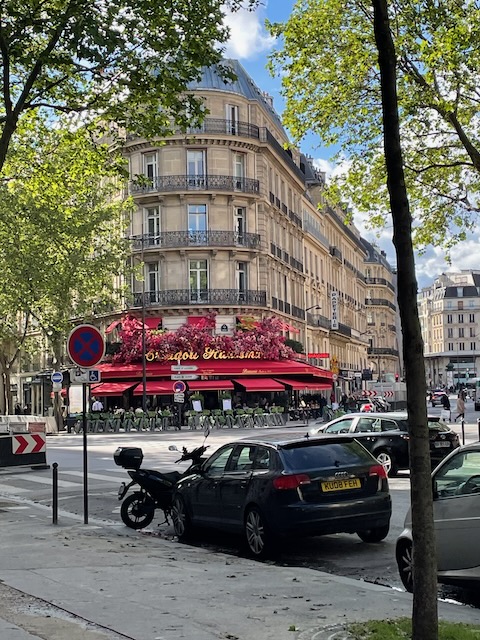
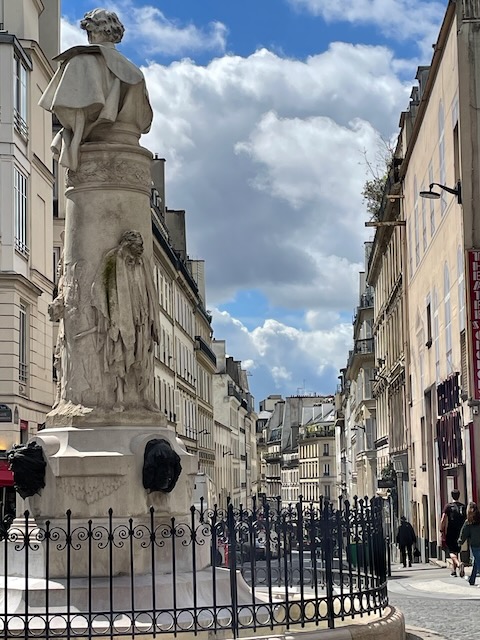
Here are a few other photos of the area near our hotel.



- This aerial photo of The Louvre, which I found on the museum’s website, gives a sense of how massive the complex really is ↩︎
 I'm All Write