Tag Archives: Seine River

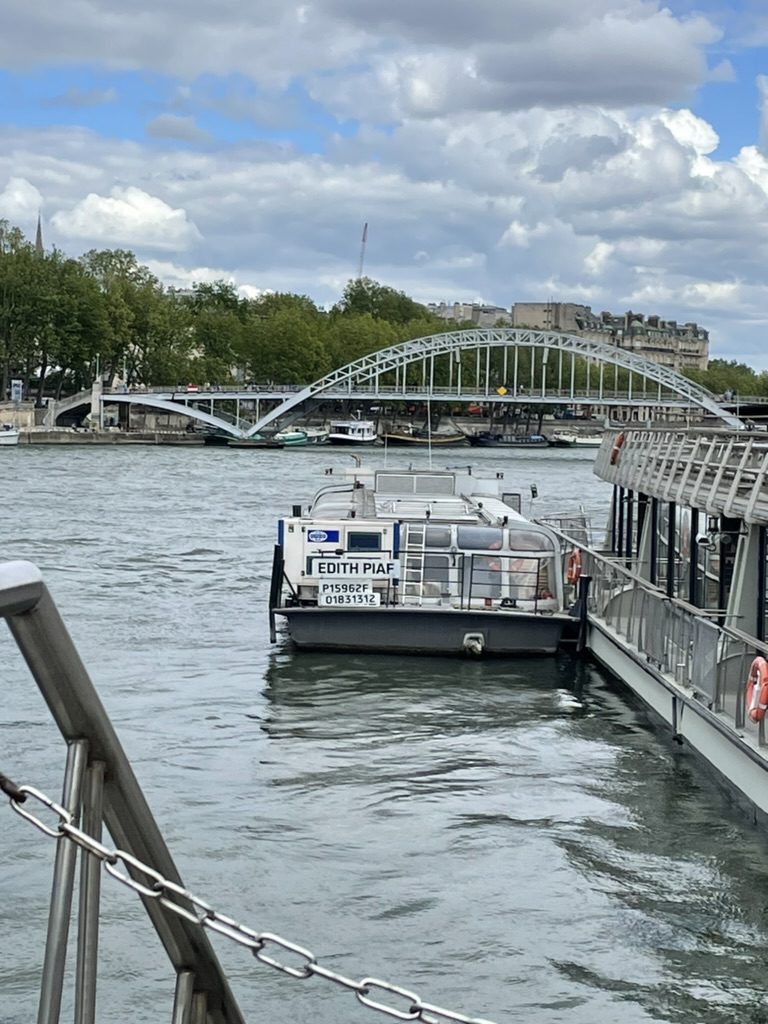
London, etc. and Paris, 15: A River Cruise and a Visit to the Arc de Triomphe, but no sign of Xi Jinping.

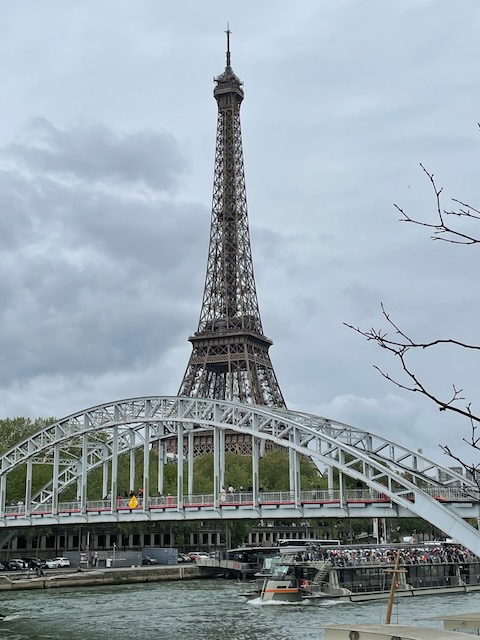
We descended the stairs at the end of the Rue de la Manutention (which sounds a little better in French than it does in English, but not much. The English translation of “Manutention” is “Handling”), and made our way to the footbridge across the Seine that would take us to our river tour.

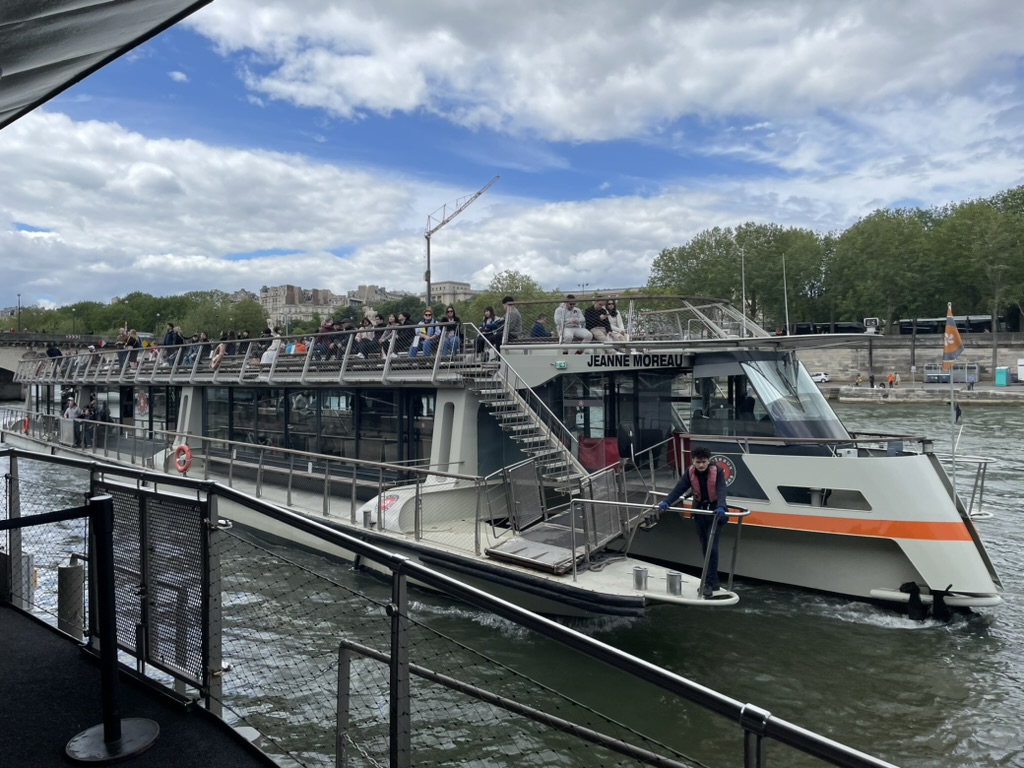
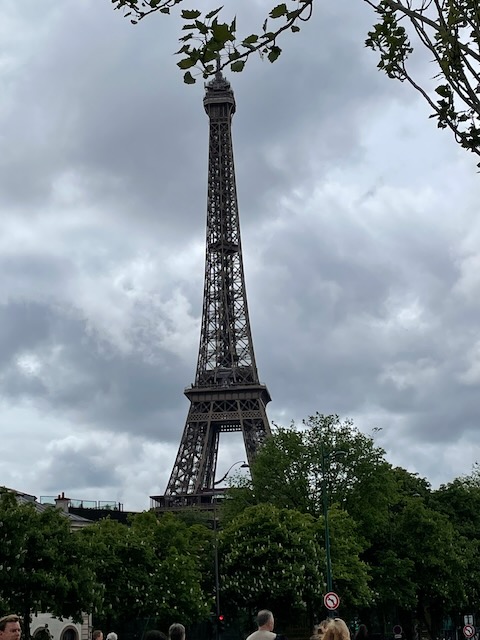
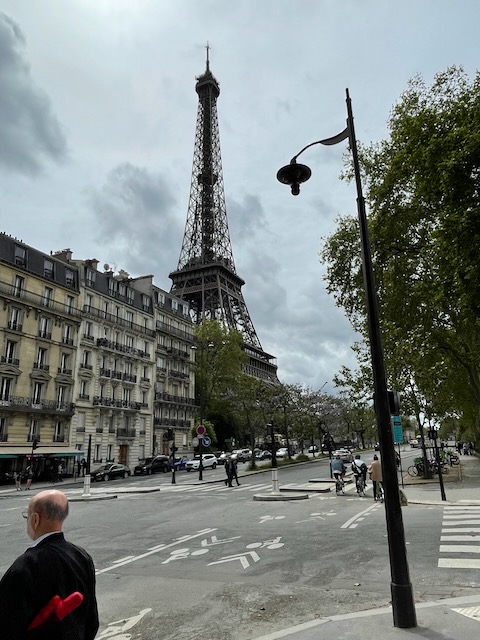
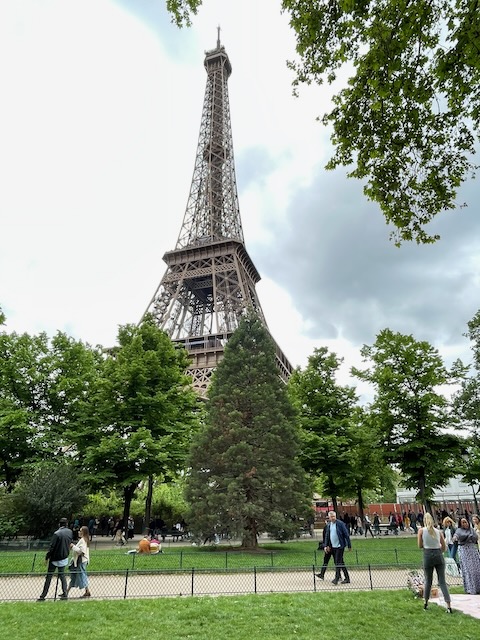
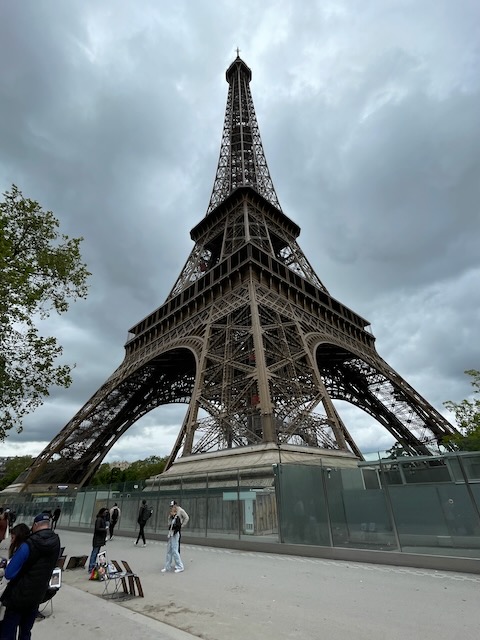
The river cruise in Paris starts just below the Eiffel Tower. I will spare you the ten or twenty photos I added that day to my already ridiculously large collection of Tower photos, but there are many pix of that landmark on my last post, if you have a hankering.

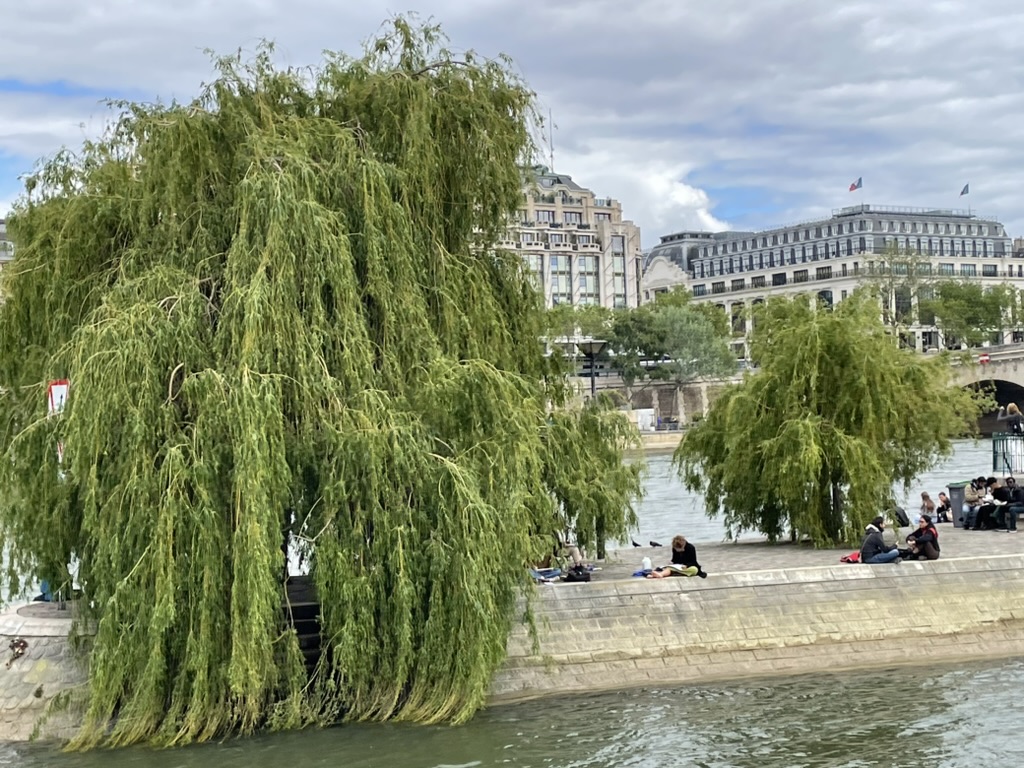
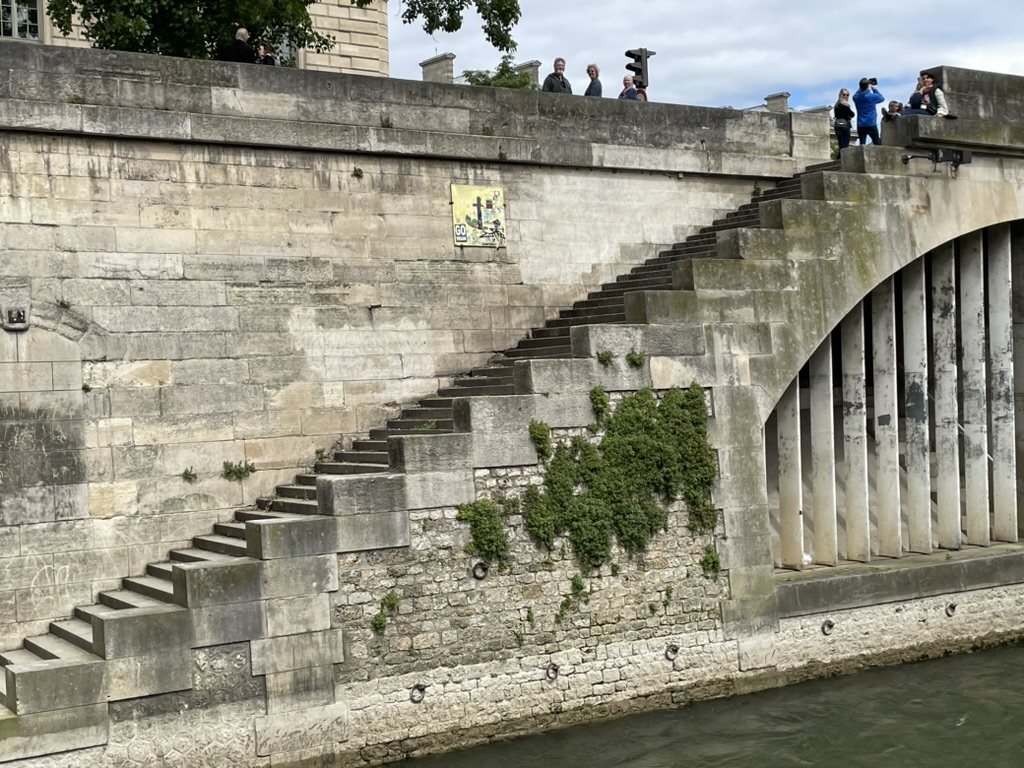
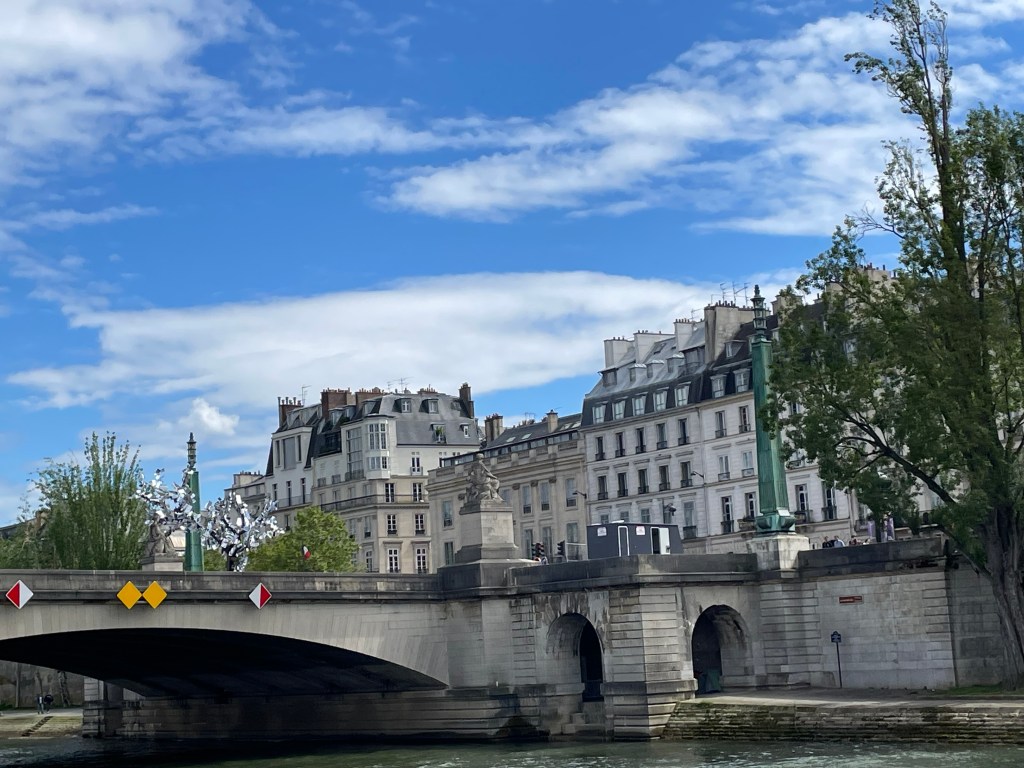
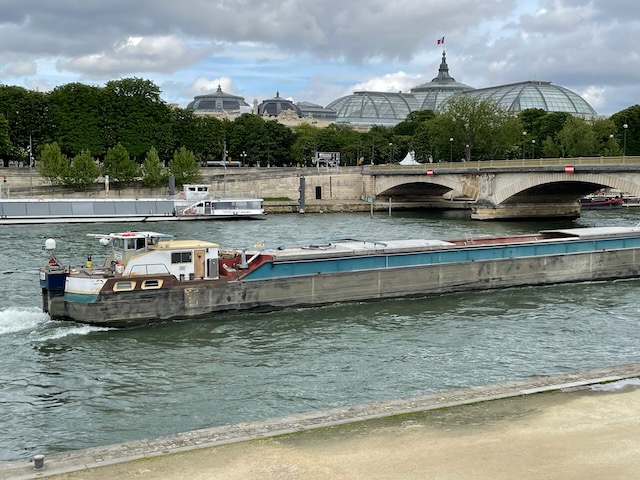
There is a very large island in the Seine east of the Musée D’Orsay called “Île de la Cité.” Just east of that is another, smaller island that fits nicely against the first (just as though it all used to be one big island!) called Île Saint-Louis. The cruise took us around that second island and then headed back toward its home dock.

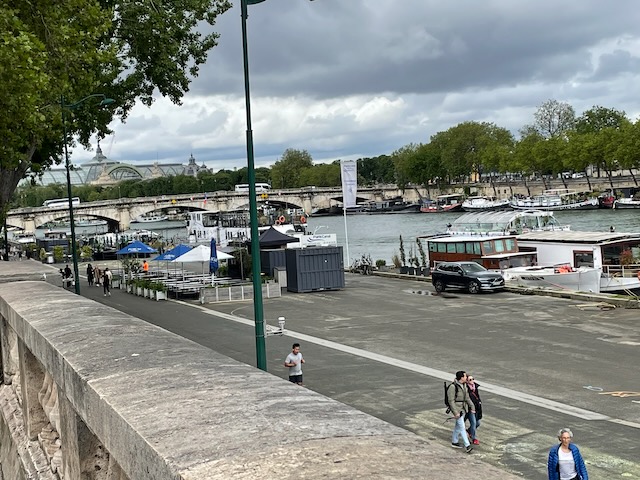
Here are some of the sights we saw on the trip.

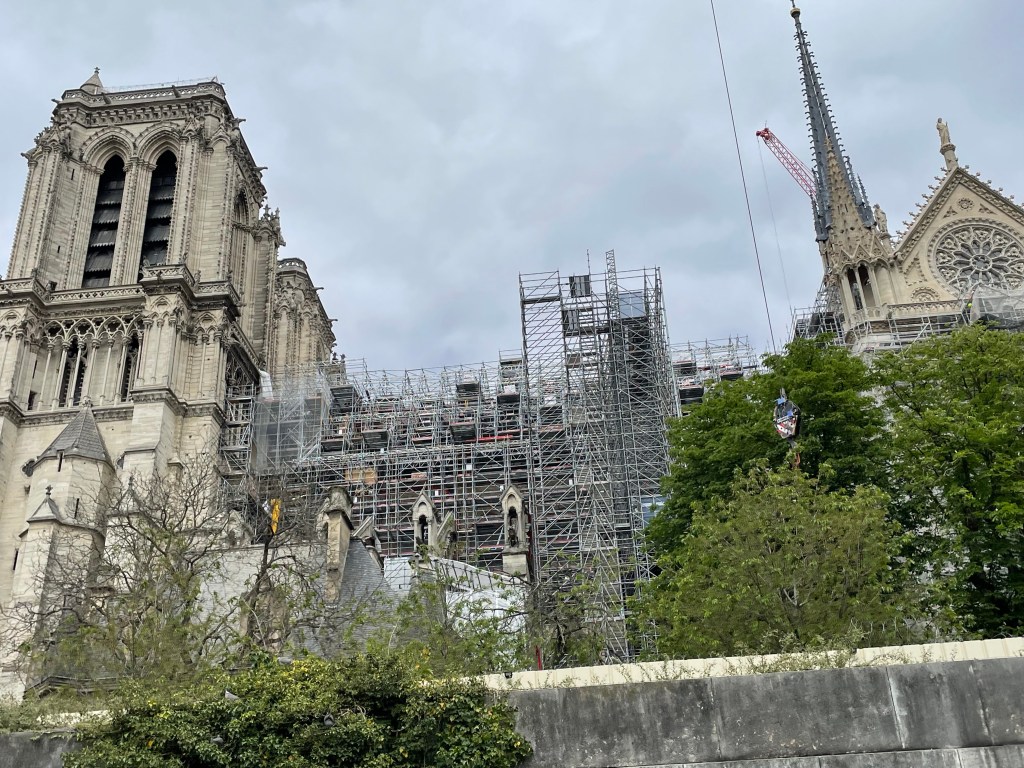
One of the highlights of the cruise was a close-up of Notre-Dame de Paris, which suffered a disastrous fire on April 15, 2019. The meticulous and very expensive reconstruction of the mediaeval Catholic cathedral, and particularly its spire, continues. It is expected to reopen in December of 2024.

There was a large group of high school students on board with us, and they insisted on making a howling noise whenever we went under one of Paris’s many bridges, thereby allowing us the opportunity (as it were) to hear not only them, but also their echoes.

Kids!

After the tour, we took the Métro to the Arc de Triomphe (1806) which is located at the west end of the Champs-Élysées. (Beyond that, the road is called l’Avenue de la Grande Armée.) We had seen the east end of the Avenue des Champs-Élysées earlier in the week, when we visited the Place de la Concorde.

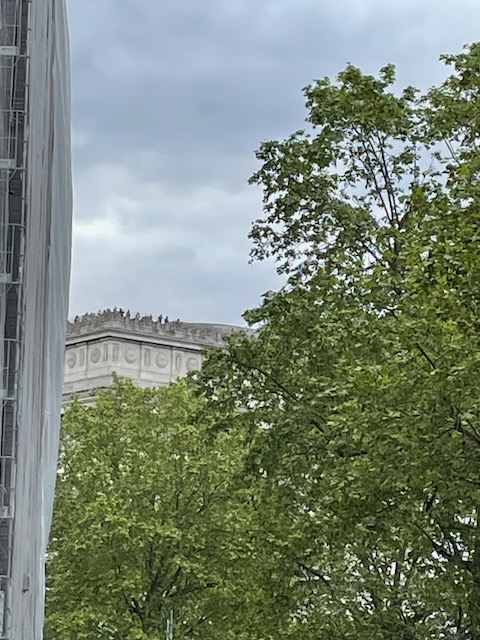
We declined to climb to the roof of the Arc de Triomphe and instead satisfied our curiosity from across the immense traffic circle that surrounds the monument.

“The Arc de Triomphe de l’Étoile, often called simply the Arc de Triomphe [… ] stand[s] […] at the centre of Place Charles de Gaulle, formerly named Place de l’Étoile—the étoile or “star” of the juncture formed by its twelve radiating avenues […]. The Arc de Triomphe honours those who fought and died for France in the French Revolutionary and Napoleonic Wars, with the names of all French victories and generals inscribed on its inner and outer surfaces. Beneath its vault lies the Tomb of the Unknown Soldier from World War I.” (Thanks as always to Wikipedia, which I support with a donation every month as I’m sure all regular users of that resource do. It’s always wise to double-check references on the site if you are citing the material in Important Documents, and some articles are biassed or incomplete, but in this age of disinformation the checks and balances on Wikipedia make it a very reliable source of background information on just about any topic you can think of. Plus, if you find a mistake, you can fix it yourself.)

I am a fan of the Tour de France, which always ends up circling the Arc de Triomphe during the final stage before heading to the finish line, so I took an extra pleasure in visualizing the peleton zooming around the monument. I would not personally want to cycle over all those cobbled streets, but then there is nothing in the Tour de France that tempts me to participate as anything but a spectator.

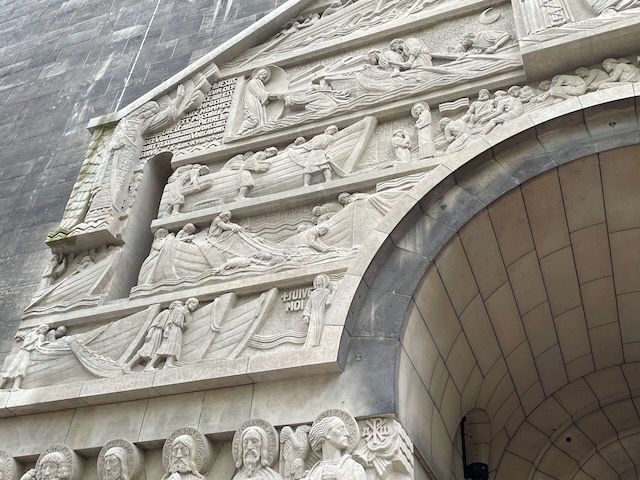
Later we walked past the magnificent Église Saint-Pierre de Chaillot, which opened in 1938 on a site the Roman Catholic Church has owned? occupied? since the 11th Century. “The church consists of three parts: a 65-metre high bell tower that dominates the whole and is located on Avenue Marceau, a low church, invisible because it was built like a crypt above which rises the main church with a central bell tower. The building is also characterised by its monumental façade on the avenue. […] It is constructed in the Romano-Byzantine style” (Wikipedia).

We didn’t go inside but the photos on the Wikipedia site suggest that the interior is as magnificent as the exterior.

On our way back to the subway, we found ourselves on a section of roadways near the Pont d’Alma that had been entirely closed off to allow for the safe passage of President Xi Jinping, President of the People’s Republic of China, who we knew from the news was dining with President Macron that evening. We probably saw the vehicle that carried him past us, but since a lot of very official vehicles with dark windows went by, we weren’t sure which one it was. In the video and photo below you can see Xi supporters on the east side of the bridge awaiting his arrival. I don’t think they saw him, either. One of the people watching with us (of which there were very few. Most people just went on about their business) said that street closures like this for visiting dignitaries are common in Paris. In other words, as we waited for a glimpse of Xi, our status as tourists was probably obvious to all of the locals – and maybe even to the President of China.

We may not have seen the President, but we were rewarded for our wait with a rainbow.

London, etc. and Paris, 14: A Good Day for a Stroll with Close-ups of The Eiffel Tower and the Moulin Rouge

Paris is best seen on foot, and although we hadn’t exactly planned it, we were able to take advantage of our one Sunday in the city to walk and walk and walk.

Our original intention that day had been to visit the Musée D’Orsay, which offers free admission to everyone on Sundays. However, the Musée was “sold out” of free tickets so we weren’t able to visit. Turns out that even when tickets are free, you still need to book them in advance to secure an entry time – which we had not done because we didn’t know it was necessary. So NB: if you want a free ticket to the Musée D’Orsay, book it in advance online. (I’m sure this tip is applicable to other museums and galleries as well.)

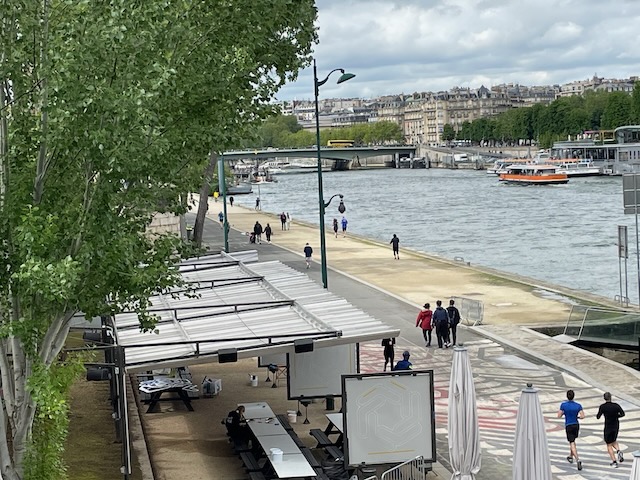
From the museum, we walked down to the Quai D’Orsay. From there, we made our way past several landmarks and bridges along the Left (south) Bank of the Seine to the Eiffel Tower, then crossed a bridge and walked back up the Right Bank. Later we made our way by subway to Place Pigalle, where we checked out the Moulin Rouge and marvelled at the dozens upon dozens of sex shops in the area. While I imagine there are some economic advantages to putting all of these outlets (for which the French term is “sex-shops”) in the same part of the city (reduced costs for advertising, shipping, signage, etc.) due to economy of scale or something, I can only thank the powers-that-be that Paris hasn’t used the same kind of organizational model for its patisseries.

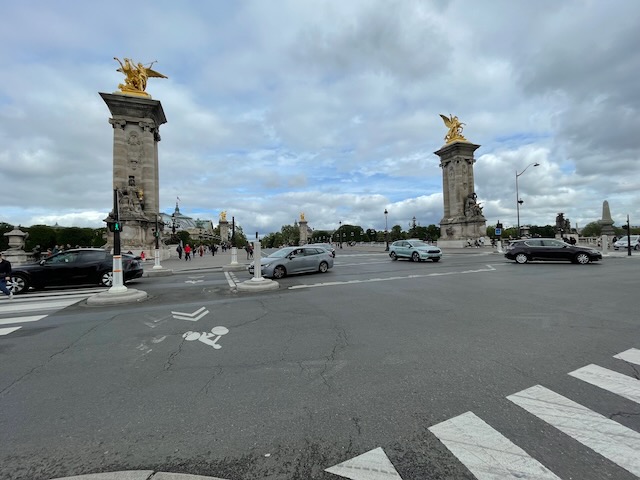
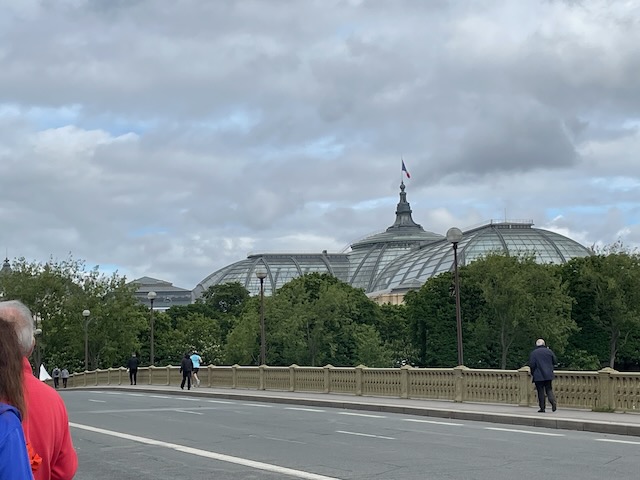
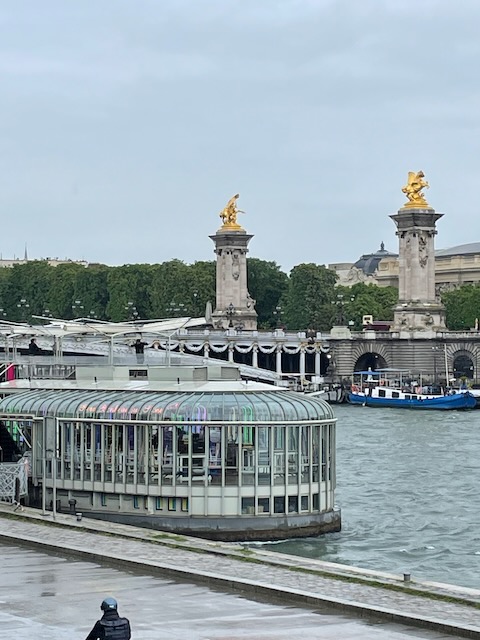
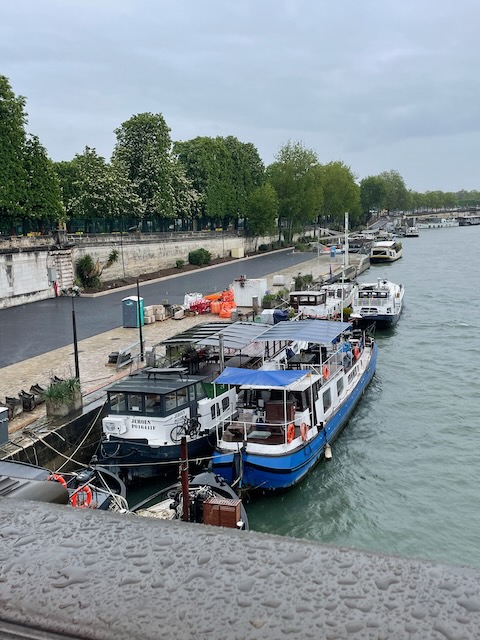
Our stroll down the Left Bank took us (for the second time) past the National Assembly and the Pont Alexandre III, and offered views across the river of Right Bank attractions, including the Grand Palais and some of the buildings that border the Tuilleries Garden.

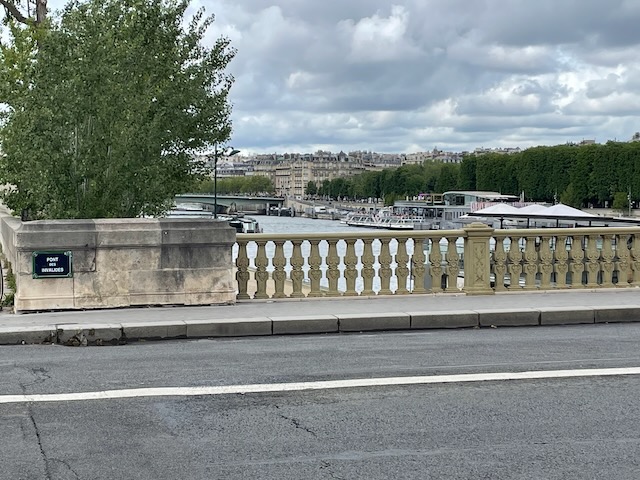
In the last volume of his novel, Marcel Proust mentions how, one evening during a blackout early in the first World War, soon after the clocks had been turned forward in the Spring, he stood not far from the Pont des Invalides on the Left Bank and looked across the Seine at the Trocadero. As I had hoped to do before I even went to France, I was able to replicate that experience (albeit in the daytime and not during a war). It was a small thing, but it pleased me.

The Trocadero, which we saw only from a distance, is a neighbourhood in the 16th arrondissement on the north (right) bank of the Seine, almost directly across from the Champs de Mars and Tour Eiffel. The Palais du Trocadéro was built on the Chaillot Hill for the World’s Fair in 1867. It was shaped like a huge concert hall, featured an enormous pipe organ (since moved to Lyon but still in use), and was named after a battle won by France in Spain. The building did not prove popular and it was partially demolished and then rebuilt in time for another World’s Fair, in 1937, at which time it was renamed Le Palais de Chaillot. The grounds include gardens, fountains and an underground aquarium, and I have added it to my “to do” list for next time.

“The Hôtel des Invalides, commonly called Les Invalides, is a complex of buildings in the 7th arrondissement of Paris, France, containing museums and monuments, all relating to the military history of France, as well as a hospital and an Old Soldiers’ retirement home, the building’s original purpose” (Wikipedia). On July 17, 1879, Parisian rioters ransacked the Hôtel for guns and ammunition before storming the Bastille.

From Wikipedia: “The Eiffel Tower is a wrought-iron lattice tower on the Champ de Mars in Paris, France. It is named after the engineer Gustave Eiffel, whose company designed and built the tower from 1887 to 1889. Locally nicknamed ‘La dame de fer‘ (French for ‘Iron Lady’), it was constructed as the centerpiece of the 1889 World’s Fair, and to crown the centennial anniversary of the French Revolution. Although initially criticised by some of France’s leading artists and intellectuals for its design, it has since become a global cultural icon of France and one of the most recognisable structures in the world.”

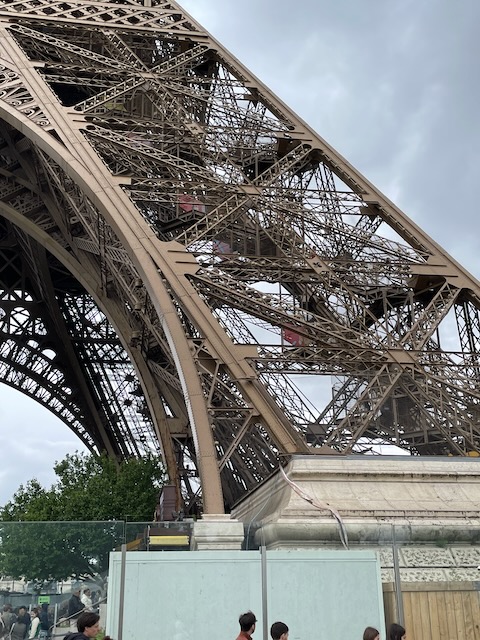
When you actually see the Eiffel Tower in real life, you cannot stop taking photos of it. Or at least, I couldn’t. I have about 200 photos of the Eiffel Tower.

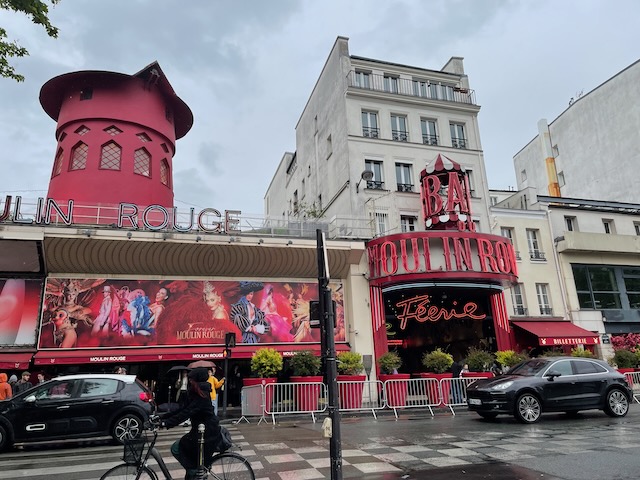
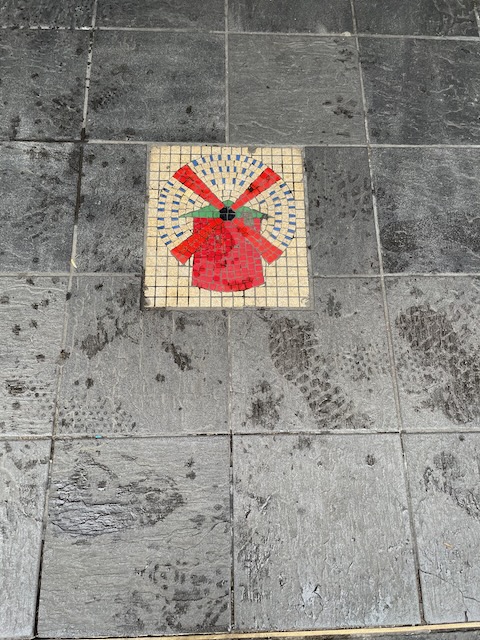
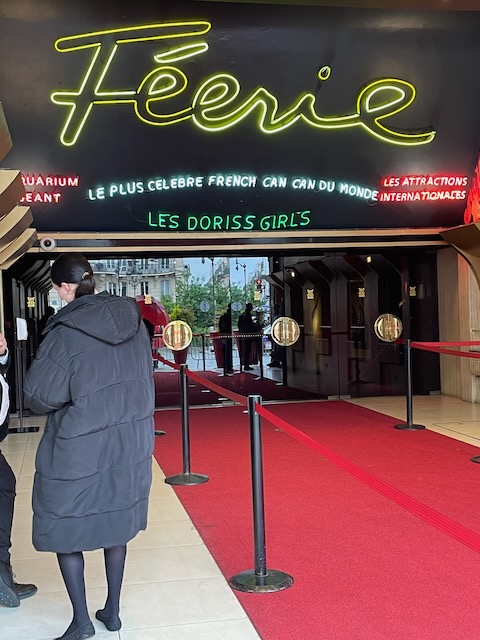
In the middle of a night shortly before we went to France, the famous windmill atop the famous Moulin Rouge fell off. It had not been reattached when we visited, so we had to make do with a Moulin Rouge cassé. Moulin Rouge is one of my favourite movies, so it was a real treat to visit the neighbourhood and the entryway to the facility, windmill or no windmill.

We did not attend any shows inside the Moulin Rouge but I got a few photos of what visitors might have expected to spend, and to see.

London, etc. and Paris, 11: “I Love Paris… when It Drizzles.”

On Thursday morning, after settling in to our new, improved quarters and checking out the neighbourhood, we set out to discover Paris. (Arnie had been to France in the 1970s, but I had never been before.) It was still raining, but for the most part the rain was a fine drizzle so it didn’t interfere with our stroll.

After consuming a bowl of French onion soup at one of the many small cafés that edge the streets of Paris (because of course we did. Very tasty), we took the Métro to the south side of the Seine, emerging near the Quai D’Orsay, and began to walk west along the Left Bank/ Rive Gauche. First we passed the Assemblée Nationale, which is France’s lower House of Parliament, the upper being the Senate.

France, like most democracies, has three branches of government: legislative, executive, and judicial. The President (currently Emmanuel Macron), a position for which an election is held every five years, appoints the Prime Minister (normally the head of the party with the most seats); the Prime Minister and his or her deputies make up the Government. I understand that elected representatives whose politics are on the left sit on the left side of the PM in the Assemblée, and those whose politics are on the right sit on the right. Seems sensible.

(Please click on a photo for a better look. If you are reading this as an email, click “Read on Blog” (at the top of the email) to see larger versions of the photos.)

The French electoral system is somewhat confusing to an uneducated outsider (as are most countries’ electoral systems, come to think of it. Autocracies and dictatorships are easier to understand: rulers like Nicolás Maduro in Venezuela just retain control of everything, no matter what the voters decide they want). The French system of government is additionally confusing since France is a founding member of the European Union, so some of its legislative functions now fall under the purview of the European Commission.

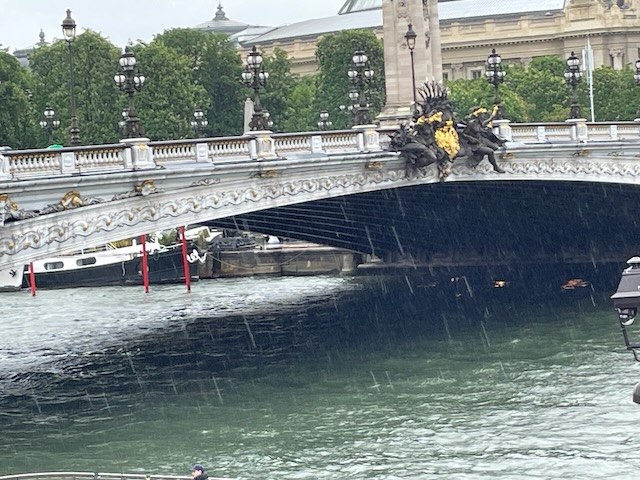
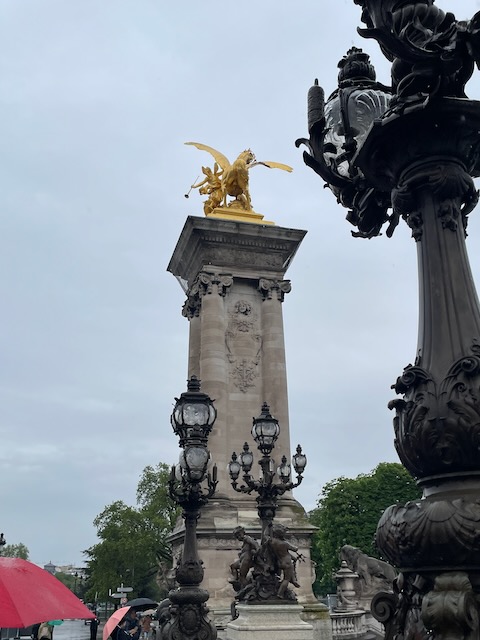
We continued along the Left Bank until we reached the Pont Alexandre III. From Wikipedia, I learned that “[This] Beaux-Arts style bridge, with its exuberant Art Nouveau lamps, cherubs, nymphs and winged horses at both ends, was built between 1896 and 1900. It is named after Tsar Alexander III of Russia, who had concluded the Franco-Russian Alliance in 1892. His son Nicholas II laid the foundation stone in October 1896. The style of the bridge reflects that of the Grand Palais, to which it leads on the right bank.” (Well said, Wikipedia.)

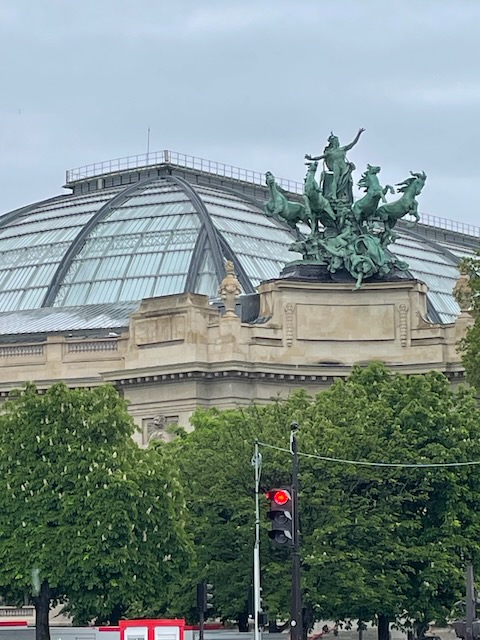
The Grand Palais was closed for renovations when we were there, but would reopen temporarily for the Olympics in August. (The fencing and taekwondo events were held there.) The full site will reopen to the public in 2025. The Grand Palais is an exhibition hall, museum and historic site dedicated to French art, and it sounds as though it is quite spectacular. We’ll have to go back to investigate it (and Notre-Dame Cathedral, of course, which was still closed for restoration following the terrible fire in 2019).

We kept catching sight of the Eiffel Tower and since I couldn’t get over the fact that we were actually IN Paris looking at THE ACTUAL Eiffel Tower (of which I have owned a small replica since my sons visited the city in about 1992), I kept taking photos of it. As a result, I now have about 200 photos of the Eiffel Tower. I will not post them all.

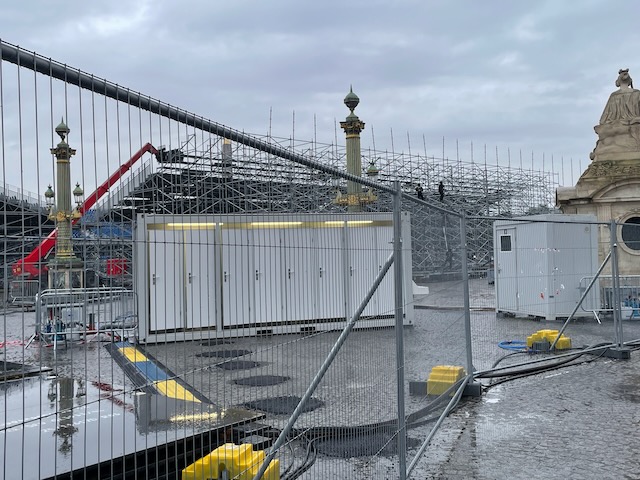
After walking in front of the Grand Palais we took a right turn and headed up the Champs-Elysées to the Place de la Concorde, the largest square in Paris, where there was a lot of activity going on to prepare for the upcoming Olympics. The Place Concorde was the site of the BMX freestyle, breaking, skateboarding and 3X3 basketball events and as the photos illustrate, a lot of temporary seating was being created when we were there.

As we walked, I spent a lot of time just marvelling to myself that I was actually on the Rive Gauche, walking by the Quay D’Orsay, crossing the Seine, catching glimpses of the Eiffel Tower, standing in the Place de la Concorde. It was both magically surreal and exactly as I had expected it would be: a perfect combination. It also made me think that if you read enough books and see enough films set in a certain location (or point in history, I suppose), it is almost as good as visiting it.

Almost, but not quite.

_________________

Addendum

Did you know that “I Love Paris” was written by Cole Porter and published in 1953? It’s been “covered” by just about everyone – notably Bing Crosby, Andy Williams, Ella Fitzgerald, Doris Day, Dean Martin, Frank Sinatra and Screamin’ Jay Hawkins. It’s a short song, but long enough to become an ear worm.