Travel date: Thursday, September 18, 2025 (Part 1)
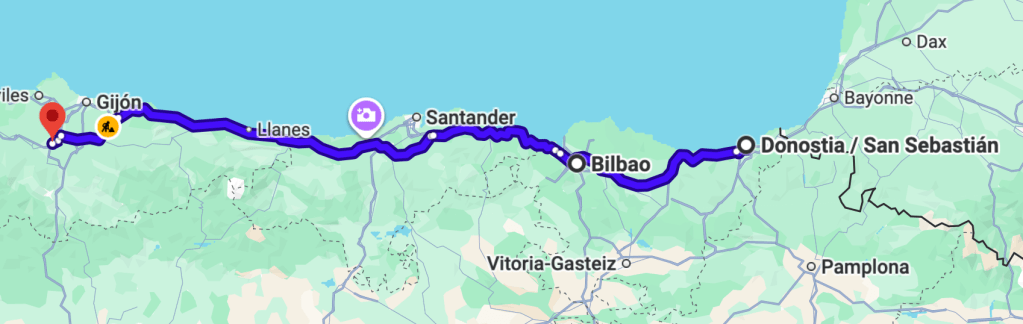
After a laid-back couple of days enjoying extraordinarily beautiful seascapes, we were challenged with a jam-packed itinerary on September 18 that took us all the way from San Sebastián to Oviedo, also on the Bay of Biscay. We did so much on September 18 that I’ve divided the day into two posts.
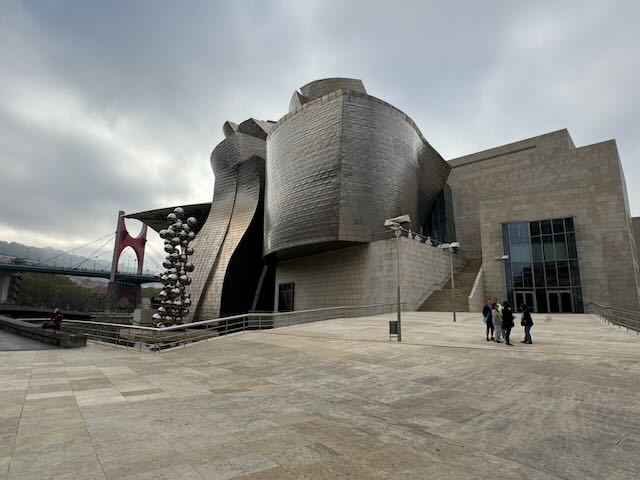
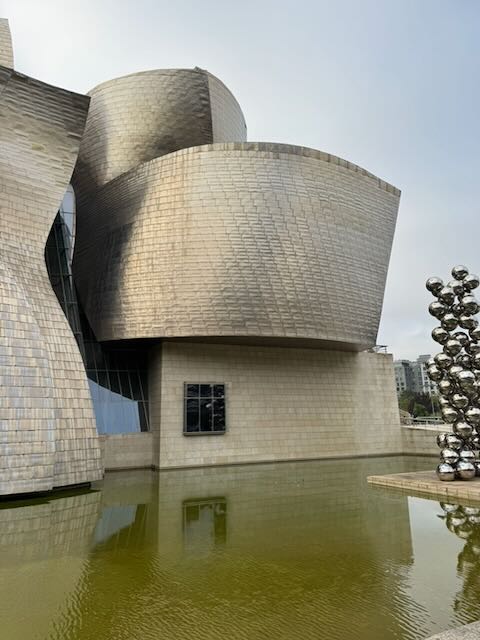
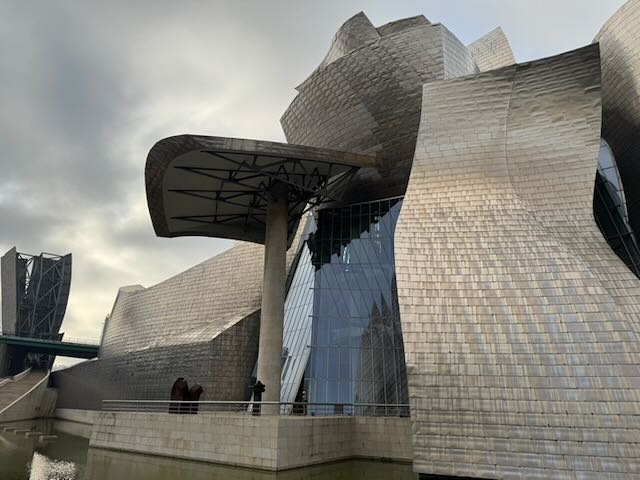
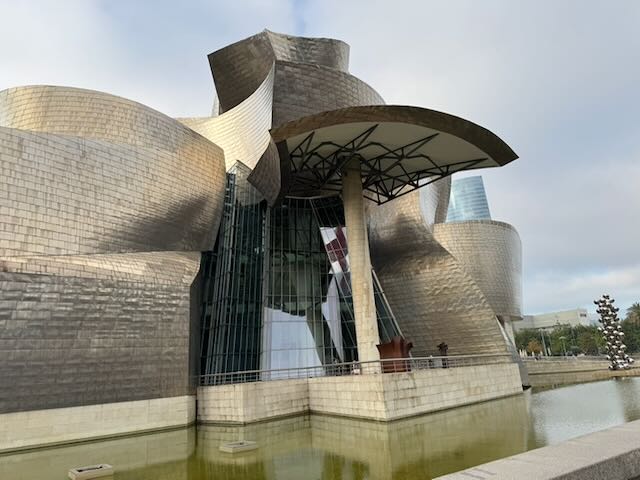
Our first stop was the Guggenheim Museum in Bilbao. Seeing Frank Gehry’s masterpiece has been on my “bucket list” since I first heard about it, decades ago, and is one of the reasons we went on a tour of Northern Spain rather than Southern Spain (or anywhere else) last year.
Bilbao, in the Basque autonomous region in the northeast of Spain, was once a thriving centre for the metallurgical and naval industries, but it fell into economic decline in the 1980s due to the petroleum crisis and the trade dynamics created by Spain’s having joined the European Union. Bilbao, Spain’s fifth-largest “municipal agglomeration,” is located on a tidal estuary formed where the Nervión and Ibaizabal rivers join – 16 km inland from the Bay of Biscay. Major flooding of the estuary in 1983, combined with social unrest and a dwindling population (from 433,000 in 1981 to 372,000 in 1991), led to the Basque Administration’s search for strategies to revitalize Bilbao. The members of the Administration conceived the idea of requesting assistance from the Solomon R. Guggenheim Foundation in New York City to build a contemporary art museum that they hoped would turn the fortunes of the city around, by attracting tourists and commerce.
......
Within six months of receiving approval for the museum’s construction, the Administration and the Guggenheim Foundation had selected Frank Gehry as lead architect for the project. Gehry (1929 to 2025), a Canadian by birth, was already well respected as an architect before he started work on the Bilbao project, and following that achievement he created several magnificent structures in other places (including the Dancing House in Prague, the Marqués de Riscal Hotel south of Bilbao, and the Walt Disney Concert Hall in Los Angeles). However, the museum in Bilbao is considered by many to be his master work.
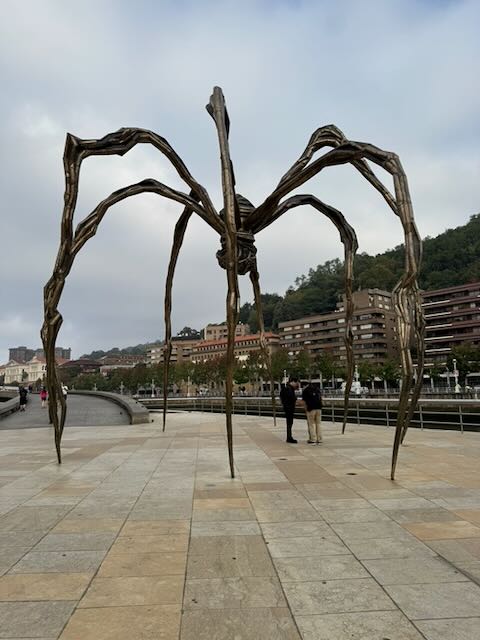
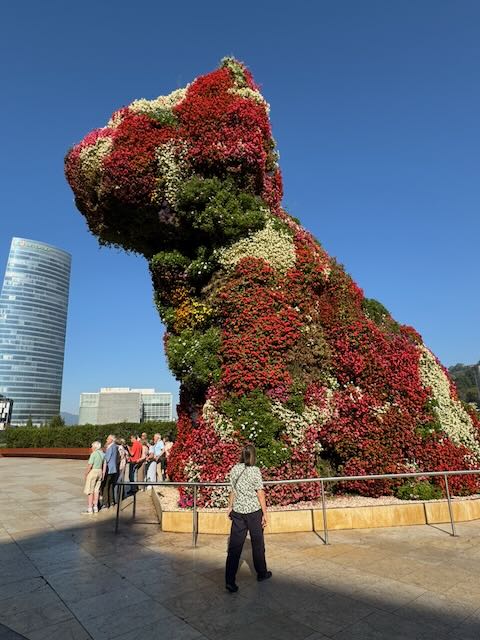
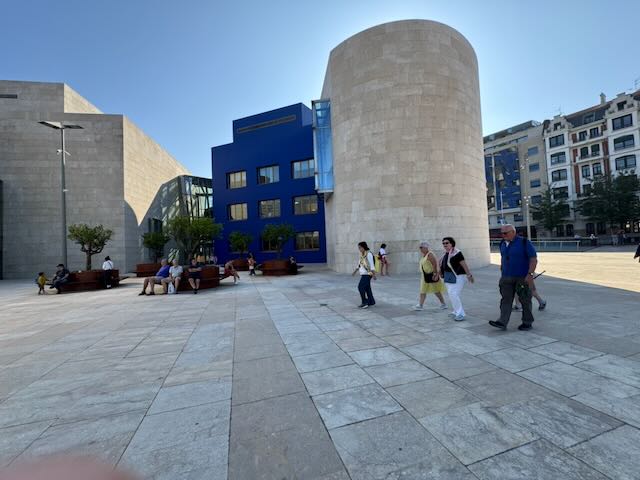
“Maman” by Louise Bourgeois“Puppy” by Jeff Koons, in Museum SquareThe blue building houses the museum’s officesThe bronze and steel sculpture by Louise Bourgeois named “Maman” appears in several locations around the world, including outside the National Gallery of Canada in Ottawa. It is 9 metres tall and symbolizes maternal strength and protection, featuring a cage-like belly filled with ten marble eggs
.
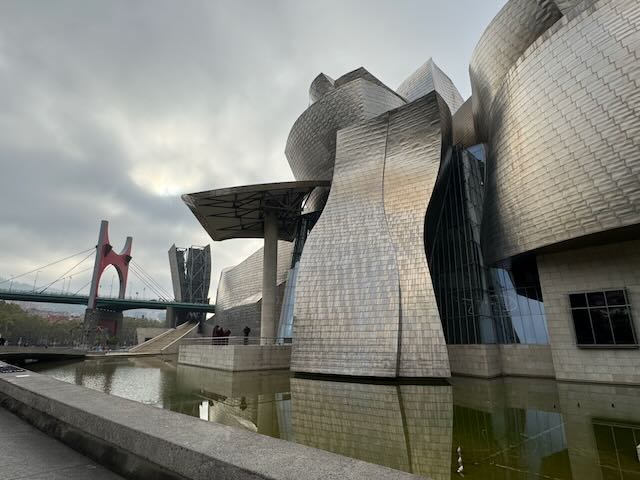
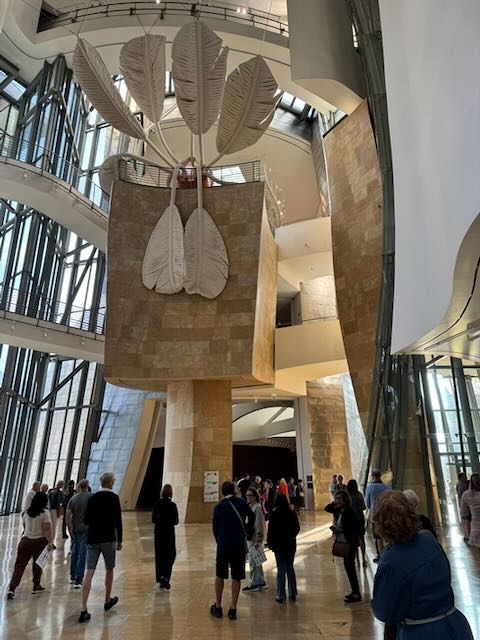
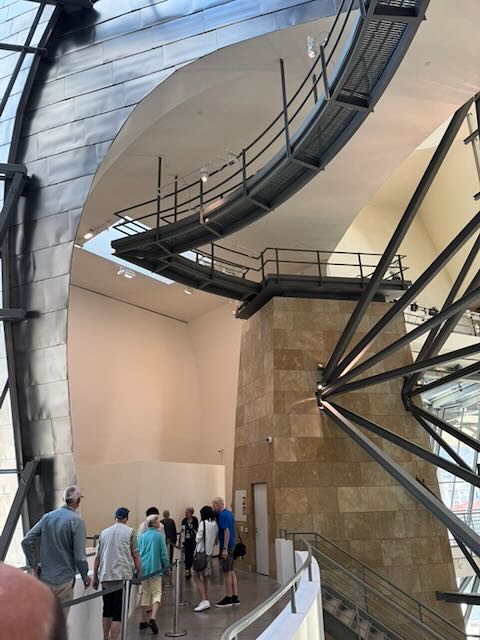
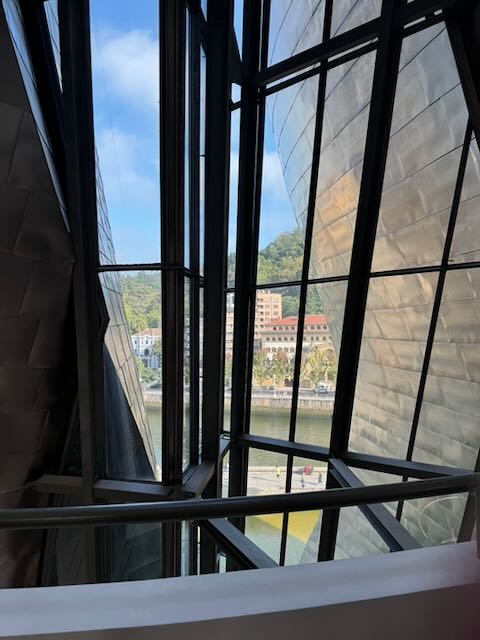
What is distinctive about the Bilbao Guggenheim is its very complex shape, which is as much a work of art as it is a functional building. Due to Bilbao’s location and its industrial history, Gehry formed the gallery from shapes that are reminiscent of sailing vessels and evoke the area’s history with the metallurgical industry. He used titanium to finish the exterior curved walls, and limestone for the vertical walls. He also made extensive use of glass and steel.
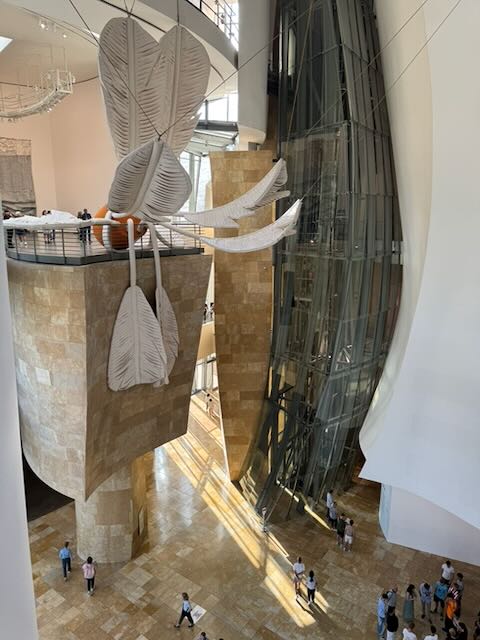
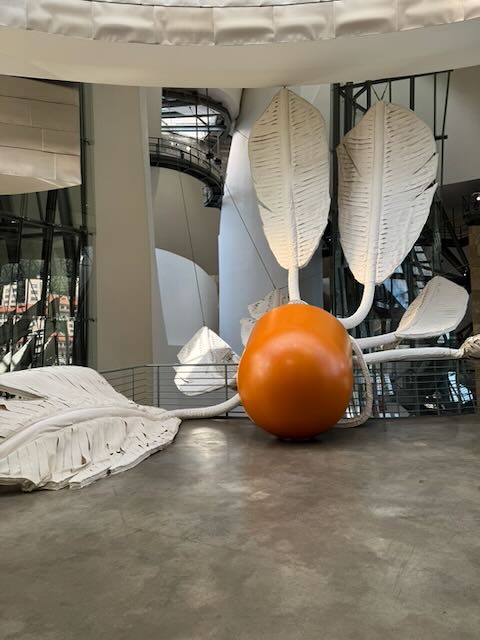
.The AtriumSecond floor.“Soft Shuttlecock” by Claes Oldenburg and Coosje van Bruggen“Soft Shuttlecock”
Gehry designed the many curves of the building using a computer program called CATIA, which until then had been used primarily in the aviation industry. The choice of titanium – non-corrosive and light-weight – for the “skin” allows the curvilinear aspects of the building to glow with light and glint like the scales of a fish, even on the gloomiest days. Overall, thirty-three thousand very thin titanium panels, each 80 x 115 cms, overlap like the shingles on a house.
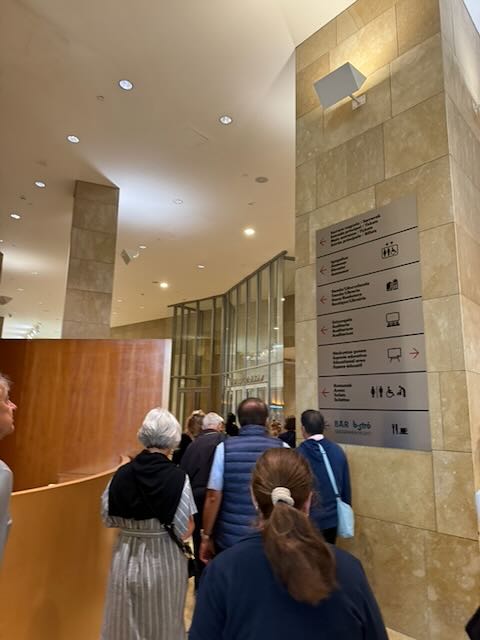
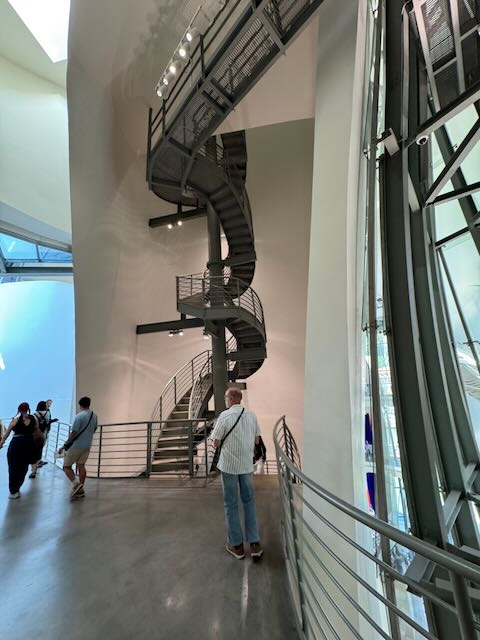
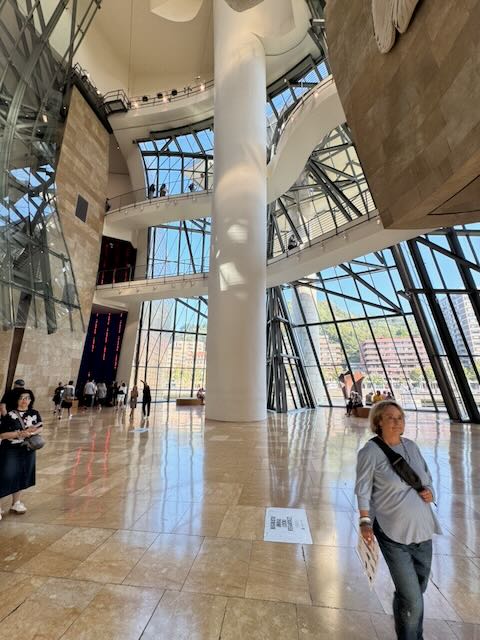
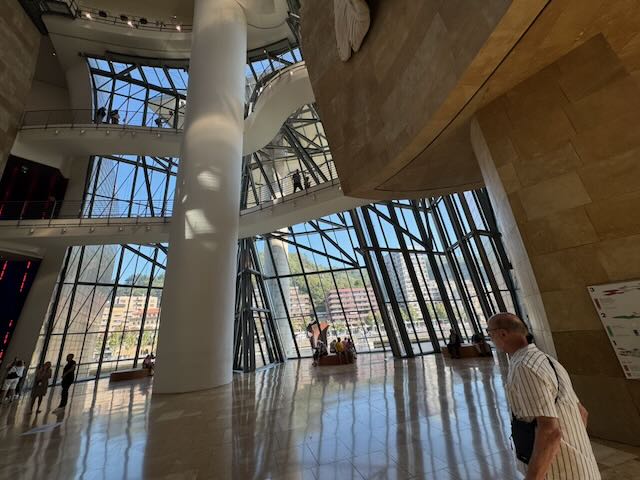
The interior of the museum is remarkable as well – due primarily to its wide open spaces. The walls themselves have been created to bear the weight of the building and its roof, which obviates the need for complex support systems. There are three floors in the museum and 20 galleries, including one of the largest exhibition spaces in the world – the ArcelorMittal Room, which is 2,768m2 and is designed for huge art installations. Some of the smaller galleries are conventional in design; others are irregular. The highest and most notable feature of the museum’s interior is the Atrium which, due to the ingenious use of glass and skylights, is filled with natural light.
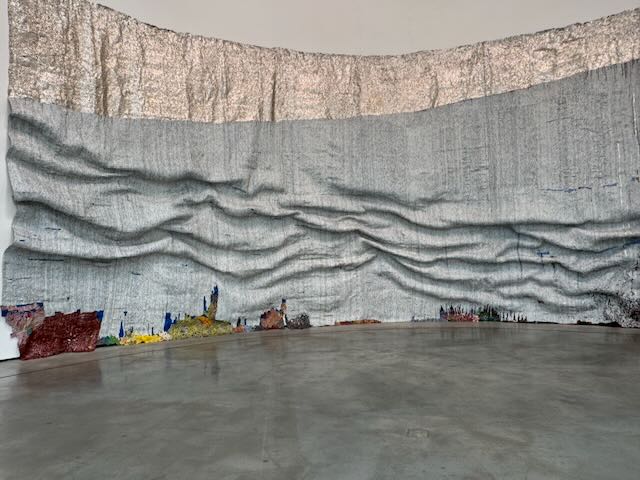
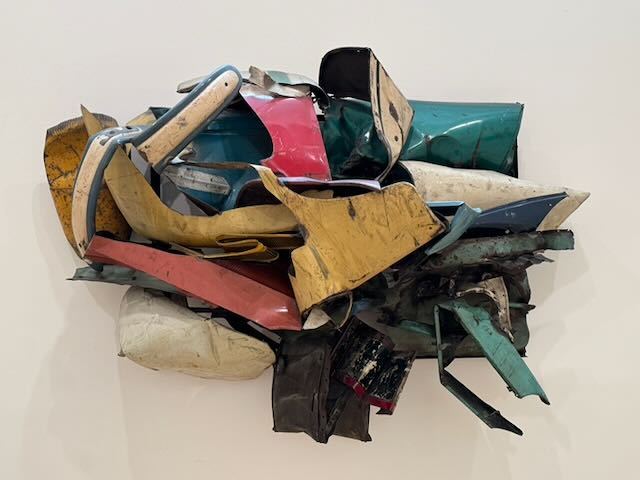
“Rising Sea,” El Anatsui“Dolores James,” John ChamberlainJean-Michel Basquiat,”Moses and the Egyptians”.AtriumSo much light!
The Guggenheim Bilbao took four years (1993 to 1997) to build, and the Basque Administration’s strategy actually worked: the museum transformed the city. The galleries offer visitors works by world-renowned contemporary artists (Jean-Michel Basquiat, Yves Klein, Jeff Koons, and Andy Warhol are among those in the permanent collection), and attracts more than a million tourists a year. Most visitors, if they are anything like me, come to see the museum itself perhaps even more than they do the art within. Today Bilbao is a major tourism and commercial centre, and Frank Gehry’s magnificent facility has attracted many other world-class architects to build other unique structures in or near the city.
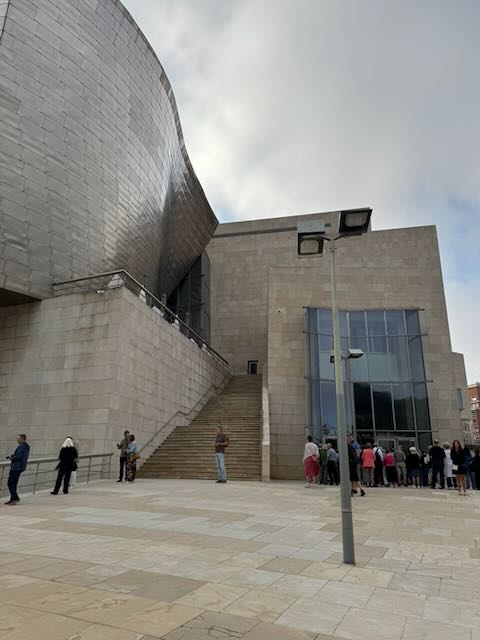
We had only a couple of hours to tour the magnificent facility and while we did a quick overview of the inside galleries and some of the art, we spent most of our time outside, and in the Atrium, admiring Gehry’s astonishing work of architectural genius. I would have relished another few hours or even several days in Bilbao, but I’m delighted I got to see the facility at least once!
On our sixth day in Spain, we crossed from the Basque country in Spain to the Basque country in France for a quick look at the cities of Saint-Jean-de-Luz and Biarritz (also spelled Miarritze). Saint-Jean-de-Luz is only about forty kilometres along the Bay of Biscay from San Sebastian, and Biarritz about 20 km beyond that, so it was a perfect half-day excursion.
Biarritz
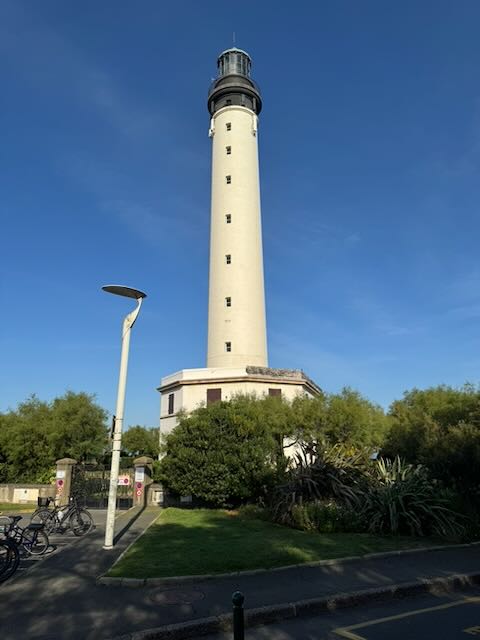
Phare de Biarritz....
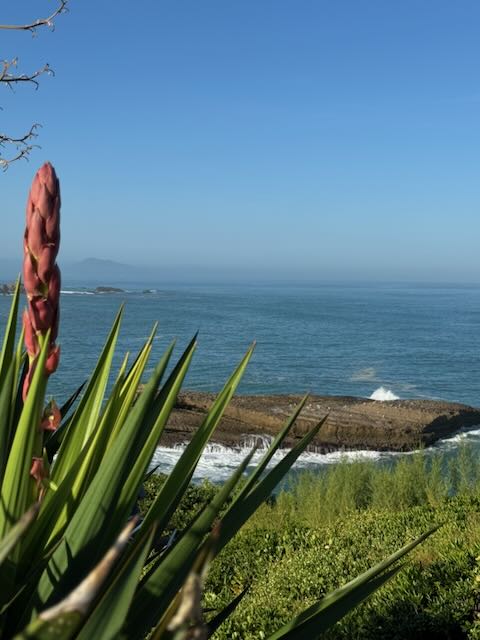
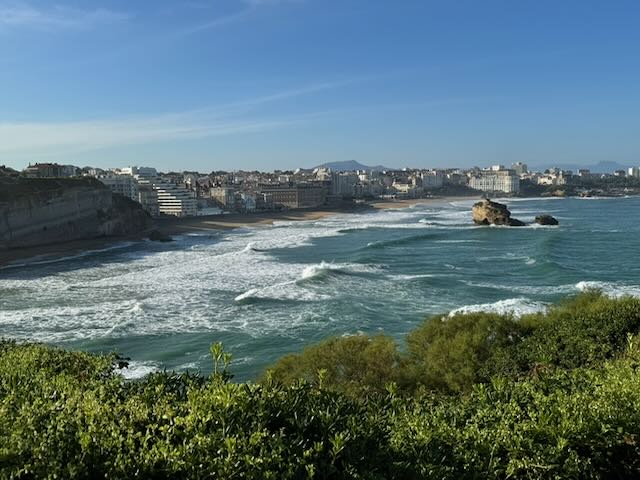
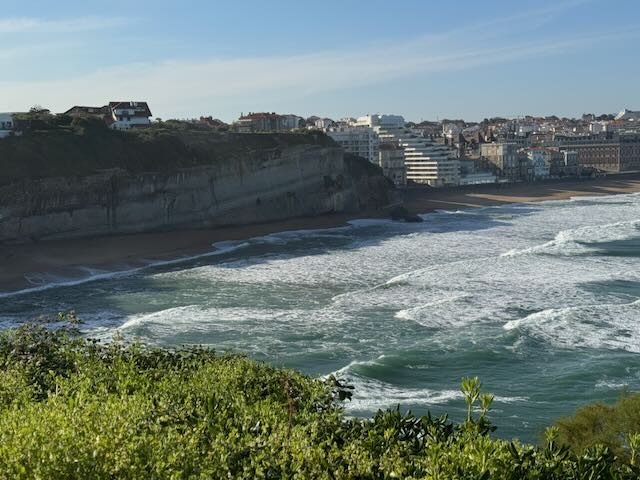
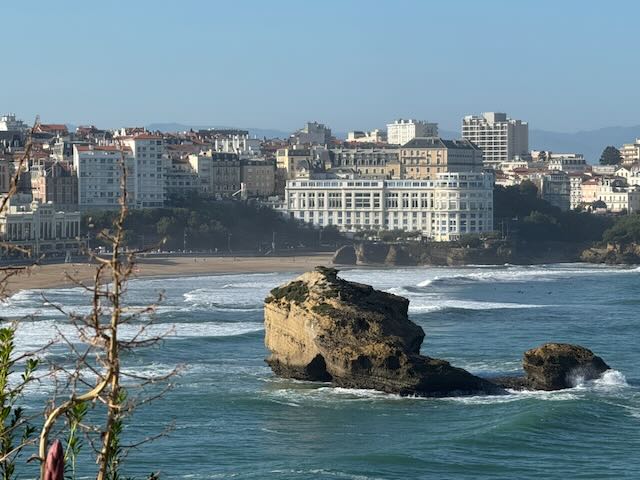
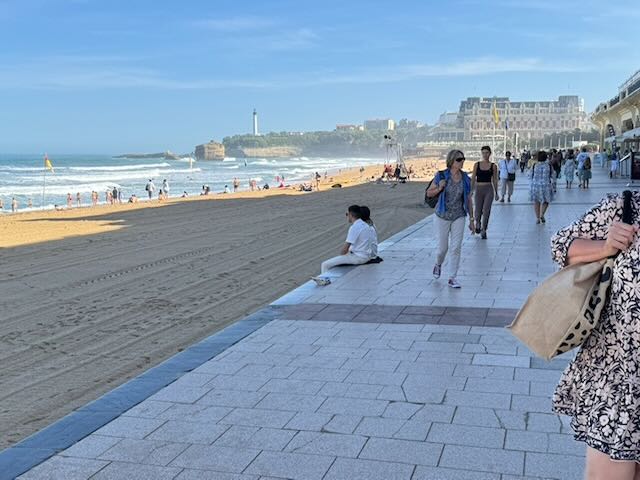
Our first stop was the farthest point of the day’s journey, the Phare de Biarritz (“phare” means “lighthouse”), from which we were able to look back at Biarritz before we visited it. Wikipedia describes the town as “a luxurious seaside tourist destination known for the Hôtel du Palais (originally built for the Empress Eugénie c. 1855), its seafront casinos, and its surfing culture.”
....
Empress Eugenie was the wife of Napoleon III. In 1893 the palace that had been built for her was converted into a hotel-casino complex, which was later rebuilt after a fire in 1903. There are nearly a dozen casinos in this region.
....Hotel du Palais in the upper right
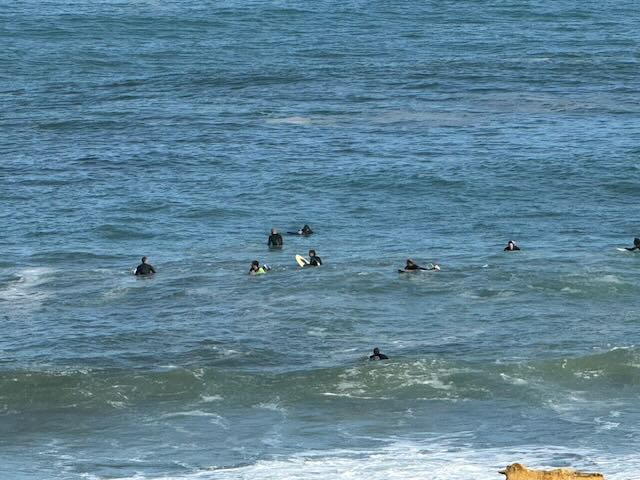
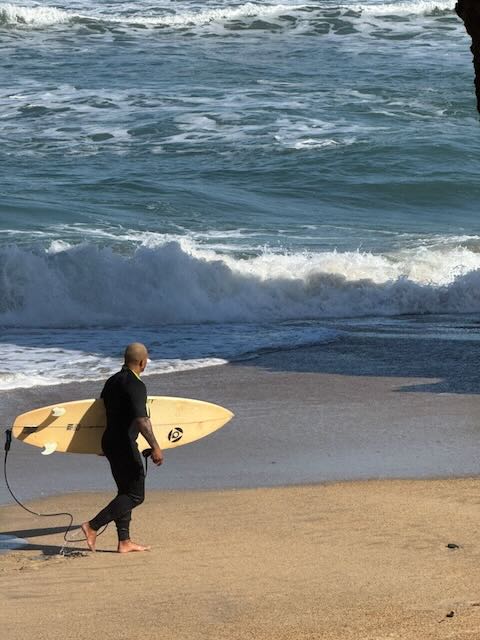
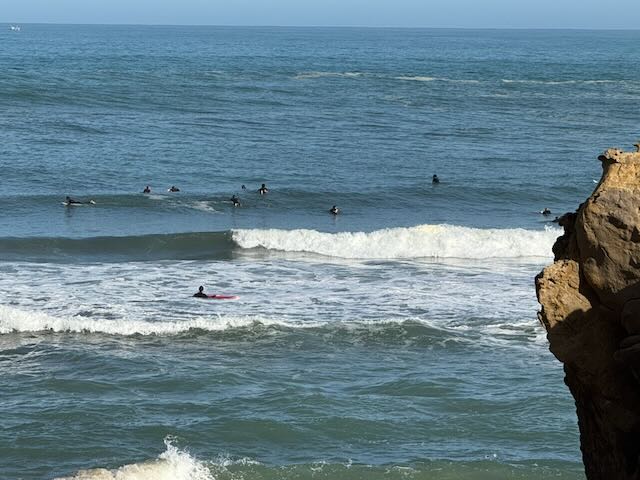
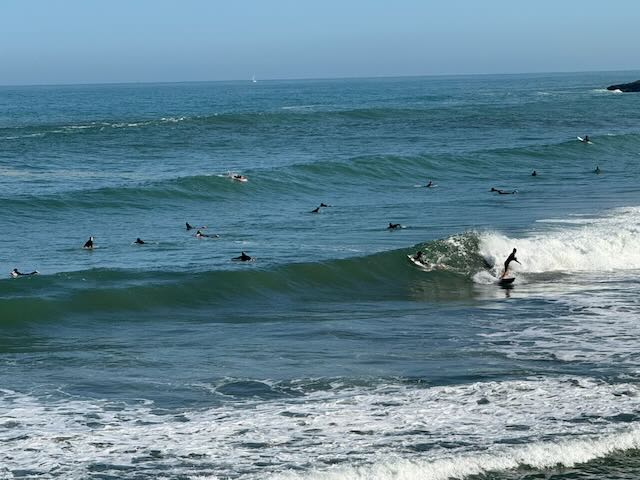
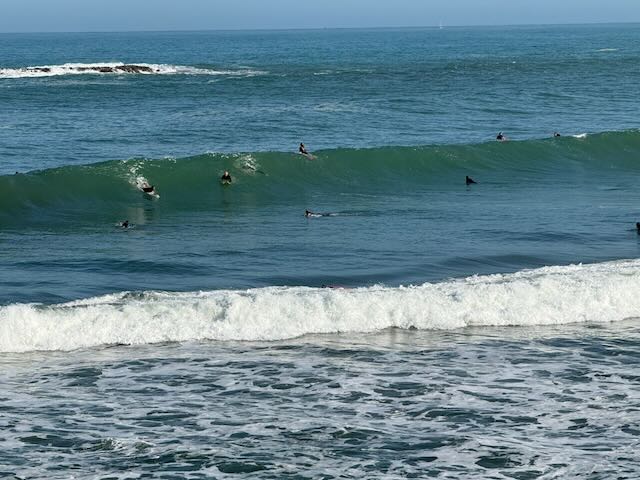
I personally could just sit on the beach in Biarritz all day and watch the surfers and the waves. (If you are reading this as an email, you will miss the video. It is here.)
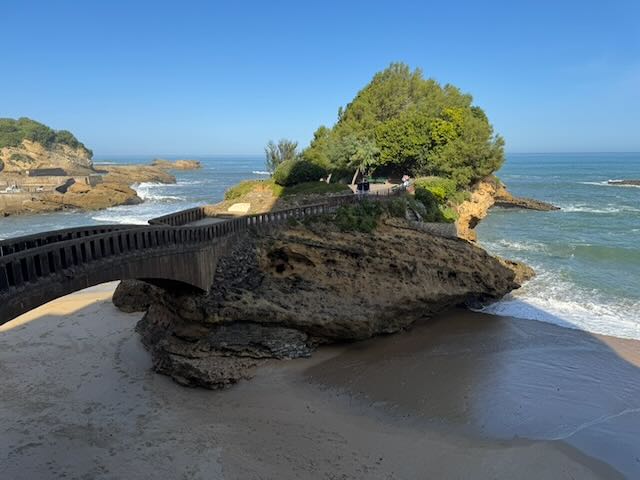
..,,,Rocher de la Vierge
A website promoting Biarritz says, “You may not know it, but Biarritz is the birthplace of surfing in France and even in Europe. The discipline, which arrived at the end of the 50s thanks to a filming on the Basque coast, aroused the curiosity of a few young locals who played the pioneers.”
Saint-Jean-de-Luz
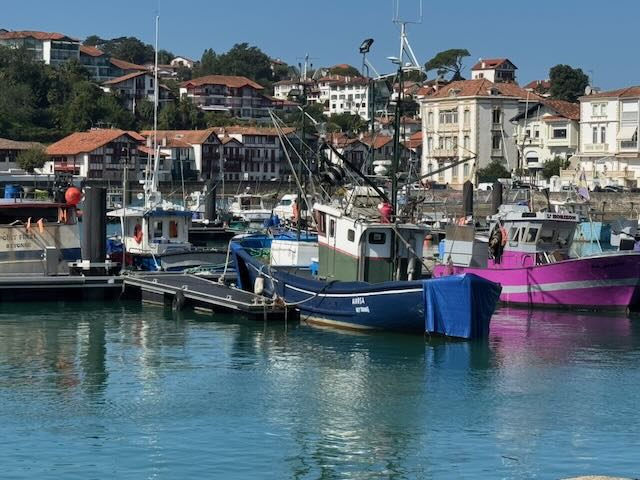
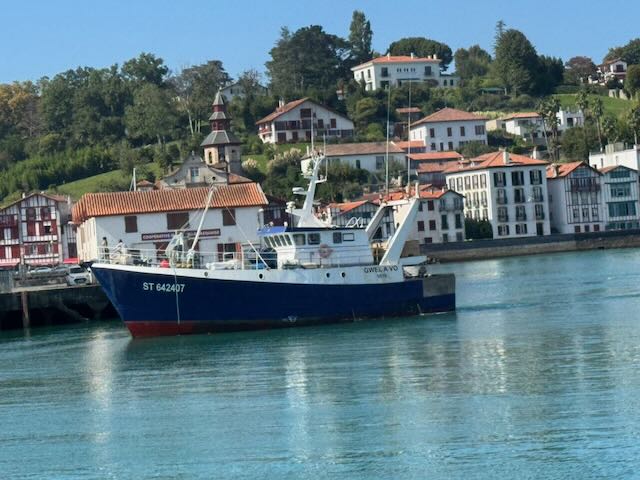
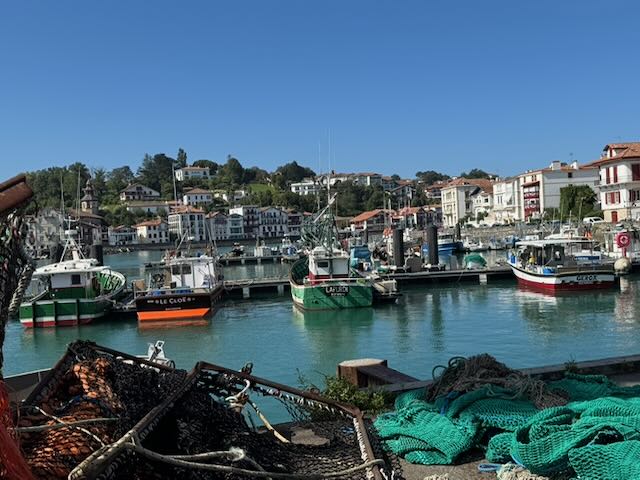
We had lunch in Saint-Jean-de-Luz, which was also lovely. It is a busy fishing town, and the harbour is particularly picturesque.
......
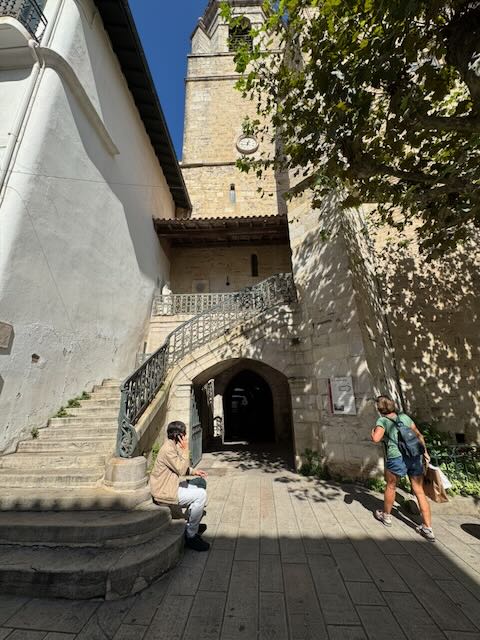
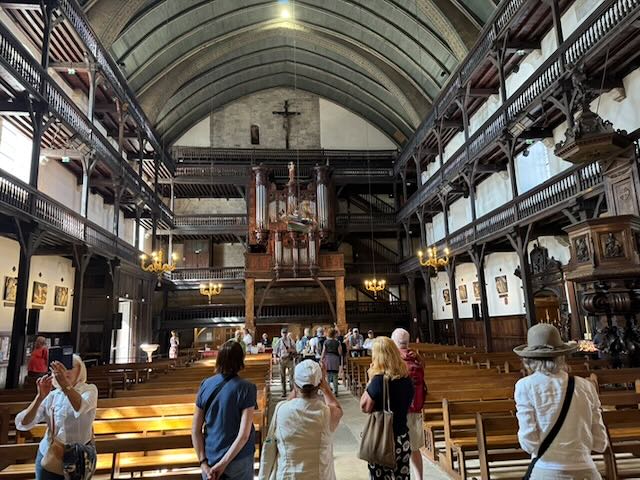
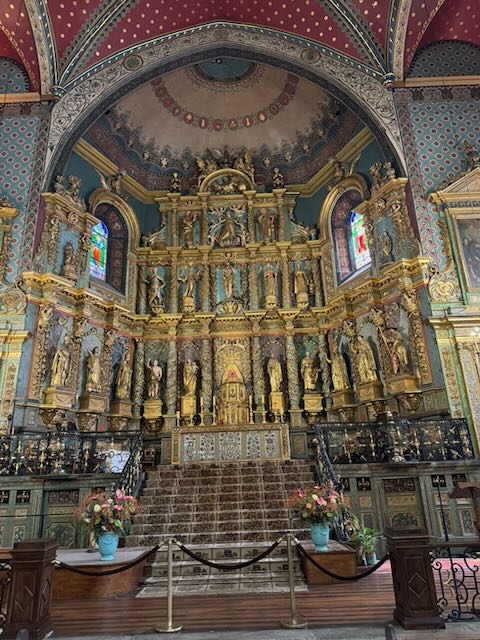
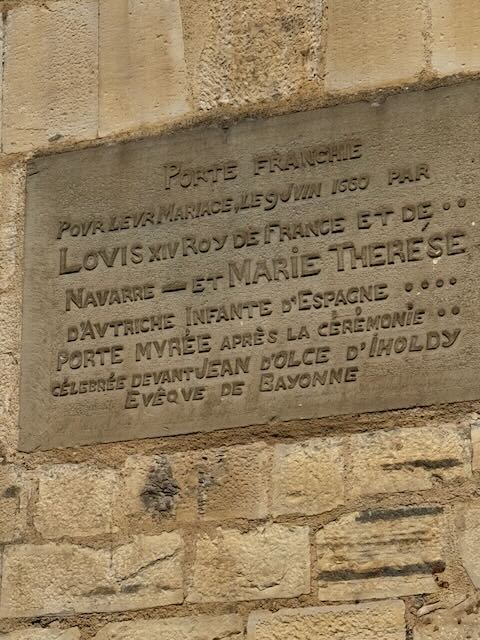
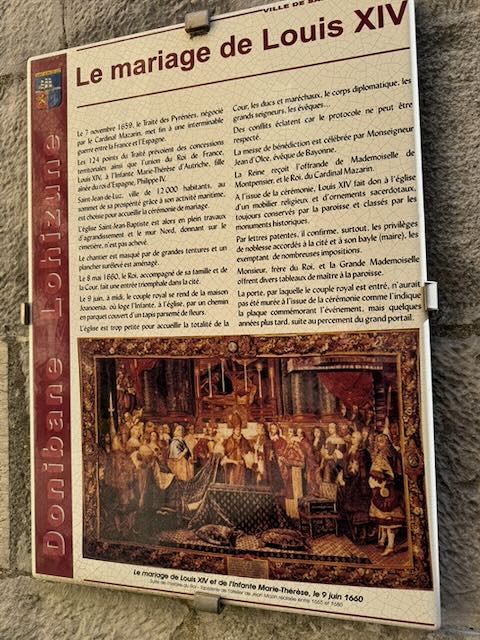
Saint-Jean-de-Luz is the location of the church where Louis XIV, the “Sun King,” married Spanish princess Maria Theresa (another Hapsburg. They really were everywhere) in 1660. This marriage marked the end of the Franco-Spanish War (1635–1659) – but of course one thing always leads to another, and French control of Spain ultimately led to the War of the Spanish Succession, which extended from 1701 to 1714).
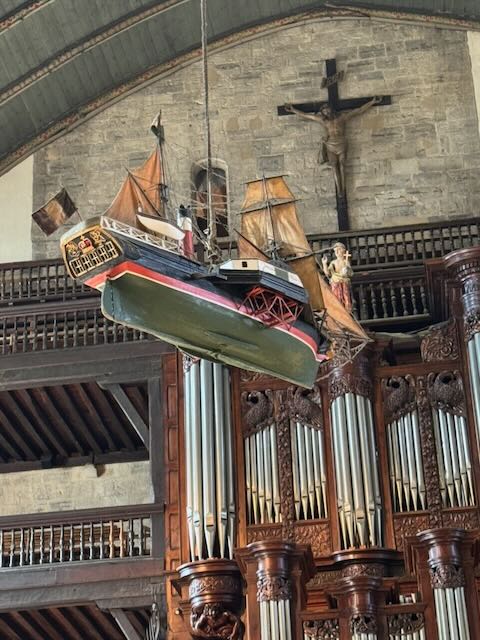
.The suspended ship is an ex-voto, a traditional offering made by sailors or their families to seek divine protection or give thanks for surviving a peril at seaChurch of Saint-Jean-Baptiste...
Louis XIV adopted the sun as his personal emblem, “symbolizing [according to the AI summary] his absolute power and centrality to France, much like the sun is the center of the universe, a concept reinforced by his self-styled image as the source of all light, life, and order in his kingdom, famously depicted as the Greek god Apollo.” Sounds familiar.
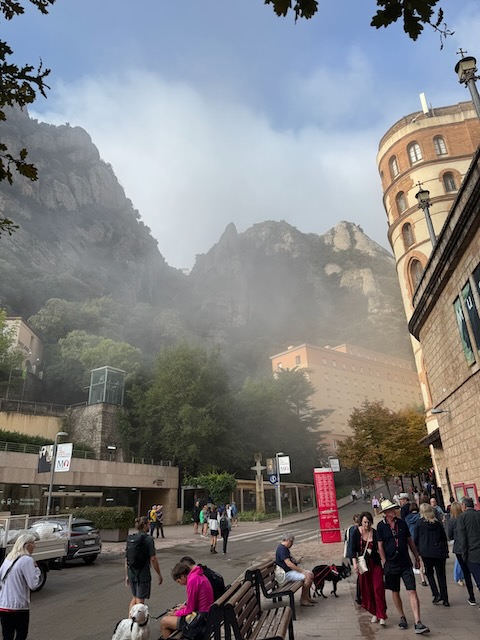
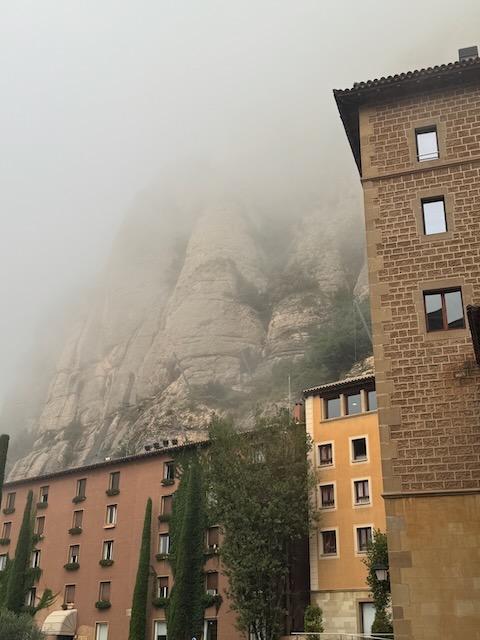
Traces of sunlight through mist and fog put the magical final touches to this excursion. At first we were disappointed to drive into low-hanging clouds as we ascended the mountains northwest of Barcelona toward the Benedictine abbey that was our destination. But in the end, instead of forming an opaque blanket, the clouds fell into shifting curtains of mist that revealed what was ahead of us, behind us, beside us for a few moments or minutes, then hid it away again. It was a haunting, almost otherworldly experience.
Montserrat
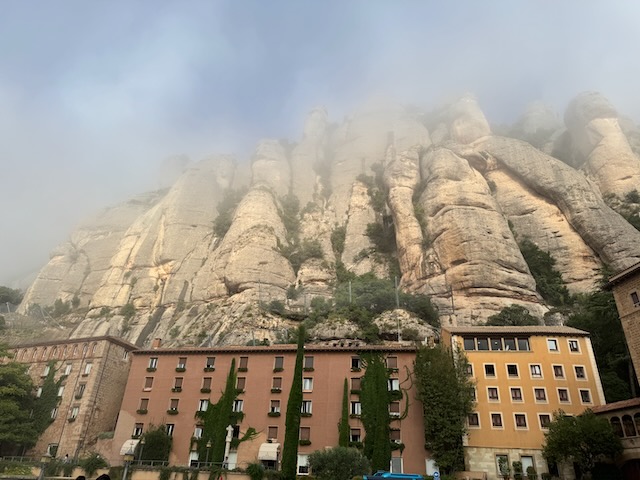
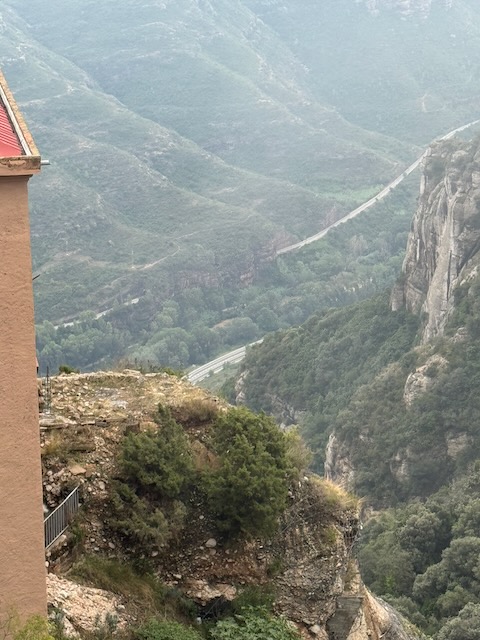
Montserrat (“serrated mountain”), the site of the Benedictine abbey Santa Maria de Montserrat, with its famous “Black Madonna” statue, is located in the Catalan Pre-Coastal Range about 45 km northwest of Barcelona. It is composed of a type of sedimentary rock called “pink conglomerate” that is formed from a mixture of hard and soft fragments including pebbles, gravel and sand, held together with a fine-grained binding compound. Over millennia, erosion – or, more specifically, the ability of this particular rock combination to partially resist it – has given Montserrat a stunningly distinctive appearance, more evocative of the limbs and digits of huge living creatures than of the jagged rock formations they actually are.
I couldn’t stop taking photos of these amazing land formations. They astonished me.
“Montserrat Mountain […] gives the appearance of being higher than it actually is, due to the fact that it rises straight up from the Llobregat River. There are no other mountains in its vicinity that come close to its height – making it look very distinctive in this part of Catalunya” (From the very useful Montserrat Tourist Guide).
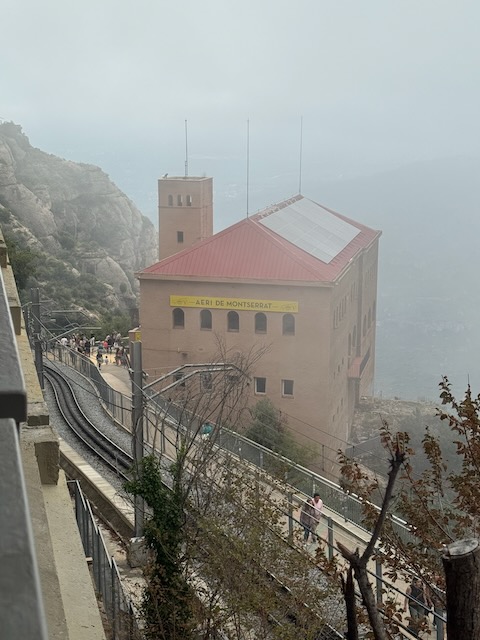
The Funicular at Montserrat
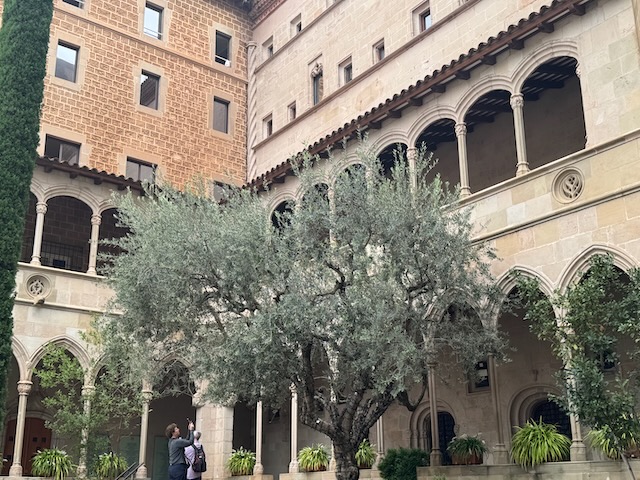
The Benedictine Monastery
It is believed that it was during the ninth century that a group of solitary monks – of the variety that don’t talk to one another – started building the chapels that formed the foundations of the Santa Maria Abbey. Little of their work remains, although one of the original chapels – St. Iscle – can still be visited. (I just found this out today, so I didn’t get there in September. Adding it to my list of things to go back and see next time.)
Between the eleventh and thirteenth century, the monastery was officially established with the construction of a church in the Romanesque style, and pilgrims began to come to Montserrat. In 1492, one of the monks from the abbey went to the New World with Christopher Columbus, which is how one of the islands in the Lesser Antilles came to be named “Montserrat.”
The history of Montserrat Abbey is not entirely one of a peace cloaked (like the mist on its mountains) in silence and prayer. In 1811, Napoleon’s army destroyed the abbey; subsequently all of the monks but one left when the property was confiscated under new legislation. Reconstruction did not begin until 1858.
The monks were forced to leave again during the Spanish Civil War (1936 – 1939), and during this period 23 monks were killed. The Catalonia government protected the Abbey as much as it could during this period, and after the war, the monks returned and reconstruction continued. The church now standing on the site is Gothic in design.
The Black Madonna
The Black Madonna, or “Black Virgin” as it is also known, has helped to make the Abbey at Montserrat famous.
The statue, which is carved from wood, is located high above the chancel of the abbey. We did not have time to go up to see it, but we caught a glimpse from the main floor. The online tourist guide tells us that the Madonna figure “sits behind a sheet of glass, but one of her hands that is holding a sphere (which symbolises the universe) is not behind the glass. It is tradition for you to kiss or touch the Virgin’s hand whilst opening out your other hand to Jesus.”
The Montserrat statue is only one of many Black Madonnas found around the world, but it is one of the most famous. Some believe that this sculpture was carved in Jerusalem when Christianity was new (possibly even by Saint Luke), was later given as a gift to monks in Barcelona, and then was hidden in a mountain during a century of Muslim rule. It was ultimately rediscovered only thanks to a miracle involving shepherds who saw light coming from a cave. The name “Black Madonna” comes from the colour of the wood, which was not dark when the statue was carved, but has darkened over time. (According to The Internet, historical analysis suggests that this Madonna sculpture is Romanesque, from the late 12th century.)
The Enthronement of the Image of the Mother of God was celebrated in 1947, and since then the Basilica’s restoration has been completed, a museum has been added, and the site has been visited by a Pope (John Paul II). Many people come to Montserrat each year for meditation and prayer, and a large hostel is located just below the abbey to accommodate these pilgrims.
Sculptors and Artists
Saint George (Sant Jordi) by Josep Maria Subirachs. Altar del Santíssim, Subirachs, 1977
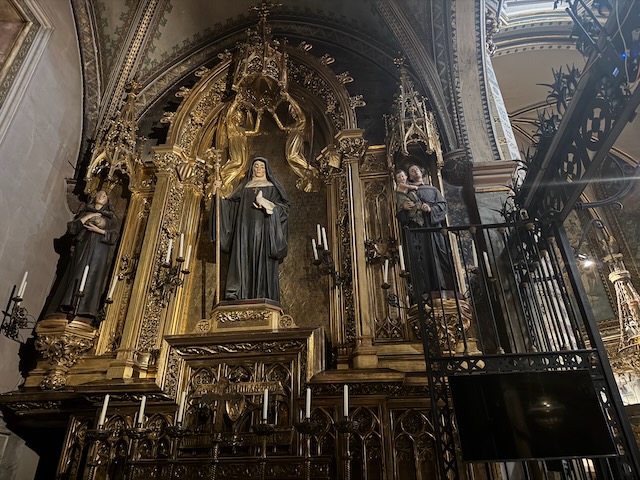
My interest in sculptors in general and those from the region we visited in particular was extended when I learned that contributions to the Basilica included the chapel of the Image of the Mother of God, which was completed in 1885 under the direction of Francesc de Paula del Villar i Lozano with the assistance of “a young Antoni Gaudí.” We also saw two pieces by my latest favourite Catalan sculptor, Josep Maria Subirachs.
Plaça de Catalunya Casa Milà, also known as La Pedrera, by Antoni Gaudi
After we had returned from Montserrat, we and our Trafalgar group headed out for a bus tour of Barcelona that included a walk around the Sagrada Familia. The day concluded with a lovely dinner at a Barcelona waterfront restaurant in which tapas figured largely. During our travels, I became a big fan of tapas, which are called by other names in other parts of Spain. More on that in another post.
One of our most eagerly anticipated destinations in Spain was The Sagrada Familia, the basilica in Barcelona that was designed and partially built under the direction of the brilliant architect and artist Antoni Gaudi – whose truly distinctive work we had also seen the day before in Park Güell. Gaudi’s designs are also on display in several Barcelona residences, three of which are open for tours (next time!), and other buildings.
The itinerary for the group we were joining later on the 13th for our ten-day tour of Northern Spain would include only a walk-around of The Sagrada Familia, so we booked tickets for earlier in the day so we could take our time and see the interior as well.
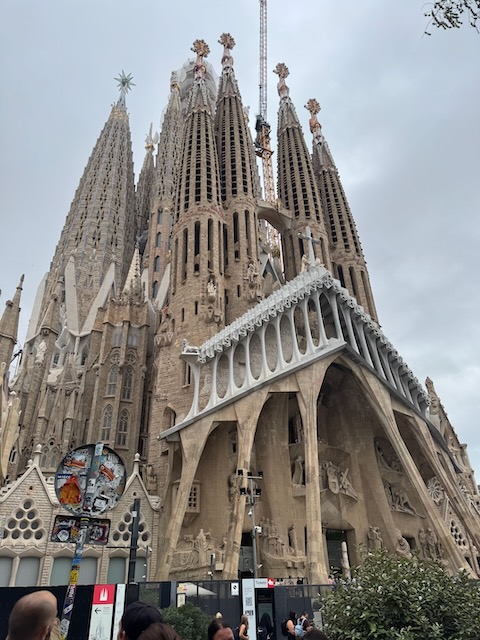
Our first sight of The Sagrada Familia when we emerged from the nearest Metro station. In front of us is the Passion Facade, which faces west.
Gaudi began his work on The Sagrada Familia in 1884 and continued until his death in 1926. I was surprised to learn that he was not the first architect to have been selected to design and build the new church. He was appointed to the position only after Francisco de Paula del Villar y Lozano resigned after two years’ work, following a bureaucratic disagreement. Villar had planned a fairly standard neo-gothic church for the site, but Gaudi transformed the project into his magnum opus when he was awarded the position in 1883.
A deeply religious man, Gaudi was already an acclaimed Catalan architect when he took on this assignment. “Gaudí’s work was influenced by his passions in life: architecture, nature, and religion. He considered every detail of his creations and combined crafts such as ceramics, stained glass, wrought ironwork forging and carpentry. He introduced new techniques in the treatment of materials, such as trencadís which used waste ceramic pieces.” (Wikipedia)
Gaudi became so focused on the project that he moved from his house in Park Güell, where nuns had been looking after him, into the cathedral itself. As time went on he increasingly neglected his appearance, his diet, and his hygiene. On June 7, 1926, at the age of 74, Gaudi was walking down a Barcelona street on his way to confession at a nearby church when he was hit by a tram car. Due to his unkempt appearance and the fact that he was carrying no identification, passersby mistook him for a beggar and paid him little attention. Finally someone arranged for him to be transported to a nearby hospital, where he was admitted to the pauper’s ward. It was several days before his assistants at the basilica located and identified him. By then it was too late for him to receive the kind of treatment that might have helped him to survive his injuries, and he died soon after. He is buried in the crypt of his famous cathedral.
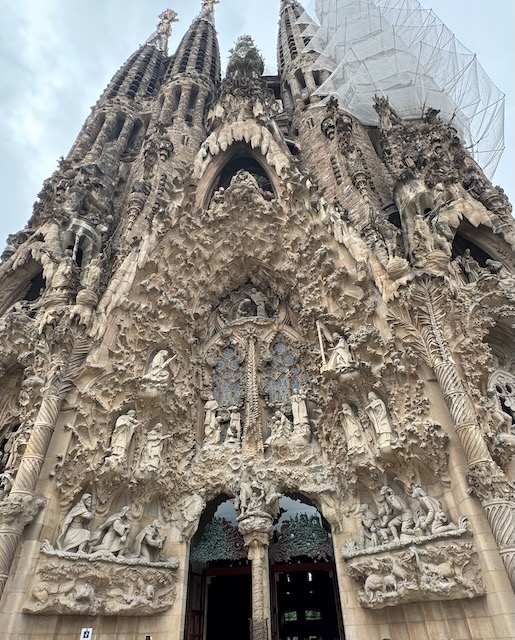
The Sagrada Familia was only about 25% complete when Gaudi died. Aside from a few years during the Spanish Civil War, work has continued ever since, but the cathedral is still not finished. While Gaudi was alive, most of the work on the “Nativity Façade” on the eastern side of the cathedral was completed, and his wishes for the entire project had been outlined. His creation reveals the unique inspiration he found in natural forms and shapes, in his religion, and in his Catalan heritage. His vision still guides the work, despite the contributions of other architects and artists who have created or supervised the realization of various components over the years.
The Cathedral
Like many Christian churches, the basic footprint of The Sagrada Familia is oblong, in the shape of a cross. The congregation sits in rows of pews and chairs down the middle of the nave, with the chancel, including the altar, near the top (north) end. A transept crosses the nave just below the chancel and on the east and western exteriors of the transept are doors, or portals. The main entrance, when it is finished, will face south.
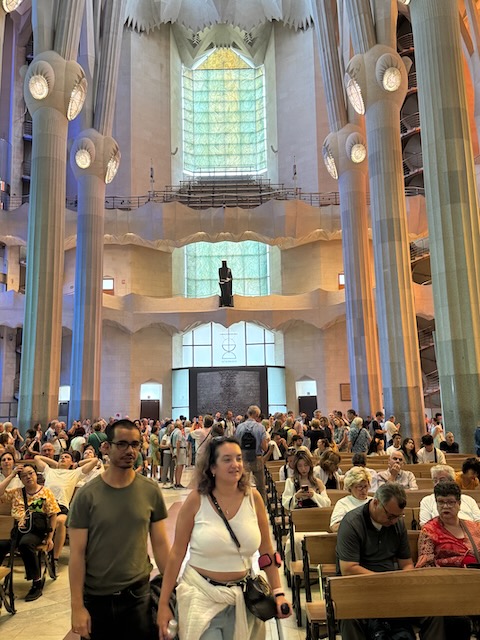
Nave facing northNave facing southChancel/altarStained glass windows facing east (sunrise/birth)Stained glass windows facing west (sunset/death)Pillars
As well as supporting the enormous weight of the spires that rise from the cathedral, the columns suggest trees and are finished in various natural colours.
Gaudí’s original design for The Sagrada Familia “called for a total of eighteen spires, representing in ascending order of height the Twelve Apostles, the four Evangelists, the Virgin Mary and, tallest of all, Jesus Christ. Thirteen spires had been completed as of 2023, corresponding to four apostles at the Nativity façade, four apostles at the Passion façade, the four Evangelists, and the Virgin Mary” (Wikipedia). The Jesus Christ spire is due to be finished in 2026. At 172.5 metres with a cross on top, it will make The Sagrada Familia the tallest church in the world. A couple of the towers are open (for an additional fee) to those who wish to climb them (next time!), at which point (I have read) you are rewarded with great views of the city.
The official name of the magnificent structure is “Basílica i Temple Expiatori de la Sagrada Família.” “La Sagrada Familia” means “The Sacred Family.” A “basilica” is a special designation given to a church by the Pope, based on criteria that include its architecture, history and spiritual significance. The Sagrada Familia was consecrated on November 7, 2010 by Pope Benedict XVI, who also designated it a “minor basilica.”
The Nativity Facade
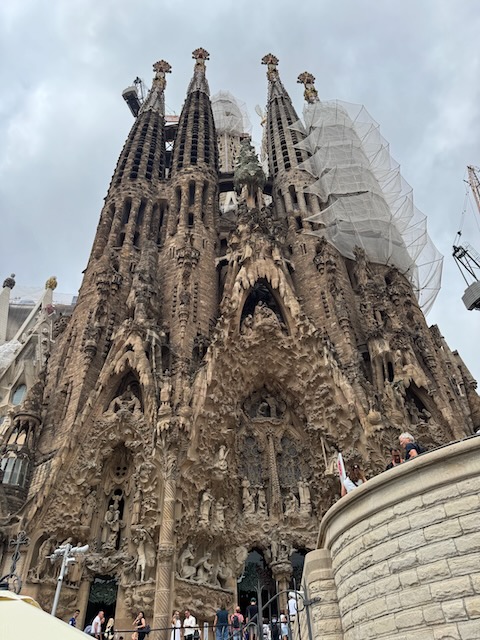
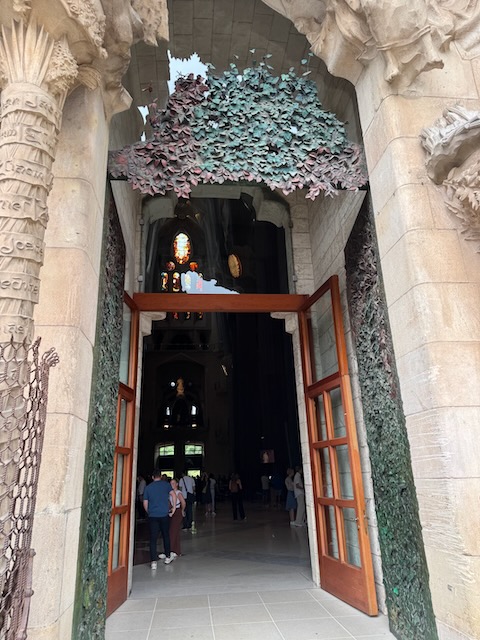
The Nativity Facade was completed first, in 1930. It features three portals (representing faith, hope and love), several towers (representing The Holy Trinity and four of the Apostles), and many decorative carvings and statues. It faces east, in honour of the birth of Jesus Christ, and includes many depictions of Biblical scenes describing Jesus’s early life.
You will notice the sculpture of a cypress tree above the middle portal. It is the symbol of the Tree of Life. A person could spend months tracking down the meanings associated with the adornments that appear everywhere on and in The Sagrada Familia.
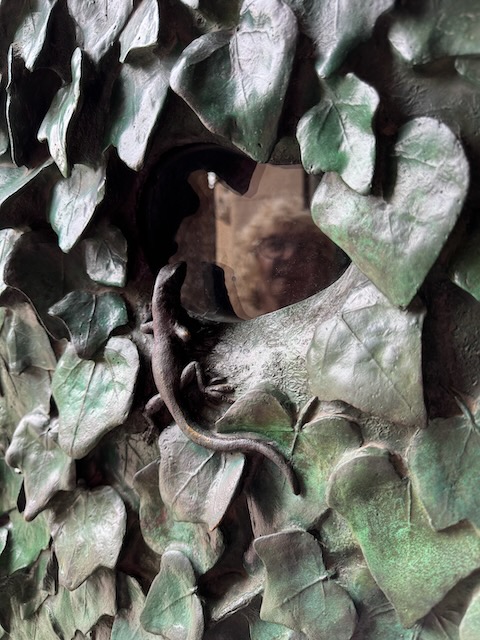
There are little mirrors in the leaves
The Passion Facade
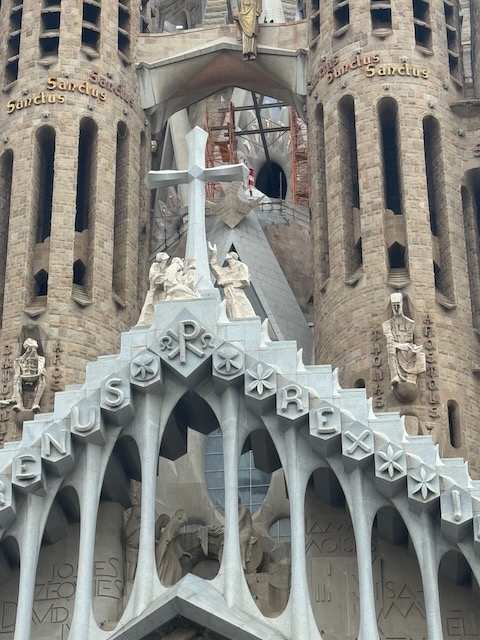
Several of Gaudi’s models for the cathedral were damaged and destroyed during the Spanish Civil War. Their restoration was overseen by Francesc de Paula Quintana, who had been one of Gaudi’s assistants. In 1954, Quintana initiated the construction of the Passion Facade, which Gaudi had instructed should be a stark, skeletal contrast to the rich and detailed Nativity Facade. The “look” is indeed different from the lavish detail that distinguishes The Nativity Facade: it is minimalist, abstract, spare and open. Themes of this facade (which faces west) include the Last Supper, the Way of the Cross, the Crucifixion, and other scenes from Jesus’s final days. Towers honour four more of the apostles.
The Glory Facade
While most of The Sagrada Familia is finally nearing completion, the Glory Facade, which faces south, in which the main entrance will be situated, is not finished. Its design represents the path to eternal glory, including Christ’s final judgement and ascension into heaven. Seven pillars represent the seven deadly sins and seven heavenly virtues.
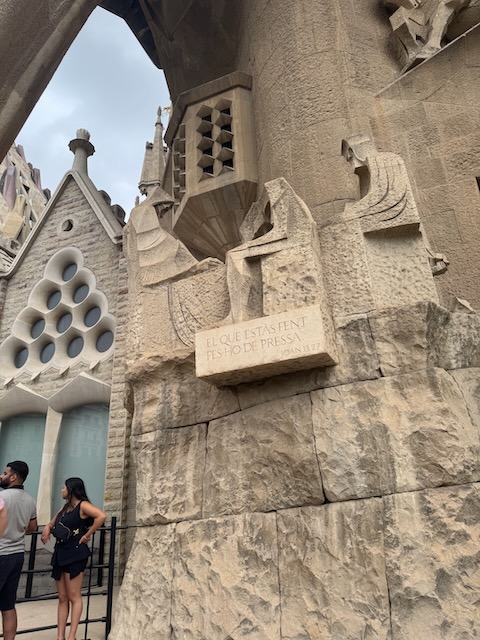
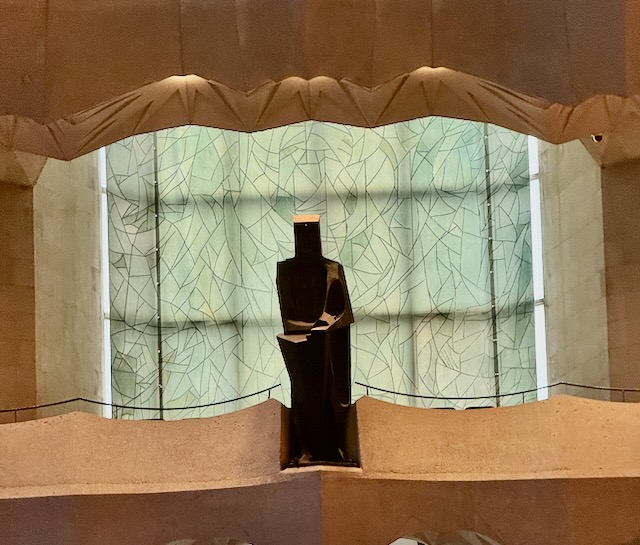
Subirachs’s sculpture of Saint George
Josep Maria Subirachs (1927 to 2014) was commissioned to create the Glory Portal in 1987, and his distinctive style raised much controversy because his work (expressionist, abstract) is very different from that of Gaudi and the other designers involved with the project. (Note: I have no opinion on whether Subirachs’ designs are appropriate to The Sagrada Familia, but I did develop a great fondness for his work as we travelled through the region and saw several pieces he had done. Dark, haunting and evocative, his work is definitely nothing like Gaudi’s. Watch for his Crucifix in the next post.)
Plans for the construction of The Glory Facade are in conflict with the wishes of Barcelona residents who live nearby – approximately 3000 of whom will need to be relocated if the current plans are executed. With zoning issues as well as construction of the portal still ahead, a completion date in 2026 sounds somewhat optimistic.
The entry fees charged to the 4 to 5 million visitors who visit The Sagrada Familia each year are what pay for the construction. Due to the basilica’s popularity, it is wise to purchase tickets (online) several months in advance of a visit, as they are usually unavailable at the site. (One person told us that if you go to a Sunday morning service, there is no admission charge. But don’t quote me.)
After we returned to the hotel from The Sagrada Familia, we enjoyed a well-earned nap and then, at 5:30 p.m., we met with the others on our tour for the first time, in the hotel’s breakfast room. The group of about forty-five people included four or five other Canadians, a lot of Americans, two people from the UK and a family from the Philippines. Our tour guide’s name was Celia. Originally from Madrid she was extremely knowledgeable, well organized, attentive and personable. I can’t think of how she – or our driver Paolo – could have done anything better than exactly how they did it.
After some introductory remarks (such as a warning that we heard over and over again to keep an eye out for pickpockets in Barcelona), we were handed the headsets that we would use to hear our guides throughout the tour, and our luggage tags. (Our suitcases were collected from outside our room each travel day, loaded onto the bus, and delivered back to us after we arrived at our next destination. The system worked perfectly.)
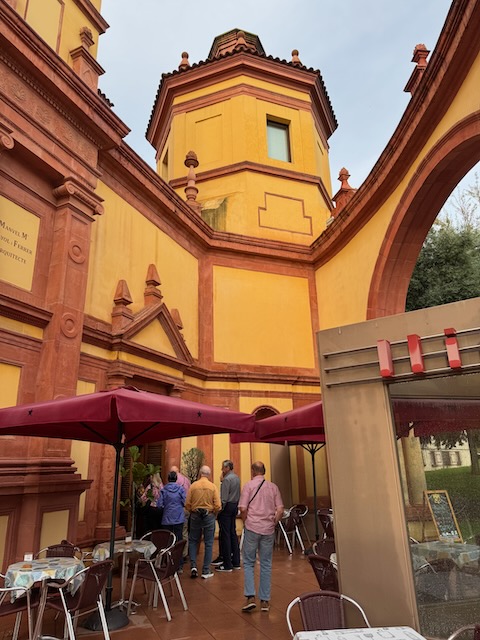
Then we climbed onto our bus and were driven through Barcelona to a restaurant on a hill above the city. The restaurant where we ate is a community initiative sponsored by the Fundacion Mescladis, that works to train people in vulnerable situations (particularly immigrants) and to prepare them to enter the workforce. The staff was attentive and the food was delicious.
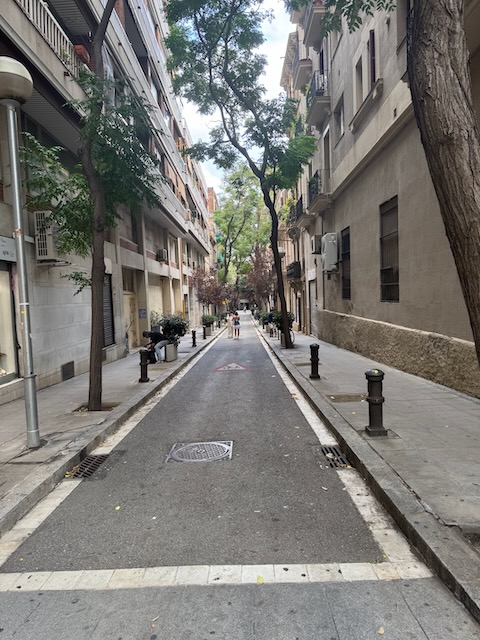
Our Trafalgar Tour busAnother clean and appealing Barcelona streetBottle trees (Brachychiton rupestris)
(In August, 1999, I took a one-day excursion from my first-ever visit to London England to visit the town in Wales where my father had been born. He died when I was 2 and I knew very little about him. Thanks to an amazing couple, Maureen and Terry Williams, strangers who extended an incredible gift of hospitality and friendship, I learned even more than I’d hoped about Abertillery and the beautiful valley in which it is situated. And thereby, about my father.)
“Is there a hotel in town?” I asked the driver as I hoisted my duffel bag, heavy with guidebooks notebooks a camera jeans nightgown toothbrush a sweater clean-underwear-and-socks onto my shoulder and prepared to disembark.
He looked at me as though I were daft.
“I’m from Cardiff, i’nnit?” he said (as in ‘How the hell would I know?’). But he made an effort on my behalf, repeating my question to three clear-skinned teenaged girls as they edged past me onto the nearly empty bus, their eyes on me as they let their coins clatter down into the box.
“Aw, noo. I doon’ think so,” said one of them to another.
“Maybe there?” said the other back to the first, bending to indicate through the bus windows a gabled, several-storied red brick building just below us.
“Nah. Doon’ think so,” said the third, speaking like the other two in a soft voice that rose, to me, in unfamiliar places and made her hard to understand.
The doors of the bus sighed shut behind me as I stepped onto the pavement. Soughing diesel down into the street, it moved slowly up the roadway toward the next town, then the next and then the next. At Brynmawr, it would turn around and begin its descent south through the Ebbw Valley back to Newport, the city on the Severn where—according to a letter that contained the biographical information I’d requested from the Saskatchewan Archives Board—my father had clerked for a time at a store named Pegler’s.
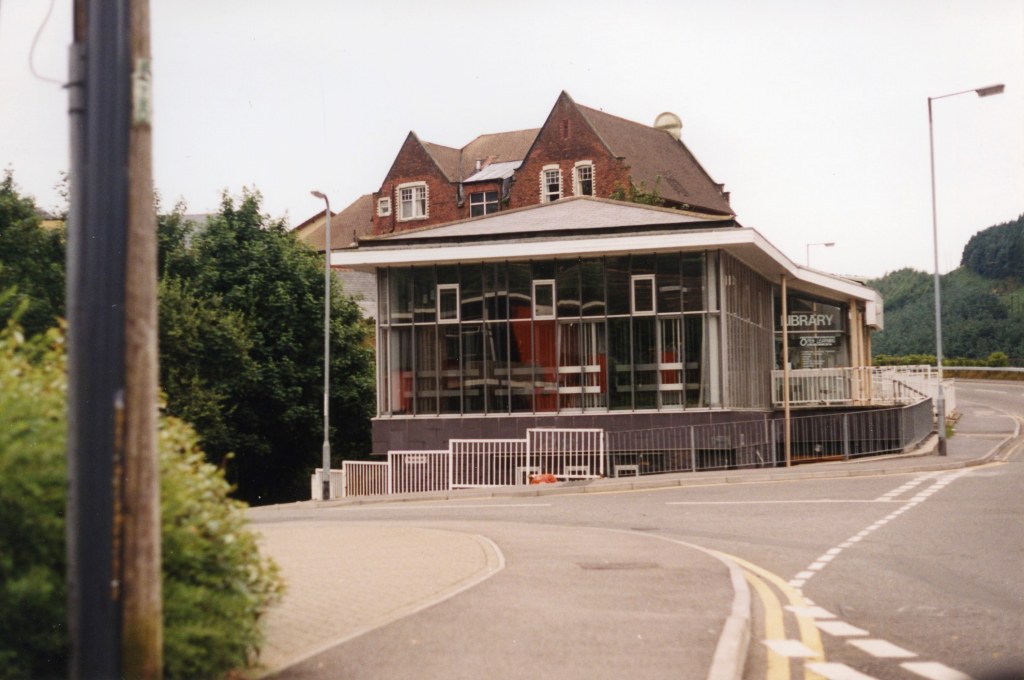
I stowed my valuables, which for now included my passport, travellers’ cheques, assorted bits of British and Canadian currency, tickets, a map, and a copy of that precious letter, in a side pocket of my bag, and zipped it closed. I lifted the bag onto my shoulder, and started down the deserted street toward the run-down building the girl on the bus had pointed out. When I’d descended the sidewalk to its lower southern side, I could see that the building’s entrance had long been boarded shut, but as I followed the sidewalk up again, I discovered on the building’s western hip the local library—a good place to have directed someone who needed information, except that it too was closed.
Now I saw that a man a bit older than myself was standing on the corner of the street ahead, above me, tanned and grey, his slender good looks set off by his uniform: navy trousers, a long-sleeved white shirt with navy epaulettes, a navy tie. I did not know yet that his name was Terry Williams, or that he was a well respected husband and proud father of two grown children who did odd jobs for neighbours rather than dip into the family coffers for his rugby-ticket money. Or that he’d retired after forty years of trade-work—never having missed a single day—then, finding himself at loose ends, had applied to become the local traffic warden, which meant that on some days like this one, he needed to stand for extended periods of time beside an empty road in his carefully pressed uniform in order to complete his shift. But he looked safe enough to talk to.
He watched my approach with a fair degree of curiosity.
“Is there a hotel in town?” I asked, lowering my bag to the pavement, then reknotting the elasticized band at the nape of my neck to keep my hair back.
“Noo,” he said, looking around, clearly distracted from wondering about me by his sorrow at my question. “Used to be.” He nodded down the street. “Closed now.”
“Motel, then? A bed-and-breakfast?”
He shook his head regretfully. “Nothin like tha’ here. Noo.”
I should have booked something before leaving London, but I’d wanted no reason not to come here on my own.
“I should have called ahead,” I said, to make it clear I wasn’t blaming him, or his town. “I came because my father was born in Wales. Here—” I waved my hand around, unwilling to try to pronounce the name of this place I had reached at last. “I never knew him, or any of his family. He died when I was two.” I looked around me, adding these deserted streets and buildings to the knowledge of my father that until today had mainly consisted of the typed, half-page list of dates and places I carried in my bag. It now also included the vast gold and dark-green valley I had risen through for nearly an hour on the local bus to get up here from Newport, and the soft, surprising way the people of this region spoke with a question behind nearly every sentence. “I came to see where he was born.”
“All the way from Canada?” he asked, astounded.
“I’ve been staying with a friend in London,” I told him. “I’m going back there tomorrow.”
“When would your father have been born?” he asked.
“In 1908,” I said, looking across the valley toward its western slope. I smiled. “I’m glad I came. It’s beautiful.”
“Wouldna looked like this back then,” he said with a shake of his head. “Hills were black in those days, from the coal.” He didn’t mean to suggest that these soft green slopes, the clear blue skies were an improvement. “Thatcher, i’nnit? Prime Minister back then? She closed the mines to punish the unions for the strikes.” He shook his head. “Now there’s no industry, no work. The place is dyin’.”
I reconsidered the green hillsides. “And there’s nowhere to stay.”
“Not in Abertillery.”
So, there: at last the name of the place was out—spoken aloud, caressed by his voice. My heart thudded into love with it—the soft stress on the second-last syllable, rather than the first as I’d been saying it to myself for all these years. “Aber” meant “mouth” or “confluence”—the only Welsh word I knew so far: I’d reached ‘the mouth of the Tyleri.’
“I think there’s a guest home toward Blaina.” He was pointing up the valley.
I lifted my bag again onto my shoulder, smiled and thanked him. He smiled back, but he wasn’t happy. “It’s at least five miles to Blaina,” he said. “You can’t walk all that way.”
“I’ll be fine,” I told him, starting off.
“It’s below the highway to the west,” he called after me disconsolately. “Just before the town.”
Cars and trucks zoomed past me as I walked along the highway—traffic headed, although I did not know it yet, up the way that one could go in the passenger seat of a battered little red Rabbit, through Blaina and Brynmawr to the Heads of the Valleys Road, then west to Tredegar. There, in the district office, a fifty-year-old woman such as myself could secure a birth certificate that would finally give her the full names of her father’s parents, and the address of his first home.
He’d left southern Wales at age nineteen, said the letter in my bag, “to get away from depressed industrial areas … where there were no business prospects.” He’d worked for Canadian Pacific in Montreal for twelve years as a bookkeeper, providing for his mother and his sister as well as for himself—the women having followed him to Canada after his father and his brothers died. My grandfather and my uncles, those men would have been: four of the thousands of Welsh miners dead through accident or disease because of where they’d worked.
Almost before I knew it I was out of Abertillery—“Aber-til-ler-y”—out of it but not beyond it. The town continued to rise up the valley’s eastern slope beyond the fences separating me from it, in terrace after terrace of joined cottages. Far off, a local bus made its way south through these residential areas and I wondered if it was the same bus I had taken up, now making its way back down again to Newport.
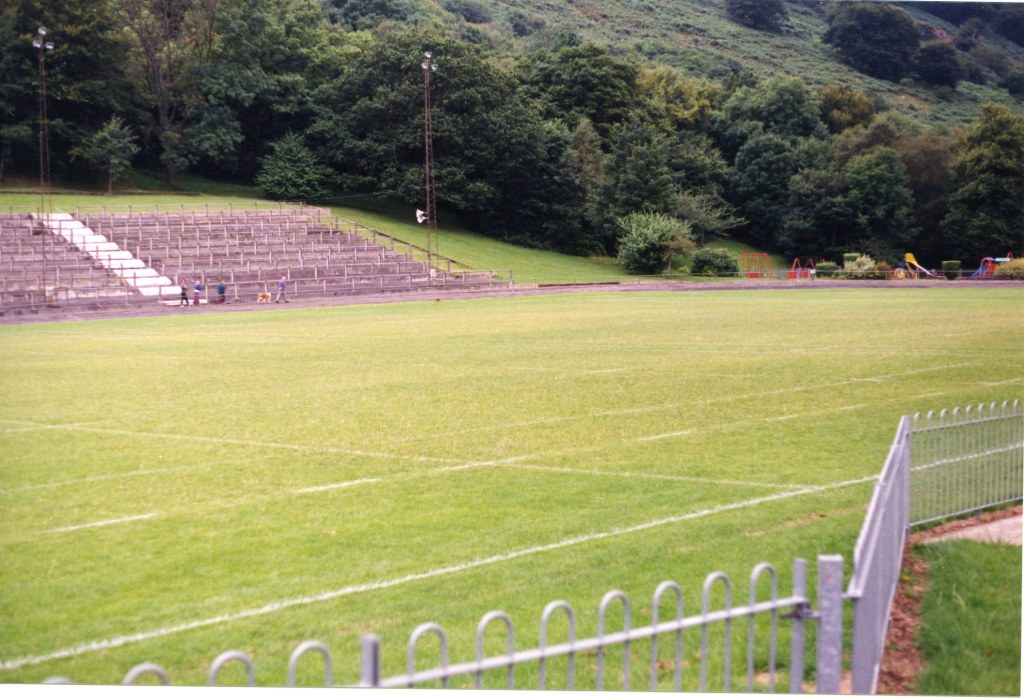
As I walked, I looked over at the jagged rows of grey brick walls, white siding, chimneyed roofs tiled grey and red, and wondered if this had been the street where he had lived—or maybe this? Or there? What I could not see, just over the Ebbw Fach River from where I walked, was Abertillery Park and the green stretch of grounds where my father’s love for the game of rugby must have been engendered and then nurtured. A man I’d tracked down several years before, a retired Anglican priest who’d gone to theological college with him in Saskatoon, recalled how he’d loved rugby—to play it as well as watch it. Recalled that he’d loved a beer when the game was over, good conversation, laughter. From such bits had I begun to assemble a man who might have been my father. Not that I understood him—what could there have been to laugh about, with his father and brothers dead in Wales, his sister dying shortly after she came to Canada, and now his mother mad with grief and rage because he’d gone off and left her yet again—this time to go to university? He was only in his mid-thirties by that time, but he had little time left for living—just a few years for marriage, fatherhood, a small-town-Canada church vocation—before his own death started to unfurl inside him. I was already older than he’d ever been.
I stayed far right on the shoulder, facing traffic. To my left, farmland fell away, then rose again into the distance. I’d never been in terrain like this—in a valley so wide and soft that it could hold a dozen towns and cities in its lap. I was walking with my map folded in my hand, having tried unsuccessfully several times to find the landmarks that would tell me how much farther I must go to get to Blaina. Gradually my pace slowed, my bag feeling heavier and heavier as I continued upward. What if I didn’t find the guest-house before dark?
But now the fences ended, and a roadway opened to my right. I took it, hoping against hope that the traffic warden’s directions had been wrong, but after several minutes I saw it was a private road to a business of some sort. There was no “private” sign, but as I would learn before long, “private” did not have the same meaning as it did in Canada. High above the town of Abertillery, for example, you could walk right out across a farmer’s field, stepping around sheep turds until you reached the radio transmitter at the top of the valley. There, your breath catching at the sudden view, you could look down into the town itself, and even down into the next town—Six Bells, that was, where one of the several local collieries had been (45 men killed in a coal-gas explosion there in 1960, 1000 feet below the surface)—then farther south until you were sure you saw the glint of the Severn in the distance. On your way down into town again, a hurtling descent around hairpin turns pocked with Rabbit horn blasts to warn off anyone who might be in the way, you could stop at a deconsecrated church—St. Illtyd. Parts of that building were a dozen centuries old: my father’s life, his father’s and the rest—brief even in human terms—were mere flecks against that kind of time.
I resumed my trek up the highway, growing increasingly discouraged. If I couldn’t sleep in the town where my father had been born, I might as well go back to Cardiff and find a room that was at least somewhere near the bus to London. I had done what I intended: I had found the town. I had even talked to someone who lived there, seen a street-corner or two, considered a few houses that might well have been his.
It is true that I had not yet been welcomed into a snug home on Cwm Cottage Road, or been shown up and down the valley before the dark descended; not been offered a feast of steak-and-kidney pie, mashed potatoes, peas, hot tea, or been given a comfortable upstairs room in which to spend the night. I had not yet begun to know two of the gentlest people I could ever have imagined, nor had I yet seen their willingness to share with a stranger whatever they could think of about her father’s birthplace—completely unaware that their gestures, their way of speaking and their generosity would show her as much about him as the rest combined. They would give her a piece of herself she hadn’t had before—and ignite a fierce pride in it.
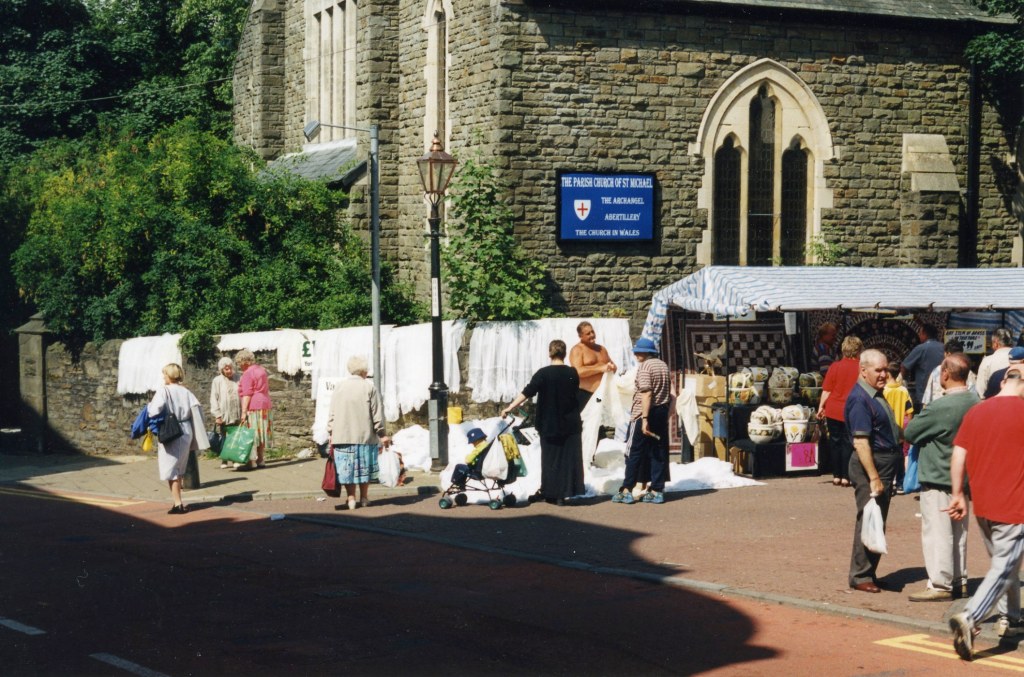
Nor had I yet stood on a sidewalk just half a block off Cwm Cottage Road, looked up at a narrow house mid-terrace—29 Princess Street—where my father was born and raised – and imagined its tiled walls sifted over with coal dust, pictured its men hurrying off to the colliery, wondered how so many people could have lived in so small a place. I had not yet strolled through Abertillery’s weekly outdoor market—spread out in the morning sunlight on the cobbled church plaza as it had been for decades—and reflected on the determination of a young man who’d left everything familiar to come to an unknown country. And not just for a night. For ever.
I had done what I could. It would have to be enough. If I didn’t make a move soon, the buses down to Newport would stop running for the night.
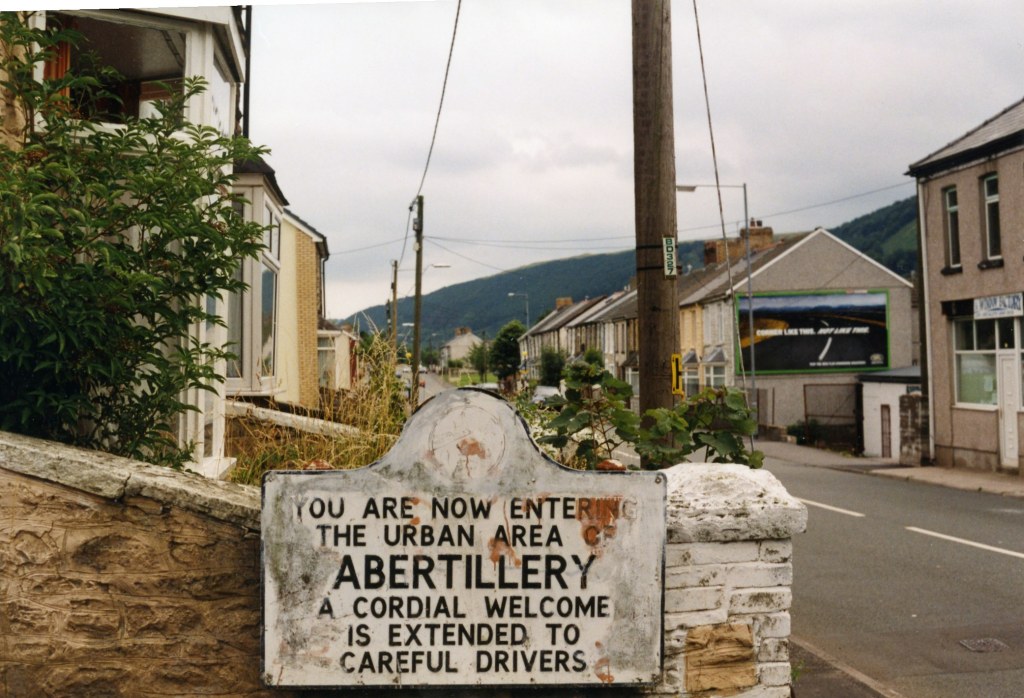
I cut down into the ditch, threw my bag over a fence and clambered after it, headed up a grassy hill to the road that led back to town. Back I walked through the deserted streets, until finally I saw a post with a bus-stop notice on it. But between it and me was a rusting white enamel sign that read, “You are now entering the urban area of Abertillery. A cordial welcome is extended to careful drivers.”
I had to take a picture. It would be proof, if only to myself, that I had actually been here. I put down my bag, dug out my camera, and crouched to take the photo.
As I did, a bus zoomed past, going south. I watched it disappear and felt something tighten in my throat—certain that I’d let the last bus get away.
But now, a small red car—possibly a Rabbit—zipped up the road from behind me, whipped over to the curb and stopped. The driver—a strongly built woman radiating energy, with soft grey hair in curls and a face with so much life in it, it revived me just to see her—clambered out.
“Are you from Canada?” she asked.
“Yes,” I said, surprised, looking down—trying to imagine what aspect of my appearance could have given my nationality away.
“Thank God I’ve found you,” she laughed. “I’ve been looking everywhere! Get in. I’m the traffic warden’s wife: Maureen. I’ve come to take you home.”
*****
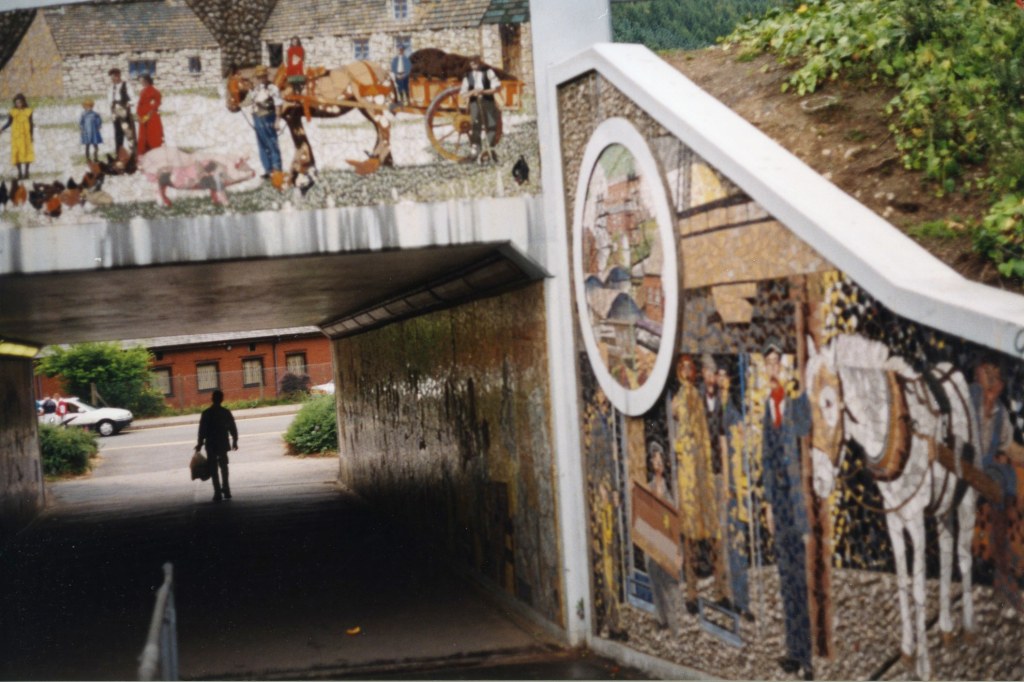
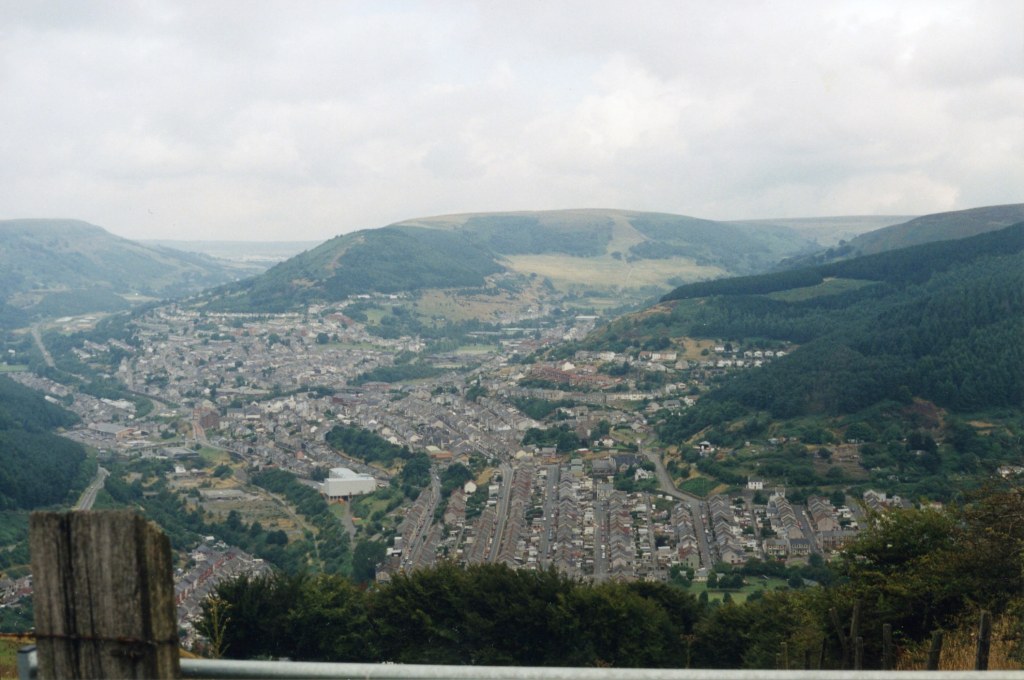
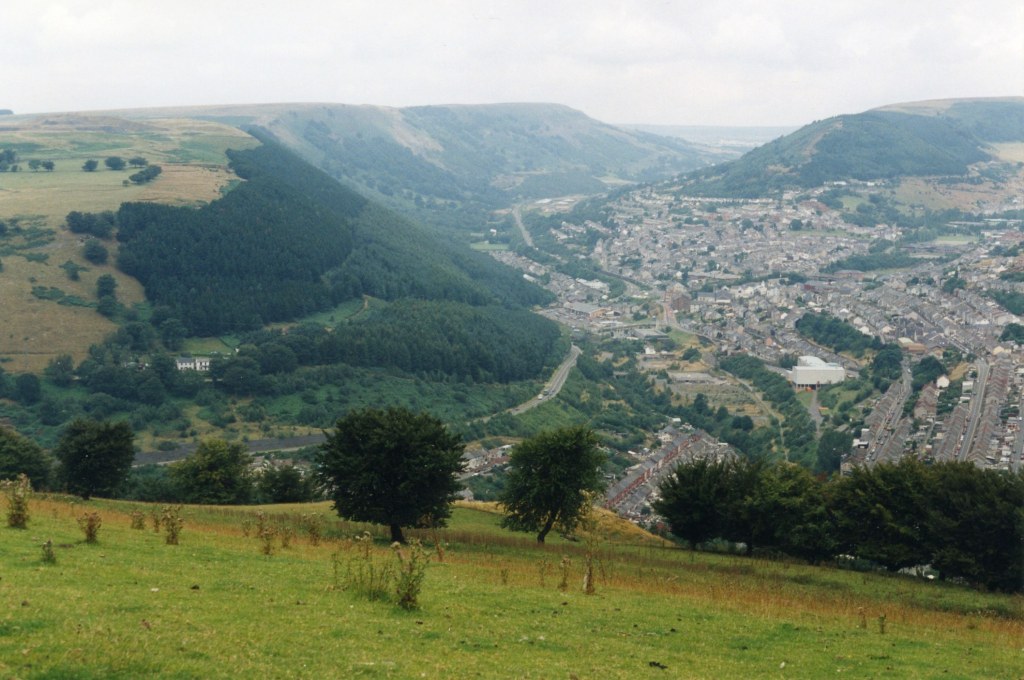
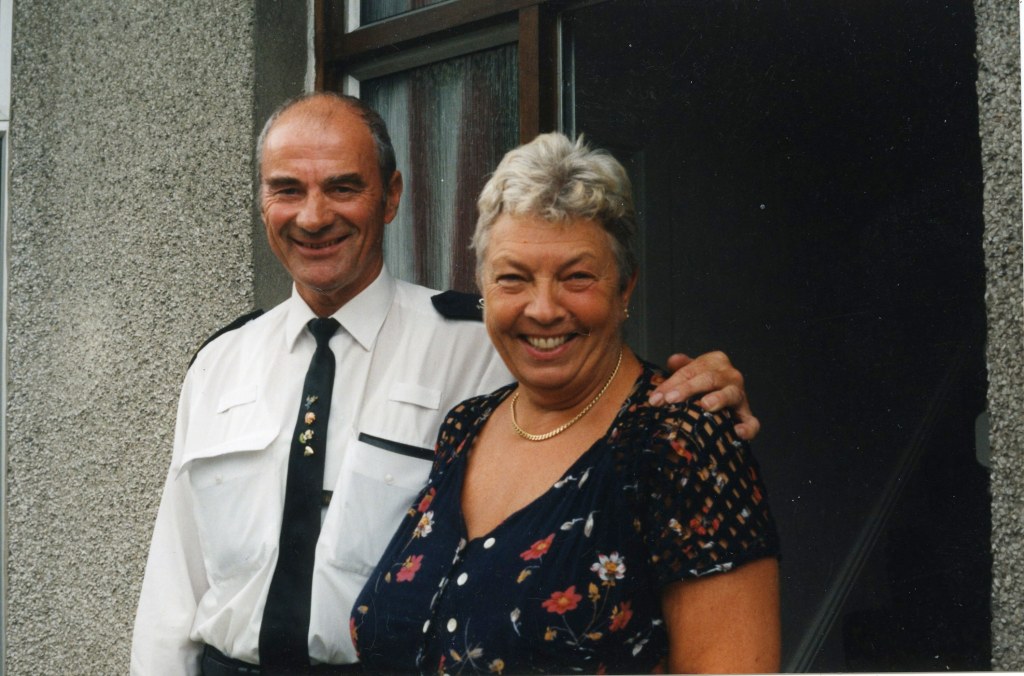
“Abertillery” was published in The Nashwaak Review in 2024. Below are photos I took in 1999 when I visited the town of my father’s birth in Wales.
The Library. Street where I first met Terry WilliamsThe sign that distracted me so that I missed my bus and Maureen Williams found meThe Tyleri (“Abertillery” means “mouth of the Tyleri”)Abertillery Rugby FieldMarket Day in AbertilleryBridge in Abertillery wiith the history of the town done in tilesView of the valley from a sheep field aboveView of the Valley and the Town29 Princess St., where my father was bornPrincess St.Maureen and Terry Williams
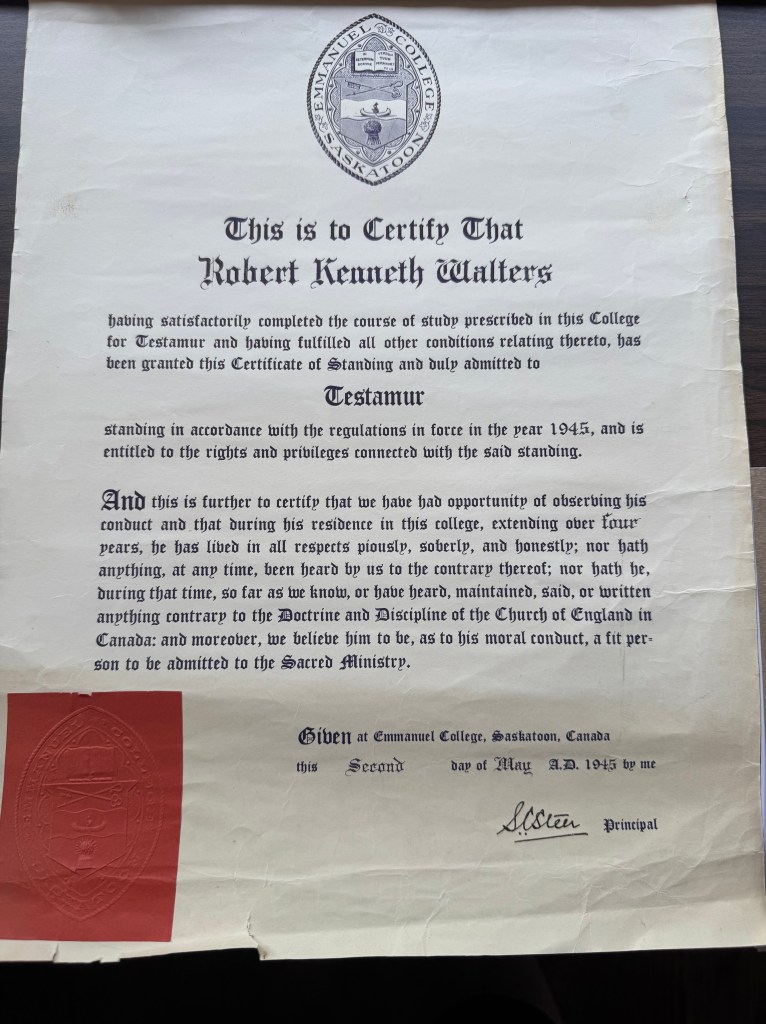
My father’s graduation certificate from Emmanuel College, Saskatoon (1945)
In the past few days I have written at some length about how I have wished that I had learned more about the history of France in general and the French Revolution in particular before I went to France, rather than after I returned to Canada, so that I’d have had a greater appreciation for the historical significance of several of the sites we visited. Among these were the Champs de Mars, a large green space southeast of the Eiffel Tower, where Bastille Day was first celebrated on July 14 1790 to mark the first anniversary of the storming of the Bastille and where the first major massacre of the Revolution occurred, and Place de la Concorde, which was the location of many of the 17,000 public beheadings that took place during the Reign of Terror.
The Palace at Versailles also played a central role in the French Revolution. The primary impetus for the Revolution, which ultimately lasted for more than ten years and expanded from a civil uprising to involve several neighbouring countries, was the terrible social and economic circumstances in which most French people were living, largely due to the onerous tax burden that the “ancien regime” (“old order”) imposed on them. The economy was on the verge of collapse but in the meantime, King Louis XVI (a popular king) and his wife Marie-Antoinette (not as despicable as her reputation would have it, from what I have now read) were living with their son the Dauphin and other relatives in the most luxurious conditions imaginable. One early, unsuccessful attempt to quell the fomenting unrest took place at the Royal Tennis Court at Versailles in 1789, and it was from Versailles that the king and queen were moved to the Tuileries Castle in Paris and thence to prison and after that to their own public executions.
I highly recommend Hilary Mantel’s novel A Place of Greater Safety and the French Revolution podcast episodes of The Rest is History for fascinating in-depth explorations of this decade in French history – which did not go well at all but ultimately did lead to a democracy in France that has lasted till this day (and which we desperately hope will continue).
Where I was going with that draft, now revised to become this draft, was to draw comparisons between the social and economic conditions in France that precipitated the overthrow of the monarchy, then the failure of one replacement system of government after another, with conditions that are contributing to the popularity of far-right movements around the world today. But I decided that whole line of thought was too depressing, and also that it would take me weeks to research my argument to the extent that I could support it with citations, so (you’ll be relieved to hear) I’ve decided to just show you some of the many photos we took when we went to Versailles and toured the chateau. ‘ll leave you to crawl down the rabbit holes that lead to political parallels if you so desire.
.
Versailles palace , which is now a UNESCO World Heritage Site, was built originally as a hunting lodge in 1623 by Louis XIII, and expanded to its current massive size by Louis XIV. It was the latter Louis who moved the seat of the French government from Paris to Versailles (no. I will not mention Mar-a Lago here), and it was at Versailles where Louis XVI was living when all hell broke loose.
Today “The palace is owned by the government of France […]. About 15,000,000 people visit the palace, park, or gardens of Versailles every year, making it one of the most popular tourist attractions in the world” (Wikipedia). The Versailles experience begins as soon as you board the train that carries visitors along the 10.7 k route from Paris.
Paris to Versailles train: interiorLeaving Parisen routeOur train in Versailles StationVersailles City HallApproaching the palace
The walk from the train station to the palace takes ten or 15 minutes, which provides visitors an opportunity to begin to absorb the sheer size of the chateau and the vastness of the estate (800 hectares).
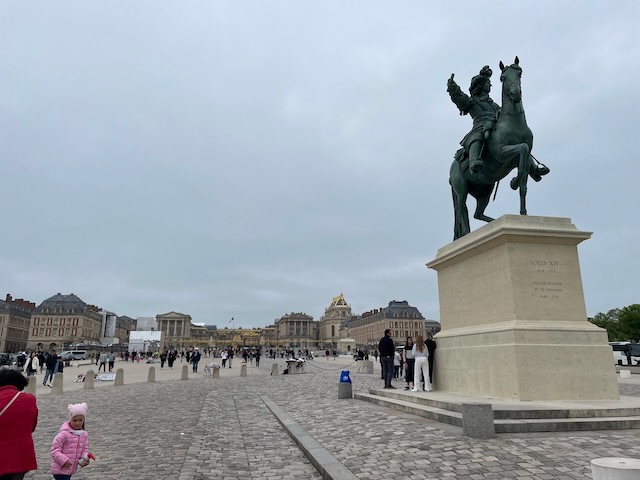
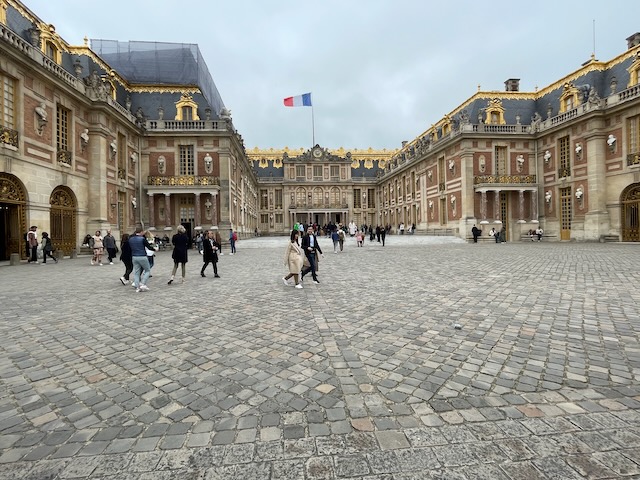
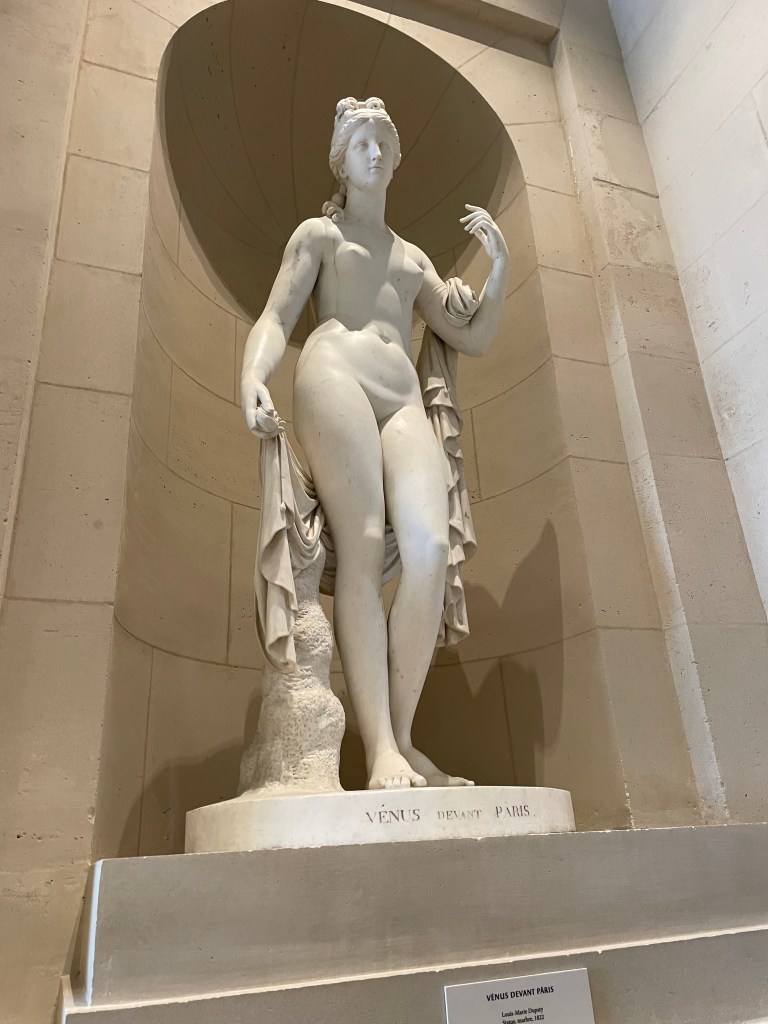
.Louis XIV on horsebackMain entranceEntranceInside hallway“Venus devant Paris”
Early in our tour we saw the living quarters of Mme Victoire and Mme Adelaide, two of King Louis XVI’s sisters. They survived the Revolution, as did the Dauphin (who was later recognized by royalists as King Louis XVII, although he did not reign).
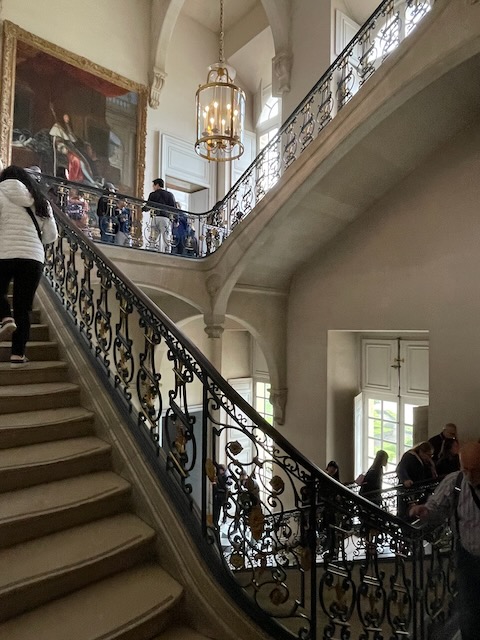
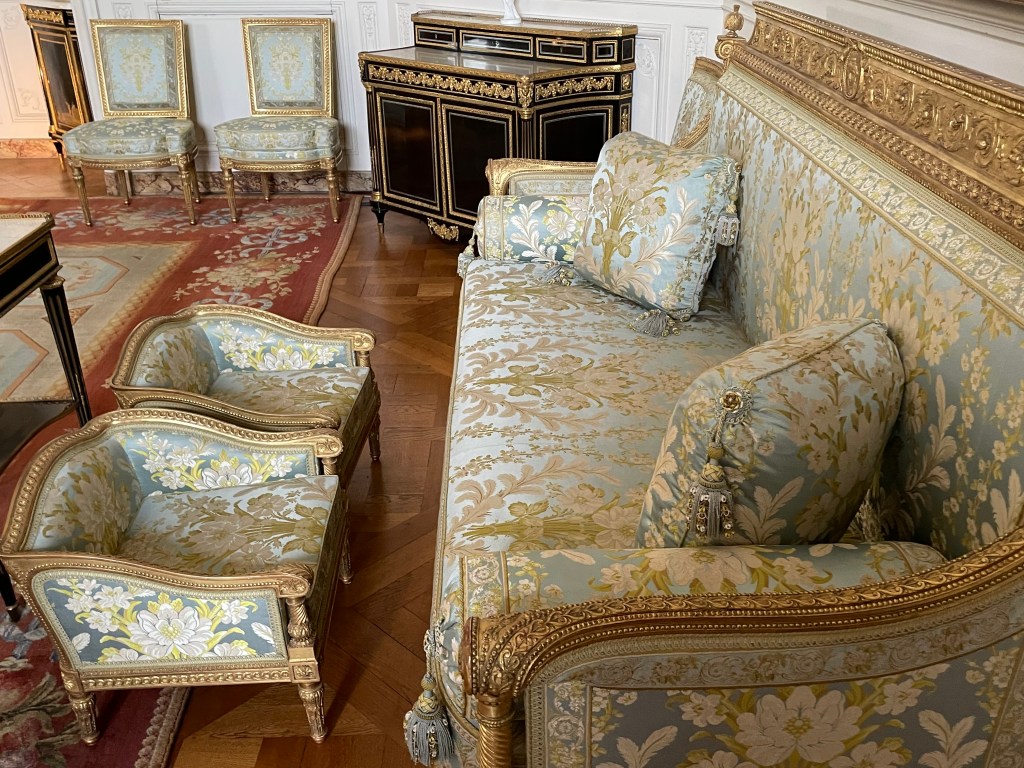
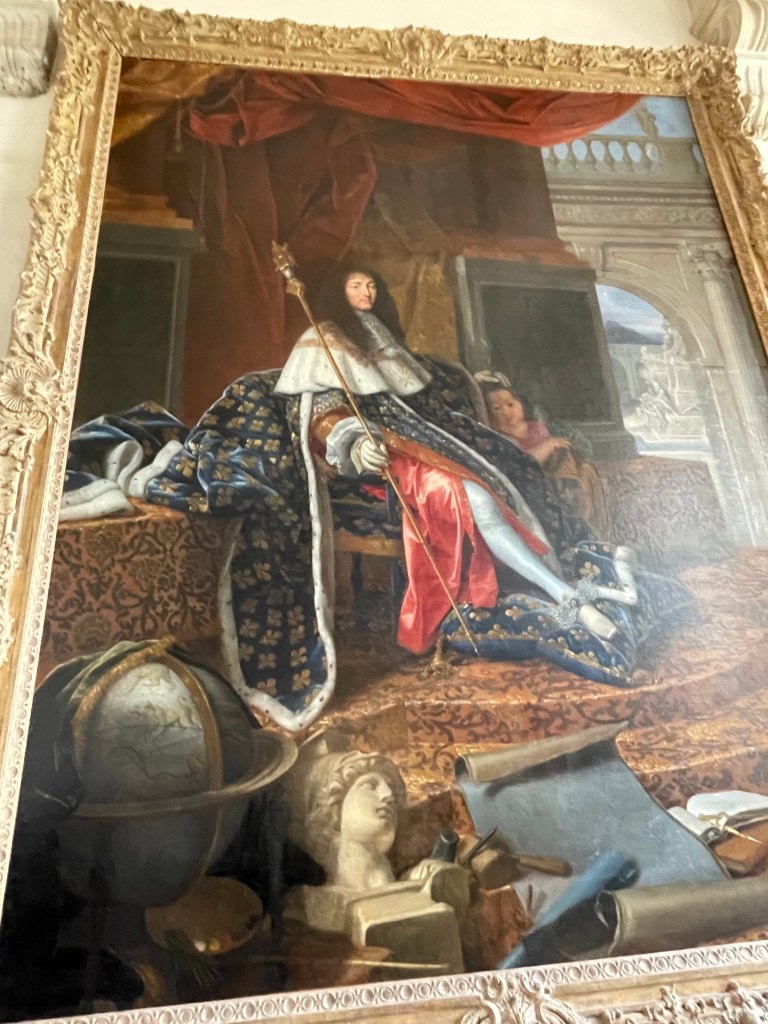
....Painting of Louis XIV at the top of the stairsThe brocade!
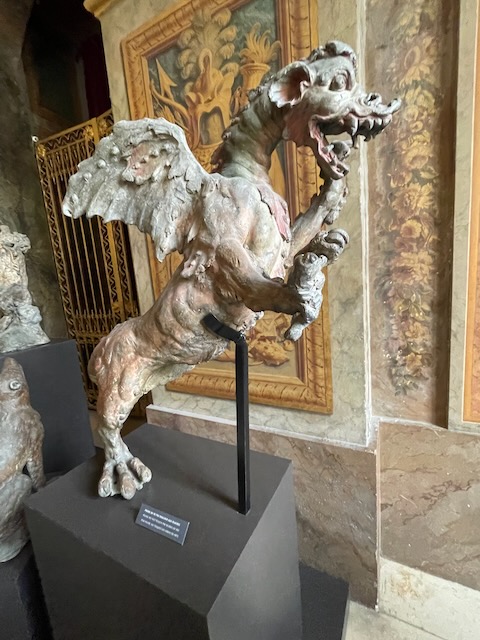
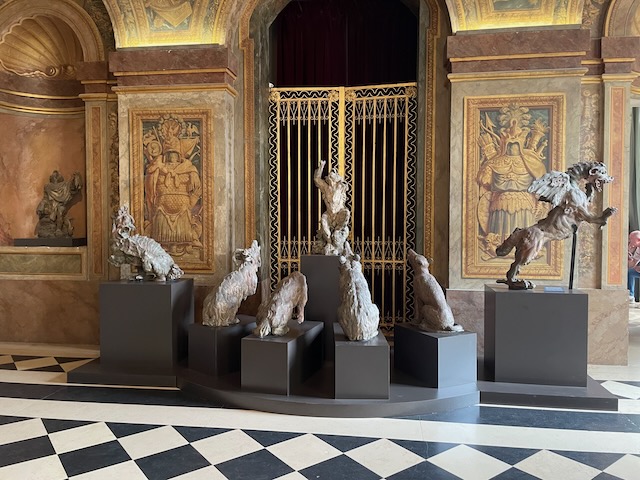
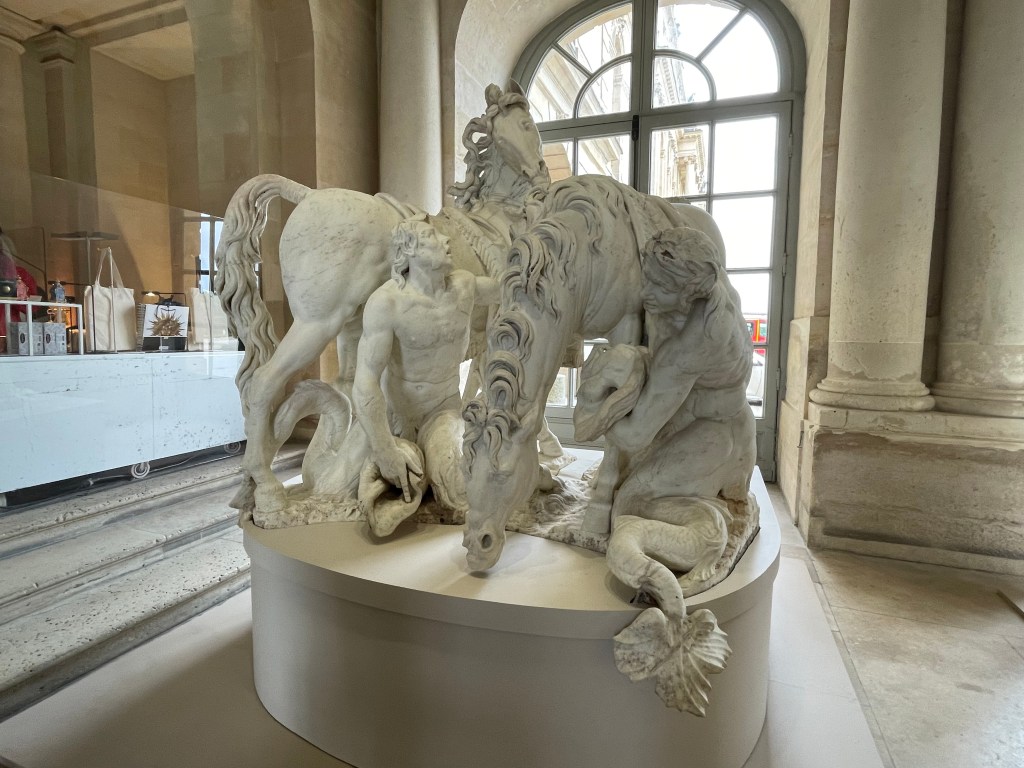
We saw sculptures in nearly every room of the palace, some strangely attractive and some really breathtaking. In the former category are the statuary shown in first four images below, which were formerly fountains with water spewing from their mouths and heads. The last two photos are of more classical statues, made from white Carrara marble. They date from the mid-1600s.
....“Horses of the Sun Groomed by Tritons”“Apollo Served by the Nymphs”
We visited the royal family chapel, which was larger and more ornate than many free-standing churches I’ve been in. There were also a lot of interesting paintings in the palace, not only hanging on the walls but also decorating the ceilings.
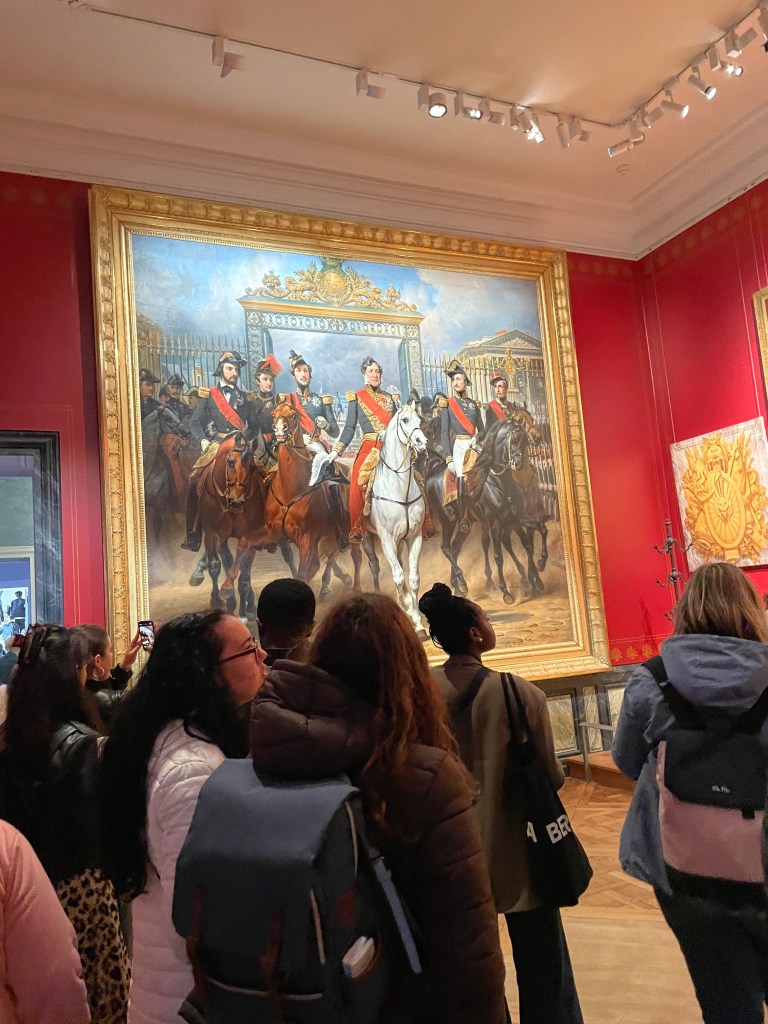
“Illumination of the Belvedere at the Petit-Trianon” Claude Louis ChateletLouis XIVLouis Philippe and His Sons, by Horace Vernet
Versailles today is a museum. Not all of the art we saw would have been there during the reign of Louis XVI; some of the works were created long after he was relieved of his regal responsibilities.
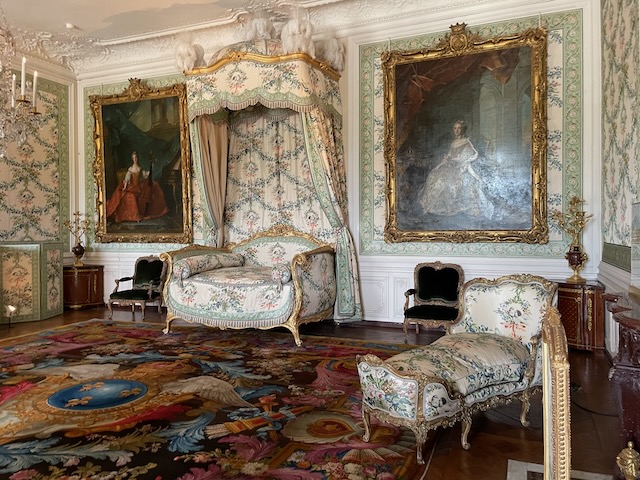
The state rooms of the king and queen, including their private bedchambers, extended through nine or ten large rooms. Here is a sample:
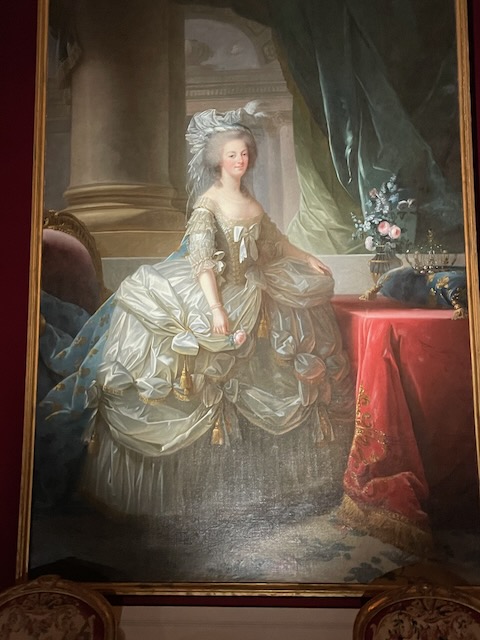
.....Marie-Antoinette
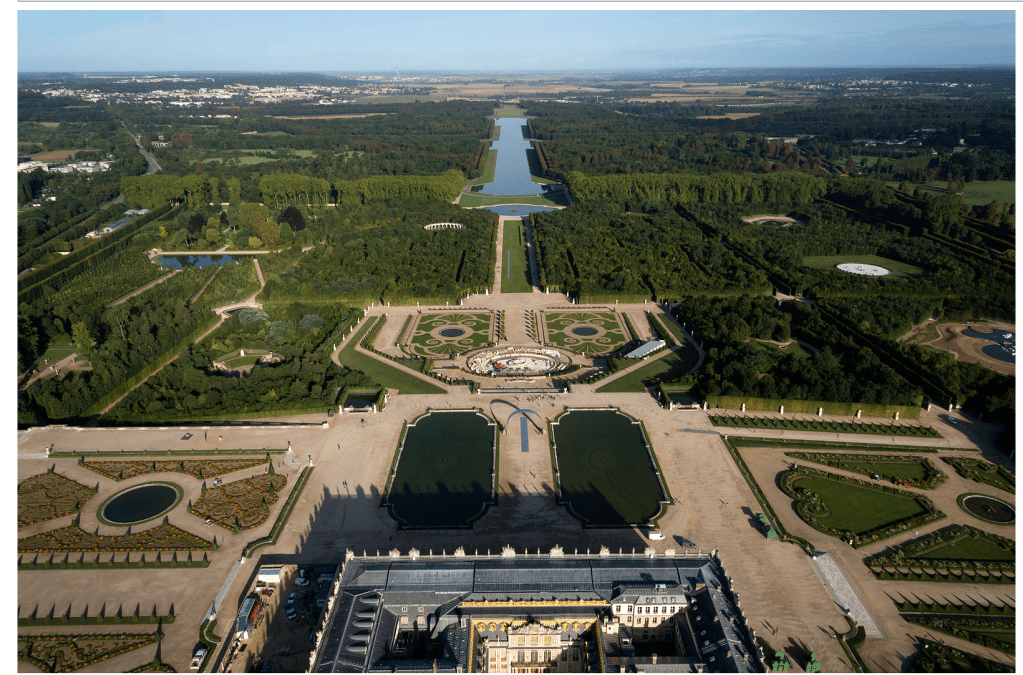
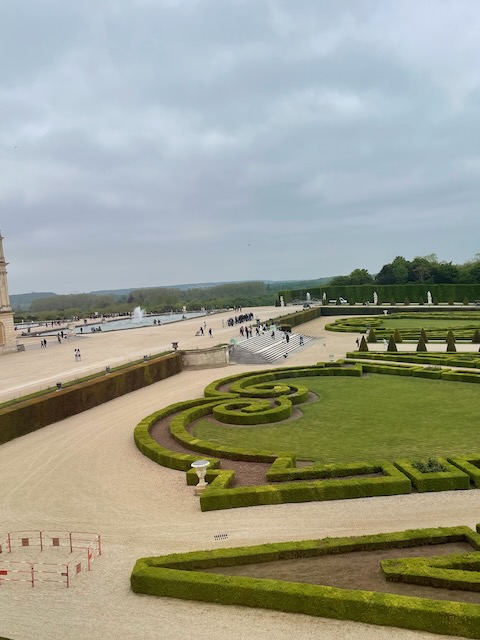
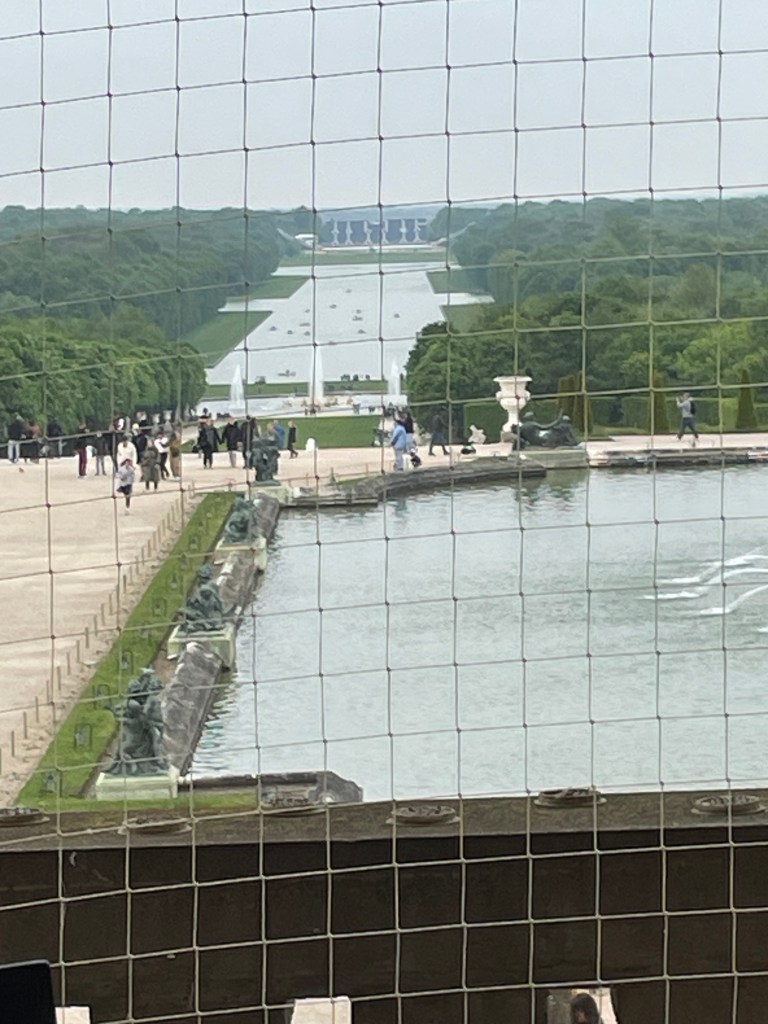
We saw the famous gardens at Versailles through many of the windows in the rooms we visited, but we ran out of time and energy before we could wander around outside
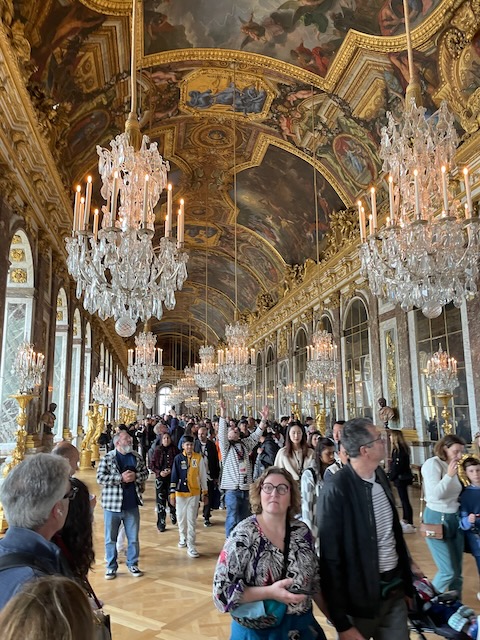
The Treaty of Versailles which ended the first world war was signed in the Hall of Mirrors on June 28, 1919.
The Hall of Mirrors
.
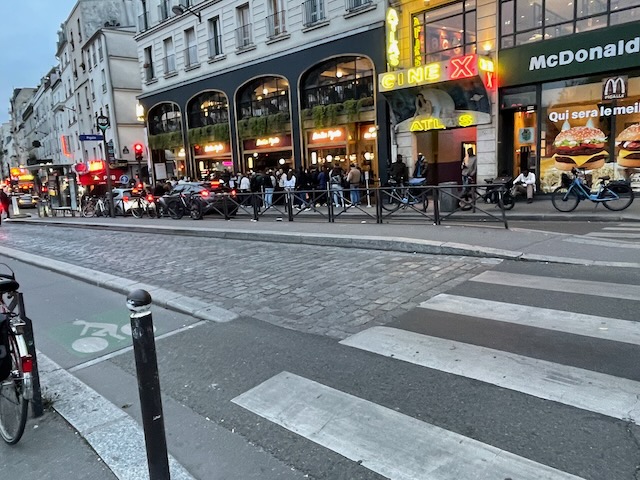
After returning to Paris, we decided to eat dinner at Bouillon Pigalle restaurant. We had seen the long lines waiting outside this restaurant a few days previously and had become interested in eating there, but it seemed to have no accessible system for taking reservations. We decided that waiting in line must be worth it, since so many other people were doing that. The line is so long that it runs down the whole block and around the corner. Thanks to a special agreement between the restaurants, there is a break in the line in the middle so that patrons of the McDonald’s next door can get to their destination.
The wait was worth it, as it was so often on this trip. Le Bouillon Pigalle serves delicious French food in a very efficient manner, where patrons sit close to one another and orders are taken almost as soon as you’ve been seated. But the system works: there is no sense of being rushed, the food is excellent, and the price is reasonable.




















































 I'm All Write
_-_panoramio.jpg)
