Travel dates: Saturday & Sunday, September 19 & 20, 2025
Santiago de Compostela, the capital of Galicia, is the destination of hundreds of thousands of pilgrims from around the world every year; they travel on foot, by bicycle or on horseback to visit the reputed location of the remains of St. James the Apostle. From starting points in countries throughout Europe, they join one of several traditional pilgrimage routes (“caminos”) in Spain, Portugal and France, all leading to the same destination.
It estimated that in 2024, more than 490,000 people received the official certificate (“Compostela”) for having completed one of the designated routes “with a Christian sentiment, even if it is only with an attitude of search.”
Before they start their journeys, pilgrims apply for a “credencial” from an institution related to the pilgrimage; this document allows them access to participating hostels along their route, and serves as proof that they have completed the pilgrimage when they apply for the Compostela at the Cathedral of Santiago.
In addition to the pilgrims, another estimated 500,000 tourists (people like us) come to Santiago de Compostela every year, bringing the total number of visitors annually to over a million.
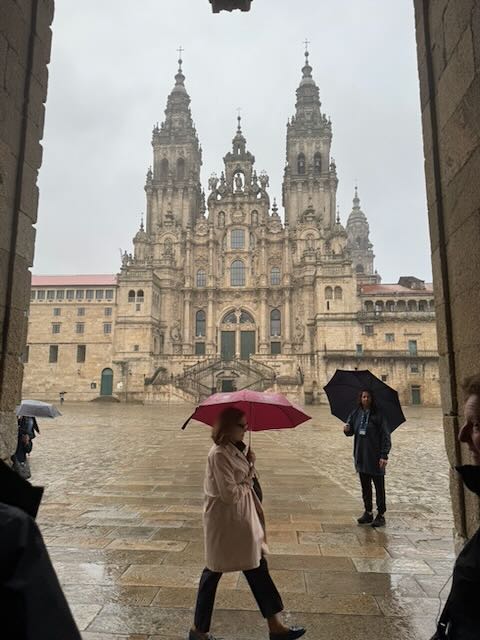
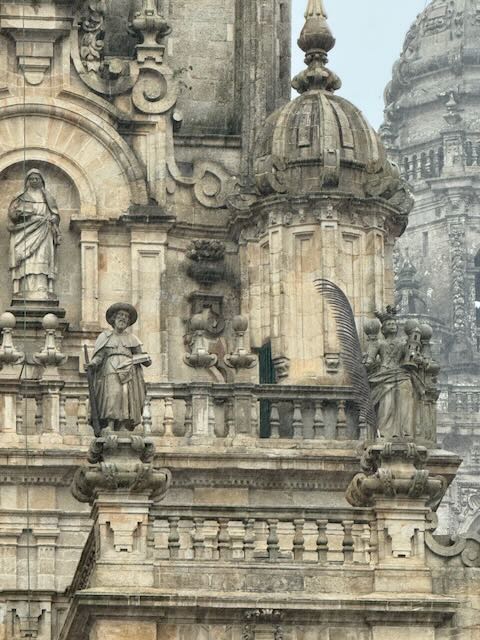
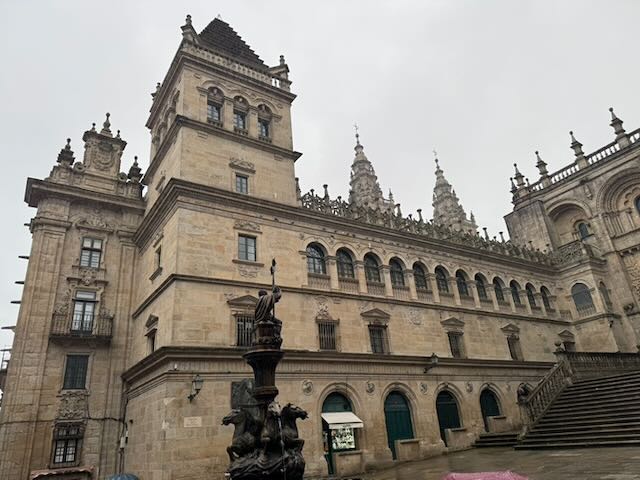
St. James the Great, Apostle
St. James the Great was one of the Twelve Apostles of Jesus. (In case anyone was wondering, this was not the same James who wrote the Epistle – that was St. James the Less.) It is believed that after Jesus’s death, James’s mission to preach the gospel took him to Spain, but legend says that he returned to Judea after encountering a vision of the Virgin Mary near Zaragosa. He was martyred in his mid-forties, and – again, according to tradition – his remains were carried by boat from Jerusalem to Santiago de Compostela, where they were “discovered” by religious scholars in the early 800s (CE).
After the end of Spain’s Granada War, in 1492, by which time visiting the site of the remains of St. James had become a sacred journey for mediaeval Christians, Pope Alexander VI declared the Camino de Santiago “one of three great Pilgrimages of Christendom.”
“A gigantic migratory flow”
In Cees Nooteboom’s remarkable book about Spain, Roads to Santiago (which I will discuss more fully in a separate post following this travel series), the Dutch writer describes the early years of the pilgrimage as “one of the arias of madness of European opera, a gigantic migratory flow, a movement of millions of extras, an unceasing stream of scallop-bearing pilgrims from all corners of Christendom […]. What that massive adventure signified in terms of religious zeal, political, social, economic and artistic influence is almost impossible to imagine. For centuries a whole army was permanently on the move across Europe […]. Thus the pilgrimage became a myth in its own right, and as the links between northwestern Spain and the European north continued to strengthen, the desire for reunification with the Arab-occupied areas of Spain deepened” (p. 200).
Muslims ruled parts of the Iberian Peninsula (Spain and Portugal) for nearly 800 years, from 711 to 1492, and the Moorish influence is still obvious in the architecture, food and culture in many parts of Spain. Nooteboom points out that some historians have argued that were it not for the massive waves of pilgrims bringing travellers from the rest of Europe to Santiago de Compostela, Muslim rule in Spain might easily have extended into Europe – and possibly thence across the Atlantic to the New World – creating a very different history for our planet.
Although he acknowledges that there is no such thing as an “alternate history” (despite our endless interpretations of them, the actual facts of history are what they are), Nooteboom opines that “On that shadowy conviction [the belief that St. James’s remains were in Santiago de Compostela] and on the obstinate independence of the Asturian kings […] hinged a momentous European mass migration which gave successive generations of Spaniards the motivation and the means to resist Arab domination, to reconquer the rest of Spain from Islam, and thus to turn a tide that could have swept all over Europe.”
The Cathedral
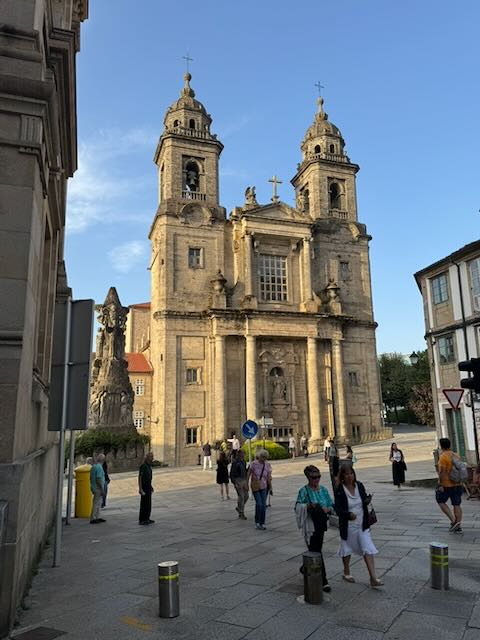
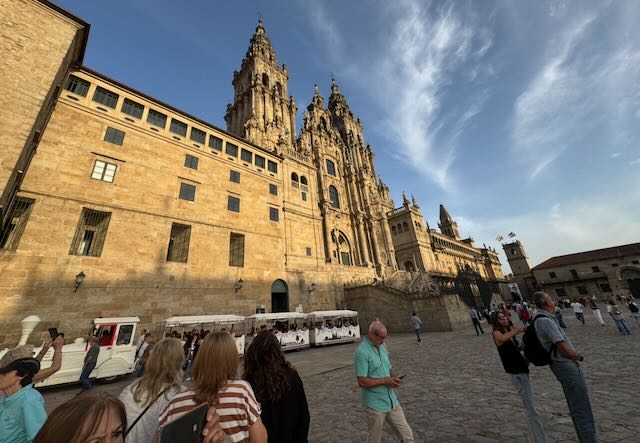
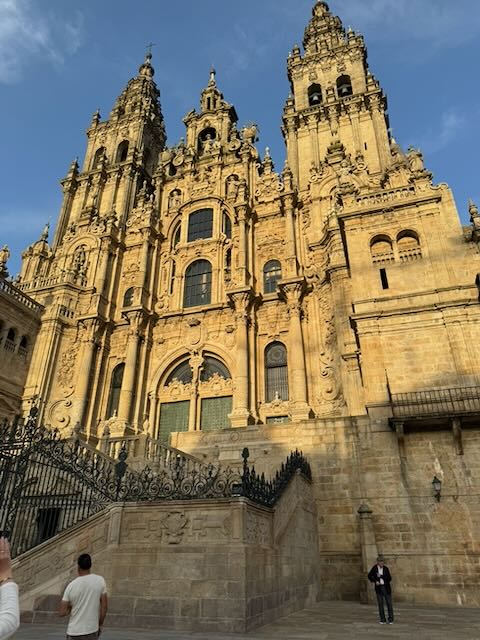
Each of the four façades of the Cathedral of Santiago de Compostela features different architectural styles, including Romanesque, Gothic and Baroque. The building, a UNESCO World Heritage Site, was founded in 1075 on the site of another chapel that had been burned by invaders; it remained under construction well into the 18th century.
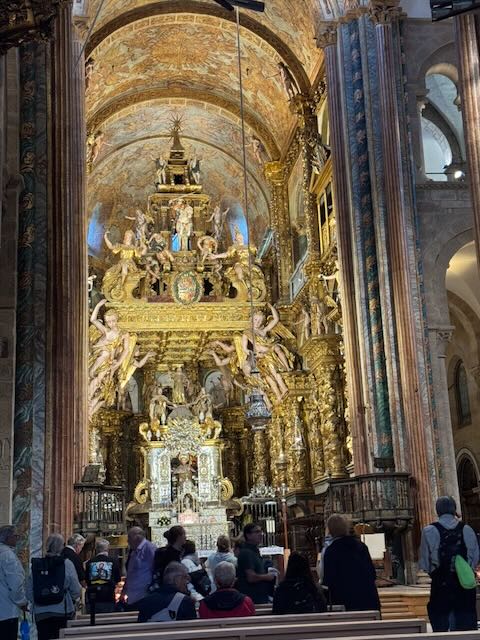
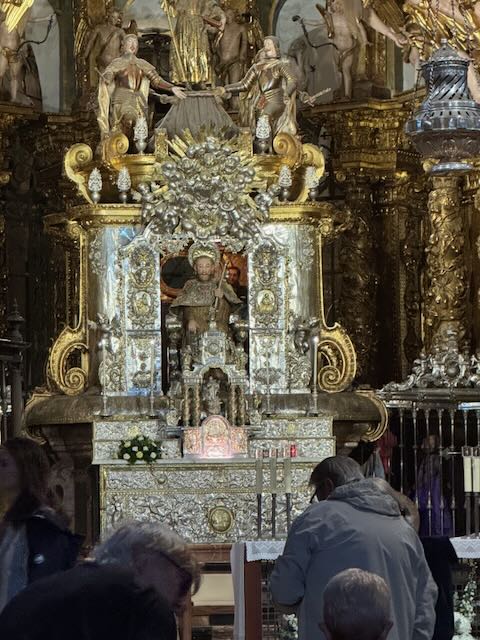
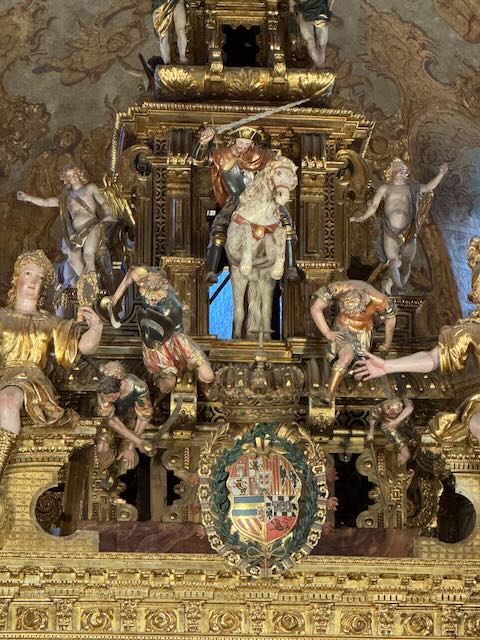
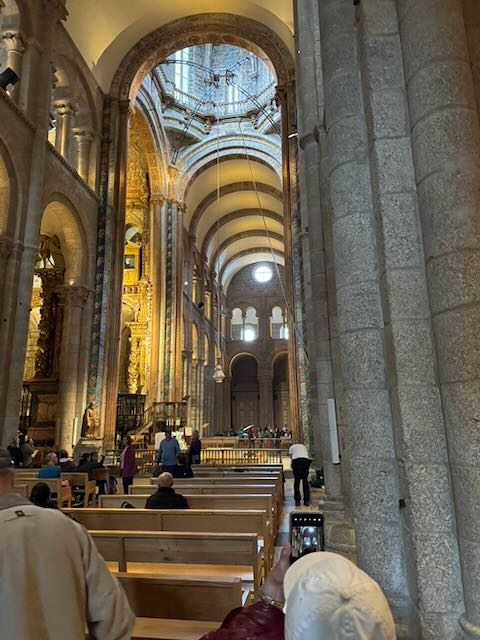
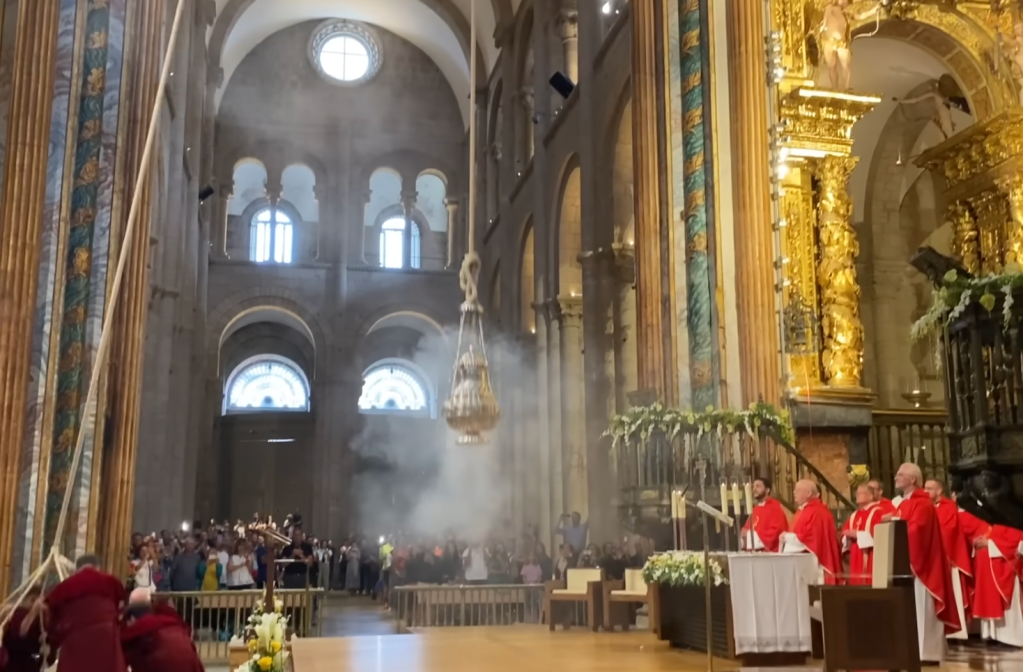
We also toured the cathedral itself, which is not only a religious and tourist destination, but is still an active church. It is the home of the Botafumeiro, one of the world’s largest incense burners. A few members of our group went back to the cathedral the day after we had visited it together, so they could attend a mass and see the Botafumeiro in action. I later looked up a YouTube video of the ritual, and it really is a spectacular (if somewhat dangerous-looking) sight.
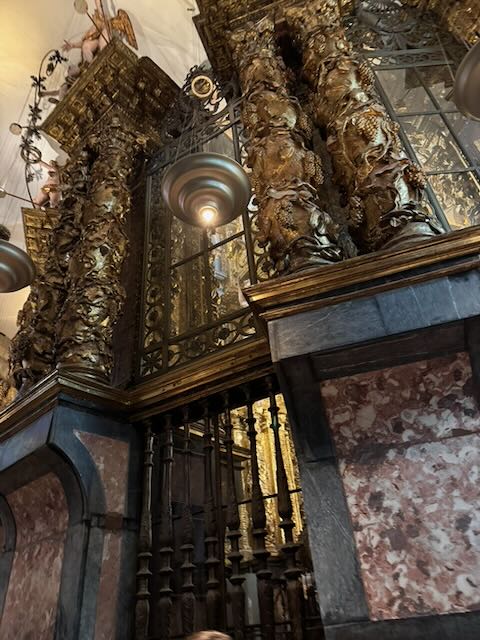
The crypt purportedly containing the remains of St. James and a number of statues and artifacts depicting biblical events and honouring aspects of Christian Doctrine are among the features of the basilica, as are the towering architecture and fine details of the artistic installations.
Do You Know the Way to Santiago de Compostela
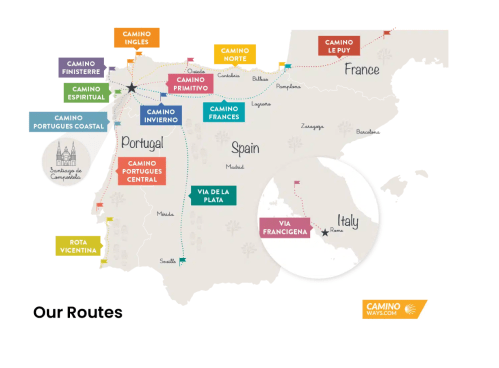
The main routes to Santiago de Compostelo are from Spain, Portugal and France, as indicated in the map below, with the farthest starting point being Seville in southern Spain (the “Via de la Plate,” 2000 k), and the shortest the “Camino Spiritual,” which starts in Portugal. The Via Francigena is made up of legs which start at Canterbury Cathedral in England, and it crosses territory in France, Switzerland and Italy before joining the actual camino in Spain.
Each of the routes has its own challenges and appeals.
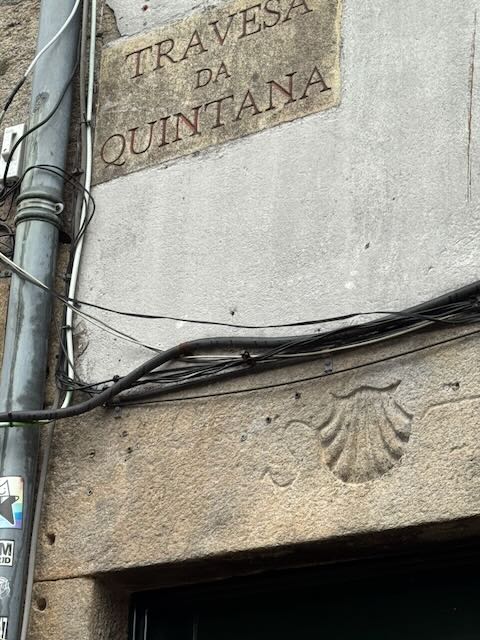
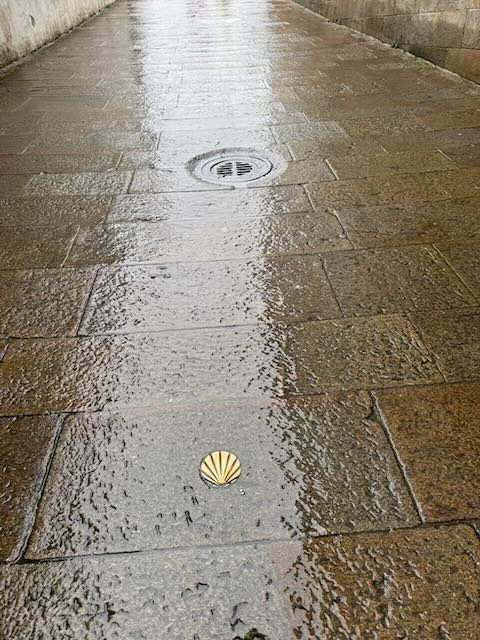
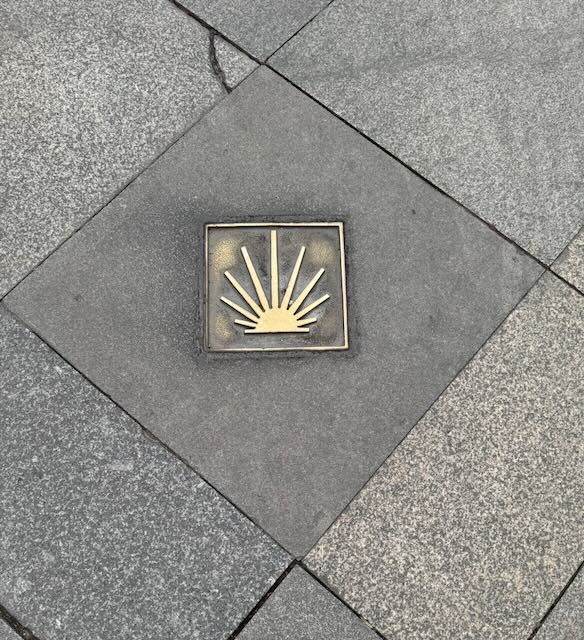
All of the main routes are marked with the symbols of St. James – which takes the shape of a scallop and is embedded in walls and in the streets. We saw these all over northern Spain, the ligament or hinge of the seashell always pointing in the pilgrims’ destination.
A Galician Dinner
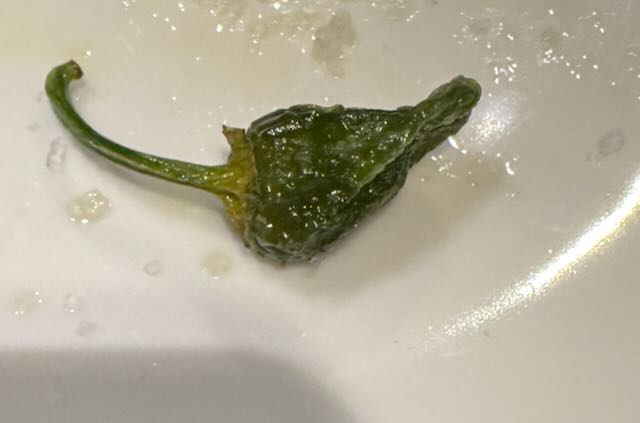
We arrived in Santiago de Compostela in the evening and wandered around the old town for a while before enjoying a delicious Galician dinner at one of the restaurants. One of the highlights of the dinner for me was a tiny green pepper called a pátron, which has the most delicate flavour imaginable, especially when prepared as it was at that restaurant. I have since discovered that these delectable treats are available at certain markets and in some restaurants in Toronto. I intend to track them down.
Galicia is known for its seafood and for its stews.
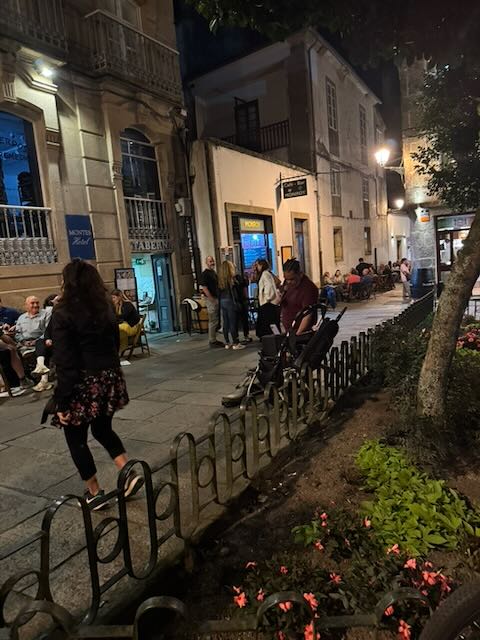
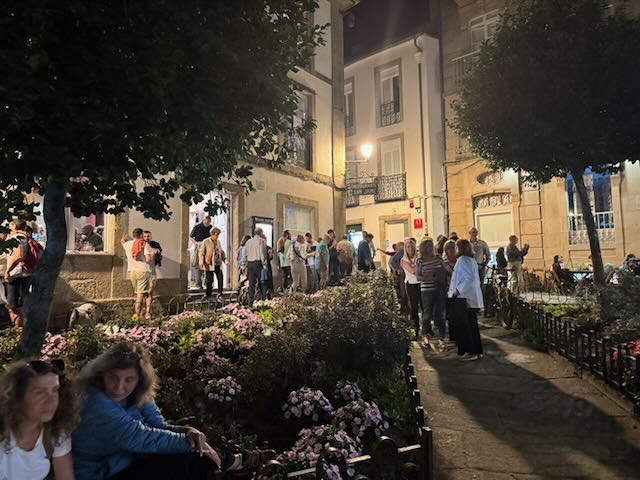
Santiago de Compostela’s old town is considered by many to be one of the most beautiful in Spain. We’d seen a lot of beauty already, but I had to agree that this was a definite contender, especially since the rain had stopped and the world smelled fresh and green.
Rias Baixas
The following morning we took an optional excursion to Rías Baixas, a series of four estuarine inlets located on the southwestern Galician coast.
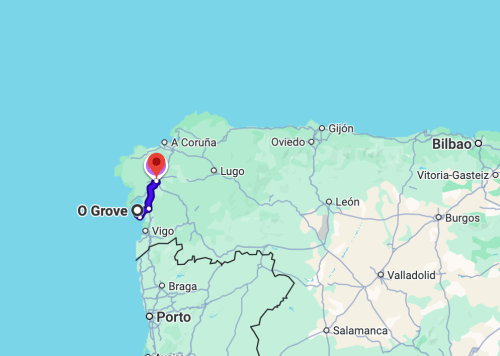
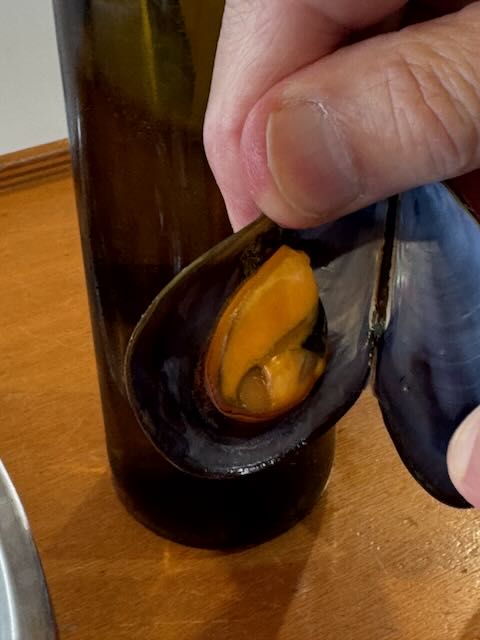
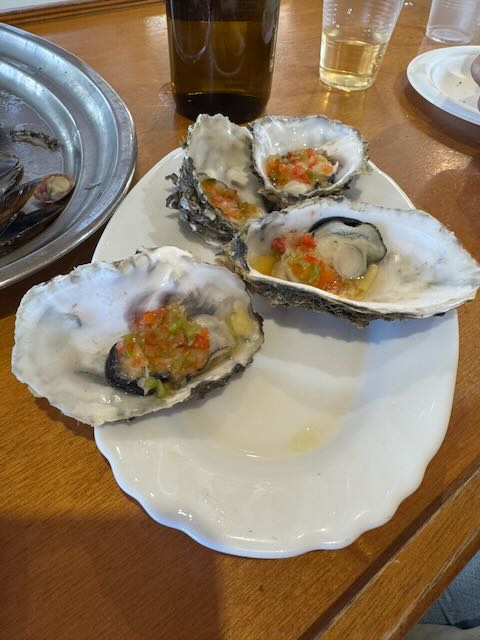
Our destination was the town of O Grove where we boarded a boat and spent a couple of hours out on the water. We saw mussel, clam, scallop, and oyster farms. It was fascinating to learn how they “seed” the ropes which are tied to platforms called “bateas” that float at anchor all over the estuaries, and then are lowered into the water.
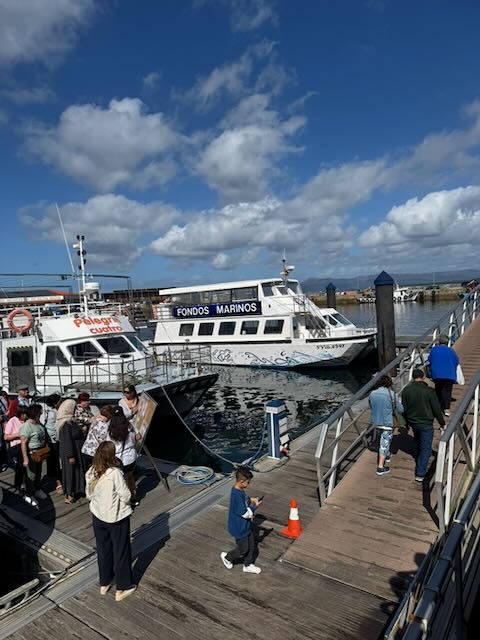
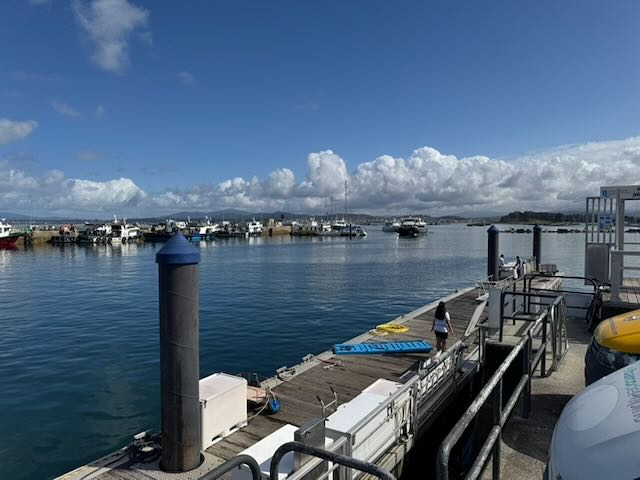
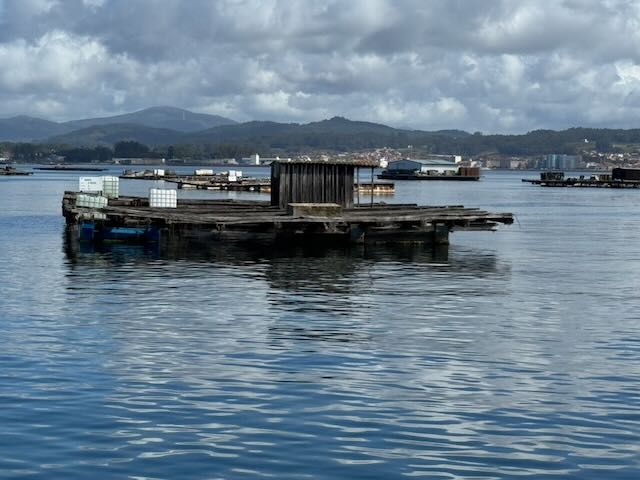
Each raft can hold over 400 ropes and produce more than 100 tons of mollusks per year. The system is not only efficient but also sustainable: no feed or chemicals are used, as the bivalves feed exclusively on what the estuary provides.
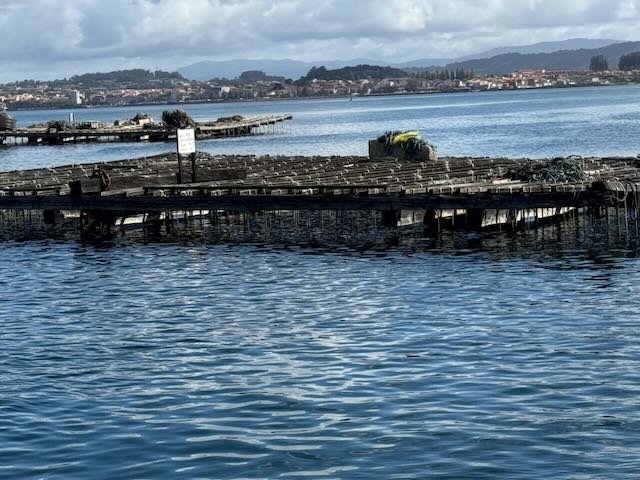
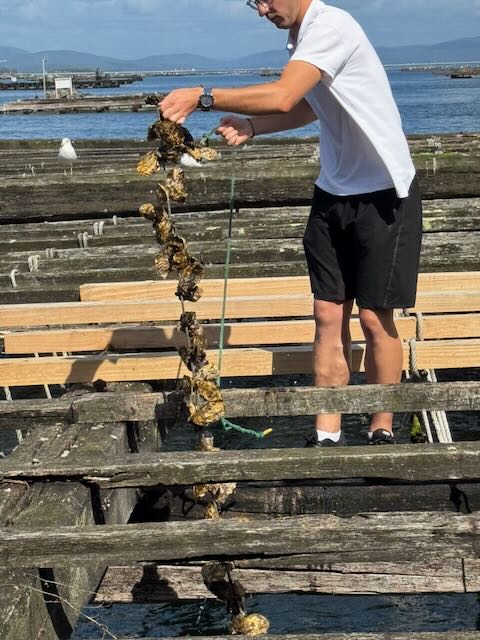
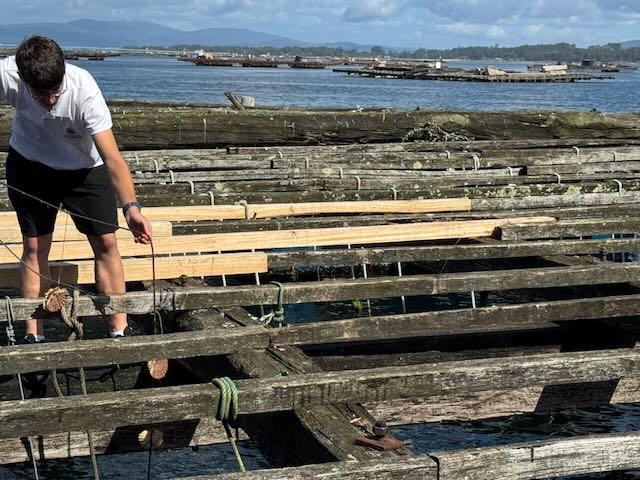
Each spring, baby mollusks or “seeds” are gathered from the rocks along the seashore, and they are hand-wrapped onto ropes using a biodegradable mesh that holds them in place until they attach themselves to the webbing, which usually happens within 7 to 10 days. During the growing season, the shellfish on the ropes are cleaned and weeded to allow those that remain to grow to optimal size and health.
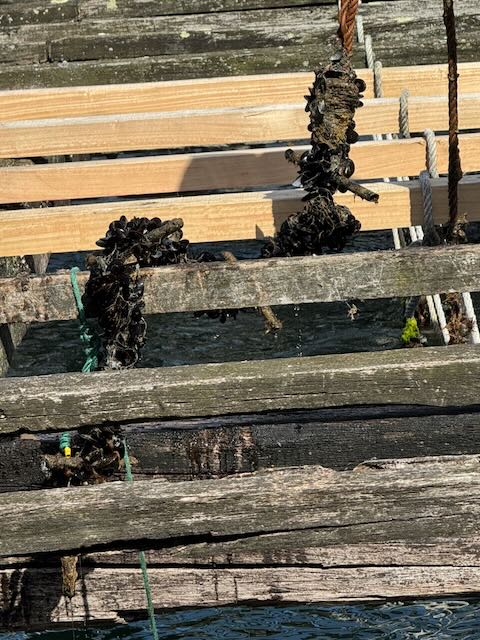
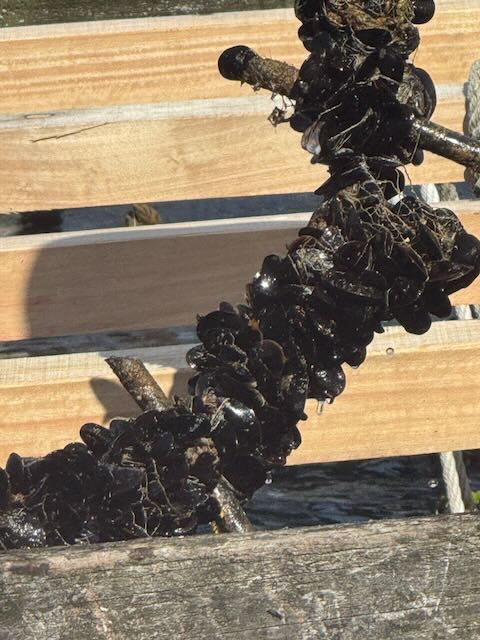
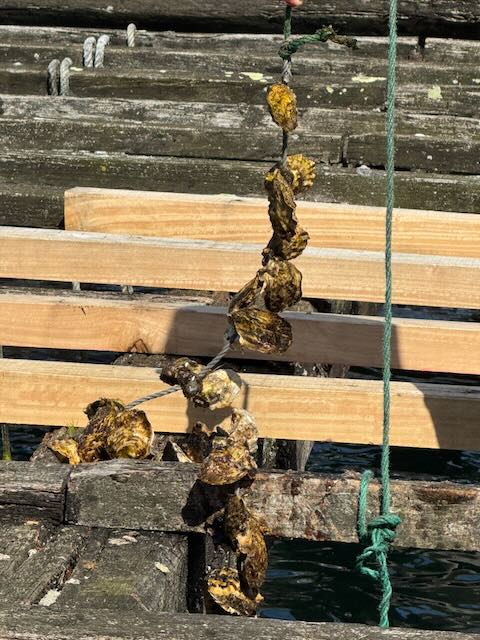
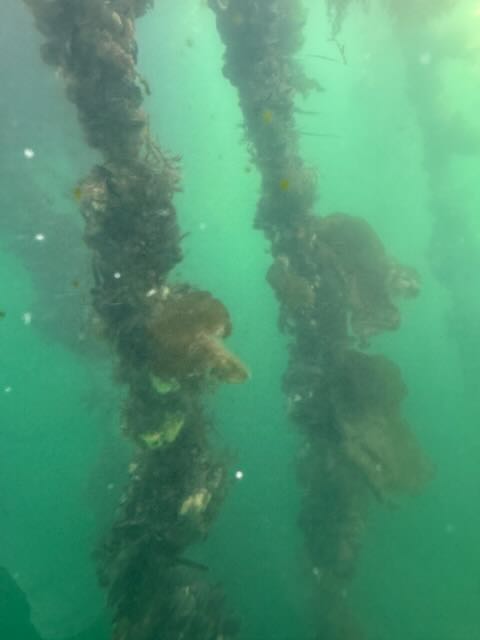
On board we watched workers on the beateas and were able to go downstairs to see the ropes through windows in the hull. We ate on board, sampling mussels and oysters, newly steamed, fresh out of the water, accompanied by fresh bread and local wine. So delicious!
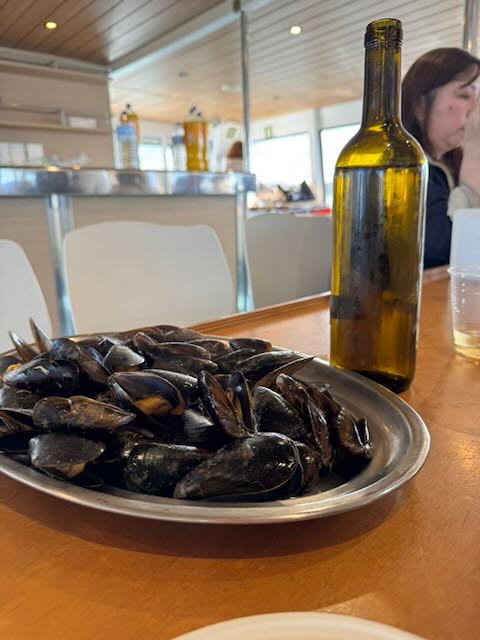
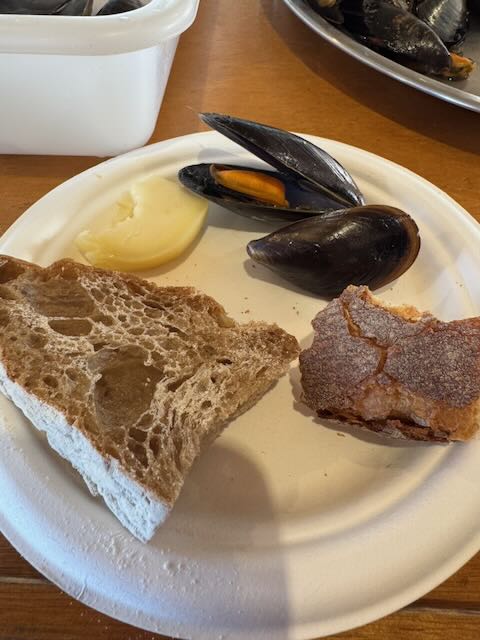
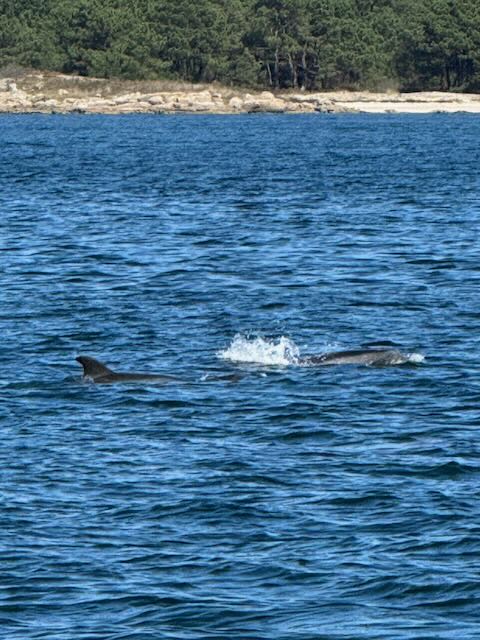
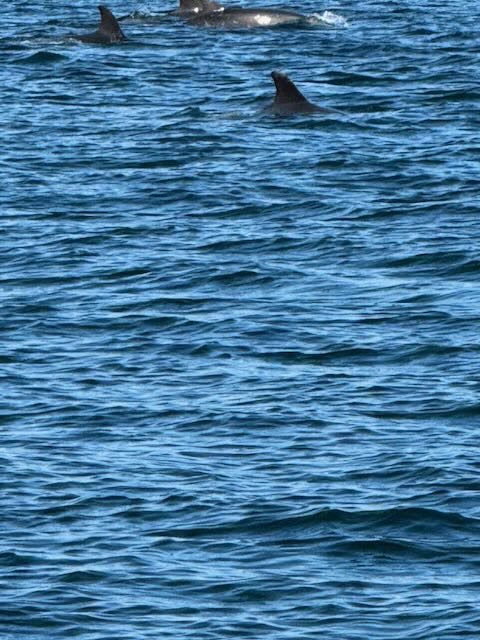
As we headed back to shore, a few curious dolphins leapt out of the water nearby to get a better look at us (or maybe they were just doing calisthenics so we would look at them. It was hard to tell).
.
A particularly lovely Santiago symbol that we saw in Zamora.
Discover more from I'm All Write
Subscribe to get the latest posts sent to your email.


Mary, this post evoked fine memories of our pilgrimage. Thank you!
❤️