Category Archives: Travelling

Abertillery

(In August, 1999, I took a one-day excursion from my first-ever visit to London England to visit the town in Wales where my father had been born. He died when I was 2 and I knew very little about him. Thanks to an amazing couple, Maureen and Terry Williams, strangers who extended an incredible gift of hospitality and friendship, I learned even more than I’d hoped about Abertillery and the beautiful valley in which it is situated. And thereby, about my father.)

“Is there a hotel in town?” I asked the driver as I hoisted my duffel bag, heavy with guidebooks notebooks a camera jeans nightgown toothbrush a sweater clean-underwear-and-socks onto my shoulder and prepared to disembark.

He looked at me as though I were daft.

“I’m from Cardiff, i’nnit?” he said (as in ‘How the hell would I know?’). But he made an effort on my behalf, repeating my question to three clear-skinned teenaged girls as they edged past me onto the nearly empty bus, their eyes on me as they let their coins clatter down into the box.

“Aw, noo. I doon’ think so,” said one of them to another.

“Maybe there?” said the other back to the first, bending to indicate through the bus windows a gabled, several-storied red brick building just below us.

“Nah. Doon’ think so,” said the third, speaking like the other two in a soft voice that rose, to me, in unfamiliar places and made her hard to understand.

The doors of the bus sighed shut behind me as I stepped onto the pavement. Soughing diesel down into the street, it moved slowly up the roadway toward the next town, then the next and then the next. At Brynmawr, it would turn around and begin its descent south through the Ebbw Valley back to Newport, the city on the Severn where—according to a letter that contained the biographical information I’d requested from the Saskatchewan Archives Board—my father had clerked for a time at a store named Pegler’s.

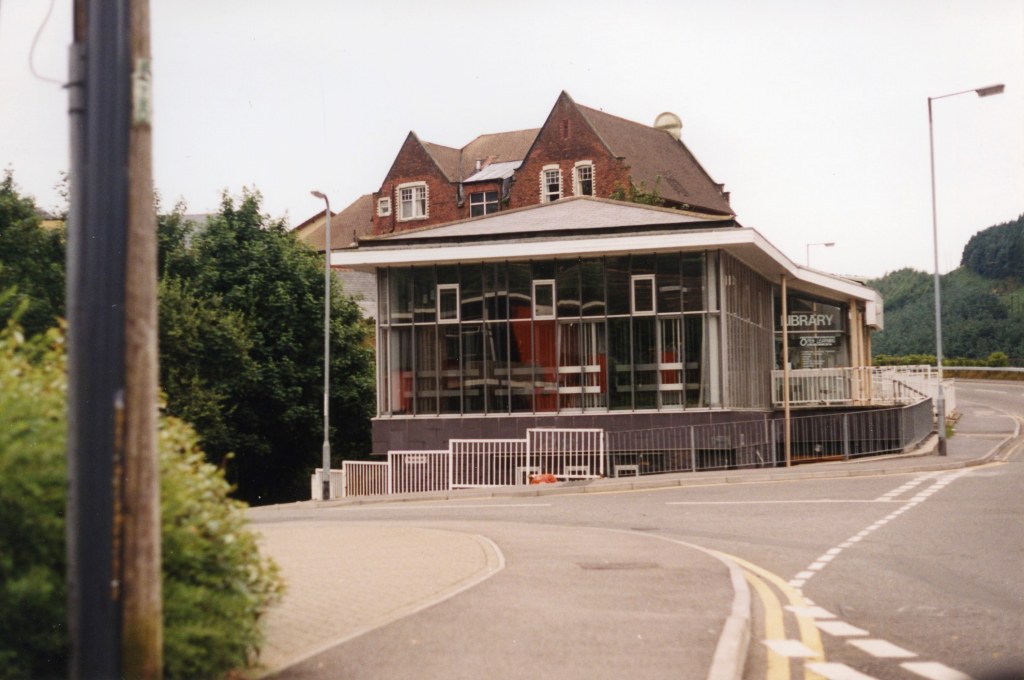
I stowed my valuables, which for now included my passport, travellers’ cheques, assorted bits of British and Canadian currency, tickets, a map, and a copy of that precious letter, in a side pocket of my bag, and zipped it closed. I lifted the bag onto my shoulder, and started down the deserted street toward the run-down building the girl on the bus had pointed out. When I’d descended the sidewalk to its lower southern side, I could see that the building’s entrance had long been boarded shut, but as I followed the sidewalk up again, I discovered on the building’s western hip the local library—a good place to have directed someone who needed information, except that it too was closed.

Now I saw that a man a bit older than myself was standing on the corner of the street ahead, above me, tanned and grey, his slender good looks set off by his uniform: navy trousers, a long-sleeved white shirt with navy epaulettes, a navy tie. I did not know yet that his name was Terry Williams, or that he was a well respected husband and proud father of two grown children who did odd jobs for neighbours rather than dip into the family coffers for his rugby-ticket money. Or that he’d retired after forty years of trade-work—never having missed a single day—then, finding himself at loose ends, had applied to become the local traffic warden, which meant that on some days like this one, he needed to stand for extended periods of time beside an empty road in his carefully pressed uniform in order to complete his shift. But he looked safe enough to talk to.

 He watched my approach with a fair degree of curiosity.

“Is there a hotel in town?” I asked, lowering my bag to the pavement, then reknotting the elasticized band at the nape of my neck to keep my hair back.

“Noo,” he said, looking around, clearly distracted from wondering about me by his sorrow at my question. “Used to be.” He nodded down the street. “Closed now.”

“Motel, then? A bed-and-breakfast?”

He shook his head regretfully. “Nothin like tha’ here. Noo.”

I should have booked something before leaving London, but I’d wanted no reason not to come here on my own.

“I should have called ahead,” I said, to make it clear I wasn’t blaming him, or his town. “I came because my father was born in Wales. Here—” I waved my hand around, unwilling to try to pronounce the name of this place I had reached at last. “I never knew him, or any of his family. He died when I was two.” I looked around me, adding these deserted streets and buildings to the knowledge of my father that until today had mainly consisted of the typed, half-page list of dates and places I carried in my bag. It now also included the vast gold and dark-green valley I had risen through for nearly an hour on the local bus to get up here from Newport, and the soft, surprising way the people of this region spoke with a question behind nearly every sentence. “I came to see where he was born.”

“All the way from Canada?” he asked, astounded.

“I’ve been staying with a friend in London,” I told him. “I’m going back there tomorrow.”

“When would your father have been born?” he asked.

“In 1908,” I said, looking across the valley toward its western slope. I smiled. “I’m glad I came. It’s beautiful.”

“Wouldna looked like this back then,” he said with a shake of his head. “Hills were black in those days, from the coal.” He didn’t mean to suggest that these soft green slopes, the clear blue skies were an improvement. “Thatcher, i’nnit? Prime Minister back then? She closed the mines to punish the unions for the strikes.” He shook his head. “Now there’s no industry, no work. The place is dyin’.”

I reconsidered the green hillsides. “And there’s nowhere to stay.”

“Not in Abertillery.”

So, there: at last the name of the place was out—spoken aloud, caressed by his voice. My heart thudded into love with it—the soft stress on the second-last syllable, rather than the first as I’d been saying it to myself for all these years. “Aber” meant “mouth” or “confluence”—the only Welsh word I knew so far: I’d reached ‘the mouth of the Tyleri.’

“I think there’s a guest home toward Blaina.” He was pointing up the valley.

I lifted my bag again onto my shoulder, smiled and thanked him. He smiled back, but he wasn’t happy. “It’s at least five miles to Blaina,” he said. “You can’t walk all that way.”

“I’ll be fine,” I told him, starting off.

“It’s below the highway to the west,” he called after me disconsolately. “Just before the town.”

Cars and trucks zoomed past me as I walked along the highway—traffic headed, although I did not know it yet, up the way that one could go in the passenger seat of a battered little red Rabbit, through Blaina and Brynmawr to the Heads of the Valleys Road, then west to Tredegar. There, in the district office, a fifty-year-old woman such as myself could secure a birth certificate that would finally give her the full names of her father’s parents, and the address of his first home.

He’d left southern Wales at age nineteen, said the letter in my bag, “to get away from depressed industrial areas … where there were no business prospects.” He’d worked for Canadian Pacific in Montreal for twelve years as a bookkeeper, providing for his mother and his sister as well as for himself—the women having followed him to Canada after his father and his brothers died. My grandfather and my uncles, those men would have been: four of the thousands of Welsh miners dead through accident or disease because of where they’d worked.

Almost before I knew it I was out of Abertillery—“Aber-til-ler-y”—out of it but not beyond it. The town continued to rise up the valley’s eastern slope beyond the fences separating me from it, in terrace after terrace of joined cottages. Far off, a local bus made its way south through these residential areas and I wondered if it was the same bus I had taken up, now making its way back down again to Newport.

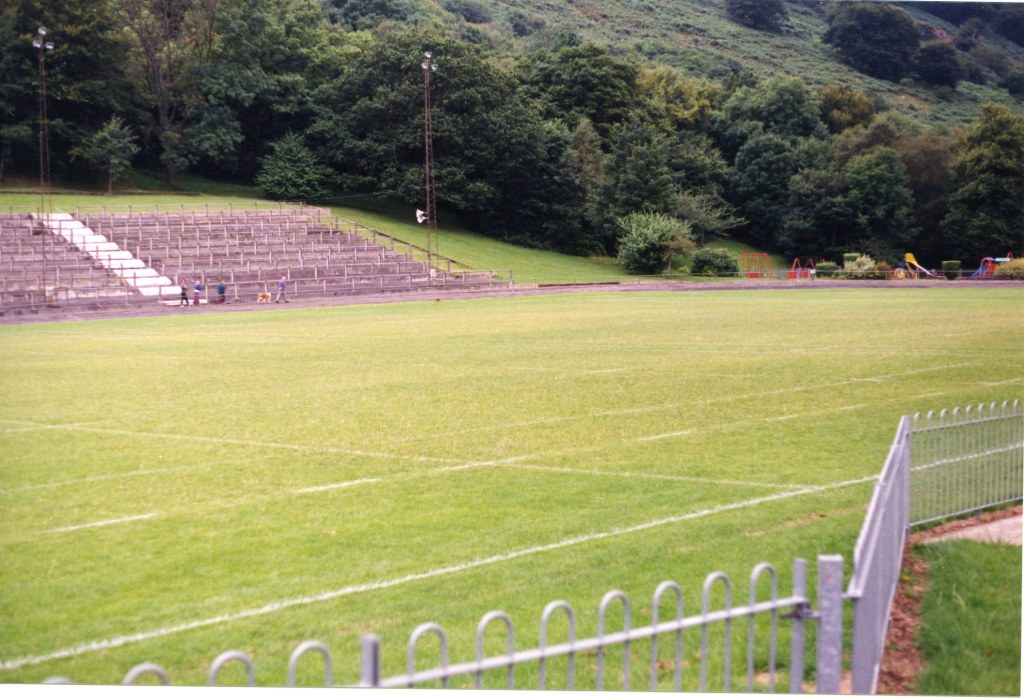
As I walked, I looked over at the jagged rows of grey brick walls, white siding, chimneyed roofs tiled grey and red, and wondered if this had been the street where he had lived—or maybe this? Or there? What I could not see, just over the Ebbw Fach River from where I walked, was Abertillery Park and the green stretch of grounds where my father’s love for the game of rugby must have been engendered and then nurtured. A man I’d tracked down several years before, a retired Anglican priest who’d gone to theological college with him in Saskatoon, recalled how he’d loved rugby—to play it as well as watch it. Recalled that he’d loved a beer when the game was over, good conversation, laughter. From such bits had I begun to assemble a man who might have been my father. Not that I understood him—what could there have been to laugh about, with his father and brothers dead in Wales, his sister dying shortly after she came to Canada, and now his mother mad with grief and rage because he’d gone off and left her yet again—this time to go to university? He was only in his mid-thirties by that time, but he had little time left for living—just a few years for marriage, fatherhood, a small-town-Canada church vocation—before his own death started to unfurl inside him. I was already older than he’d ever been.

I stayed far right on the shoulder, facing traffic. To my left, farmland fell away, then rose again into the distance. I’d never been in terrain like this—in a valley so wide and soft that it could hold a dozen towns and cities in its lap. I was walking with my map folded in my hand, having tried unsuccessfully several times to find the landmarks that would tell me how much farther I must go to get to Blaina. Gradually my pace slowed, my bag feeling heavier and heavier as I continued upward. What if I didn’t find the guest-house before dark?

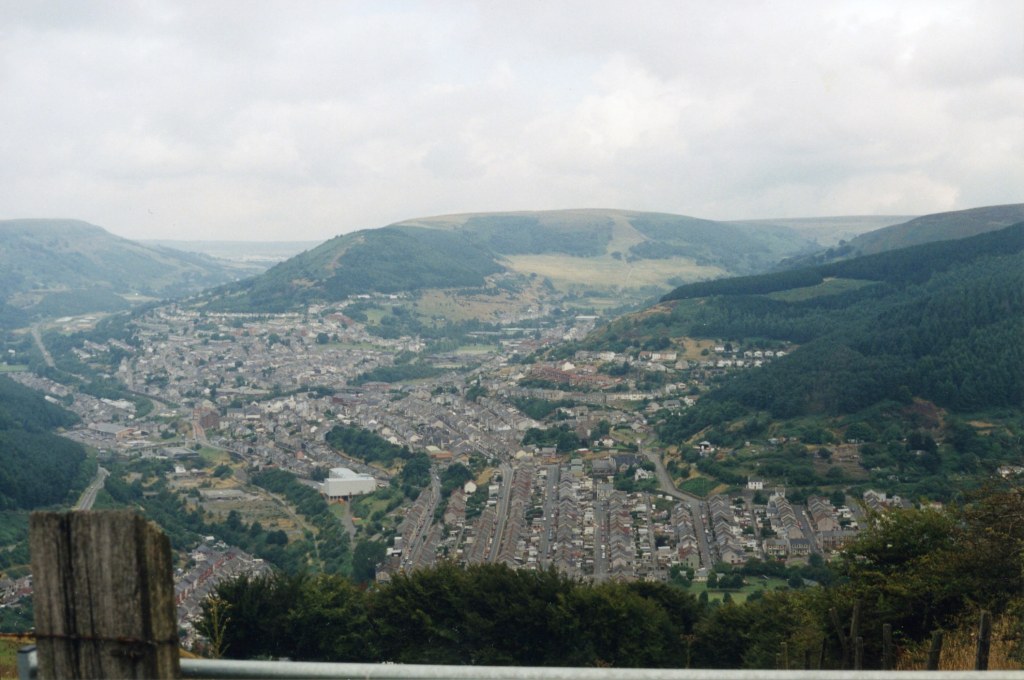
But now the fences ended, and a roadway opened to my right. I took it, hoping against hope that the traffic warden’s directions had been wrong, but after several minutes I saw it was a private road to a business of some sort. There was no “private” sign, but as I would learn before long, “private” did not have the same meaning as it did in Canada. High above the town of Abertillery, for example, you could walk right out across a farmer’s field, stepping around sheep turds until you reached the radio transmitter at the top of the valley. There, your breath catching at the sudden view, you could look down into the town itself, and even down into the next town—Six Bells, that was, where one of the several local collieries had been (45 men killed in a coal-gas explosion there in 1960, 1000 feet below the surface)—then farther south until you were sure you saw the glint of the Severn in the distance. On your way down into town again, a hurtling descent around hairpin turns pocked with Rabbit horn blasts to warn off anyone who might be in the way, you could stop at a deconsecrated church—St. Illtyd. Parts of that building were a dozen centuries old: my father’s life, his father’s and the rest—brief even in human terms—were mere flecks against that kind of time.

I resumed my trek up the highway, growing increasingly discouraged. If I couldn’t sleep in the town where my father had been born, I might as well go back to Cardiff and find a room that was at least somewhere near the bus to London. I had done what I intended: I had found the town. I had even talked to someone who lived there, seen a street-corner or two, considered a few houses that might well have been his.

It is true that I had not yet been welcomed into a snug home on Cwm Cottage Road, or been shown up and down the valley before the dark descended; not been offered a feast of steak-and-kidney pie, mashed potatoes, peas, hot tea, or been given a comfortable upstairs room in which to spend the night. I had not yet begun to know two of the gentlest people I could ever have imagined, nor had I yet seen their willingness to share with a stranger whatever they could think of about her father’s birthplace—completely unaware that their gestures, their way of speaking and their generosity would show her as much about him as the rest combined. They would give her a piece of herself she hadn’t had before—and ignite a fierce pride in it.

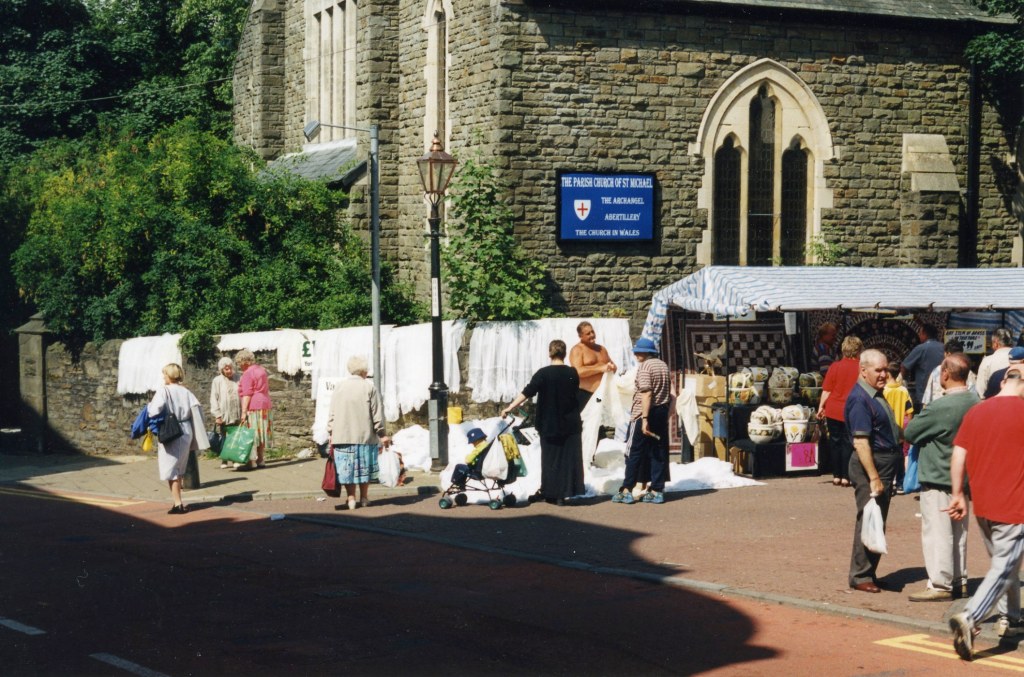
Nor had I yet stood on a sidewalk just half a block off Cwm Cottage Road, looked up at a narrow house mid-terrace—29 Princess Street—where my father was born and raised – and imagined its tiled walls sifted over with coal dust, pictured its men hurrying off to the colliery, wondered how so many people could have lived in so small a place. I had not yet strolled through Abertillery’s weekly outdoor market—spread out in the morning sunlight on the cobbled church plaza as it had been for decades—and reflected on the determination of a young man who’d left everything familiar to come to an unknown country. And not just for a night. For ever.

I had done what I could. It would have to be enough. If I didn’t make a move soon, the buses down to Newport would stop running for the night.

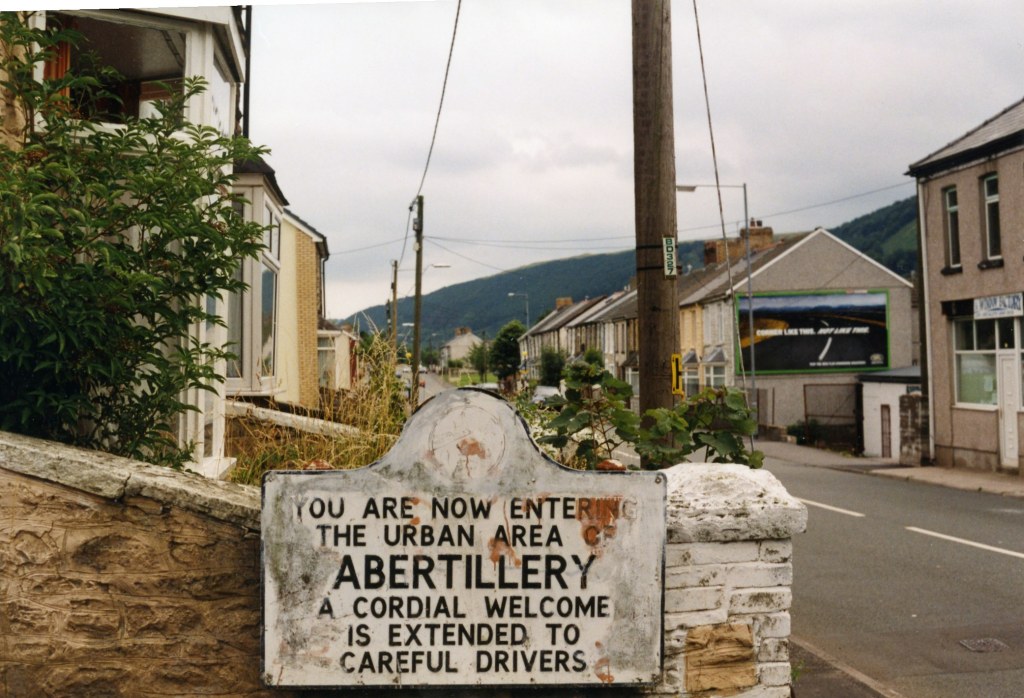
I cut down into the ditch, threw my bag over a fence and clambered after it, headed up a grassy hill to the road that led back to town. Back I walked through the deserted streets, until finally I saw a post with a bus-stop notice on it. But between it and me was a rusting white enamel sign that read, “You are now entering the urban area of Abertillery. A cordial welcome is extended to careful drivers.”

I had to take a picture. It would be proof, if only to myself, that I had actually been here. I put down my bag, dug out my camera, and crouched to take the photo.

As I did, a bus zoomed past, going south. I watched it disappear and felt something tighten in my throat—certain that I’d let the last bus get away.

But now, a small red car—possibly a Rabbit—zipped up the road from behind me, whipped over to the curb and stopped. The driver—a strongly built woman radiating energy, with soft grey hair in curls and a face with so much life in it, it revived me just to see her—clambered out.

“Are you from Canada?” she asked.

“Yes,” I said, surprised, looking down—trying to imagine what aspect of my appearance could have given my nationality away.

“Thank God I’ve found you,” she laughed. “I’ve been looking everywhere! Get in. I’m the traffic warden’s wife: Maureen. I’ve come to take you home.”

*****

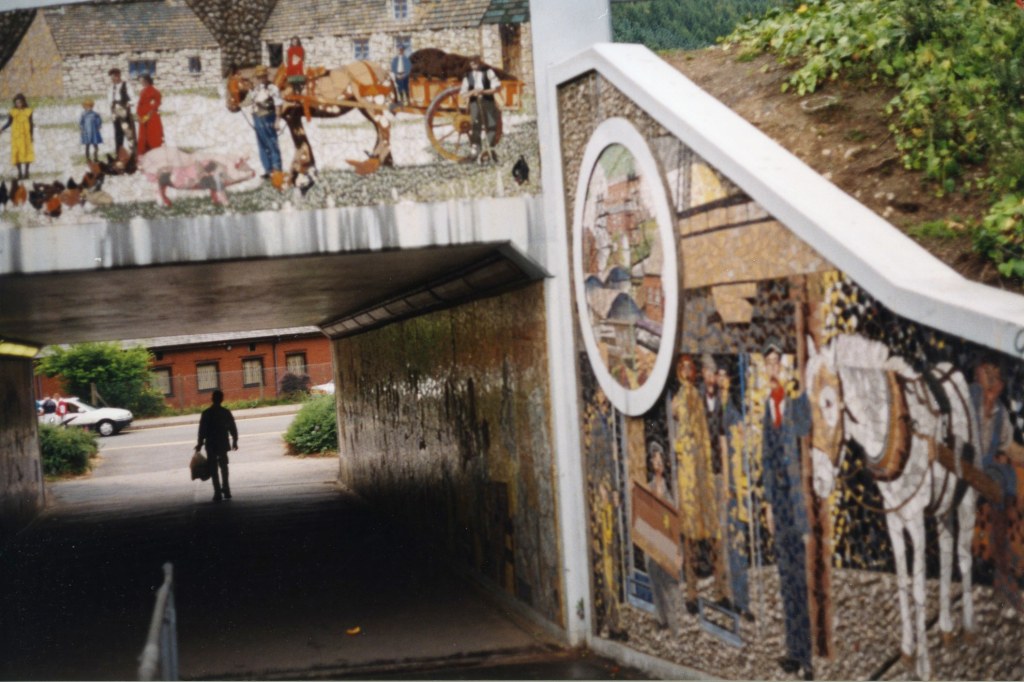
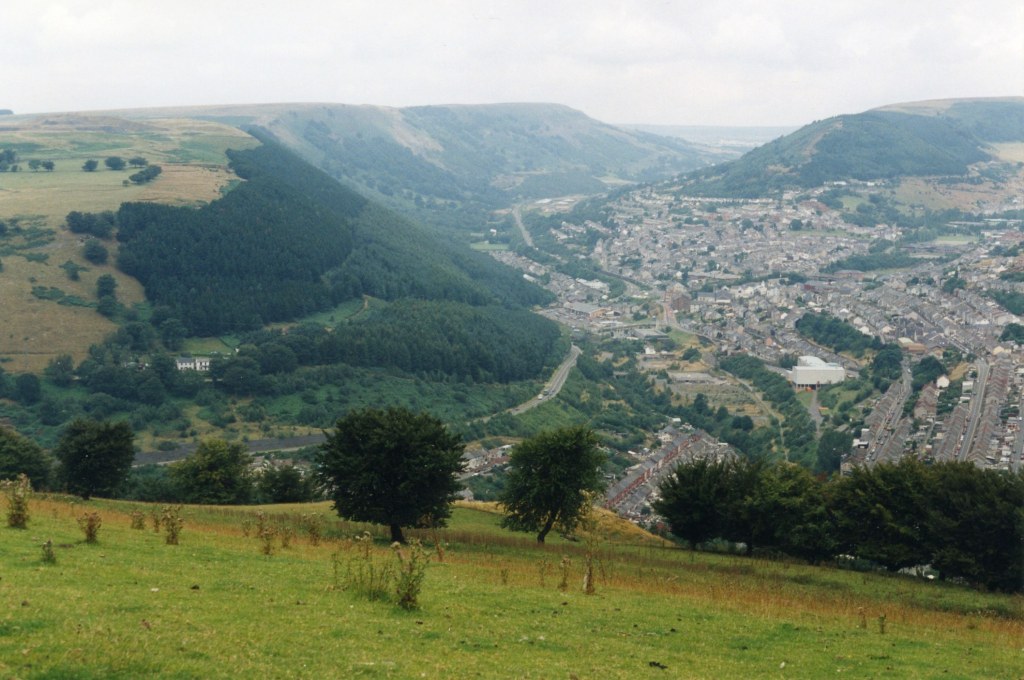
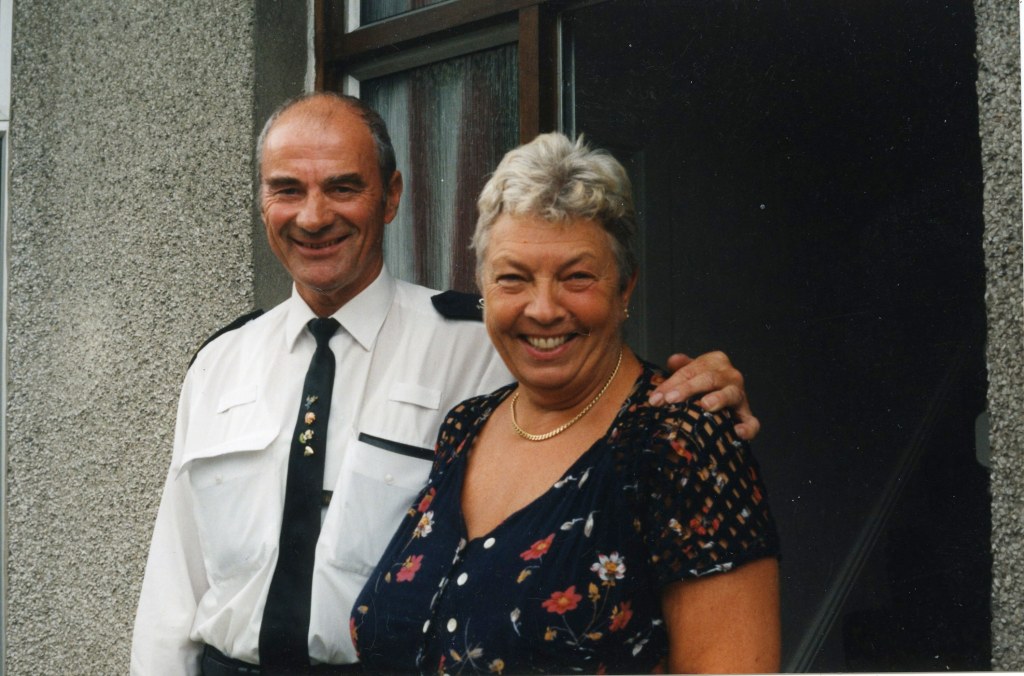
“Abertillery” was published in The Nashwaak Review in 2024. Below are photos I took in 1999 when I visited the town of my father’s birth in Wales.
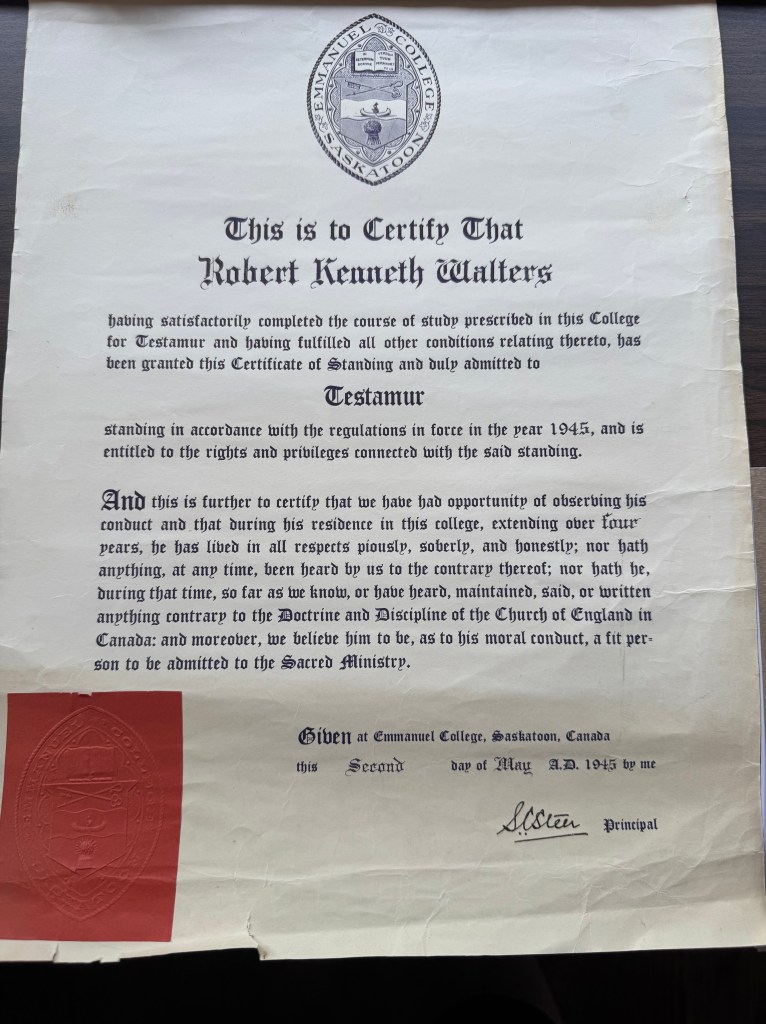
My father’s graduation certificate from Emmanuel College, Saskatoon (1945)

London, etc. and Paris, 20: Final Thoughts

Unlike many of my contemporaries, I was unable to travel much outside of the North American continent until I was in my 50s. Over the years, however, my reading and other interests (art, film, theatre, culinary) have taken my imagination far and wide, and made me long to see more places in the world than I will ever actually get to visit. About forty years ago, I made a list of places I wanted to see. I am enough of a paper hoarder that I could probably find that list again if I put my mind to it, but it would undoubtedly depress me: after all, I’m suddenly three-quarters-of-a century old and my travelling days are likely coming to an end. (Not yet! But soon.)

My interest in travelling both literally and figuratively has also meant that throughout my life, I have usually been studying one language or another, never attaining fluency but always enjoying the exercise. I studied Russian, French and Spanish at university, and have since taken several courses in the latter two languages with the intent of brushing up. I’ve used Duolingo to give me some knowledge of Italian, and I am currently working on German. My literary interests have always been international in scope as well, and books set in countries from Burma/Myanmar through China and Russia, to Japan and Iceland, across Europe, down through Africa, and over to Brazil and Patagonia and Chile, have piqued my interest in actually seeing the places where they are set. At the age of fifty, I finally got to the UK, home of my forebears, where I visited London and saw a tiny bit of Wales.

When it finally became possible for me to make a major excursion to a foreign land, India was at the top of my list – much to the dismay of my elder son, who had generously shared his air travel points with me as a 60th birthday gift. He was not keen on the idea of his mother travelling alone to India, much less on feeling any sense of responsibility if anything happened to her. But I felt that if I had only one chance to see an entirely different geography and culture from my own, I wanted it to be as entirely different as possible. Plus, I didn’t travel alone: I joined a group trip. (The eldest of my travelling companions was barely half my age, but after they all got used to having someone older than most of their parents in the group, it was fine. It was even better once they basically forgot that I was in their midst.) I loved India, and confirmed that I loved travelling.

Most of my travels since have been with my husband, Arnie, especially since his retirement ten years or so ago. Together, in addition to several U.S. trips, we have been to Cuba, Italy (& Croatia), Germany (& Prague), and this past year to London (etc.) and Paris.

I have gained more than I can ever explain from these travels, most of it positive. Travelling has changed me for the better, enriched my life, widened my perspectives, deepened my feelings of connection with people around the world, and made me appreciate our differences. Perhaps the most frustrating lesson to learn has been that it would not be possible for me to cross travel destinations off my life list, even if I knew where it was. There is not one place of those I have travelled to (at least so far) that I would not relish going back to again for an extended stay. In fact, in most cases the hankering is worse now that I’ve seen the places than it was before I went. When I watch a TV series or a movie set in Berlin, or London, or Mumbai, or Mexico City, or read a book from or about somewhere I have been, I long to be back there again.

Our most recent trip was no exception. If you asked me right now if I would rather visit a country I haven’t ever seen before or go back to Paris (and maybe see some more of France), I would be hard pressed to answer the question. I did love Paris.

But then I think of the night markets in Japan, or the Sagrada Familia, and my imagination is off and running once again.

My only hope at this point is that in my 90s, when I can no longer travel, I will at least be able to afford some kind of virtual-reality headset so I can visit a few places my actual body has not yet been to. (I hope the device comes with smells. Food would be nice, too.)

Paris may feel like it’s half way around the world, but on May the 11th we woke up in a hotel room in Paris and went to sleep around midnight the same day in our own bed in Toronto. That boggles my mind, even though I know that this experience was only possible because of time differences, and that these differences also mean that it would take us two days to get back to that hotel again.

The speed of our return was also of course due to a few miracles of modern travel. On May 1, when we took a bus from London to Paris, which included crossing the English Channel on a ferry, the trip took ten hours. On the 11th, we returned by train through the “Chunnel,” and the trip from the Gare du Nord in Paris to St. Pancras Station in London was only two hours and twenty minutes. (It would have taken about the same length of time to fly, and the cost would have been almost the same.)

At St. Pancras we transferred to the Tube, which delivered us to Heathrow Airport in about 45 minutes, and our plane for Toronto left not long after we arrived at the airport. Smooth sailing, as it were.

While the train trip back to London saved us time, I would not have wanted to miss the worst day of our entire trip, which had happened on the day we travelled the opposite way by bus.

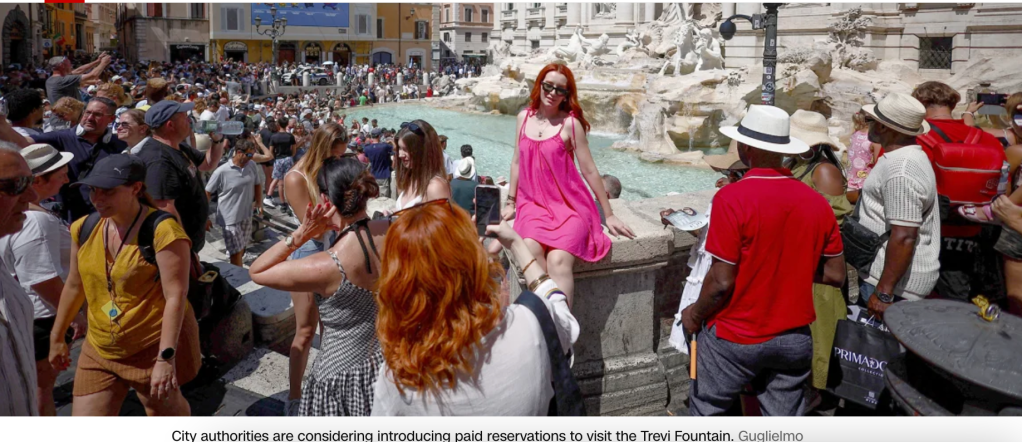
It is my hope and expectation that the current fad of people posting almost nothing but photos of themselves online will come to an end shortly. However, the fact that many selfie addicts (younger women in particular) have found a way to monetize the practice is not conducive to the likelihood of an early end to this trend.

As I have previously written in a blog post on the matter, influencers are an increasing eyesore (ironically) at tourist spots around the world. “Influencers” (at least in this context) are people who get all dressed up in clothing, makeup and accessories from name-brand fashion and cosmetics outlets, and then go and stand in front of something that makes an interesting backdrop and get their photos taken, and then they post the photos on their Instagram or other social media platforms, and hope that the clothing, accessory or cosmetics outlet will pay them for promoting their products. People who are famous from other initiatives – e.g. the tackily clad women from Selling Sunset – are ready-made influencers: they just add sponsored products to the photo shoots they are already doing in order to promote their programs and themselves. I expect that they are paid for the number of “hits” that their images receive online, and that the more popular the influencer, the more they can charge.

I would also guess that a lot of the (literal) poseurs we saw on our travels were wannabe, rather than established, influencers: not all of them can have financially viable web presences. I wonder whether these people have to pay for their own clothes. No doubt the reason so many of them show up at places like the Eiffel Tower or Niagara Falls is because these landmarks are also popular Google search destinations, which increases the odds that people will come across their photos.

Several times on this trip, like the ones that preceded it, we walked farther than we’d intended. One day early in our visit to London we tracked more than 18,000 steps (including eleven flights of stairs). By the time we got off the underground at the station near our hotel that night, I was promising my feet that if they’d just carry me the final few blocks, I’d never make them go anywhere again. My back was not happy either. But each time when I thought I’d really overdone it, I was relieved to discover that a night’s sleep was all I needed to recharge, after which I was able to head out one more time. (Arnie, by contrast, just kept going and going, without complaint. Very impressive.)

The lesson I learned from this is that you should visit all the interesting foreign places you can when your limbs are still limber and walking is easy. However, if you can’t go until you have achieved the age of aches, pains and sore feet, you should go anyway. You’ll be surprised how far you can get when there’s something around the next corner or at the next Tube stop that you just have to check out. (Of course, good shoes are essential. I say this at the risk of sounding as old as I am.)

A backup power supply for your phone is also essential. There is nothing worse than running out of battery power before you’re ready to call it a day, especially if you need GPS to get you the final few blocks back to your hotel.

Here is a photo Arnie took of the inside of the Shakespeare and Company bookshop. I didn’t realize he had taken this when I wrote my post about the shop. This really captures the feel of the place.

Arnie also got a great video of a charming busker who provided a musical accompaniment for part of our trip from Paris to Versailles.

And that FINALLY concludes my blog series about London, etc. and Paris. I am most grateful to those who have been reading, and for the many positive comments!

A Page from My “Trip Planner”

London, etc. and Paris, 19: Finishing strong – Cimetière Père Lachaise, and Montmartre

We spent most of the last day of our travels in a cemetery: but what a cemetery it was! The list of famous people who are buried at Cimetière Père Lachaise in the 20th Arrondissement seems endless, and the temptation to go visit “just one more,” and then “just one more” again, is overwhelming. There are authors, musicians, scientists, philosophers and more. Notable figures about whom most of us have heard for our entire lives turn out to have been real people who came to their inevitable ends one way or another and were laid to rest in Paris.

We walked until we could walk no more and barely scratched the surface (as it were), but even then we only left because as closing time approached, an official came along with a very large and very loud handbell, which she rang as she started herding everyone toward the exit gates. Begging for sympathy because you just had to visit one more grave was pointless. The bell ringers (probably necessarily) have hearts as stony as the monuments. (It’s not just me. See this post, “TERRIBLE STAFF – beware of the bell ringer,” on TripAdvisor.)
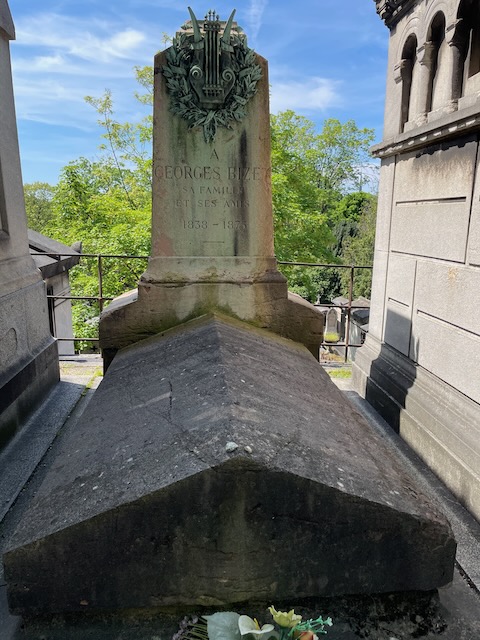
We spent about five hours wandering about this beautiful 44-hectare (110-acre) property, as do nearly 3.5 million other visitors every year. I am very grateful to my friend Jacqui Dumas who urged us to visit this place, and gave us other excellent tips that helped make the entire trip to Paris very special.

The cemetery is named after the long-time confessor of Louis XIV, Père Français de La Chaise, who had lived on this property for many years. It was was established in 1804 by Napoleon, who “had declared during the Consulate that ‘Every citizen has the right to be buried regardless of race or religion'” (Wikipedia).

As you will notice from the photos, Père Lachaise is a “garden cemetery” and the grounds are stunning and wonderfully maintained. It would be a superb place to wander or to sit and read a book even if one weren’t surrounded by reminders of some of the most interesting and notable people in history.

As well as graves of the famous and not so famous, the huge property includes a crematorium and a columbarium, as well as French war graves, memorials from both world wars, and an ossuary containing the bones of 2500 French soldiers who were killed in the siege of Paris during the Franco-Prussian War (1870-1871).

Probably the most visited grave is that of Jim Morrison, lead singer of The Doors, who died of a drug overdose in Paris in 1971 and allegedly wanted to be buried at Père Lachaise in order to be near one of his literary heroes, Oscar Wilde. Morrison’s original grave in the cemetery was disturbed and vandalized by Morrison “fans” so often, as were other graves nearby (collateral damage), that Parisiens were outraged. In 1990, the gravesite was dismantled – even the headstone had to be demolished – and a new one with barriers around it took its place.

Morrison fans visiting the grave often stick chewing gum to a tree, now wrapped in bamboo, near the grave. I was unable to discover the reason for this tradition.

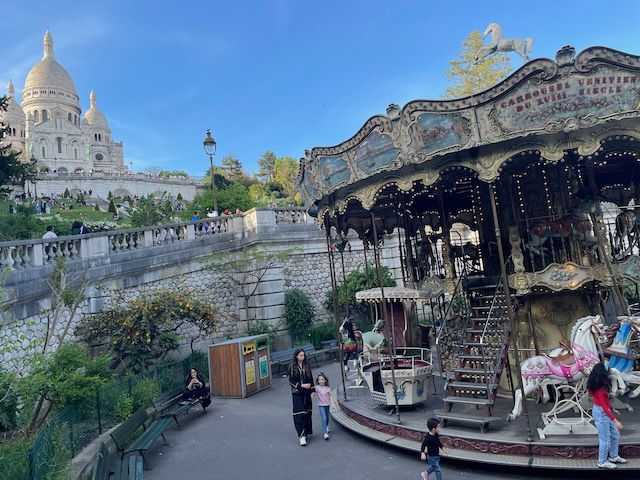
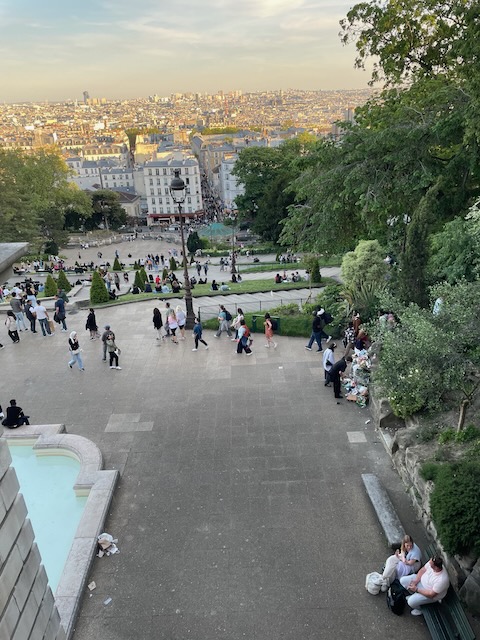
After we had worn out our legs and feet at the Cimetière Père Lachaise, we realized that we’d better check out Montmartre, the 130m-high hill in north-central Paris, because we were leaving Paris the next day and wouldn’t have another chance. We did not intend to walk to the top, but when we got there… well, you know how it is with mountains. It was there, so up we went.

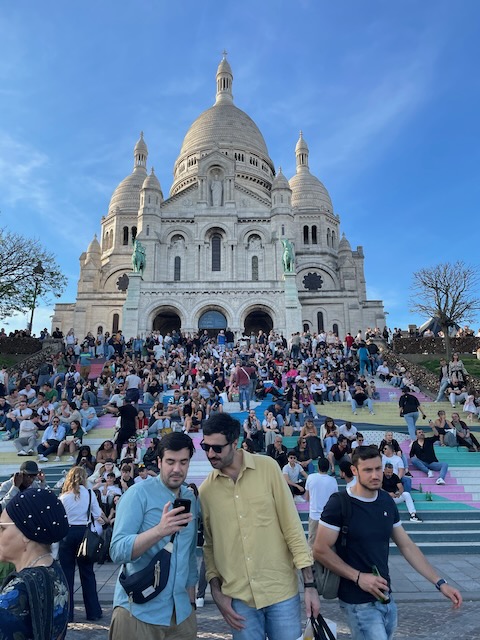
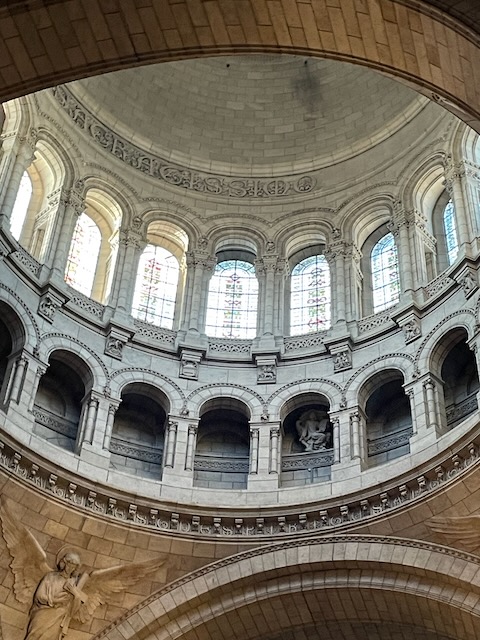
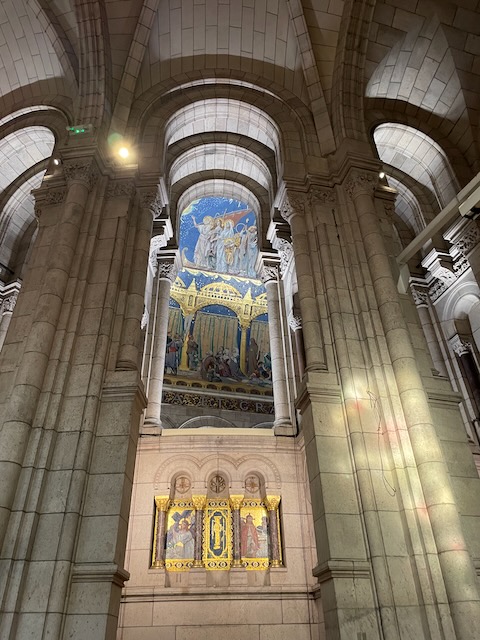
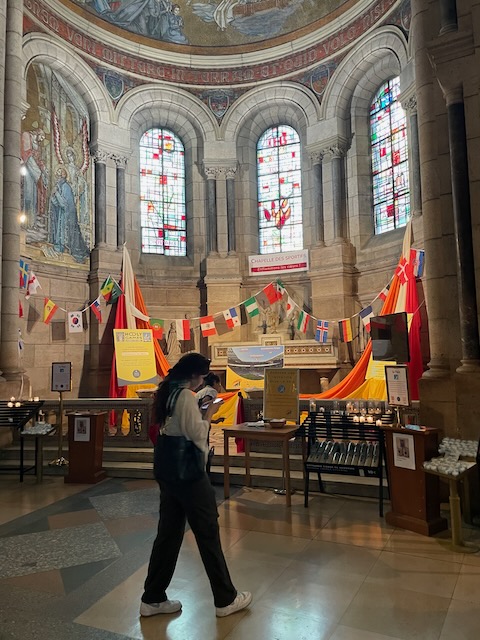
We toured the beautiful Sacre Couer Basilica which stands on the top of the hill, and then went out to look at the view of the city before making our way back down. We had to pick our way very carefully among people who were seated everywhere on the steps and the grass, enjoying the evening, chatting with one another and enjoying performances by buskers.

When we reached the bottom of the hill again, we discovered that, just a few feet away from where we had begun our climb, there was a funicular that we could have taken to the top, avoiding all those stairs.

Video of the View

By the time we had dinner and finally got back to our hotel, we had walked 16,500 steps or 11.62 km We were certainly ready to put our feet up, but it had been a perfect day and a perfect way to end our trip to Paris.

Walking back down from Montmartre towards our hotel

London, etc. and Paris 18: Opera, Opera, Opera!

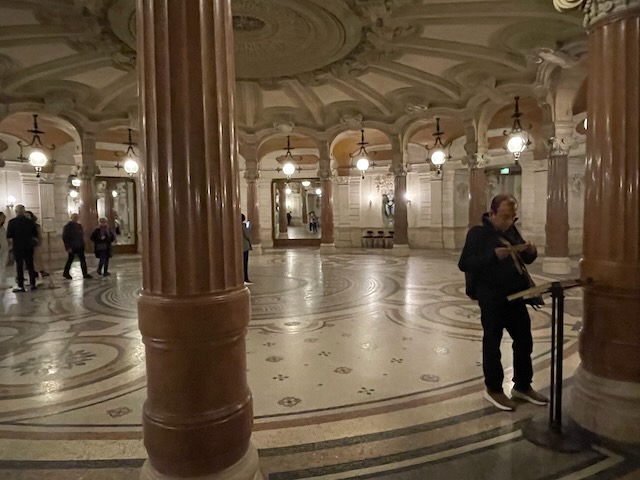
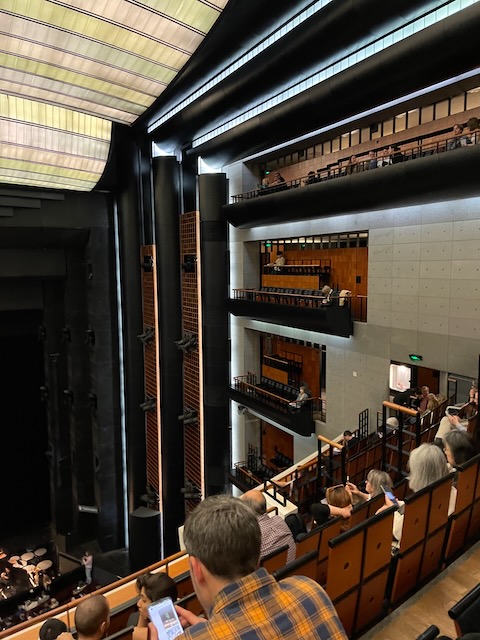
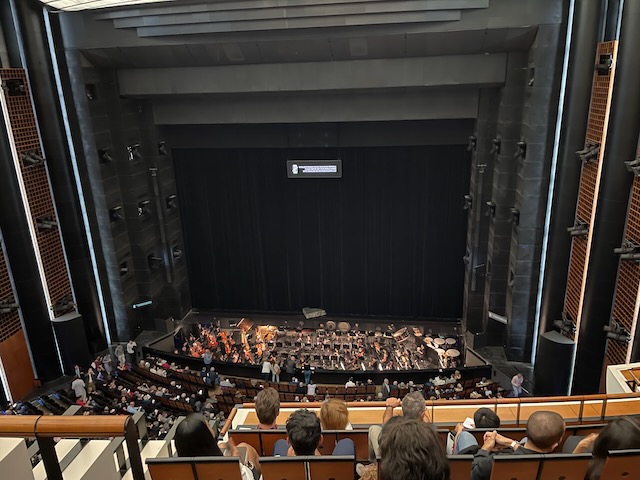
On our second-last full day in Paris, we turned our focus to two of the most important sites for opera in the city – opera having become one of my favourite pastimes in the past few decades. First we toured the lavishly beautiful Palais Garnier, then later in the day we made our way to the more restrained but no less magnificent Opera Bastille. There we attended an extraordinary production of Salomé by Richard Strauss, starring Norway’s Lise Davidsen, one of the most in-demand sopranos in the world.

[Reminder: If you receive this post as an email, you might want to click on the “Read on Blog or Reader” link at the top of the page so you can see larger versions of the photos. Once you get to the webpage, click on a photo and it will expand.]

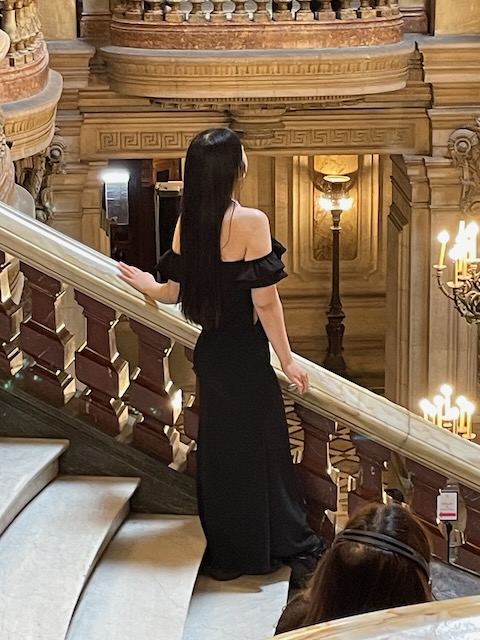
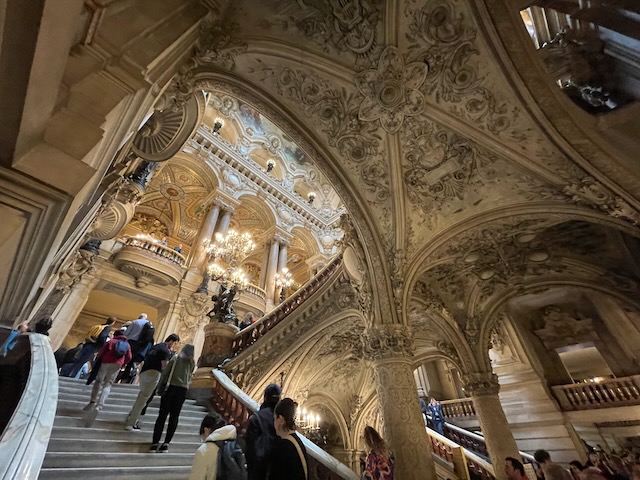
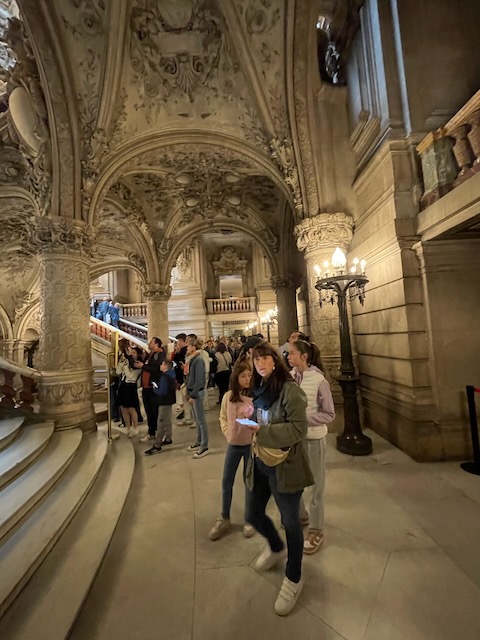
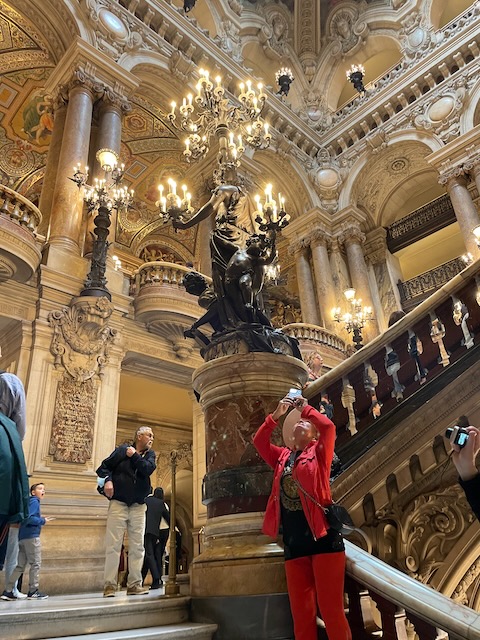
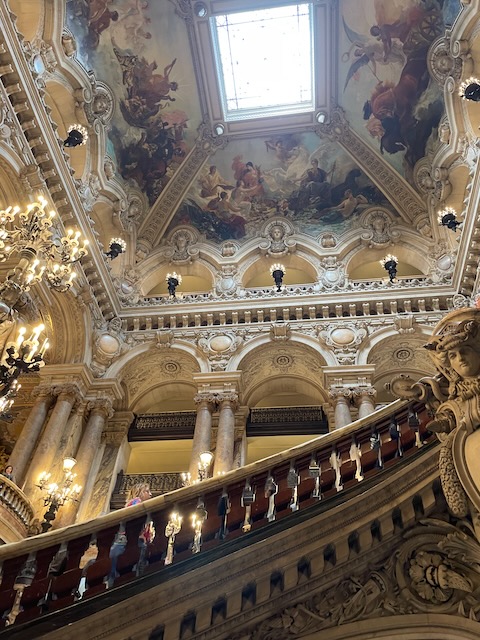
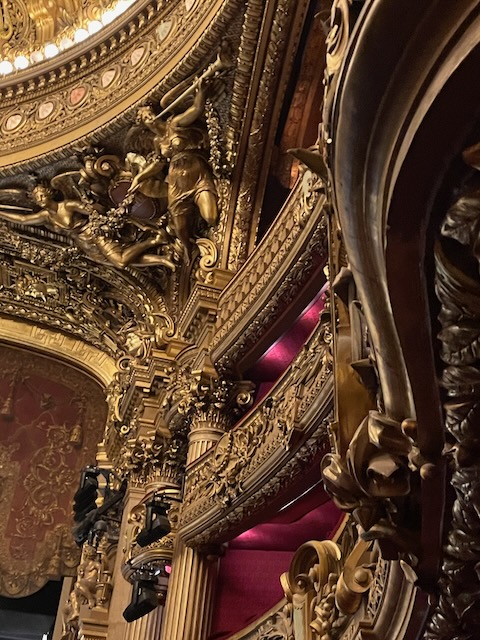
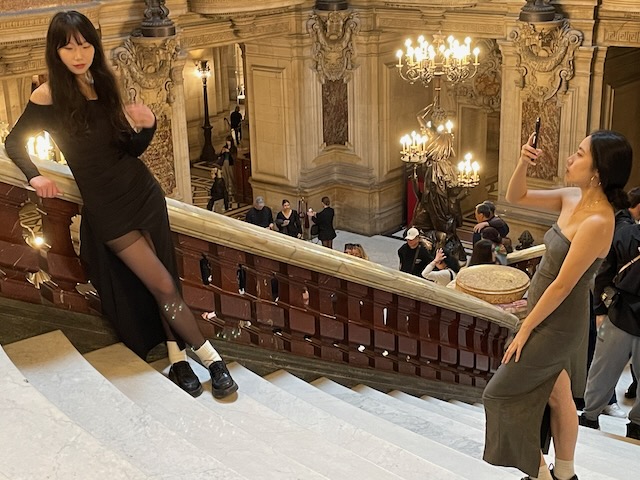
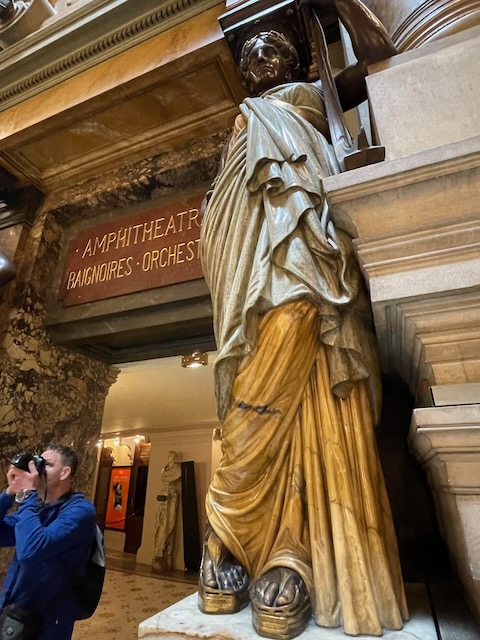
The magnificently designed and lavishly decorated Palais Garnier was built at the direction of Napoleon III. Construction began in 1861 and took more than a decade to complete. Named after Charles Garnier, its architect, the theatre was built in what is known as the Napoleonic III or Second Empire style. And as the “influencers” posing everywhere in the Palais when we were there had clearly discovered, there are more varied photo backdrops for lovely young women outside the performance auditorium than there is inside it. In fact, much of the facility was intended to be decorative rather than functional.

“The basic principle of Napoleon III interior decoration was [to] leave no space undecorated. Another principle was polychromy, an abundance of color obtained by using colored marble, malachite, onyx, porphyry, mosaics, and silver or gold plated bronze. Wood panelling was often encrusted with rare and exotic woods, or darkened to resemble ebony. [….] Drawing liberally from the Gothic style, Renaissance style, and the styles dominant during the reigns of Louis XV and Louis XVI [including Baroque], the combination was derided by Émile Zola as ‘the opulent bastard child of all the styles'” (Wikipedia).

“Opulent” is right.

“The ceiling of the Opéra Garnier was completely renovated and re-imagined in 1964 at the urging of Minister of Culture André Malraux. The talented Marc Chagall was entrusted with painting 2,400 square feet of frescoes. The opera’s new ceiling was widely decried and contested when it was unveiled to the public on September 23, 1964, and the work at this iconic Paris opera house continues to elicit curiosity and stir passions.” (The Ceiling of the Opera Garnier)

The Palais Garnier, which seats nearly 2,000 people, was for many years the sole home of the Paris Opera, which has itself has been around in one form or another since it was established by King Louis XIV in about 1670. The impetus for establishing the company was a desire to catch up to or even surpass the Italians in the field – although the Italians, having invented opera during the Renaissance, did have a good head start. Still, today French opera is well established, and works by composers such as Bizet, Massenet, Gounod and many other traditional and more modern French composers are enjoyed by audiences around the world.

The Paris Ballet is also part of the Paris Opera organization. Although most of productions by the Paris opera and ballet companies are now staged at the “new” Opera Bastille, nearly 400 performances still attract sold-out audiences to the stage of the Palace Garnier every year. Tickets for the opportunity to tour the building (without seeing the current stage production) also regularly sell out, which is why we didn’t get into the facility until our third attempt.

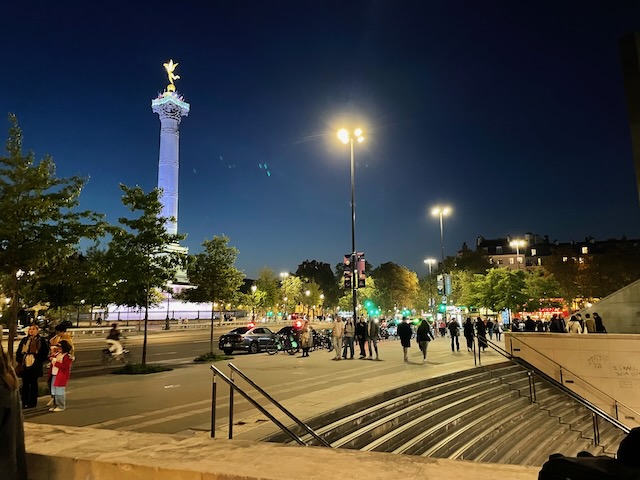
Before we left Canada, we happened to see a very interesting documentary on TVO called Building Bastille (available to watch for free on YouTube). This fascinating program documents how an almost unknown Canadian architect named Carlos Ott won the competition to create a modern opera house where the infamous Bastille Prison had once stood.

The Bastille Opera was an initiative of the then-president of France, François Mitterand. Construction began in 1984, and Mitterand wanted the project completed in time to mark the 200th anniversary of the storming of the Bastille, which had occurred early in the French Revolution in 1789. No expense was to be spared – he wanted the building to be both culturally and architecturally cutting-edge. Jacques Chirac, who had been mayor of Paris and was elected president of France in 1986, tried to halt the project several times due his to concerns about rising costs, and part of Ott’s challenge was to keep the construction moving until it was completed. With Mitterand’s help, he succeeded, and secured his name as a world-class architect with this amazing facility.

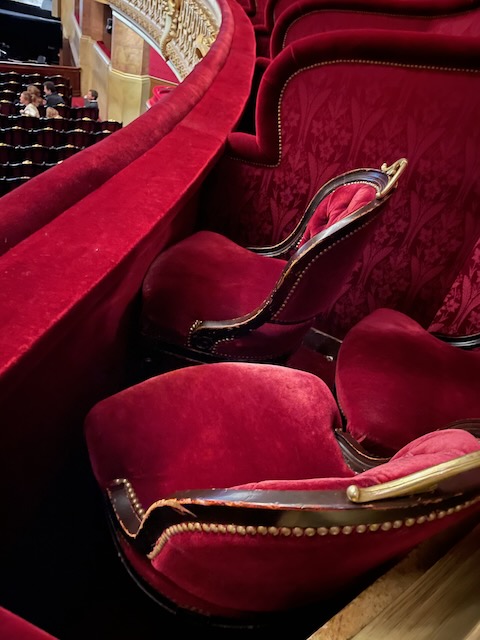
“[The Opera Bastille] was a conscious, egalitarian, departure from the Palais Garnier, which has several dozen types of seats and does not offer stage visibility from all of them. Every seat at the Opéra Bastille offers an unrestricted view of the stage, is the very same type of seat with the same level of comfort, and there are no boxes. Subtitles are visible from every seat except for those at the very back of the arena and of the first balcony” (Wikipedia).

The Bastille Opera house was just one piece of a massive monument-building initiative undertaken by Mitterand in the 1980s. Entitled the Grands Projets, the undertaking was intended to revitalize the architecture of the city and to reflect France’s commitment to, and achievements in, the arts. In addition to the Opera Bastille, the Grand Projets included the Musée d’Orsay, the pyramid at the Louvre, la Grand Arche de Défense and several other major buildings. When all of it was complete – many years after originally scheduled – the cost of these projects was estimated to have reached 15.7 billion francs.

The facility seats 2,703 people. In addition to the main theatre, it includes a concert hall and a studio theatre.

“The backstage [of the Opera Bastille] occupies an enormous area (5,000 m2), six times larger than the stage […]. A system of rails and a rotating dock make it possible to roll entire sets on and off on giant motorised platforms in a few minutes and to store these platforms on the available backstage spots; quick changes of set enable the artists to rehearse a work in the afternoon and to perform another one in the evening within the same space, something impossible at the Palais Garnier. The use of such platforms also makes it considerably easier to use three-dimensional sets rather than traditional flat images. Under the stage is a giant elevator, which is used to lower unused set platforms to an underground storehouse as large as the backstage itself” (Wikipedia).

Another elevator system lifts and lowers the entire orchestra pit, as required by different productions.

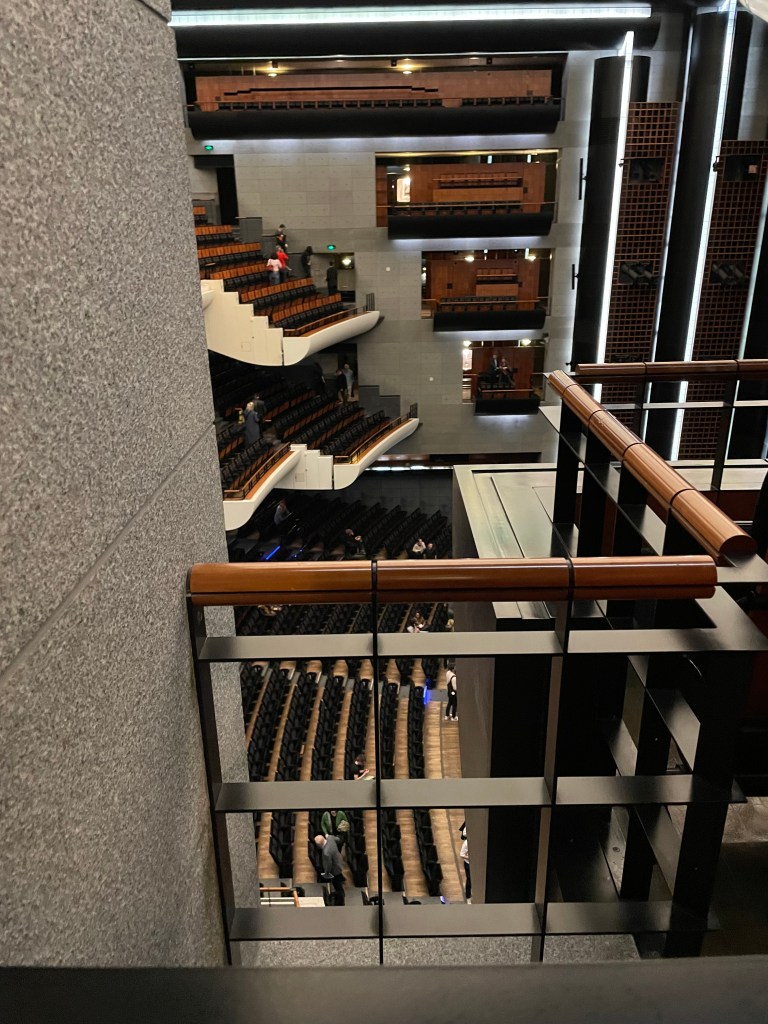
Here is a video showing the interior of the Opera Bastille’s main theatre.

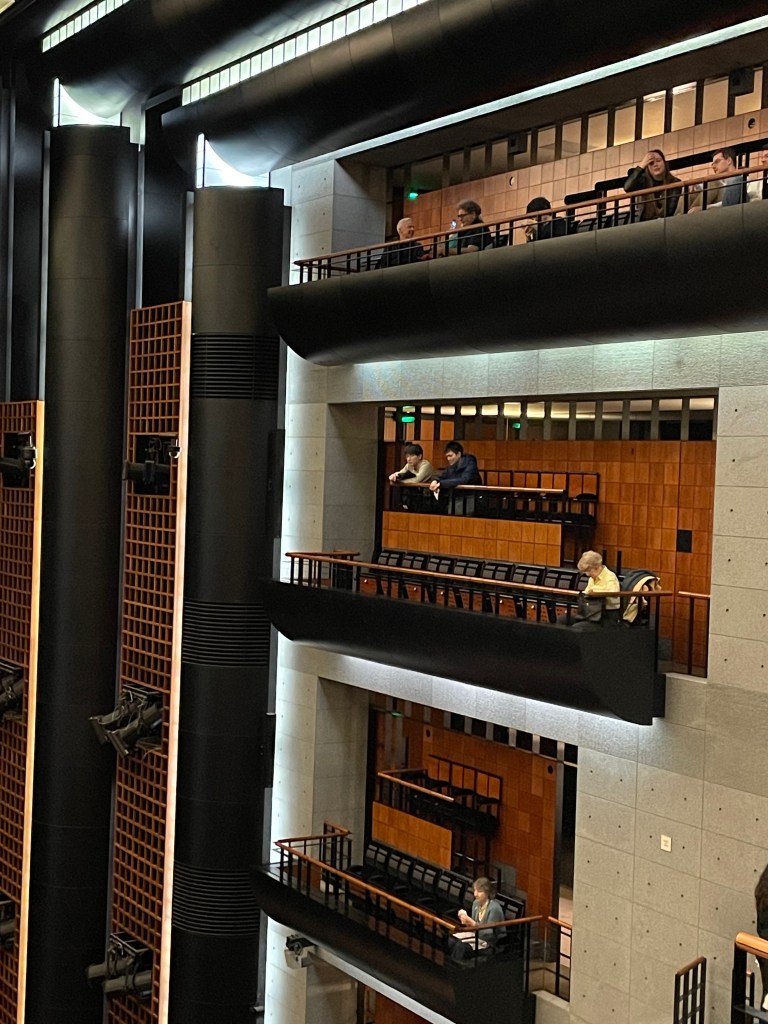
Critics have called the Bastille “cold” and “impersonal” due to its minimalist design and the extensive use of concrete walls, and black, cream and grey decore. To my mind, the spareness also works to its advantage, as it surely offers less distraction from actual productions than would the ornately and colourful Opera Garnier.

Ott’s building certainly seemed a perfect setting for the production of Salomé we saw on May 9. Lise Davidsen was outstanding as the stepdaughter and niece of King Herod, a man who has lustful eyes for her. She falls in love with prophet Jochanaan (John the Baptist), whom Herod has imprisoned mainly because he’s afraid of the power he wields with his spirituality. Jochanaan resists Salome’s overtures, and ultimately she gives Herod everything he wants from her (as depicted in the agonizing and powerful Dance of the Seven Veils) in exchange for Jochanaan’s head.

The opera was dramatic, haunting, and fantastic.

After the opera, we emerged into a warm, perfect Paris evening.

.

London, etc. and Paris, 16: The Musée d’Orsay (worth the wait!), and Shakespeare and Company

Travel Date: Tuesday, May 7, 2024

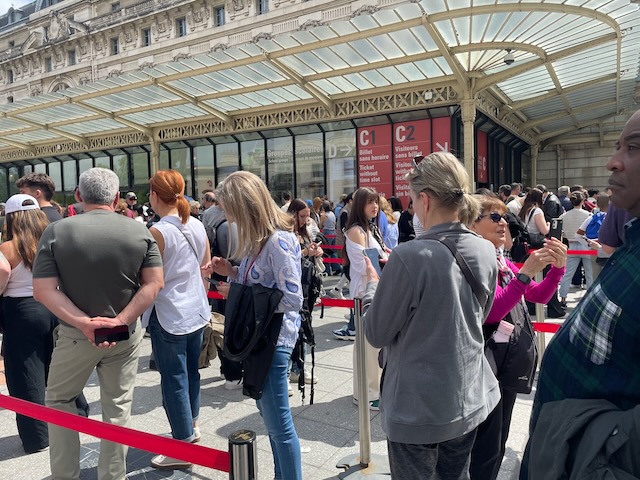
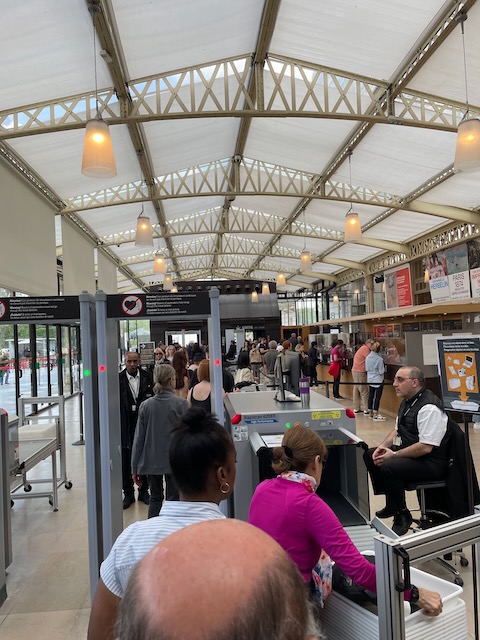
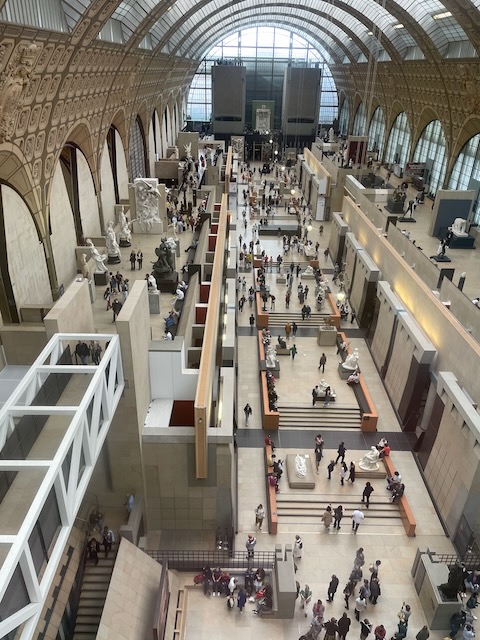
With our acts finally together, by which I mean with timed tickets purchased in advance, we finally gained admission to the Musée d’Orsay. What a splendid facility it is! The museum is housed in a former train station and it becomes clear from the moment you step inside that a former train station, particularly one with a lot of light available from arched ceilings, is an excellent location for a world-class art collection.

The original Gare d’Orsay was a notable achievement, having been built to accommodate and welcome the thousands of people who came by train to visit Paris for the Universal Exhibition of 1900.

The collection on display at the facility today includes art that ranges from the Revolutionary Era in the late 1700s to the early years of the 20th century. In total, 140,000 works are located here, including “paintings, sculptures, drawings, objets d’art, photographs – and the world’s finest collection of impressionist and post-impressionist paintings” (d’Orsay signage).

Upon entry, visitors are greeted by magnificent overviews of the museum, where art is not confined to the galleries.

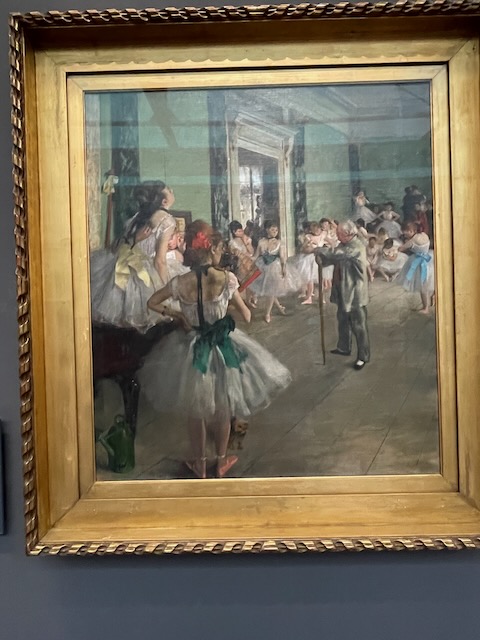
Of course, there are separate galleries as well, containing some of the most famous paintings and sculptures in the world. I find it a genuine thrill to see the original of a famous work of art, or even of an artist I haven’t known too much about before. Standing in front of the canvas or the sculpture gives me a sense of connection with the artist that always makes me feel like going someplace and writing something. It’s rejuvenating.

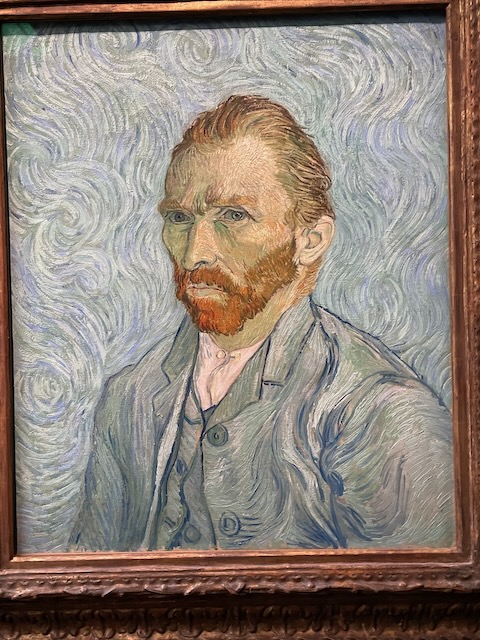
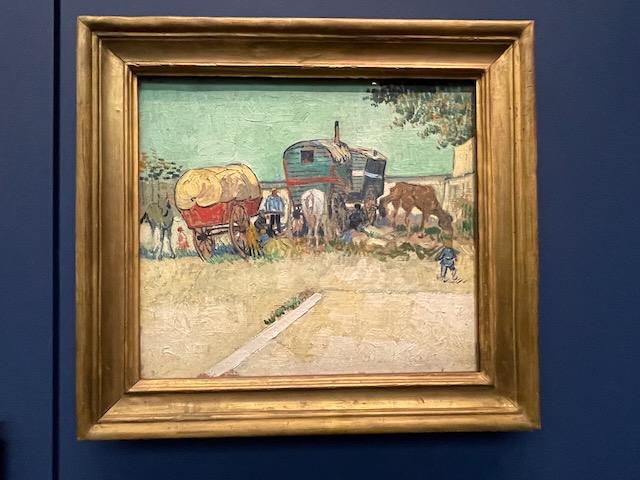
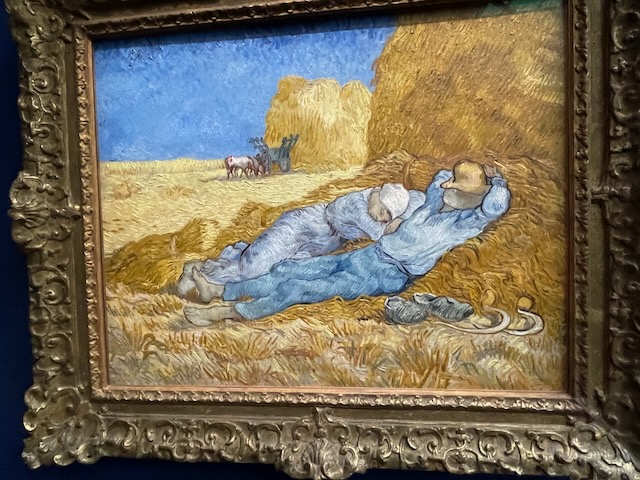
And there are so many well- known Van Goghs at the Musée d’Orsay: all splendid and impressive! I was particularly enchanted by the painting titled “The Church at Auvers.” It looks like something out of a Tim Burton film.

And there were Cézannes….

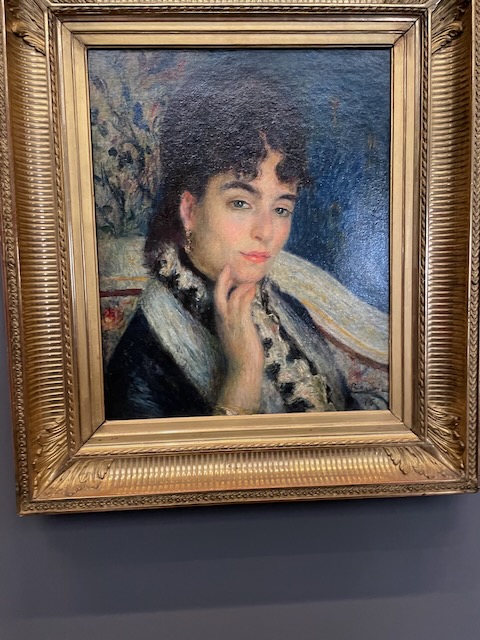
And Renoirs!

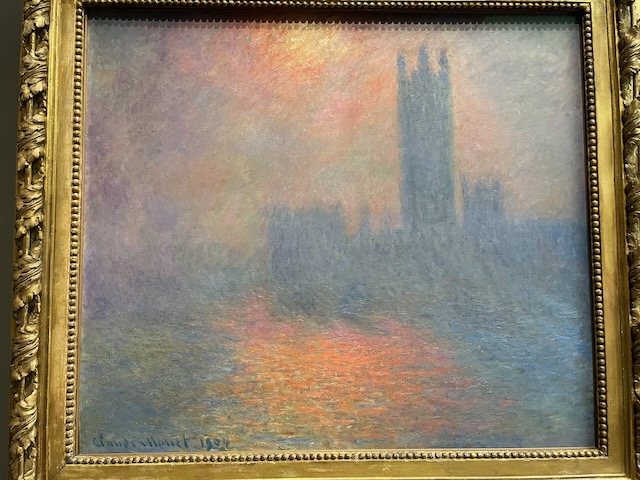
And Monets!

And many others.

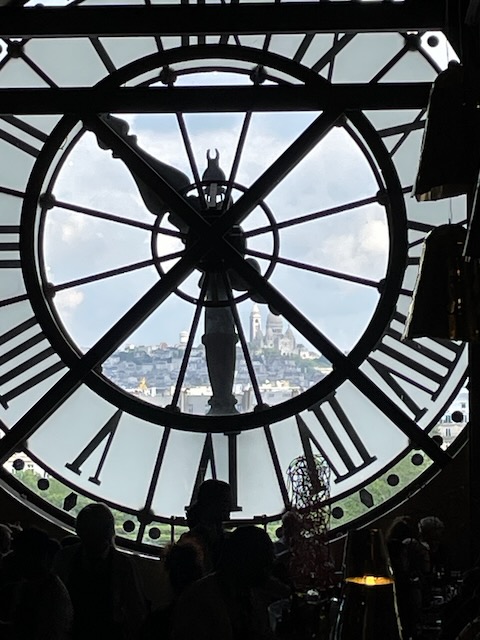
The Musée d’Orsay has three eating facilities, one of which – the Cafe Campana on the fifth floor – offers a view across the Seine towards Montmartre through its famous window clock.

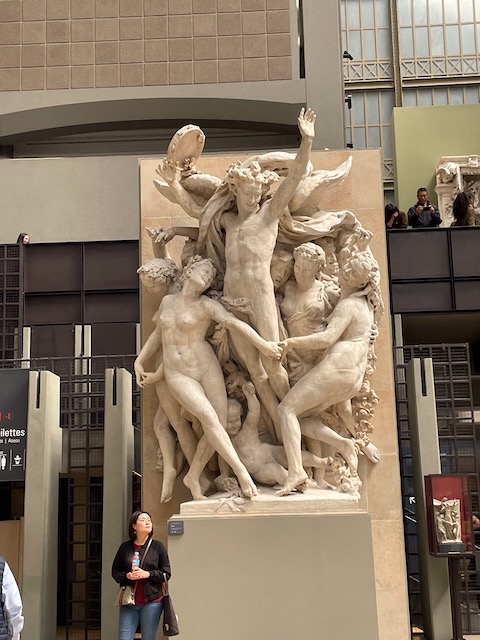
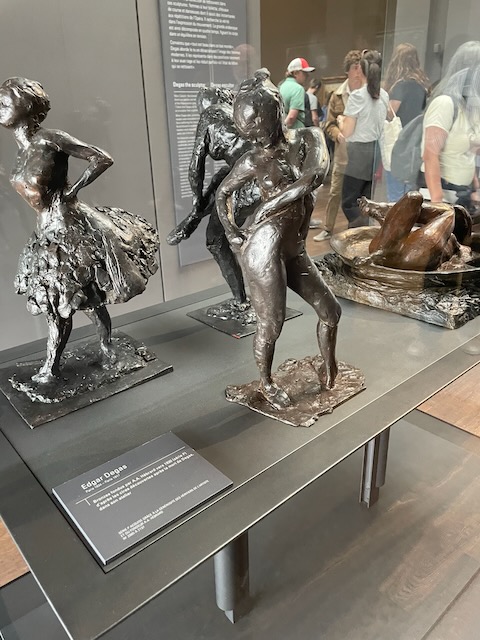
Some of the most interesting sculptures were outside the museum. These two were created in 1878.

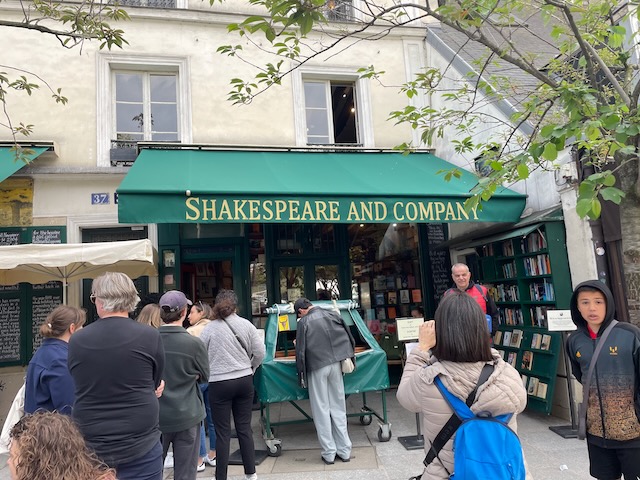
After we left the Musée d’Orsay, we made our way to one of the most famous English-language bookstores in the world: Shakespeare and Company. The shop opened in 1951 and remains a must-see destination for readers and writers – particularly anglophones – who visit Paris. Taking photos inside is not permitted, so if you haven’t done so already, you’ll just have to go there and see the place yourself. It is a warren of delights for booklovers.

This photo, which I found on the page of the Shakespeare and Company website that is devoted to the fascinating history of the shop and the story of its founder, looks as though it was taken decades ago, but the store has the same feel and look today.

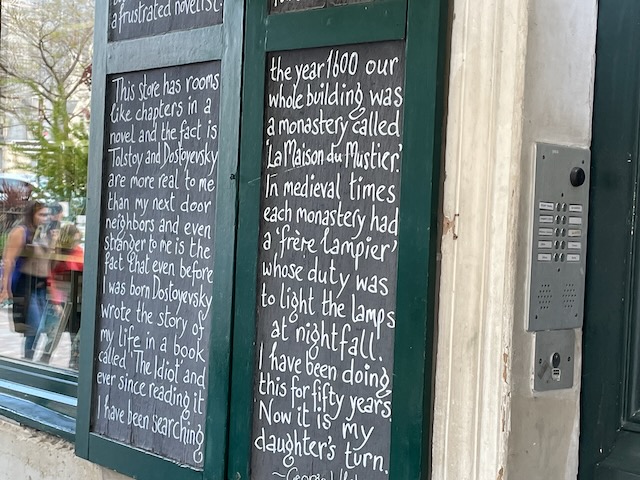
“I created this bookstore like a man would write a novel, building each room like a chapter, and I like people to open the door the way they open a book, a book that leads into a magic world in their imaginations.”

— George Whitman

Since I’ve come home I’ve read a lovely work of fiction – The Paris Novel by Ruth Reichl – that is set in part at Shakespeare and Company. The online blurb describes it as “Named a must-read for spring 2024 by Eater, Oprah Daily, Chatelaine, Brit+Co and Everything Zoomer. A dazzling, heartfelt adventure through the food, art, and fashion scenes of 1980s Paris—from the New York Times bestselling author of Save Me the Plums and Delicious!” It is a sensory delight and a fine adventure, and I recommend it.

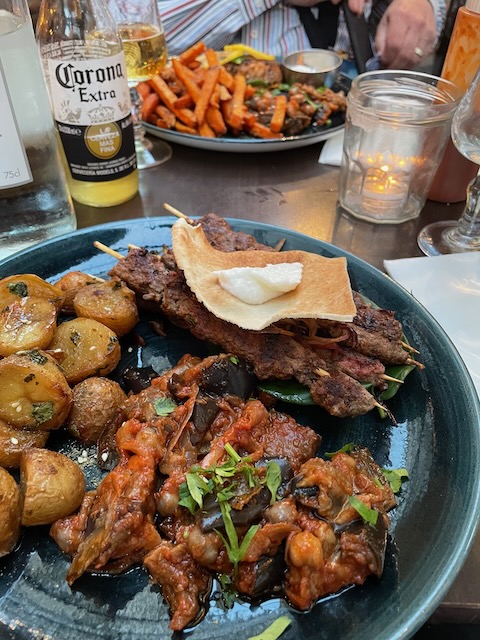
We finished our day of cultural meanderings with another excellent Lebanese dinner at Chez Sofia, near our hotel.

London, etc. and Paris, 15: A River Cruise and a Visit to the Arc de Triomphe, but no sign of Xi Jinping.

We descended the stairs at the end of the Rue de la Manutention (which sounds a little better in French than it does in English, but not much. The English translation of “Manutention” is “Handling”), and made our way to the footbridge across the Seine that would take us to our river tour.

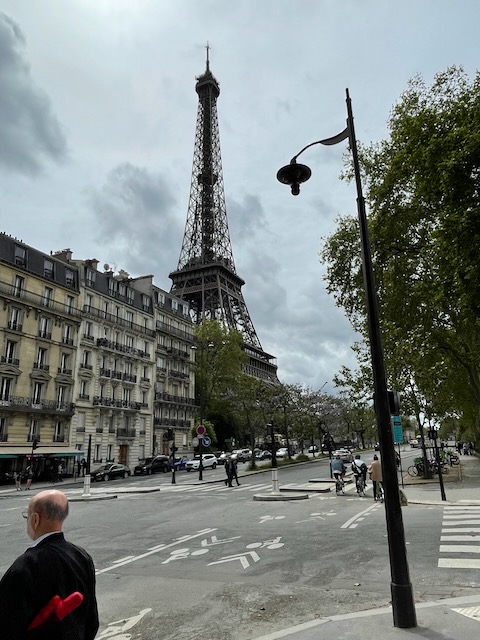
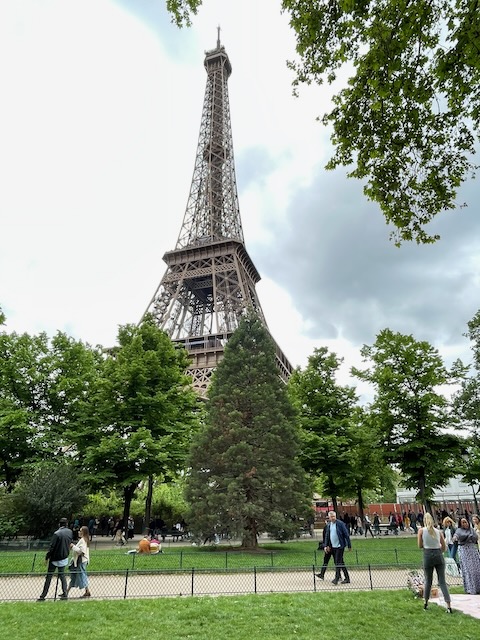
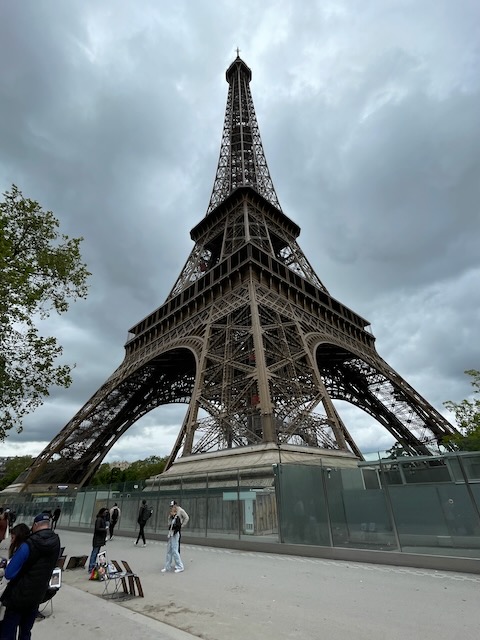
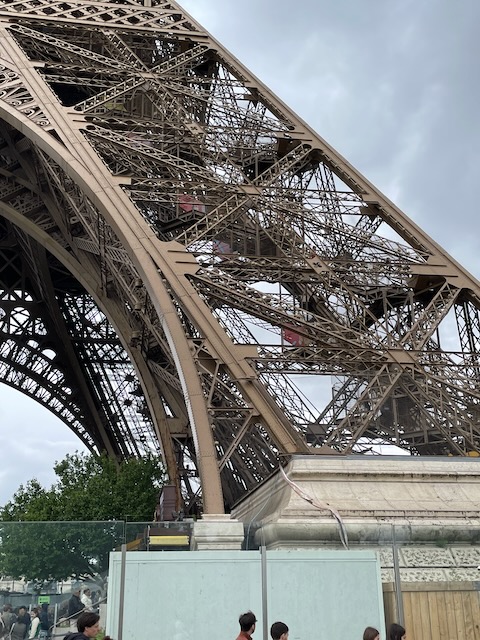
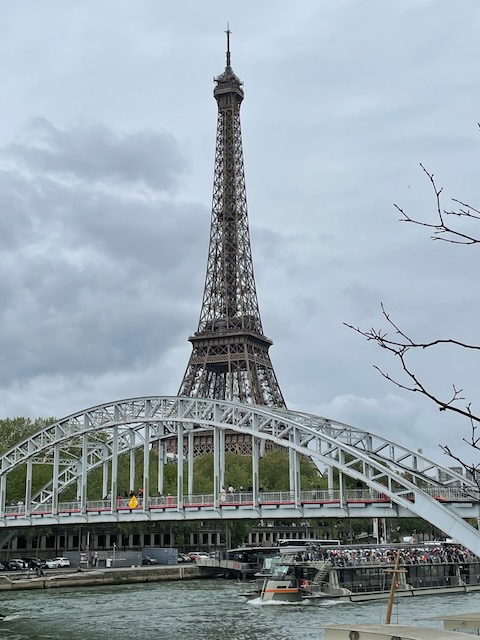
The river cruise in Paris starts just below the Eiffel Tower. I will spare you the ten or twenty photos I added that day to my already ridiculously large collection of Tower photos, but there are many pix of that landmark on my last post, if you have a hankering.

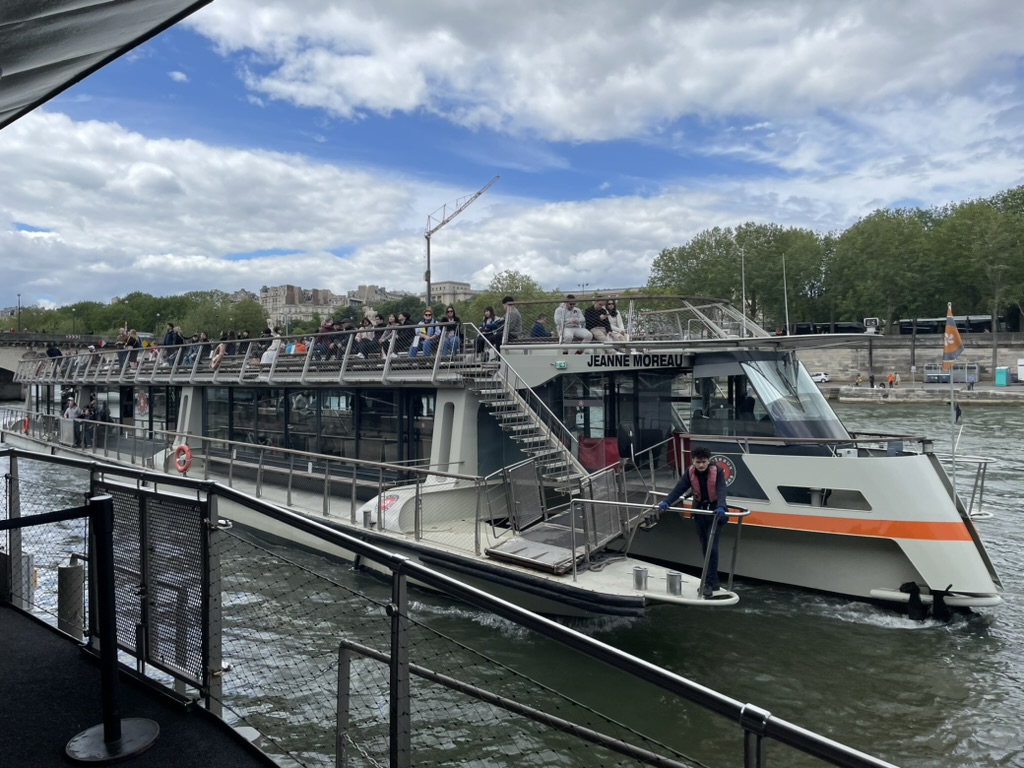
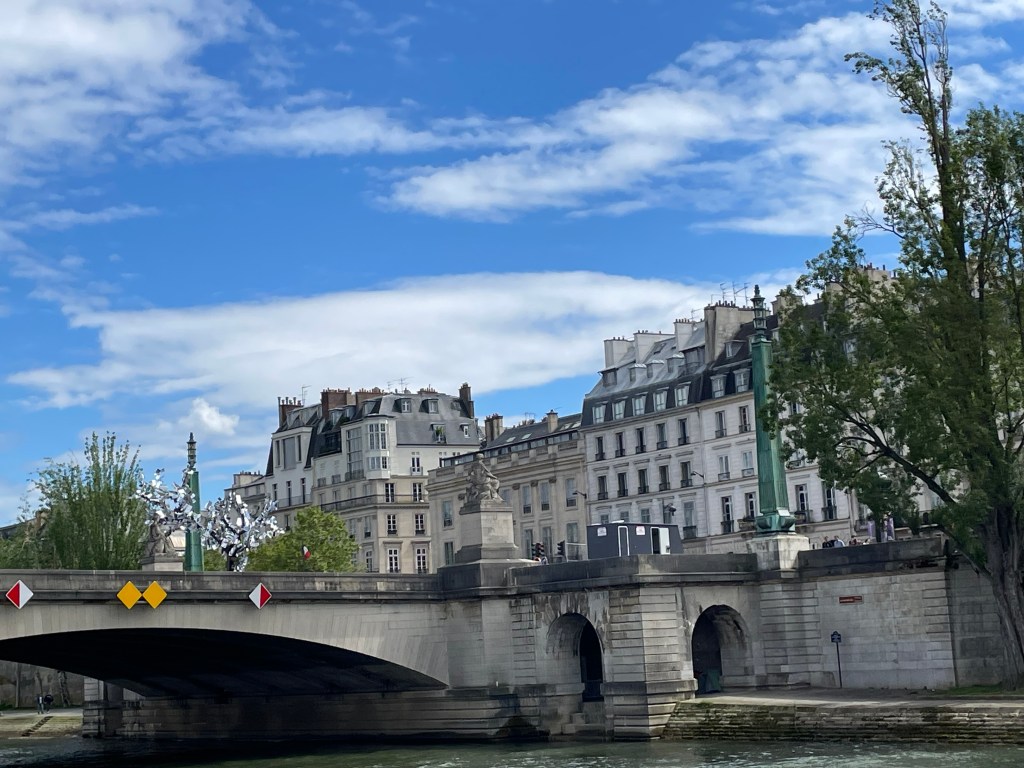
There is a very large island in the Seine east of the Musée D’Orsay called “Île de la Cité.” Just east of that is another, smaller island that fits nicely against the first (just as though it all used to be one big island!) called Île Saint-Louis. The cruise took us around that second island and then headed back toward its home dock.

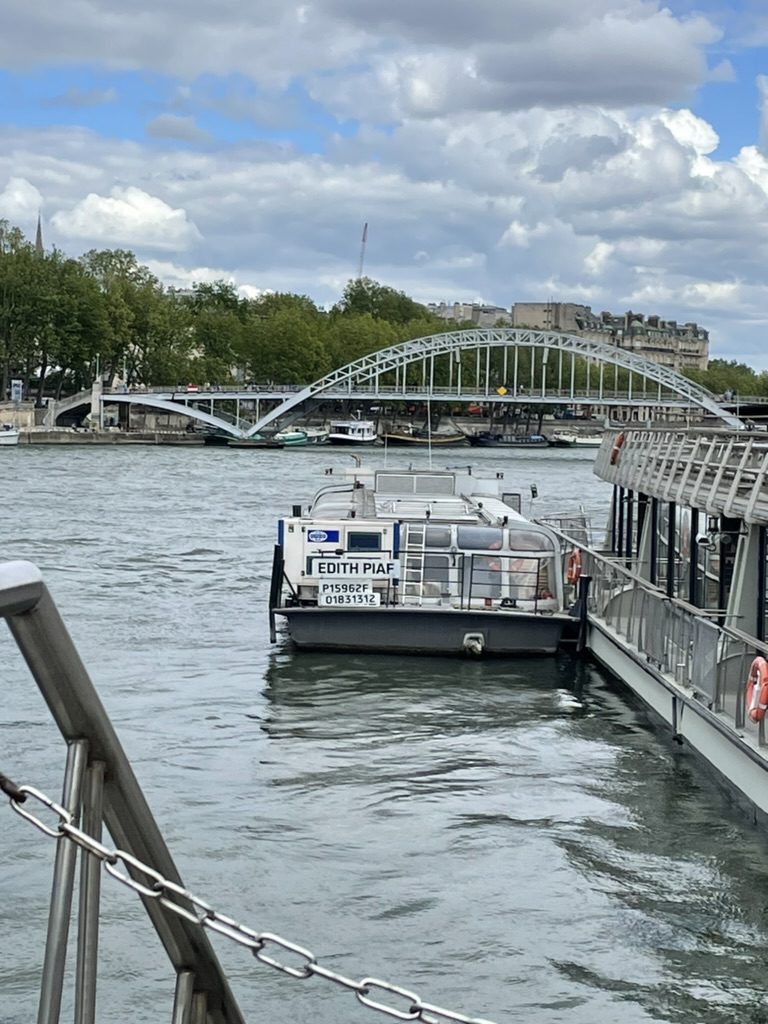
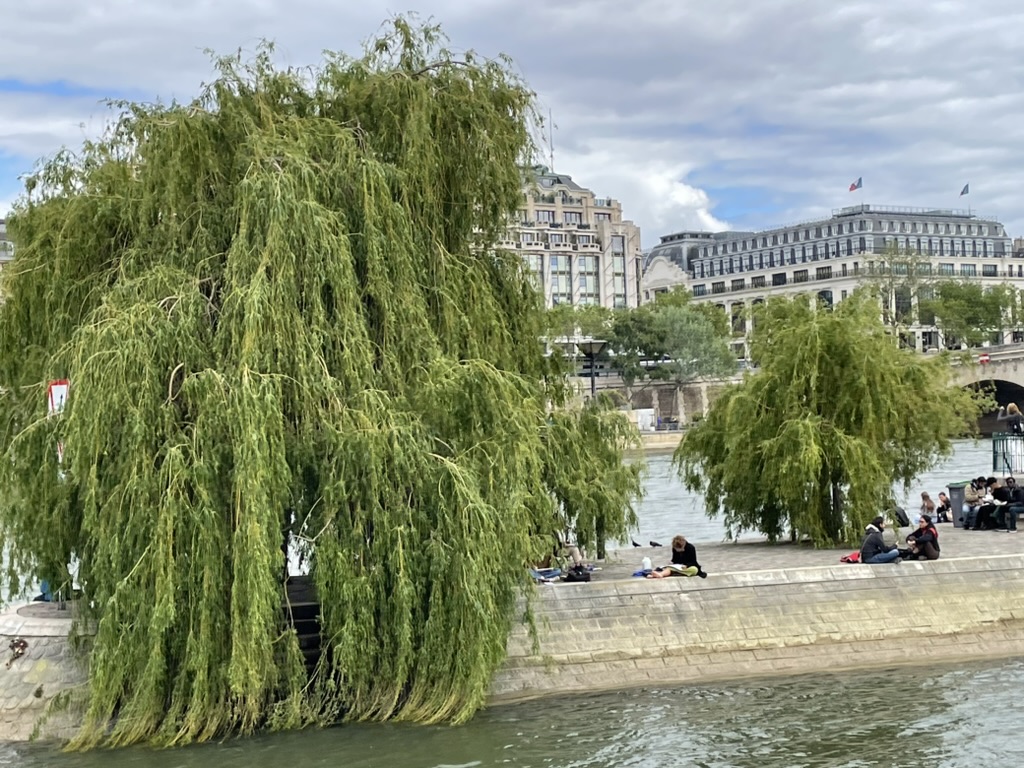
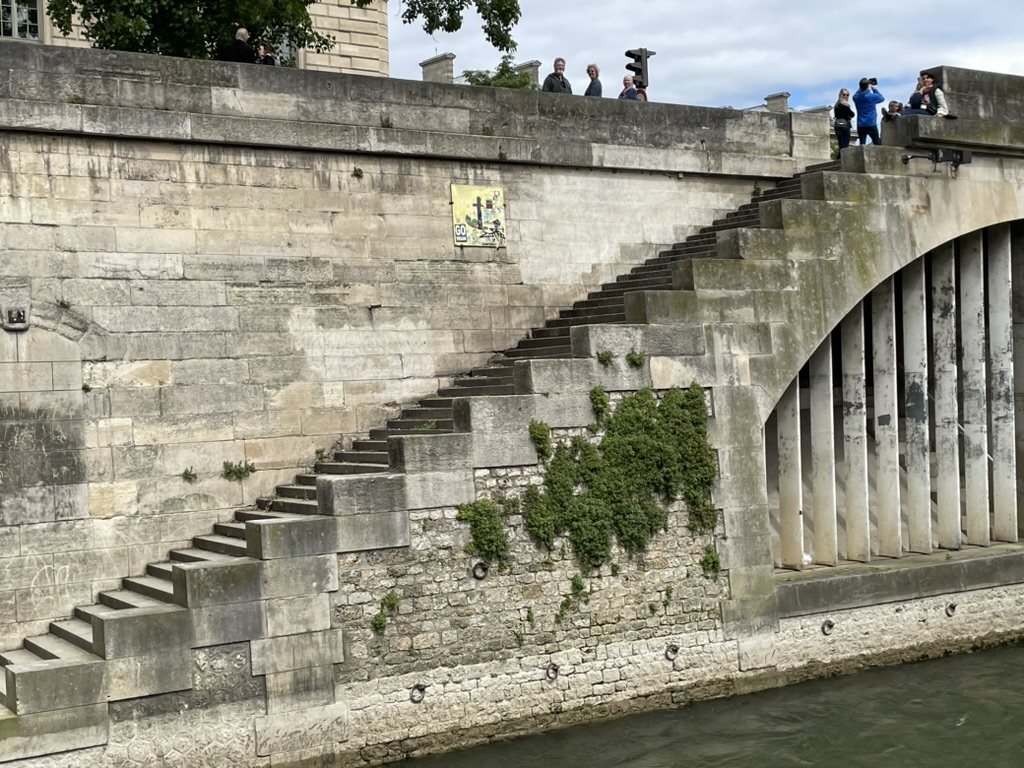
Here are some of the sights we saw on the trip.

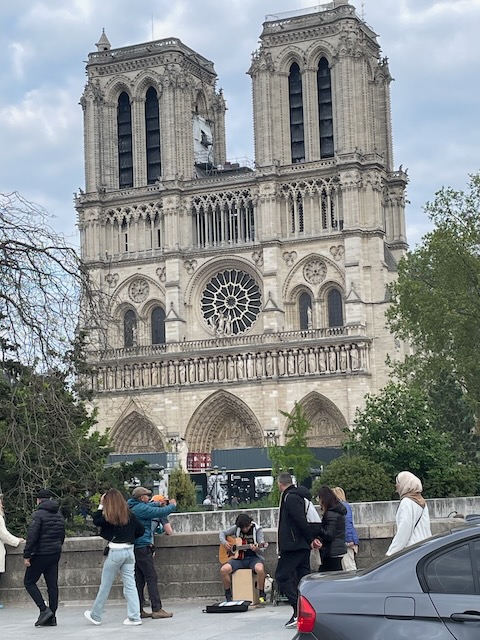
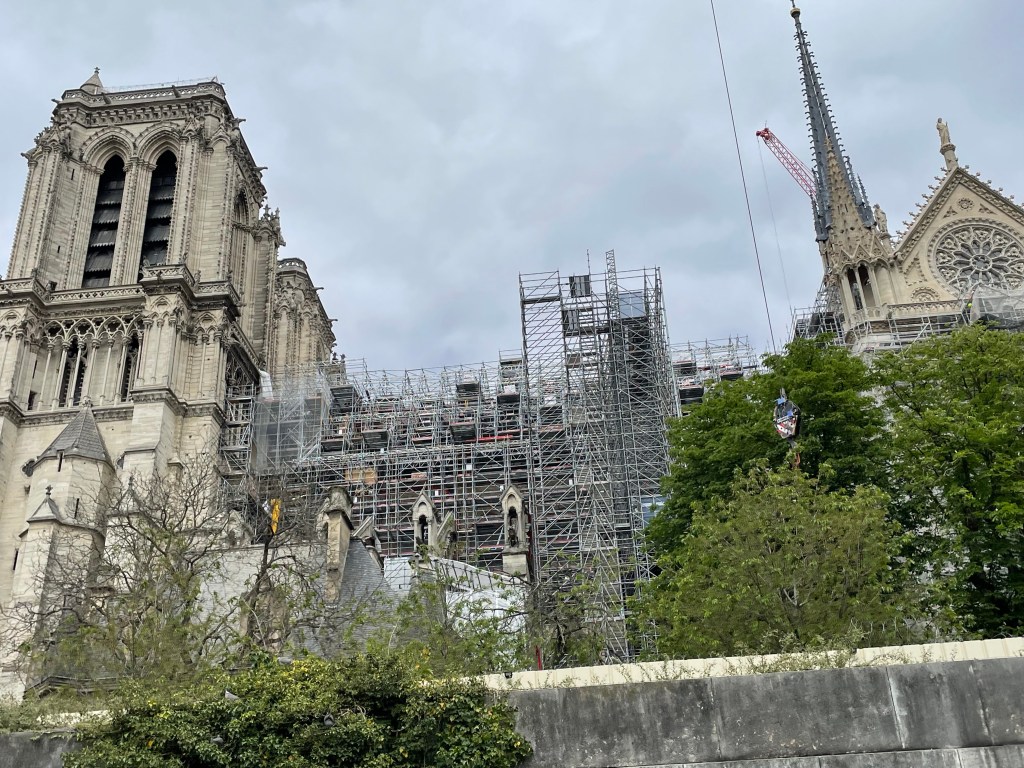
One of the highlights of the cruise was a close-up of Notre-Dame de Paris, which suffered a disastrous fire on April 15, 2019. The meticulous and very expensive reconstruction of the mediaeval Catholic cathedral, and particularly its spire, continues. It is expected to reopen in December of 2024.

There was a large group of high school students on board with us, and they insisted on making a howling noise whenever we went under one of Paris’s many bridges, thereby allowing us the opportunity (as it were) to hear not only them, but also their echoes.

Kids!

After the tour, we took the Métro to the Arc de Triomphe (1806) which is located at the west end of the Champs-Élysées. (Beyond that, the road is called l’Avenue de la Grande Armée.) We had seen the east end of the Avenue des Champs-Élysées earlier in the week, when we visited the Place de la Concorde.

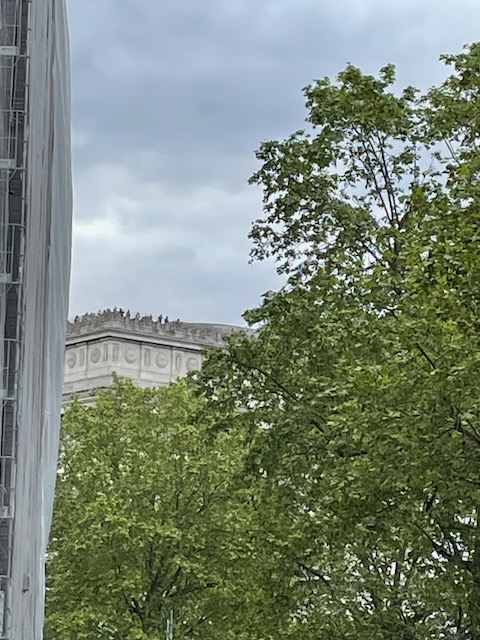
We declined to climb to the roof of the Arc de Triomphe and instead satisfied our curiosity from across the immense traffic circle that surrounds the monument.

“The Arc de Triomphe de l’Étoile, often called simply the Arc de Triomphe [… ] stand[s] […] at the centre of Place Charles de Gaulle, formerly named Place de l’Étoile—the étoile or “star” of the juncture formed by its twelve radiating avenues […]. The Arc de Triomphe honours those who fought and died for France in the French Revolutionary and Napoleonic Wars, with the names of all French victories and generals inscribed on its inner and outer surfaces. Beneath its vault lies the Tomb of the Unknown Soldier from World War I.” (Thanks as always to Wikipedia, which I support with a donation every month as I’m sure all regular users of that resource do. It’s always wise to double-check references on the site if you are citing the material in Important Documents, and some articles are biassed or incomplete, but in this age of disinformation the checks and balances on Wikipedia make it a very reliable source of background information on just about any topic you can think of. Plus, if you find a mistake, you can fix it yourself.)

I am a fan of the Tour de France, which always ends up circling the Arc de Triomphe during the final stage before heading to the finish line, so I took an extra pleasure in visualizing the peleton zooming around the monument. I would not personally want to cycle over all those cobbled streets, but then there is nothing in the Tour de France that tempts me to participate as anything but a spectator.

Later we walked past the magnificent Église Saint-Pierre de Chaillot, which opened in 1938 on a site the Roman Catholic Church has owned? occupied? since the 11th Century. “The church consists of three parts: a 65-metre high bell tower that dominates the whole and is located on Avenue Marceau, a low church, invisible because it was built like a crypt above which rises the main church with a central bell tower. The building is also characterised by its monumental façade on the avenue. […] It is constructed in the Romano-Byzantine style” (Wikipedia).

We didn’t go inside but the photos on the Wikipedia site suggest that the interior is as magnificent as the exterior.

On our way back to the subway, we found ourselves on a section of roadways near the Pont d’Alma that had been entirely closed off to allow for the safe passage of President Xi Jinping, President of the People’s Republic of China, who we knew from the news was dining with President Macron that evening. We probably saw the vehicle that carried him past us, but since a lot of very official vehicles with dark windows went by, we weren’t sure which one it was. In the video and photo below you can see Xi supporters on the east side of the bridge awaiting his arrival. I don’t think they saw him, either. One of the people watching with us (of which there were very few. Most people just went on about their business) said that street closures like this for visiting dignitaries are common in Paris. In other words, as we waited for a glimpse of Xi, our status as tourists was probably obvious to all of the locals – and maybe even to the President of China.

We may not have seen the President, but we were rewarded for our wait with a rainbow.

London, etc. and Paris, 14: A Good Day for a Stroll with Close-ups of The Eiffel Tower and the Moulin Rouge

Paris is best seen on foot, and although we hadn’t exactly planned it, we were able to take advantage of our one Sunday in the city to walk and walk and walk.

Our original intention that day had been to visit the Musée D’Orsay, which offers free admission to everyone on Sundays. However, the Musée was “sold out” of free tickets so we weren’t able to visit. Turns out that even when tickets are free, you still need to book them in advance to secure an entry time – which we had not done because we didn’t know it was necessary. So NB: if you want a free ticket to the Musée D’Orsay, book it in advance online. (I’m sure this tip is applicable to other museums and galleries as well.)

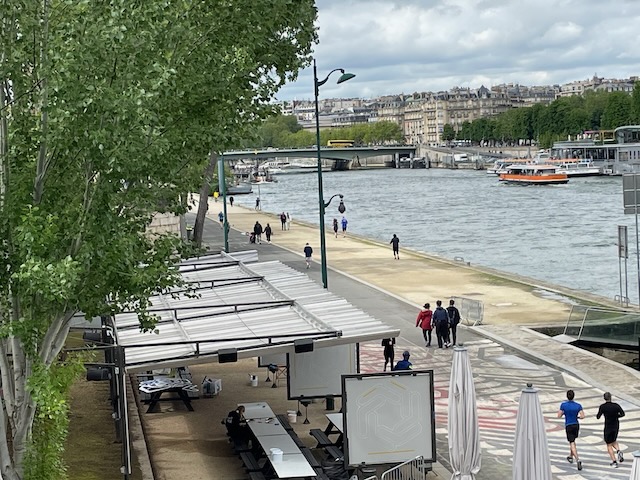
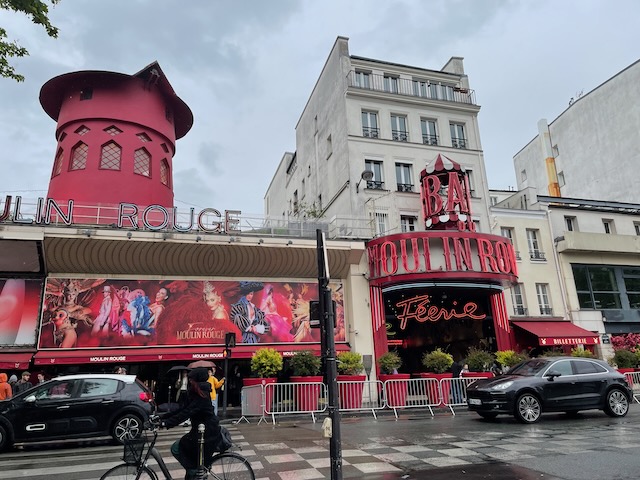
From the museum, we walked down to the Quai D’Orsay. From there, we made our way past several landmarks and bridges along the Left (south) Bank of the Seine to the Eiffel Tower, then crossed a bridge and walked back up the Right Bank. Later we made our way by subway to Place Pigalle, where we checked out the Moulin Rouge and marvelled at the dozens upon dozens of sex shops in the area. While I imagine there are some economic advantages to putting all of these outlets (for which the French term is “sex-shops”) in the same part of the city (reduced costs for advertising, shipping, signage, etc.) due to economy of scale or something, I can only thank the powers-that-be that Paris hasn’t used the same kind of organizational model for its patisseries.

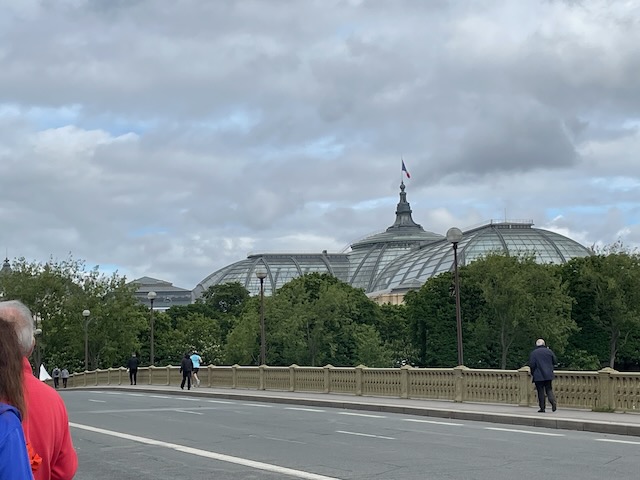
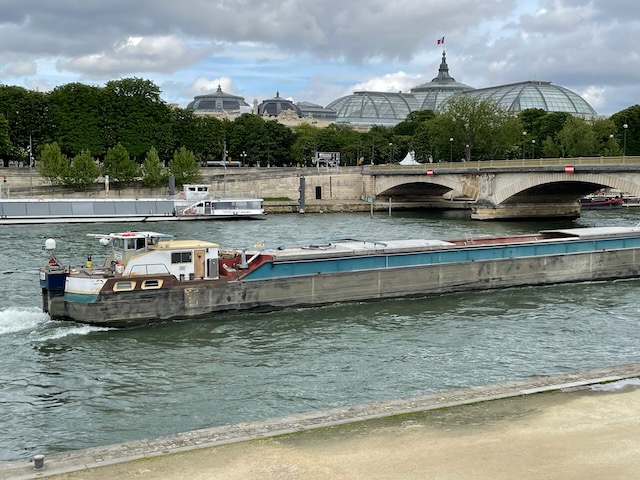
Our stroll down the Left Bank took us (for the second time) past the National Assembly and the Pont Alexandre III, and offered views across the river of Right Bank attractions, including the Grand Palais and some of the buildings that border the Tuilleries Garden.

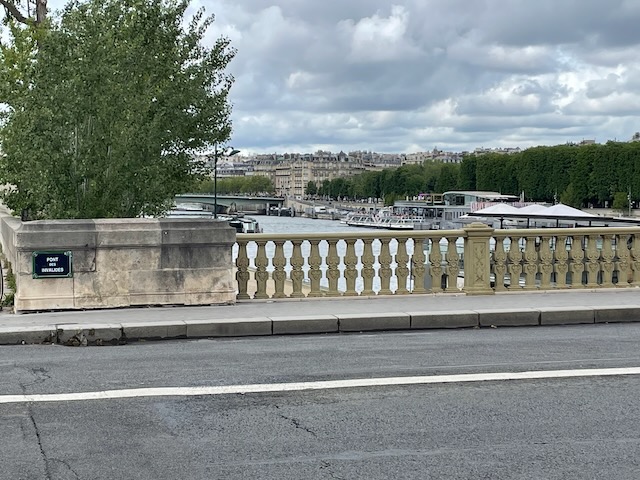
In the last volume of his novel, Marcel Proust mentions how, one evening during a blackout early in the first World War, soon after the clocks had been turned forward in the Spring, he stood not far from the Pont des Invalides on the Left Bank and looked across the Seine at the Trocadero. As I had hoped to do before I even went to France, I was able to replicate that experience (albeit in the daytime and not during a war). It was a small thing, but it pleased me.

The Trocadero, which we saw only from a distance, is a neighbourhood in the 16th arrondissement on the north (right) bank of the Seine, almost directly across from the Champs de Mars and Tour Eiffel. The Palais du Trocadéro was built on the Chaillot Hill for the World’s Fair in 1867. It was shaped like a huge concert hall, featured an enormous pipe organ (since moved to Lyon but still in use), and was named after a battle won by France in Spain. The building did not prove popular and it was partially demolished and then rebuilt in time for another World’s Fair, in 1937, at which time it was renamed Le Palais de Chaillot. The grounds include gardens, fountains and an underground aquarium, and I have added it to my “to do” list for next time.

“The Hôtel des Invalides, commonly called Les Invalides, is a complex of buildings in the 7th arrondissement of Paris, France, containing museums and monuments, all relating to the military history of France, as well as a hospital and an Old Soldiers’ retirement home, the building’s original purpose” (Wikipedia). On July 17, 1879, Parisian rioters ransacked the Hôtel for guns and ammunition before storming the Bastille.

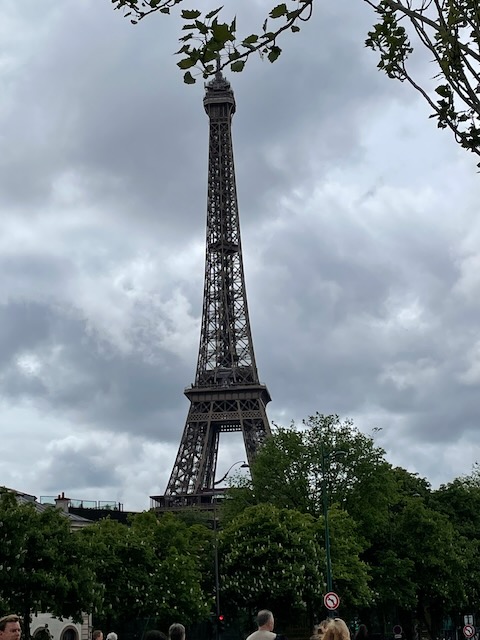
From Wikipedia: “The Eiffel Tower is a wrought-iron lattice tower on the Champ de Mars in Paris, France. It is named after the engineer Gustave Eiffel, whose company designed and built the tower from 1887 to 1889. Locally nicknamed ‘La dame de fer‘ (French for ‘Iron Lady’), it was constructed as the centerpiece of the 1889 World’s Fair, and to crown the centennial anniversary of the French Revolution. Although initially criticised by some of France’s leading artists and intellectuals for its design, it has since become a global cultural icon of France and one of the most recognisable structures in the world.”

When you actually see the Eiffel Tower in real life, you cannot stop taking photos of it. Or at least, I couldn’t. I have about 200 photos of the Eiffel Tower.

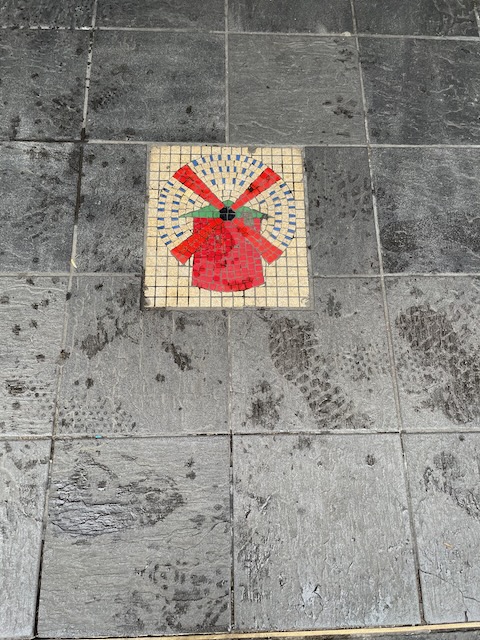
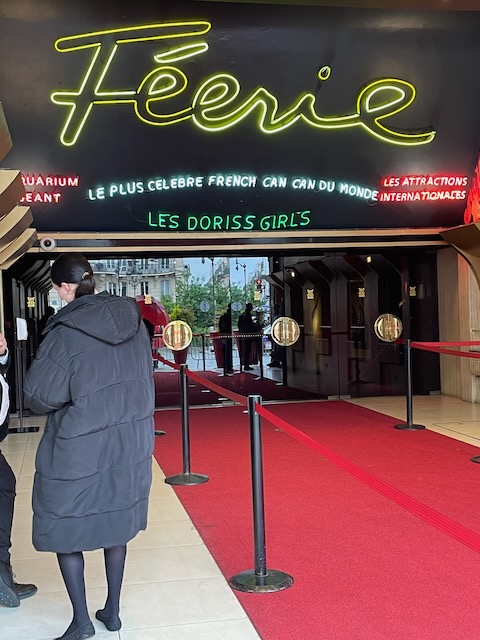
In the middle of a night shortly before we went to France, the famous windmill atop the famous Moulin Rouge fell off. It had not been reattached when we visited, so we had to make do with a Moulin Rouge cassé. Moulin Rouge is one of my favourite movies, so it was a real treat to visit the neighbourhood and the entryway to the facility, windmill or no windmill.

We did not attend any shows inside the Moulin Rouge but I got a few photos of what visitors might have expected to spend, and to see.

London, etc. and Paris, 12: Le Louvre, including a brief audience with Mona Lisa

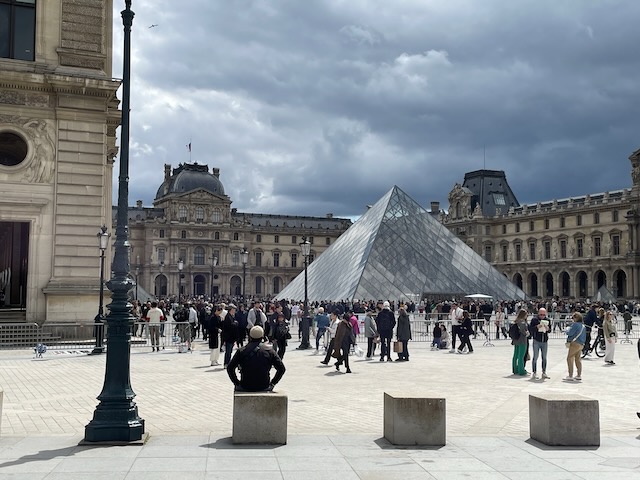
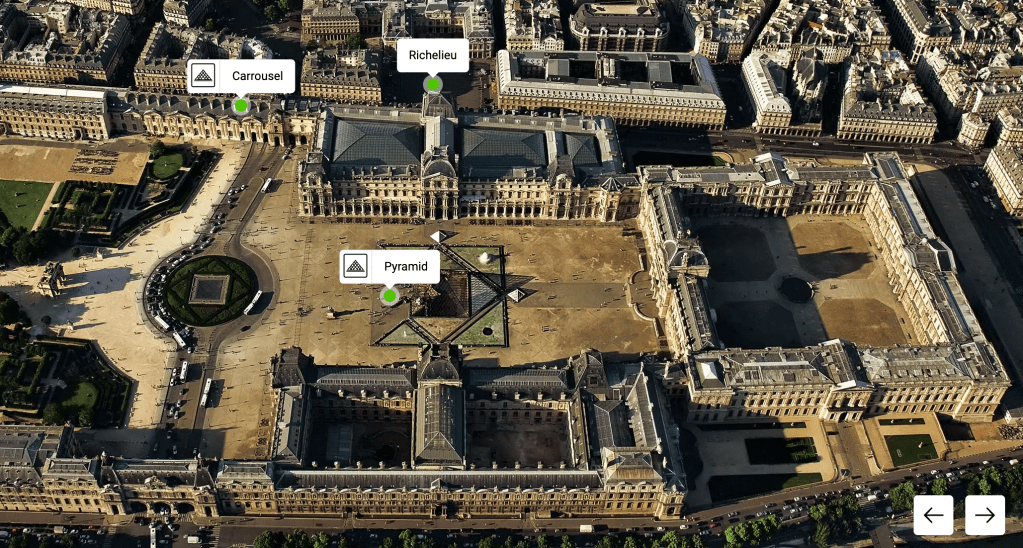
Since this post is mainly about a visit to an enormous museum (652,300 square feet, to be exact)1, there are quite a lot of photos in it. They depict only a few of the hundreds of paintings and sculptures I saw during our visit to Le Musée du Louvre in Paris that compelled me to take photos of them to ensure that I would never forget them. (Hah.) In the long run, of course, it was more time-consuming to figure out which photos to leave out of this blog post than it would have been to include them all, but I have done my best to cull and whittle; what is left is what you get.

.

In a shopping centre near Le Louvre we came across a public washroom that I thought must be an extension of the gallery itself. It turned out to have a more commercial intent: it was a promotional display by a paper company called Renova, which describes itself as selling “The Sexiest Paper on Earth” – a claim that is almost as engaging as the display itself.

Once we got to the actual art, I was immediately attracted by a painting of Joséphine, first wife of Napoleon I. It was completed just before the annulment of their marriage six years in, by which point she had failed to provide him with an heir. In contrast to the usual formal portrait of a member of nobility, she has chosen to be seated and to look away. Who can blame her?

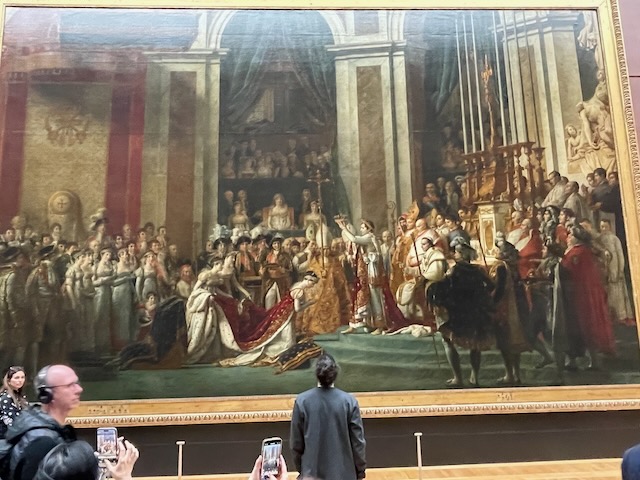
The last two photos in this set are of a painting of an event that took place in happier (?) days: The Consecration of the Emperor Napoleon and the Coronation of the Empress Joséphine in Notre-Dame Cathedral on 2 December, 1804. Since Napoleon essentially crowned himself, I saw this painting as a chilling but eminently plausible long-term strategy of a certain gilt-and-pomp-loving candidate in the 2024 U.S. presidential election.

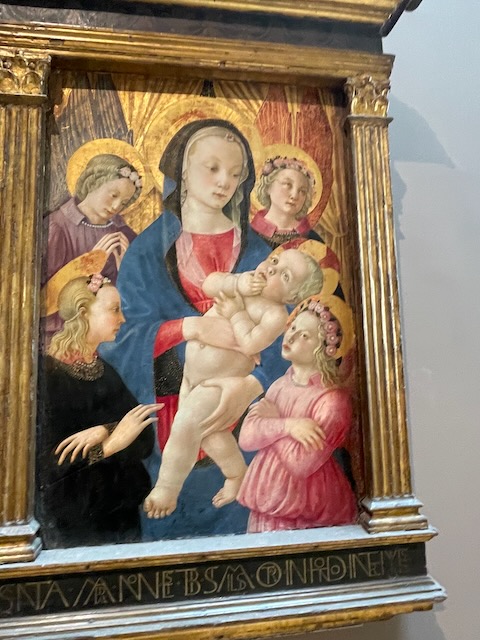
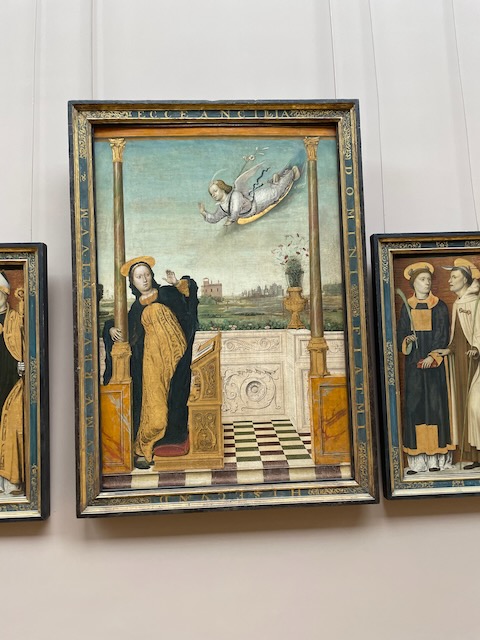
I am always impressed by the effect religious enlightenment and enthusiasm (or perhaps the fear of God) have had on the artistic initiatives of some of the world’s most noted visual artists and musicians. There were many outstanding examples of such works at the Louvre, although mythology was the source of inspiration for many artists too.

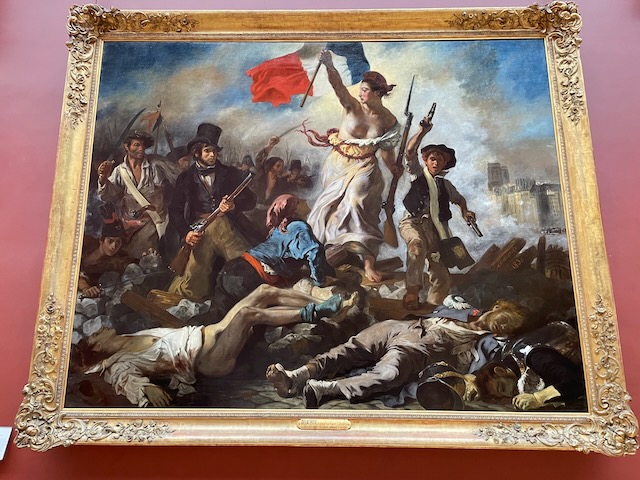
I liked the Delacroix paintings (below) very much, perhaps because of the immensity of their scale and subject matters.

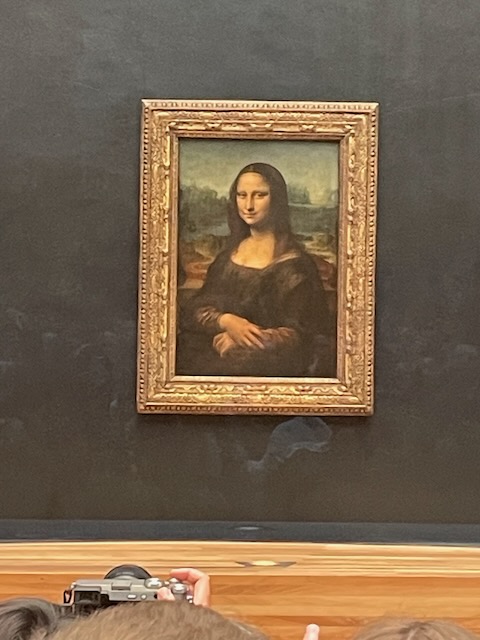
And at long last we got to see the Mona Lisa. The Louvre runs a very tight ship when it comes to what is likely the most famous work of art in its collection: After joining a carefully corralled group, we inched forward for about half an hour until we finally reached the wooden railing that separated us from the Da Vinci masterpiece. There, three uniformed staff members gave us maybe a minute to get our unobstructed photos before they hustled us out of the room.

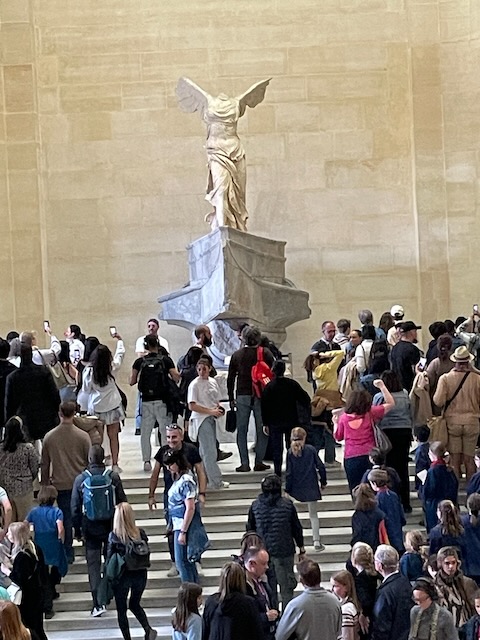
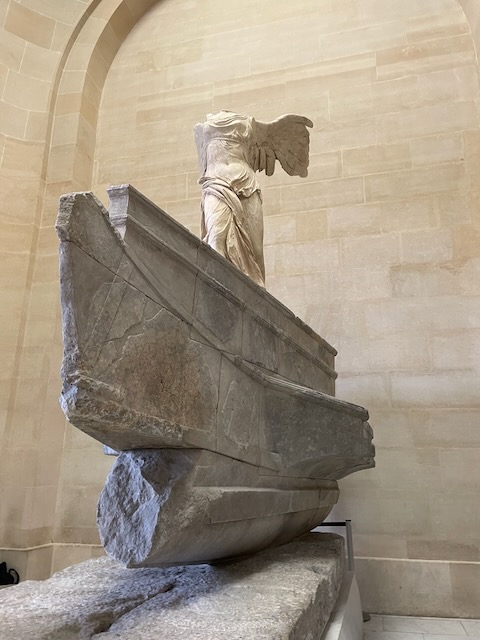
I think my favourite installation at The Louvre was the magnificent Winged Victory of Samothrace, which is “a votive monument originally found on the island of Samothrace, north of the Aegean Sea. It is a masterpiece of Greek sculpture from the Hellenistic era, dating from the beginning of the 2nd century BC” (Wikipedia). I could have gone back to the gallery again and again just to look at that sculpture.

After departing the Louvre we decided to tour the Palais Garnier, one of the homes of the Paris Opera. We were unable to gain admission because it was almost closing time, which is probably just as well as we were fairly tired by then. Later in the week, we did see the building, a masterpiece of baroque architecture. As you will see in a later post, it was worth making a second attempt.

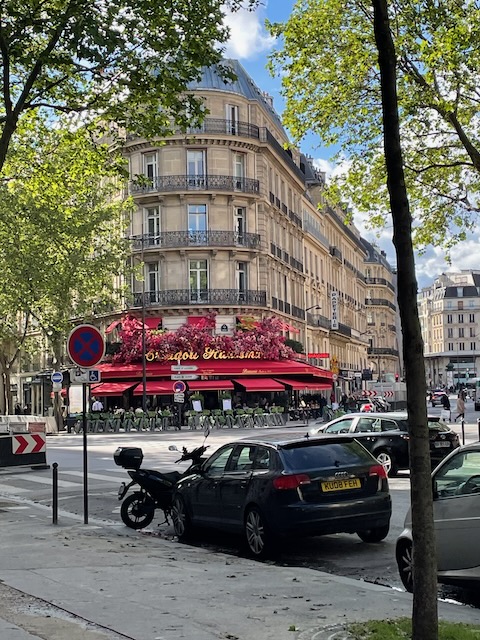
Near our hotel, a lovely plaza (Place Gustave Toudouze) offered four or five restaurants with different types of cuisine, including French, Italian and Indian. We enjoyed the food at the Lebanese restaurant Chez Sofia so much we went back again later in the week. (I even wrote a positive review online.)

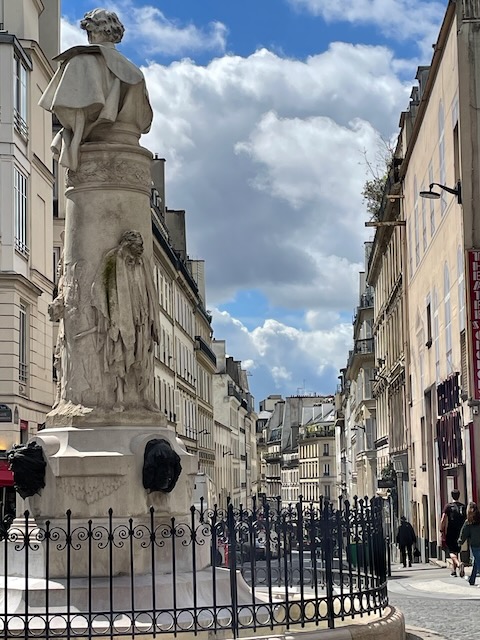
Here are a few other photos of the area near our hotel.

  1. This aerial photo of The Louvre, which I found on the museum’s website, gives a sense of how massive the complex really is ↩︎

London, etc. and Paris, 11: “I Love Paris… when It Drizzles.”

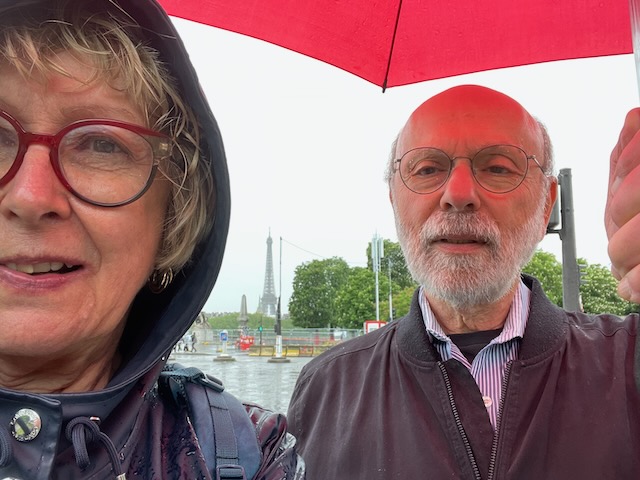
On Thursday morning, after settling in to our new, improved quarters and checking out the neighbourhood, we set out to discover Paris. (Arnie had been to France in the 1970s, but I had never been before.) It was still raining, but for the most part the rain was a fine drizzle so it didn’t interfere with our stroll.

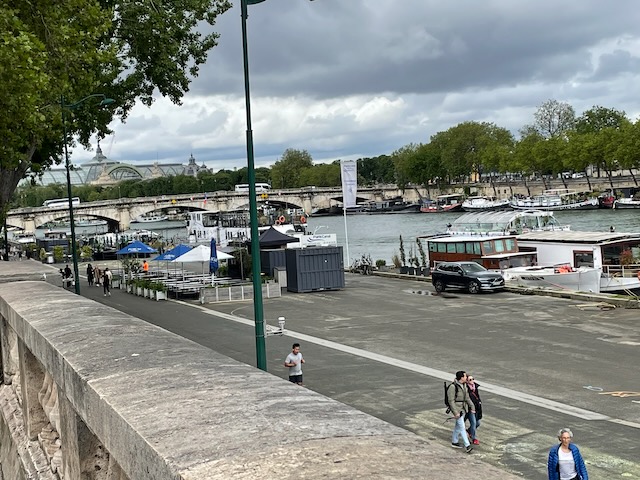
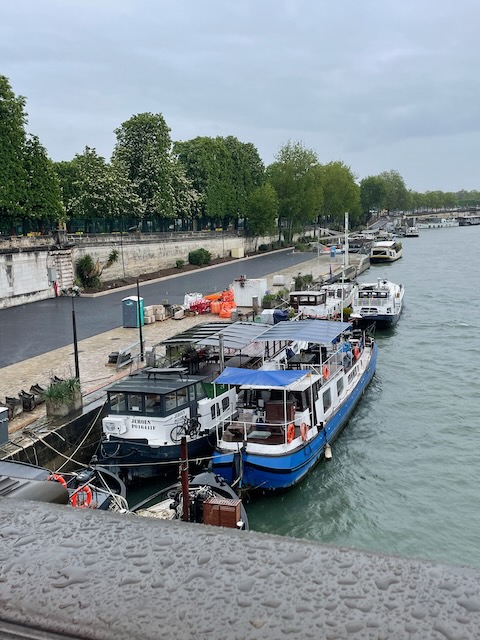
After consuming a bowl of French onion soup at one of the many small cafés that edge the streets of Paris (because of course we did. Very tasty), we took the Métro to the south side of the Seine, emerging near the Quai D’Orsay, and began to walk west along the Left Bank/ Rive Gauche. First we passed the Assemblée Nationale, which is France’s lower House of Parliament, the upper being the Senate.

France, like most democracies, has three branches of government: legislative, executive, and judicial. The President (currently Emmanuel Macron), a position for which an election is held every five years, appoints the Prime Minister (normally the head of the party with the most seats); the Prime Minister and his or her deputies make up the Government. I understand that elected representatives whose politics are on the left sit on the left side of the PM in the Assemblée, and those whose politics are on the right sit on the right. Seems sensible.

(Please click on a photo for a better look. If you are reading this as an email, click “Read on Blog” (at the top of the email) to see larger versions of the photos.)

The French electoral system is somewhat confusing to an uneducated outsider (as are most countries’ electoral systems, come to think of it. Autocracies and dictatorships are easier to understand: rulers like Nicolás Maduro in Venezuela just retain control of everything, no matter what the voters decide they want). The French system of government is additionally confusing since France is a founding member of the European Union, so some of its legislative functions now fall under the purview of the European Commission.

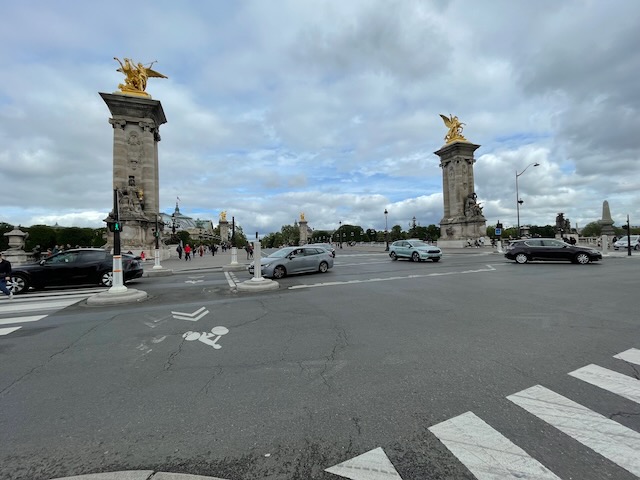
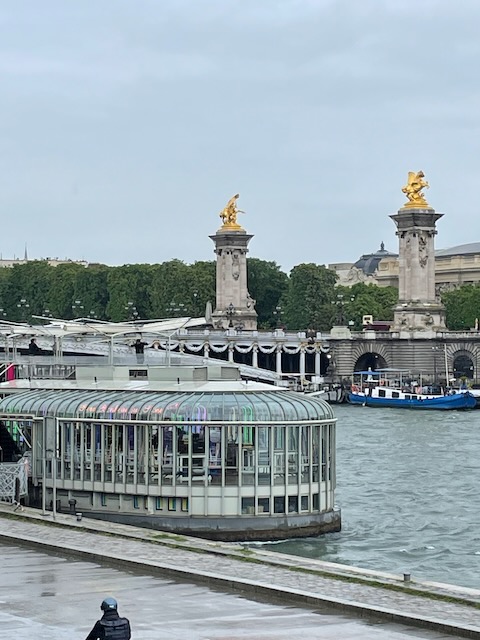
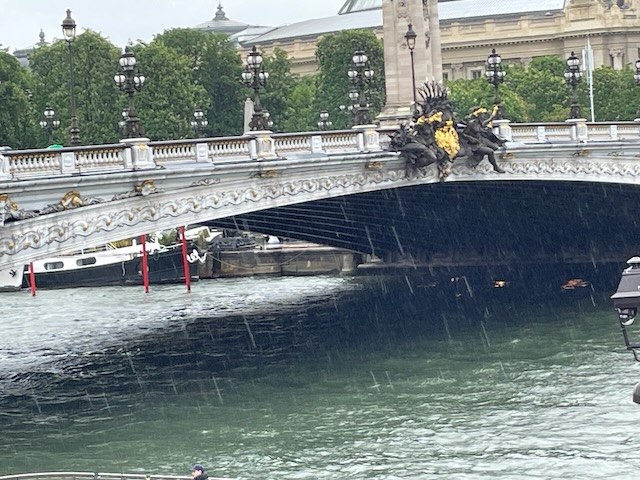
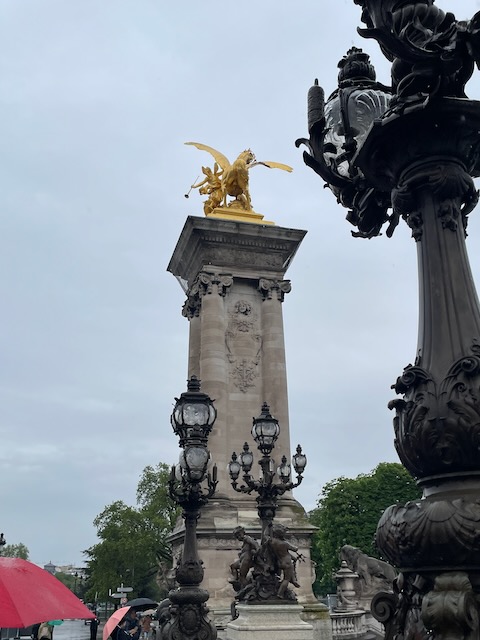
We continued along the Left Bank until we reached the Pont Alexandre III. From Wikipedia, I learned that “[This] Beaux-Arts style bridge, with its exuberant Art Nouveau lamps, cherubs, nymphs and winged horses at both ends, was built between 1896 and 1900. It is named after Tsar Alexander III of Russia, who had concluded the Franco-Russian Alliance in 1892. His son Nicholas II laid the foundation stone in October 1896. The style of the bridge reflects that of the Grand Palais, to which it leads on the right bank.” (Well said, Wikipedia.)

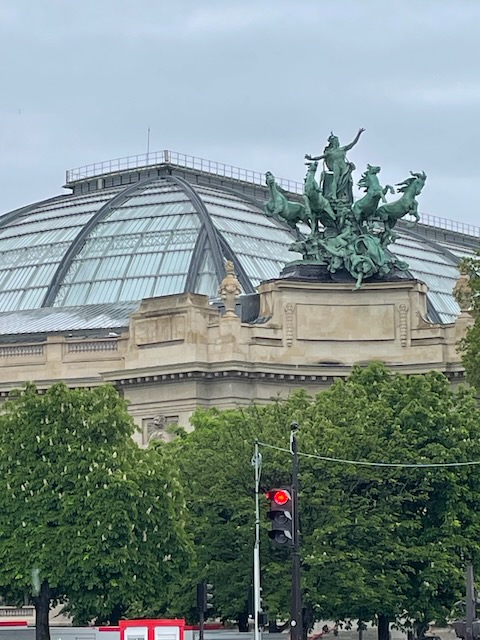
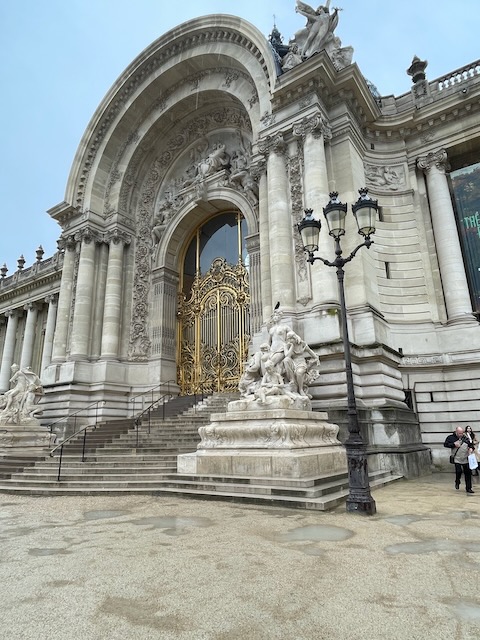
The Grand Palais was closed for renovations when we were there, but would reopen temporarily for the Olympics in August. (The fencing and taekwondo events were held there.) The full site will reopen to the public in 2025. The Grand Palais is an exhibition hall, museum and historic site dedicated to French art, and it sounds as though it is quite spectacular. We’ll have to go back to investigate it (and Notre-Dame Cathedral, of course, which was still closed for restoration following the terrible fire in 2019).

We kept catching sight of the Eiffel Tower and since I couldn’t get over the fact that we were actually IN Paris looking at THE ACTUAL Eiffel Tower (of which I have owned a small replica since my sons visited the city in about 1992), I kept taking photos of it. As a result, I now have about 200 photos of the Eiffel Tower. I will not post them all.

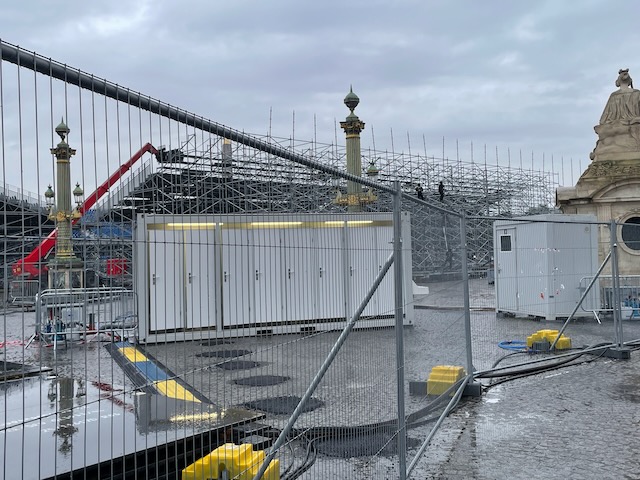
After walking in front of the Grand Palais we took a right turn and headed up the Champs-Elysées to the Place de la Concorde, the largest square in Paris, where there was a lot of activity going on to prepare for the upcoming Olympics. The Place Concorde was the site of the BMX freestyle, breaking, skateboarding and 3X3 basketball events and as the photos illustrate, a lot of temporary seating was being created when we were there.

As we walked, I spent a lot of time just marvelling to myself that I was actually on the Rive Gauche, walking by the Quay D’Orsay, crossing the Seine, catching glimpses of the Eiffel Tower, standing in the Place de la Concorde. It was both magically surreal and exactly as I had expected it would be: a perfect combination. It also made me think that if you read enough books and see enough films set in a certain location (or point in history, I suppose), it is almost as good as visiting it.

Almost, but not quite.

_________________

Addendum

Did you know that “I Love Paris” was written by Cole Porter and published in 1953? It’s been “covered” by just about everyone – notably Bing Crosby, Andy Williams, Ella Fitzgerald, Doris Day, Dean Martin, Frank Sinatra and Screamin’ Jay Hawkins. It’s a short song, but long enough to become an ear worm.

London, etc. and Paris, 10: Paris Greets Us with Thunderbolts, Hail and a Bus Station from Hell

It costs about £30 (C$50) and takes approximately 8.5 hours to get from London to Paris on a bus. (This includes the cost of the ferry the bus drives onto in order to cross the English Channel). It costs about £125 (C$221.25) to travel from London to Paris through the “Chunnel” on a train. It costs about £80 (C$140) to fly from London to Paris.

Partly because of the cost, partly because we had no deadlines, and partly because I wanted to see the English Channel as we crossed it, we took the bus.

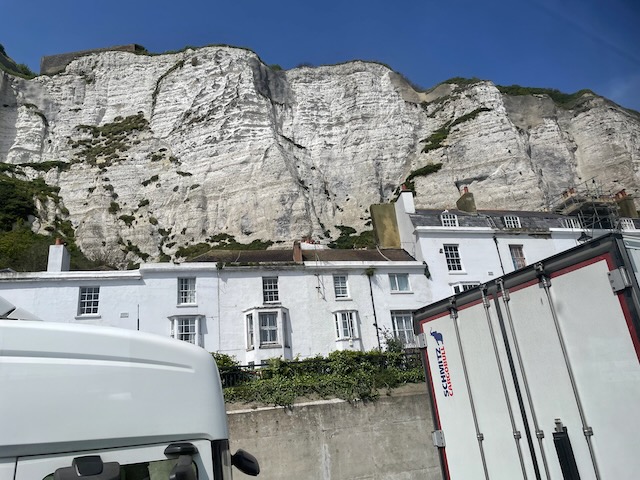
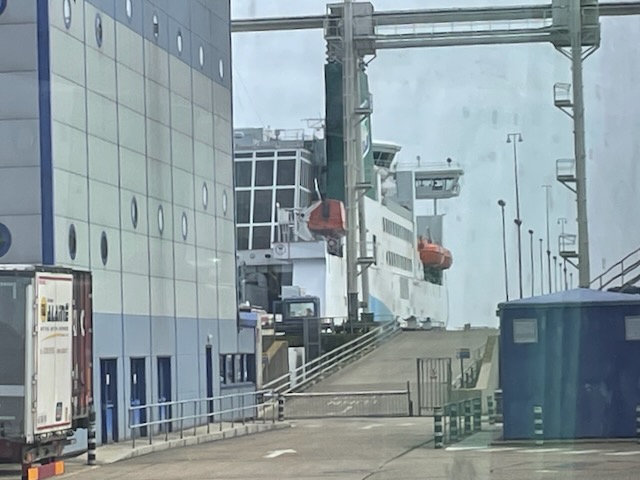
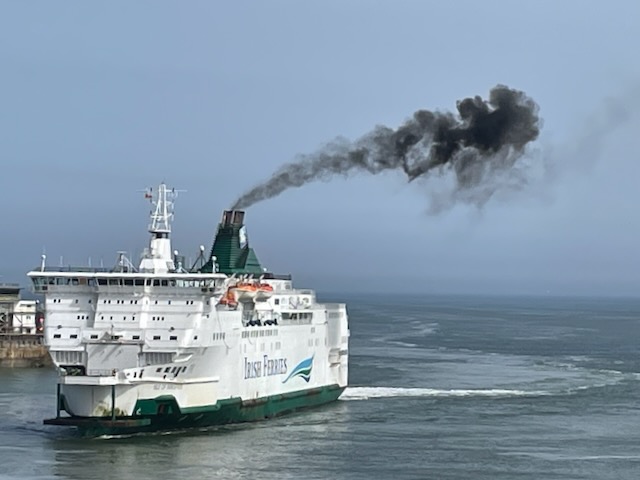
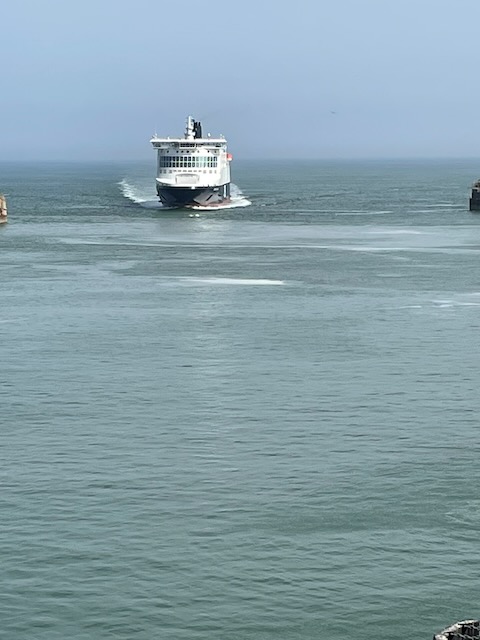
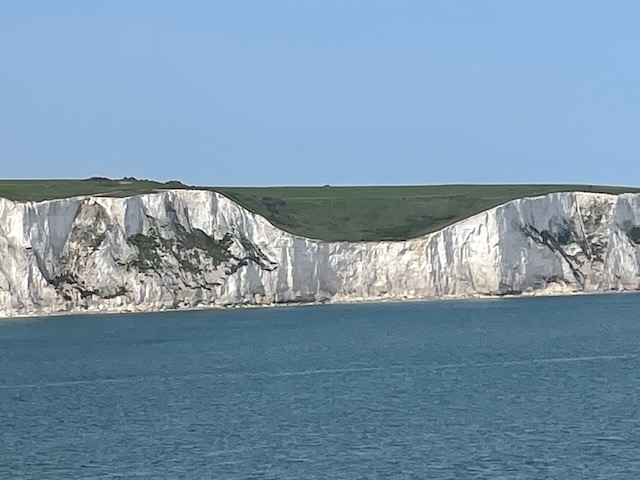
We had been warned that a rough crossing could be a nauseating experience or worse, but we were fortunate to make our trip to France on a wonderfully calm day. This was the second time we’d been to Dover, but we had much better views of its white cliffs this time, particularly after the ferry left the dock.

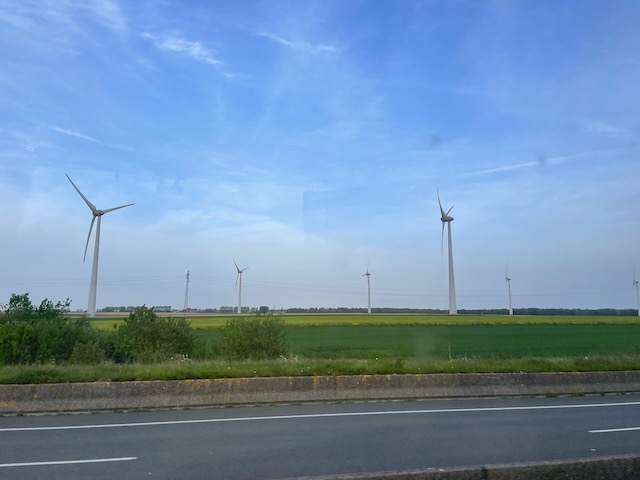
The actual crossing by ferry takes about 2.5 hours, and the trip was calm and picturesque. We arrived in Calais to find le temps there as pleasant as the weather had been in England. As we drove between Calais and Paris, I tried to get my brain around the fact that I was actually in France for the first time in my life. Since I was a young teenager, I’ve been studying French, reading books by French authors, watching French films, learning some French history, and envying absolutely everyone who got to be in France while I did not, so perhaps it is not difficult to understand why I found the experience almost unreal. As we travelled through the French countryside (where , by the way, I noticed happily – as I had in Germany a year or two before – that there are a lot of wind farms), I peered eagerly toward the horizon for my first sight of Paris.

But le temps had other ideas. The skies grew dark with clouds as the night fell, and as we reached Paris, a monstrous storm let loose. The torrent of hail and rain was intensified by near-constant flashes of lighting and crashing thunder. The bus, being largely a metal object, intensified the sound of the hailstones clattering down upon us, and I felt as though we were in a tin bucket – fortunately one with a lid on it, and windows.

I’m including a couple of the videos I took after the bus had pulled over to the side of the road, to wait for the worst to pass.

All hail breaks loose.

All of this meteorological excitement meant that we arrived at Paris’s Bercy Seine bus station a couple of hours later than scheduled, after ten at night. Delayed buses and storms be damned, all the service staff were heading home on time. Loiterers were being shooed out of the waiting room and asked to stand on the platforms until their connecting buses arrived. The lights in the office areas were extinguished, and doors and windows that might provide access to any useful information were securely locked.

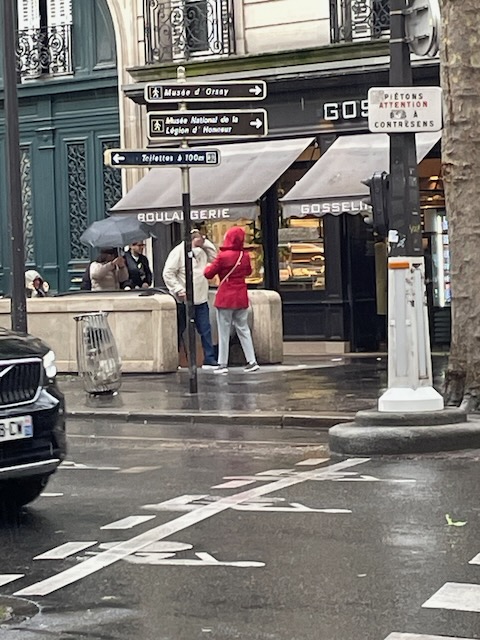
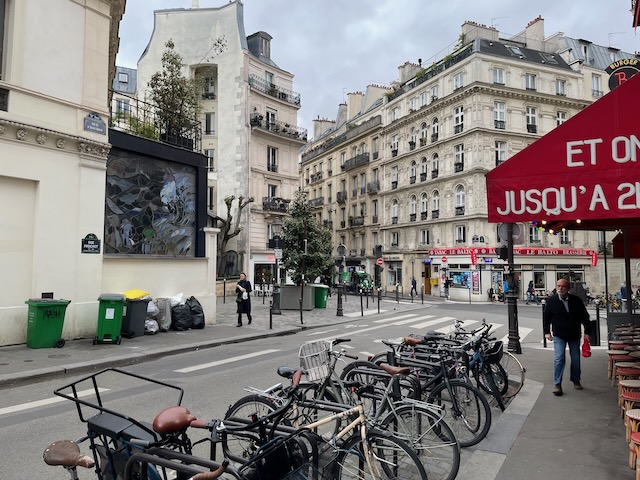
At first sight, the streets of Paris were not how I’d imagined them

Not being entirely fluent in French (not bad, but not fluent), we had some serious difficulty trying to figure out where to leave the building in order to find a ride to our hotel. We asked other travellers on the platform where the exit was, but those who did understand our questions and gesticulations all seemed to be waiting for connecting buses and didn’t know any more than we did about the layout of the station.

Several days later, when I finally had some time to try to figure out where we had gone wrong with la Gare Bercy Seine, I discovered that our challenges were not entirely due to our inadequacies in French (although our fellow-sufferer was also from Toronto, so maybe it’s a Canadian thing to expect that there be signage). On Trip Advisor I came across a review by “Oyster Boys” entitled “Flixbus Station at Bercy Seine in Paris is the Bermuda Triangle!!!!” Turns out its authors had had the same experience as we did, only in reverse: they’d been trying to leave Paris to go to Brussels when they’d encountered the mysteries of the Gare from Hell. “Finding the Flixbus station is like looking for the North Korean nuclear missile site,” they wrote. “You can’t find it. It’s almost as if they don’t want you to find it. It’s hidden underground inside a park….yes a park full of trees and some kind of playground full of graffitis…. It’s like walking into the abyss of the underworld. There’s no sign that says it’s a bus station. You just have to walk to a park with no sign to lead you to the entrance. I could see people circling around the park looking for the station.”

The only exit we could find opened into the aforementioned park. As we peered through the ongoing downpour we noticed that past the park, a couple of city blocks away, there was a street with cars on it. Although the worst of the storm had passed, we knew we were about to get very wet, but we had little choice. So off we went toward the street where we could call an Uber, dragging our suitcases through the park’s puddles as we walked.

After being tricked once by a non-Uber driver who convinced us he was an Uber driver, and then shouting at him until he returned us to the original meeting spot and let us out of his vehicle, and after finally connecting with our actual Uber driver (yes. I know. Check the license plate. We won’t forget again), we were dropped off after midnight at our small hotel – on one of those wonderful Paris streets I’d come so far to see. It was no longer raining, and the reflections of the street lights glinted on the wet stones and pavement.

However, the day was not quite over. We had to wake someone up inside the hotel in order to be let in and register. Our third-floor room, it turned out, was only a few feet larger than the double bed, but we were exhausted: we’d figure out how to manage the unpacking of the suitcases in the morning. I plugged my power bar into the wall so I could recharge my phone and my watch, and promptly plunged the entire hotel into darkness.

After Arnie went down to confess my sin, and received a small lecture from the night manager, we heard a caretaker (or most likely the manager himself) open a door just outside our room, and fiddle around with things a bit. Suddenly the lights came on. We turned them out and went to sleep.

The next morning we got up and looked around, now even more fully aware of how much time we might need to spend just to figure out how to sort our stuff so that we could get at it when we needed it, and still have enough floor space to get from the bed to the bathroom and to the doorway to the hall. But after a superb petit déjeuner in the downstairs breakfast room (it included fruit, eggs, sausages, bacon, croissants, real coffee, pain chocolat and more, and was included in the price of our room), we went to the desk to ask about something else, and the person who was then on duty said, “Hey. You guys are here for an extended stay. Wouldn’t you like a larger room?”

The next thing we knew we were in a main-floor “suite,” at no additional cost (a very small suite, but it had a very large bathroom and a hallway and a window to the patio outside and lots of room for suitcases).

And so, as it turned out, May 1 was the only truly difficult day on our entire trip. We had other moments of frustration (getting lost in the subway system, for example, which happened several times in Paris, as it had in London), but despite their reputation, every Parisian we encountered was helpful and friendly (aside from one or two who worked in booths at the Métro, see above), and no day that followed was anything like the day we went from London, England to Paris, France.

And even that one day had caused us only a few hours of grief. After that, we were in Perfect Paris, which was all that I had ever dreamed it would be, and more.