
Too little sun. Too much surf. Not enough Imodium.
Sunday, January 10 to Wednesday, January 13, 2016
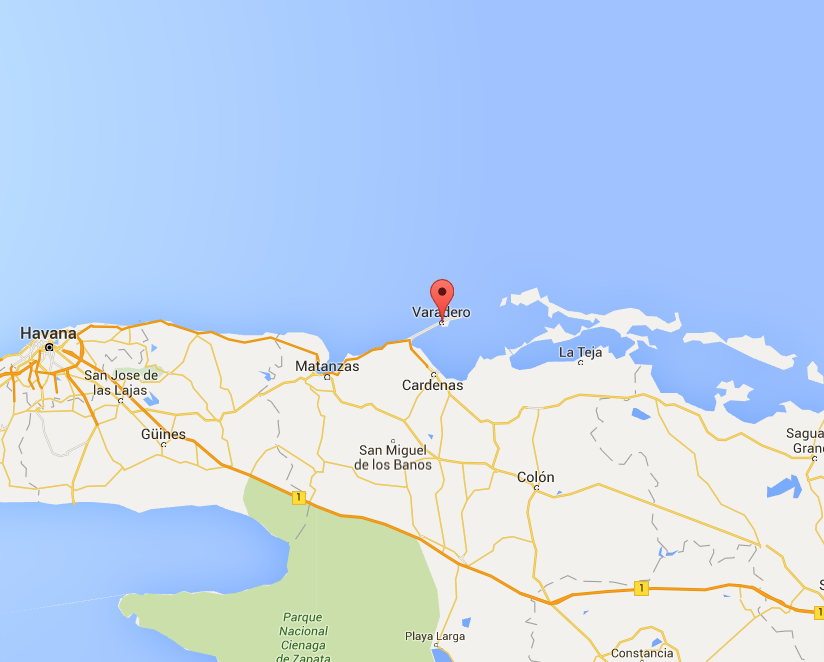
Screen capture showing location of Varadero in relation to Havana, from Google Maps
We spent our last three days in Cuba at an all-inclusive in Varadero, a popular tourist sun-and-surf destination on Cuba’s north coast. When we’d booked our stay at the hotel, we’d envisioned concluding our ten-day trip to Cuba with three days on the beach – reading books, swimming, eating great food, talking about what we’d seen on our tour, and generally just relaxing before returning to reality.
It didn’t quite turn out the way we had imagined.


When we arrived at the all inclusive, the Royalton Hicacos Resort And Spa (photos above), we immediately discovered that the Cuban sense of time (which is non-specific, to say the least) extended to the tourist spots. Neither of us was feeling particularly well, so we were looking forward to checking into our room and getting settled. It took two hours for that to happen, despite our having timed our arrival to make sure it was well after the official check-in time. The delays included two last-minute room changes in the midst of a downpour.
Undaunted (well, Arnie was undaunted. I was ready to rip someone’s head off. And that isn’t only because Arnie is a calmer person in general than I am. For some reason, when I had been in Cuba proper I’d been unfazed by lengthy delays and mix-ups and the inability of almost anyone to understand English. I was fully aware that this was their country, and I was a visitor, and however Cubans did things was how they did them. I was cool with that. But when we got to the resort, I was suddenly bereft of empathy, sympathy and a few other forms of basic human kindness. I think this is because the place existed to serve tourists, primarily from Canada, and although it was a bit worn at the edges, it looked like it should have known what it was doing. Visually, it was a good imitation of an international resort. But the service, with a few exceptions, was ridiculously bad) we stowed our luggage in our room and set out for the beach.


There we learned that the sea was too dangerous for swimming (although a few fools had ventured into the water), and that it was unlikely to improve over the rest of our visit. (I did not blame this on the hotel. I was very zen about it.) In fact, as it turned out, that first afternoon offered the best weather, and we did get an hour or so on the beach before we went back to change for dinner.
Soon after that, we were struck in earnest by traveller’s tummy, referred to in other climes and places as Montezuma’s Revenge, Delhi Belly, and perhaps other equally charming epithets that I haven’t yet learned about/ experienced (“Barcelona Biliousness” may still be somewhere in my future). I had brought about 18 Imodium with me, but having doled out quite a few of them to various members of our group earlier in our tour, there weren’t enough left to use even judiciously during our current bouts of stomach upset.

A detail of the medical report on my “food transgression”
Finally, after a sleepless night of intestinal uproars on both our parts, we requested a visit from the medical team at the resort, which consisted of Dr. Isabel Amable Alvarez and the nurse who was her assistant (whose name I don’t seem to have written down). These strict but kind women saved our lives – or if not our lives, at least the final days of our vacation.
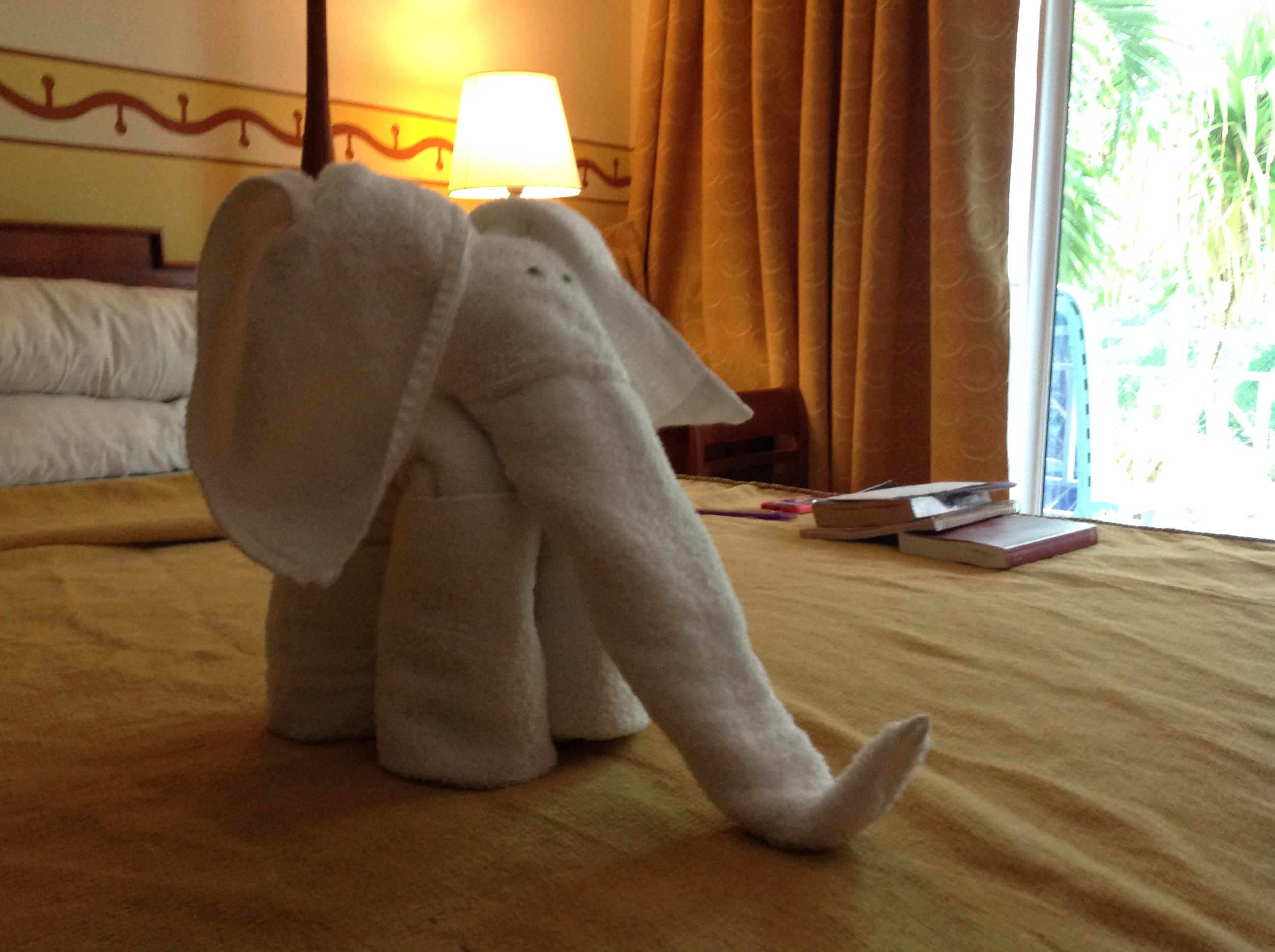
A towel folded by our housekeeping staff
They advised us (as others have before) to avoid treating diarrhea with loparamide (the main ingredient of Imodium) because it does nothing to treat the cause of the stomach upset, and can have undesirable side effects. (I am happy to follow this advice as long as I don’t have to go anywhere in public when I have a case of diarrhea. I will take anything that prevents my having a disaster in public.) They gave us injections and prescriptions involving an antibiotic, a stomach-acid inhibitor (ranitadine), electrolytes, and something called buscapina. They also warned us against eating anything acidic or greasy or containing milk for 48 hours – which limited our selection at the hotel’s several buffets considerably, but since we weren’t feeling too well, it wasn’t very difficult to comply.

On the road to recovery – with our outstanding medical team
The medical attention (including medications) cost us about 100 CUCs each, and we got most of the money back from the Government of Ontario (OHIP) and our insurance companies, so it was well worth the call. We had a great visit with Dr. Amable Alvarez when we went back two days later for our recheck. Among other interesting facts, such as how Latin American women get their double-barrelled last names (When they are single, their first last name is their father’s first surname and the second their mother’s first surname. After they get married their second surname may change to the first surname of their husband), we learned that doctors in Cuba earn only about the equivalent of USD 70 per month, while nurses earn about half that.
The stay at the all inclusive was not a total waste by any means. We did sit by the pool when it wasn’t raining, we ate in a couple of the four restaurants (there are also two buffets and ice-cream bars and a grill on the beach) and we enjoyed one of the nightly song-and-dance performances. However, the primary advantage of staying at the Royalton Hicacos was the fact that it was part of a SunWing package that got us fantastic rates for our flights to and from Cuba. It was worth it for just that – anything else was a bonus.
-

- One of the dozens of greater Antillian grackles that dine on table scraps, swooping in the second you leave the table.
-

- Waiting to swoop
When it was time to go to the airport, we arrived at the entrance to our hotel five minutes before the appointed departure time, and found no other passengers and no sign of a bus. We considered how ironic it would be if the only vehicle that was ever early during our entire time in Cuba had been the bus to the airport – causing us to miss it.
Fortunately, we that didn’t happen – the bus was predictably late (but only by about five minutes). We learned on the bus that our misadventures with the Royalton Hicacos were nothing compared to the horrors others had encountered at neighbouring hotels. These ranged from five sick family members receiving no clean laundry, items being stolen from rooms, plugged toilets, etc. I think that a few years of American tourism is going to do a tremendous favour for everyone who visits the all-inclusives at Varadero, as Americans are much more likely to complain about bad service than are the Canadians who have for decades been the area’s primary guests.
At the airport, we made haste to turn all of our leftover CUCs to Canadian dollars, since they cannot be exchanged outside the country, made our way through customs, did a bit of shopping, and then we were off for Toronto.













 This morning Arnie and I went our separate ways: he to do a horseback trip through the Viñales valley, and me to join a walking tour of a few farms in the same area. We compared notes after we met up again and discovered that we’d both watched the owners of different tobacco farms make cigars by hand. We’d learned about the different leaves that go into the creation of the perfect cigar, and been told that the finer the cigar, the lower the level of nicotine. We’d been advised that inhaling is not a recommended part of the cigar-smoking experience anyway. After the demonstration, each member of both groups was given a Cuban cigar to smoke. Arnie smoked all of his. I just took one puff.
 Rain had pounded down all night and into the day, to the point where when a few members of our group stepped out into a Viñales street after breakfast, they found water going over the tops of their trekking boots. Their feet were wet all morning. I didn’t get wet feet until I started walking around the countryside, but when I did it was not only wet but red. I assume a high iron content in the soil, but I forgot to ask about that.
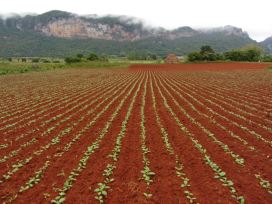 Our guide did tell us that the soil here is very good for tobacco growing and that they use no pesticides or fertilizers. The farm workers plant all the seeds, pick all the leaves, and harvest the leaves by hand. It takes three to four months to grow a tobacco crop and the farmers in this area sell 90% of their crops to the government and turn the rest into cigars with their own brands. (Our host said his were called “Geraldo’s cigars” but I think that was a joke.)
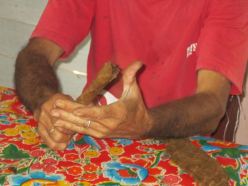 The inside leaves that are high in nicotine content are fed to animals. The better leaves are soaked in honey, guava and rum, and then put into home-fashioned humidors (made of plastic wrap) to cure for a year or two. The result is a cigar that tastes wonderful and has very little nicotine. (Geraldo pointed to his 70-year-old mother who was smoking a very large Cuban cigar as evidence that cigar smoking will not harm your health. [See slide show album below for photo of her.] I was not impressed, as 70 seems very young to me. Show me your 100-year-old mother. Then I will pay attention.) Geraldo hand wraps approximately 100 cigars a day.
 In addition to tobacco crops and drying barns, we saw fields and groves of mango, bananas, coffee beans (arabica), black beans, calabash (from which maracas are made), taro and cassava. I have discovered here in Cuba that I love taro, which is the basis for arrowroot and according the locals cures almost everything. (And anything it doesn’t cure is cured by the root of the royal palm so it is all covered here. Although there is also excellent health care in Cuba if anything else is required.)




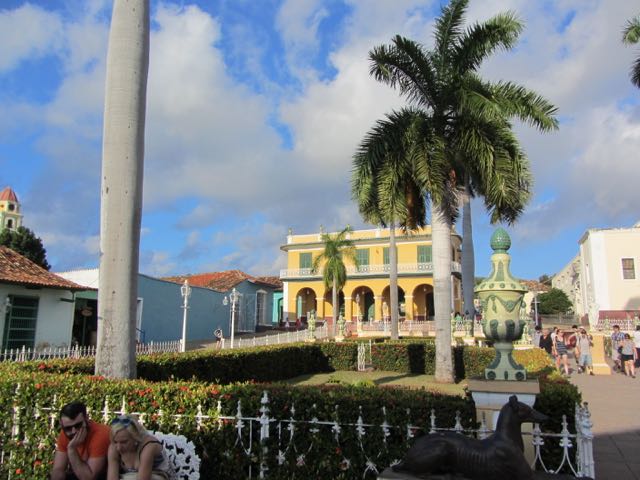




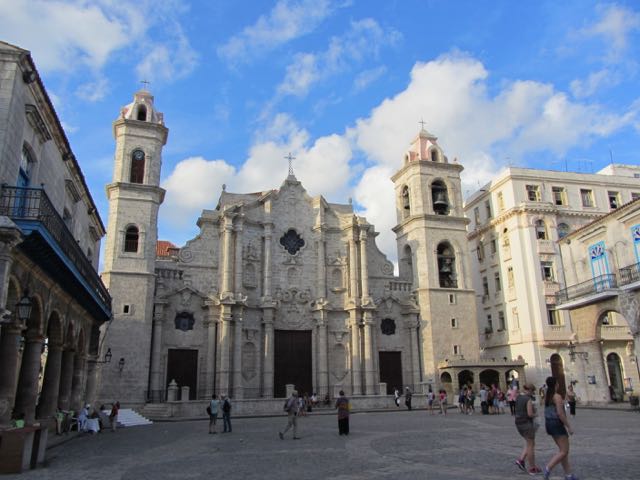
 After breakfast, our group set out on a walking tour of Cienfuegos. The city was founded by Don Louis de Clouet, who came to Cuba from France via Louisiana. He worked to build up the city’s white population by inviting families to join him from New Orleans, Philadelphia and Bordeaux. As a result, much of the city’s early architecture is neoclassical French.




 I'm All Write

