Watch. Listen. Learn. (Cuba 4: Trinidad, Part 1)

Rum, Women and Song (1)

Wednesday, January 6, 2016

Well, today was a day to remember. We did a 2.5 k hike up to a waterfall in the rainforest and went for a swim, then did a walking tour of Trinidad, and after that we had a salsa lesson. We also ate at two more picturesque and distinctive paradores (“home restaurants”), and we concluded the day with rum-soaked toasts to two members of our group who were celebrating birthdays.
IMG_2507

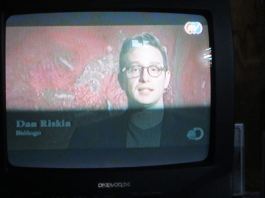
Dr. Dan Riskin, Biólogo (aka, my elder kid)

Even before all of that, I had the utterly mind-boggling experience of seeing my elder son on Cuban television. Our host at the casa had turned on her TV while we were waiting for our bus to arrive. She started changing channels and all of a sudden Arnie yelled, “Stop! Go back! Go back!” Lo and behold, there was an episode of Monsters Inside Me, a show about parasites that is broadcast on Animal Planet. And there was Dan, who is not only the co-host of Daily Planet on Discovery Channel in Canada, but also does the scientific explanations on MIM. Only it wasn’t his voice: it was a Spanish voice that had been dubbed in. I was yelling “Mi hijo! Mi hijo!” and I think our host thought we had lost our minds. But we finally explained it all, and went on with our day.

Hiking, Swimming and Bats

The bus collected us at 8:30 am and took us on a bumpy ride up to the parking area for the hike to the Salto del Caburni, a 62m waterfall that drops into a wonderful swimming hole and stream. After a beer (or gaseosa for some of us) we set out on a beautiful hike through the rainforest – bumpy and uneven in some places and uphill for part of the way, but easy walking for the most part. About half way up, we stopped at the cabin of a farmer who had lived in the same house all his life and raised his family in it. It is completely constructed from royal palm. He served us tea that he had made from various herbs.

We then followed the stream further up the mountain to where it widened into a pool of clear blue water below a waterfall. We swam into the waterfall and beyond – and inside the cave behind the falls, at least two species of bats were trying to get a decent day’s sleep. Disturbed by our splashing and calling, a few of them flitted around above us which, of course, made me very happy as my bat-loving son has fostered in me a great affection for the little beasts. I wished I’d had a camera with me and am hoping someone got some photos (Andrew? Isobel?). The swim was wonderfully refreshing and the setting magnificent.

Unlike several others in our group (mainly guys, although Isobel bravely contemplated a leap for quite a while), I’d walked into the water from a rocky platform rather than jumping off a high cliff into the deep pool that had formed beneath the pounding water from the falls. A couple of those who did jump regretted it afterwards, Will from Australia in particular. He suffered a bruised coccyx, which made sitting on buses quite difficult for him for several days. Salto means “jump” so it was hard to resist the urge, I guess.

This slideshow requires JavaScript.

In addition to intriguing flora, rock formations, the bats and a few lizards, we were fortunate to see several birds on our hike. A highlight was a sighting of Cuba’s national bird, the tocororo (aka Cuban Trogon, or Priotelus temnurus), which is red, white and blue like the Cuban flag. We also walked past almond trees and tried (without much luck) to get the nuts out by cracking dried fruits on the ground with rocks.

Back in Trinidad, we enjoyed yet another delicious meal at yet another attractive and surprisingly large family-owned restaurant. I had pollo tropicale and it was muy delicioso. We were seated outside and during lunch, a bird (not a tocororo) pooped on me. All of us agreed that this was a sign of exceeding good fortune.

(See next post for the second part of our day in Trinidad, which was far too busy and fun to describe in just one post.)


Watch. Listen. Learn. (Cuba 3: Cienfuegos, Santa Clara, Trinidad)

Some French architecture, then ¡Che!

Tuesday, January 5, 2016
IMG_2479After breakfast, our group set out on a walking tour of Cienfuegos. The city was founded by Don Louis de Clouet, who came to Cuba from France via Louisiana. He worked to build up the city’s white population by inviting families to join him from New Orleans, Philadelphia and Bordeaux. As a result, much of the city’s early architecture is neoclassical French.

Cienfuegos has a more prosperous economic base than many other cities in Cuba (shrimp fishing, thermoelectric and petrochemical plants, and ship building, according to my trusty Lonely Planet), and it is a lovely city with a large port. Its elegant and stately buildings are gradually being restored after years of neglect, thanks to the financial support that has accrued from its having been declared a Unesco World Heritage Site in 2005.

In the main square of the city, there is access to wifi so after our tour we settled in for 15 or 20 minutes of connecting the outside world. Access to the internet is extremely limited in Cuba and estimates of the number of Cubans with internet connections range from 5% to 25%. Most of the connecting is done on mobile phones in wifi hotspots, most of which are located in city squares, and even when they are connected, Cubans’ access to many independent news sites are blocked.

Wifi access cards are 2 CUCs per hour (about CAD 3), and you can use them at any hotspot on the island. The card gives you a user name and a password. We were told that if you use the card for ten minutes and then sign off, you will be able to use the remaining 50 minutes at the same or other locations in future, but several times when I signed off part way through an hour, when I tried to sign on again I was told that I had used up all my time.

Cienfuegos

We then set off for Santa Clara, enjoying a varied and delicious buffet lunch en route at a restaurant whose Don Quixote theme made me very happy, needless to say.

Mausoleo de Che Guevara

Santa Clara is where the mausoleum of Che Guevara and his friends/fellow revolutionaries is located. In 1967, seven men, including Che, were tracked down and executed in Bolivia, where they were working to instigate an uprising there, but their bodies were not found for several decades. After their DNA had been tested to prove their identities, they were brought to Santa Clara. The location was chosen because it was in Santa Clara that, years earlier, Che and his compatriots had derailed the train that carried munitions and troops sent by Batista to defend the city, effectively spelling the successful end of the Cuban revolution.

The mausoleo complex is a shrine to a man who is more than a hero in this country. It features a towering statue of Che, his arm in a cast – as it was during the Battle of Santa Clara, since he had broken his arm in a battle at Caibarién a few days earlier. The mausoleum itself, which includes an eternal flame lit by Fidel Castro, is so secure that one is allowed to take nothing at all into it – including a purse or a cell phone. The documents and objects that are collected in the accompanying museum are intriguingly specific and detailed and range across Guevara’s life. I could have spent three hours there instead the one we were allotted.

Our guide Manny told us how Che had arrived in Cuba with Fidel, Raúl and nine others on a yacht called Granma in 1956. These twelve were only ones left of 82 who had set out from Mexico with the intention of overthrowing the Batista dictatorship – an upheaval that by then Fidel had been planning from exile for more than five years.

The day was cloudy and as we got back on the bus following our tour, it started to rain. The grey skies seemed appropriate.

Assorted interesting things I have learned today (mostly from Manny):

  • The given name of Che – who was Argentinian – was Ernesto. His nickname came about from his Argentinian custom of ending his sentences with the interjection “che?” (as Canadians do “eh?” Example, “Let’s go get a beer, che?”). One of his closest friends, Nico Lopez, a Cuban, asked him, “Why do you always say ‘Che?’ I am going to call you ‘Che’.”
  • Cubans are not permitted to ride in motorized boats – even a catamaran that is for rent to tourists is off-limits to Cubans
  • Locals shop and stay in separate, lower-quality stores and casas particulares than do tourists
  • White herons hang out around the cows, adding spots of brightness to the fields
IMG_0229

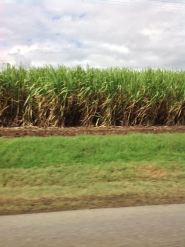
Field of sugar cane as seen from the bus

Trinidad

We next travelled through some truly beautiful mountainous countryside to Trinidad, which is a charming town on the island’s south shore with an amazing array of restaurants, bars, nightlife and shops – not to mention more interesting history and culture.

Since we arrived after dark, there was no time for sightseeing, but our group met at the foot of the stairs where all the action is. The younger ones went up the stairs to party. The more mature of us (Arnie and I) went for a great dinner in a rooftop restaurant and then walked back to our new casa.

The female head of this household – which includes two school-aged children – is, like our host in Cienfuegos, a warm and friendly woman who wants to help us practice our Spanish. 🙂 She told us that they have friends in Montreal who come down to stay with them every year or two. She also told us that they have never been outside Cuba because they cannot afford to travel (as is the case for most Cubans). For holidays they go to Havana sometimes, but prefer to spend their time at their beach house. She also told us that when she was growing up, they did not teach English in schools, but now they do. Her children are learning to speak English and she believes that this is very important.

We have two nights here, so we feel as though we can settle in a bit.


Watch. Listen. Learn. (Cuba 2: Bay of Pigs & Cienfuegos)

Waiting for…. everything

Monday, January 4, 2016

IMG_3415

Havana street

After breakfasts at our various casas in Havana (breakfasts typically included eggs, ham, bread, coffee, pineapple or guava juice, and a plate of fruit including papaya, guava and bananas), the group started the day off with a meeting. Our friendly, knowledgeable and handsome leader Manolo (You’re welcome, Manny 🙂 ) outlined the next few days of our itinerary and explained some of the protocols and vagaries of travel in Cuba. Patience is required here, he stressed. He also warned us that there would be lineups for everything.

We then met Ariel our bus driver for the week, and loaded our luggage and ourselves into our clean and comfortable minibus.

We didn’t have to wait long to learn the truth of Manny’s warnings.

IMG_3404

Arnie heads for the bus

Before our bus had even left Havana, we discovered two things of which Cuba has shortages, both of which every member of our group needed right away – i.e., before we hit the road. The first was bottled water, and the second was Cuban money. We spent almost two hours waiting for the members of our group to extract enough CUCs from various exchange offices and ATMs (cajeros automáticos) to get through the week in case we don’t have access again when we are on the road.

The first place we went to had run out of money. The second had very long lineups. Various members of our group were trying (not always successfully) to exchange Canadian dollars, British pounds, Euros, Yen, Australian dollars and NZ money so it took a very long time. On the upside, across the street from the bank was a bar where we were able to buy a few bottles of water (1 CUC per bottle) and use the bathroom.

(Note: Almost everywhere in Cuba, you have to “Pay to Pee,” but not in places where you are a customer. I generally left 25 centavos but sometimes bathroom attendants got more if I didn’t have small change. In return, they gave me a couple of thin pieces of toilet paper. As in many other countries, in Cuba toilet paper does not go in the toilets: there is always a wastebasket nearby where it is supposed to go instead. It’s a hard habit to break, letting go of that piece of tissue after you’ve used it, but now I’ve learned the new system so well that back in Toronto I am still looking for the wastebasket.)

Bay of Pigs

By now far behind schedule, we set off through the rain toward the Playa Girón, a beach on the Bay of Pigs (Bahía de Cochinos). There, some of our group went for a swim in the bay, and the rest of us walked back about fifty yards from the highway to a cenote, which is a cave that has collapsed and then filled with water (photos below). The pool in the cenote was clear, and colourful tropical fishes swam about in it. I recognized an angel fish but I have no idea what the names were of the others.

Our guide Manolo and a royal palm

Our guide Manolo extols the virtues of the royal palm

Manolo briefly recounted the story of the Cuban Revolution of 1953-59 and the invasion of the Bay of Pigs (1961) from the Cuban perspective, which is pretty much the same perspective as what I’ve read on Wikipedia (i.e. Cuba good, America bad) so I won’t bother retelling it here. But it was an amazing experience to be told the story of how the Cubans withstood the invasion at the Bay of Pigs when you are actually at the Bay of Pigs. Inspiring.

As well as being an historically significant site, the Bay of Pigs is renowned for its scuba diving and snorkeling opportunities. The water is incredibly clear. On the day we were there, there were very few people in the water – possibly because it was raining and the diving shop was closed.

Soon after we left the Playa Girón (“playa” means “beach”), we stopped for “lunch.” We arrived around 3 p.m. and didn’t finish eating until about 5. Manny grew impatient with this wait, but the rest of us were pretty laid back about it. We had picked up cookies and other snacks at one of our bathroom breaks, so it wasn’t like we were starving. The long, long wait gave us a chance to get to know our fellow travellers a little better. As always, one of the advantages of group travel is the people in the group itself, and what you learn from them.

In the long run, our lunch/supper  – ultimately quite tasty and filling – proved an excellent way to save money, as we didn’t need dinner that day. 

Cienfuegos

We arrived in the city of Cienfuegos at about 7 p.m., and since it was too dark to do a walking tour of the city and no one was hungry, we were dropped off at our various casas particulares. Ours was a small comfortable room with a full bathroom which (to our mystification) locked from the outside. The host was wonderfully welcoming and very encouraging about having a conversation with us in Spanish. I quickly learned the limits of my knowledge of Spanish as we tried to actually answer her questions about ourselves and figure out what she told us about herself. But we eventually got the gist of most of it. I think.

When we registered at each of the casas, the owners wrote down our names and passport numbers, home address, and the dates on which we were checking in and out, and then asked us to sign the entry in the register before giving us the keys. I think the government has a long arm when it comes to accountability in Cuba.

After depositing our suitcases, Arnie and I walked to Cienfuegos’s malecón (pier/waterfrontand found ourselves some ice cream, then walked along the promenade for a while. We then went back to our room and watched ER with Spanish subtitles on a small television set. (The show was no more impressive than it is without the subtitles.)

Cuban television has no commercials, and most of the channels feature educational programs.

Despite having spent a lot of the day on the bus, our brains were overloaded, and we had no trouble falling asleep.

____________

Note re the photo gallery below: hover over images to see captions; click on images to see larger versions.


Watch. Listen. Learn. (Cuba 1: Havana)

Arrival in Havana

Sunday, January 3, 2016

View from roof of Lonja de Comerica

View from roof of Lonja del Comercio, Old Havana, Cuba

Note to readers: I am posting this first instalment of our Cuban adventure on Thursday, Jan. 14  from Toronto, where we have now safely returned after a fantastic trip. I have been trying to post to this blog since the day after we arrived in Cuba, but internet access in Cuba is extremely difficult – as I will explain later. In the meantime, please keep in mind that the events described in this post happened more than a week ago.

I’ve invited the others who were on our tour to contribute photos or their two centavos’ worth, or to correct any errors I should happen to make (which is extremely unlikely, as they all know. <– joke). It was another great group! On both this trip and the one to India, I’ve been very fortunate in my travelling companions.

I will post the rest of the entries as I have time to finish writing them in the next few days/weeks, so if you enjoy this post, and want to read about the rest of the trip, please subscribe to the blog and stand by…. 

____________________

IMG_4329After a smooth flight on a Sunwing plane that we figure was originally owned by a Czech airline (see image to the right), we arrived at the Varadero airport at about 9:30 a.m. this morning (Jan. 3). We cleared customs with no problems, then changed some money into Cuban Convertible Pesos (CUCs, which everyone calls “kooks”). CUCs are one of two kinds of Cuban money; each CUC is equal in value to approximately one USD. There are also Cuban pesos (CUPs), which look a little different from CUCs (they have photos of revolutionary leaders on them rather than monuments) and one of them is worth about 1/25 of a CUC. Cubans use mostly CUPs, travellers use mostly CUCs. So it can get complicated. When you don’t know the difference, as most newcomers don’t, opportunities proliferate for getting ripped off by paying for something in CUCs and getting change in CUPs: i.e., getting 1/25 of the change you are actually due. (Update: No one ever tried to pull this trick on us.)

IMG_3377We then caught a Transgaviota bus from the airport to Havana. At 25 CUCs, it was 15 CUCs more expensive than a local Viazul bus, but we got a running commentary from the driver’s assistant and the bus took us right to Old Havana (Vieja Habana), where our first casa particulare (B&B) was located, rather than to the bus station where we’d have needed to find a taxi.

Our first view of the Atlantic from Cuba, at a stop on the highway between Varadero and Havana

Our first view of the Atlantic Ocean from Cuba, at a stop on the highway between Varadero and Havana

On the bus trip, we learned some very interesting things about Cuba from our guide (who had a dry sense of humour). He told us that:

  • There are 11 million people in Cuba. “Two million of them live in Havana. Eight million of them work for the police. This is a very safe country.”
  • In Cuba, there is free education, free health care and women receive one year of maternity leave
  • Cubans don’t swim in the ocean except in July and August.They find the air and water too cold at this time of year for swimming
  • In season at this time of year are guava, coconuts, lobster and papaya
  • There are no poisonous (I think he meant “venomous”) animals in Cuba
  • This is the high season for visitors. There is almost no accommodation available anywhere at this time of year, unless you have already booked it.
  • The tocororo is the national bird. It is very hard to find. It is the national bird because its colours are the same as the Cuban flag. (Note: We did see a tocororo later in the week, and Arnie got a great photo of it! Stay tuned.)
IMG_3378

Our first encounter with an old American car in Cuba. Note (typical) location of driver.

The most interesting fact that this guide told us was that if you kill a cow you can go to jail for twenty years. The Internet offers other reasons (and jail terms), but our bus guide told us that it was because the cow saved the country in the late 1990s when there was almost no food in Cuba – keeping many important people alive, including mothers, old people and children  – and so cows are respected and well treated.

Soon after the guide had told us this fact, I asked him what the large birds were that were flying around outside the bus. It turned out they were turkey vultures, as I had suspected, but instead of answering me directly, he told me that the birds were employees of the police department. He explained that if someone does kill a cow illegally, they must bury the bones very deeply. If they do not, the turkey vultures will circle around the spot where the cow has been buried and then the police will follow the turkey vultures to the scene of the crime.

The bus was not able to drive into Old Havana because of the size of the vehicle and the narrowness of the streets, but we were dropped about two blocks from our casa. Our room wasn’t ready so we left our luggage (four floors up! Fortunately our hosts were strong young men who carried everything up for us) and we had a late lunch then wandered around Old Havana for an hour or so. One of the highlights of our stroll was a view of the city from the top of the building on the old square (Plaza Vieja), where I took way too many photos.

IMG_4330

Pierre! What are you doing here?

After a nap we met our group and our group leader, Manolo (Manny). There are about 12 of us in the group. Arnie and I are the only two from Canada. The others come from Thailand, Singapore, New Zealand, Australia and England, and their ages range from early twenties to almost ancient (us).  We went for a delicious North-American type dinner at a restaurant in Old Havana (I think it was Ivan Chef Gusto. Is that correct? Manny? Anyone?).

While we were waiting for our dinners to be served (you have to wait for everything in Cuba, especially meals) I looked up, and what should I see high on the wall above us, but a poster featuring Pierre Elliott Trudeau! I felt right at home.

Photo gallery, Day One, January 3, Old Havana

Bright and early, the adventure begins

We got to sleep at 11 which meant we hoped for a 3.25-hour nap before our departure for the airport. But our airline (Sunwing) decided it would be a GREAT idea to send me a text message at 1 a.m. to let me know that the flight was on time. So that woke me up and I’m still awake.

Life isn’t so bad in this part of Pearson airport, however. There are iPad lounges everywhere, where you can waste time online for free while you wait for your flight to leave. I am reading a newspaper in hard copy instead (yesterday’s Globe and Mail) but I’m appreciating the comfortable seats and the fact that if I suddenly get the urge to buy something at Victoria’s Secret, I can: even if it is only 4:50 a.m

image.

Countdown to 3 a.m. departure

Cuba: Day 1 Minus 1

Screen Shot 2016-01-02 at 5.28.26 PMOur house is in a state of disarray as we pack suitcases and attempt to get all of those things organized that it is necessary to organize before one goes away for any length of time.

Our plane leaves at about 6:30 a.m. tomorrow, and the airline says we have to be at the airport three hours ahead of time – which seems ridiculous, but there you have it. So we will be leaving the house at 3 a.m., which means that we will be trying to get to sleep REALLY early tonight. And that in turn means that all the packing and sorting and checking of lists needs to be done before early evening. We’ll see how that goes, since it is almost early evening already and I haven’t packed anything yet.

Tomorrow we fly from Toronto to Varadero, Cuba, and then take a bus from the airport at Varadero to our hotel in Havana, where we are meeting with our group for dinner. Even though Havana is in the same time zone as we are here in Toronto, it is going to be a long day. But I am so excited that I probably won’t sleep at all tonight.

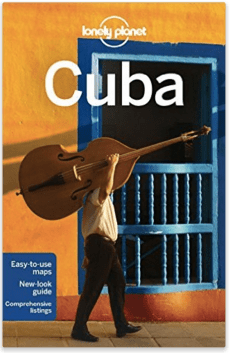
In preparation for this trip, in addition to the copious materials sent to us by our tour guides, I have read the introduction to the Lonely Planet travel guide to Cuba, and I am looking forward to reading the entries for our particular destinations as we approach them. Our trip will include stops in Bay of Pigs/Playa Girón, Cienfuegos, Santa Clara, Trinidad, Vinales and Havana, and will wind up with a couple of days at an all-inclusive in Varadero. I will post something about each place we see, but not necessarily as we go, as I understand that internet is iffy in Cuba, and that wireless internet is almost non-existent.

Screen Shot 2016-01-02 at 5.33.34 PMIn addition to the Lonely Planet book, I’m taking the Wallpaper City Guide to Havana, a gift from Arnie’s nephew Paul Resnick (thanks, Paul!). And as far as communicating while we are there, I’ve downloaded a Spanish-English dictionary onto my iPad and iPhone and I am hoping that this – combined with the past couple of months of refreshing my Spanish on Duolingo – will see us through.

In regard to Duolingo, I love the app/site and think I will take up German next. My biggest problem with Spanish (aside from being only about half way through the course now that it’s time to leave) is remembering vocabulary, and trying to change verbs to the past tense. But I can stumble along. I am looking forward to hearing Cuban Spanish, which is I’m sure much different from the Spanish I heard in Mexico and the southern U.S. – and to what I heard on Duolingo.

On my last day on Duolingo, I wrote this on Facebook: “I am now ready to go to Cuba. According to Duolingo, I can say ‘This car has no battery’ perfectly in Spanish.”

The next day I posted this  (utterly unrelated) thought:

I have been looking over my travel insurance in preparation for my trip to Cuba.  I am wondering why it is that if something really awful happens to you when you are out of the country and they have to ship the pieces of you back to Canada, they refer to the process as “repatriation.” The word makes me feel as though the insured, demised though she may be, is expected to rouse herself on arrival back in her home country at least to the point where she is able to salute.

So on that upbeat note, here we go.

Hasta luego.

I Am Cuba: A Cinematic Gem

Screen Shot 2015-10-16 at 5.03.42 PMSoy Cuba / I Am Cuba

A week or so ago, we watched a remarkable Soviet propaganda film that was made by the Russian director Mikail Kalatazov in 1964. Co-written by the Cuban novelist Enrique Pinada Barnet and the Russian poet Yevgeny Yevtushenko, Soy Cuba (I Am Cuba) is a strange mix of cinematic genius, poetry, romanticized Cuban history and America-bashing. It is also the only film I have ever seen that is narrated in one language (Spanish), dubbed in another (Russian, which often obscures the Spanish), and then subtitled in a third (English).

The film as a film is mesmerizing. It is exquisitely made in black and white, which not only serves a dramatic purpose but reinforces the melodrama of the film. I Am Cuba opens with a passionate introduction by the narrator to her beloved country as the camera pans from ocean to beach, from village to city. (You can watch the first five minutes on YouTube, albeit without the English subtitles). The film then traces its version of Cuba’s history during the first half of the 2oth century, as the country is exploited by rapacious, drunken, greedy, godless American capitalists who strip the nation of its innocence and self-respect.

As Roger Ebert pointed out when I Am Cuba was first released in English in 1995, the film demonstrates some amazing cinematic feats that were not only distinctive during the era in which they were produced, but would have been tricky maneuovres even in the mid-1990s. This probably explains at least in part why I Am Cuba attracted the attention of Martin Scorcese and Francis Ford Coppola, who are responsible for the film’s availability today. One shot very early in the film (it is part of the clip at the link above) pans across a hotel rooftop high above Havana’s harbour before dropping slowly down to a lower pool deck, where it skims past groups of carefree and care-less (American) tourists before following a sunbather from a deck chair right into the swimming pool – all in an apparent single take. The segment recalls nothing more than one of the many brilliant unbroken shots for which Scorcese himself is deservedly admired. (As far as the feel of the film itself, David Lynch kept coming to my mind.)

Such remarkable panoramas are interspersed with symbol-drenched, wonderfully over-the-top vignettes about individual Cubans whose lives have been stripped of self-respect, income (and almost, in one case, physical innocence) by the American invaders, along with their puppet president/dictator Fulgencia Batista and his henchmen – a combined force that has led them into prostitution, drug dealing, humiliation, despair and destitution. Soy Cuba then depicts, also in highly romantic terms, the bloody and violent student protests against Batista and capitalism, and the rise of a heroic communist leader who changed the course of Cuba’s history in part by broadcasting calls to action to his people from a pirate radio station in the Sierra Maestra mountains.

Clearly, Soy Cuba is not a film on which to rely for an unbiased history of the Cuban revolution, and further investigation on my part will be required. (I was only eleven when “The Bay of Pigs” occurred so I won’t be relying on my memory, either.) More important than its contribution to world history, however is the contribution this film makes to cinematic history. From an artistic point of view, it’s a must-see.

We’re Going to Cuba!

¡Hola Cuba!

I am very happy to announce that my (new) husband and I are embarking on my next (also his next, but our first) adventure early in January, 2016. We are going to Cuba! I have always wanted to go there, and now that Cuba and the USA have re-established diplomatic relations, I want to get there before the improving trade situation allows the export of whatever makes Cuba Cuba (which I have some theories about already, but no real knowledge), and the import of what does not. I hope that in the long run, the détente is going to be good for the average Cuban, but as Canadians well know, exposure to our powerful neighbour to the south (and Cuba’s north) can overwhelm what makes a nation distinctive.

As was the case with my trip to India, I will start by reading about the country I am about to visit: the Lonely Planet guide to Cuba is waiting for me at the post office as I write this. I am also brushing up on my Spanish, using an app called Duolingo. I have taken Spanish before – many times, in fact. I studied it at university for a year, and have taken conversational Spanish classes a couple of times since then. I am not sure how Cuban Spanish varies from that of other Spanish-speaking countries (of which, so far, I’ve visited only Mexico), but I will probably find out and write a post about it. In the meantime I am learning such useful terms as “The monkey sleeps above the parrots,” and “I eat in the basement,” which I am sure I will be using regularly on my trip.

I found the tour we are taking online at Responsible Travel, as I did with the India tour. Responsible Travel is dedicated to directing travellers to small, local travel companies that work to improve or at least contribute to the sustainability of the countries in which they are located. We have chosen a small-group tour from Locally Sourced Cuba, that involves local modes of transport, and accommodation with Cuban families at casas particulares.

My husband’s experience with travel has mostly involved renting a car, staying in hotels, and driving around at his own pace, so this will be a new approach for him.

We are leaving in early January, and we will be travelling for ten days. The actual tour leaves from Havana and includes the cities of Cienfuegos, Trinidad, Santa Clara, and Vinales, before returning to Havana. At that point we will go to Varadero on our own for a few days of sun. I learned on my last trip that the perfect way to end an intensive tour is to take some time for total relaxation before returning home. That will give us some time to process everything we’ve seen (and allow me to catch up on my blog posts).

I gather that internet access is almost non-existent in most places in Cuba, so although I will be writing about each day’s travel, I have no idea when I’ll be able to post my various installments. Perhaps not until I get home.

All that is still a long way in the future. In the meantime, I’ll be keeping you posted on my preparations.

¡Vamonos!

A very New Mexican miracle or two

Screen Shot 2013-03-18 at 9.46.19 AMI wrote this bit of fiction/satire in 2009, shortly after I returned to Saskatoon, SK, where I was living at the time, following a trip to New Mexico. I keep losing it on my computer so I thought I’d post it here where I can find it if I need it again. And others can read it if they want to.

There has been a miracle. There have been TWO miracles, in fact. Ever since I was in Santa Fe last month (was it only last month? I have been searching western Canada for a decent (aka New Mexican) enchilada. There is nothing like a New Mexican enchilada – my mouth waters at the recollection of them. In NM, I ate them with green chile sauce and I ate them with red chile sauce and I ate them with both (Christmas).

Last night I finally found an ancient New Mexican who had started an enchilada restaurant here in Saskatoon but no one ever came to eat there, a) because he did no advertising and b) because no other Saskatoonies knew of the wonders of the New Mexican enchilada. It was a cab driver who told me about him, and the cab driver (a Pakistani-Canadian) dropped me at the door of the restaurant, just as the poor old New Mexican (Jose Chavez) was hanging up his Closed Forever sign.

He was so shocked to have someone who actually appreciated his enchiladas that he slaved for hours in the kitchen to get them exactly right. (He wouldn’t let me watch. It is a secret recipe that only New Mexicans know. All you can dream of in your life is to have a real New Mexican come to your house and cook you enchiladas. You will never want to eat anything else again.)

Jose put the plate on my table, poured me a glass of tequila (not knowing I don’t drink) and then stood back to await my response.

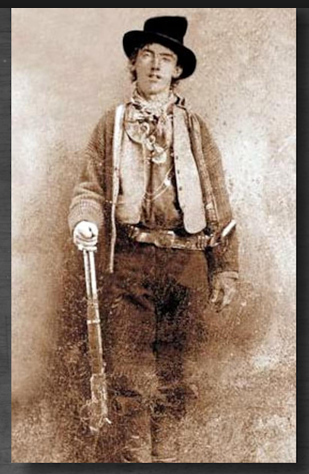
But then — here is the second miracle! I looked down at my plate and there, in the plate of enchiladas, clear as anything, was the figure of Billy the Kid!!! How could I eat that?? I had no need to explain my dilemma to Old Jose — everyone in NM knows Billy, who loved the Spanish. So now my enchiladas with the face and body of Billy (a Winchester–which I think might be a chile stem–loose in his hand, its butt against his boot), are in my fridge, and I have taken a picture and I am posting it on ebay, and when it sells for a million dollars Jose and I are running away to Guanajuato where we will live forever, me writing, him cooking me enchiladas.

Really.

______________________

(P.S. Check out the fine novel, Billy the Kid’s Last Ride by John Aragon, who is also co-author with me of  The Adventures of Don Valiente and the Apache Canyon Kid.)

Anguilla Lit Fest: Day One, Breakfast Presentation by Lasana Sekou, Hill Harper and Sheryl Lee Ralph

Okay, so it’s not really Day One any more. I admit it. The whole conference is over. But since Anguilla’s first lit fest really got underway on Friday morning at the magnificent Paradise Cove Resort, I’ve been going, going, going – which left no time for blogging, blogging, blogging. On both Friday and Saturday, I had a couple of hours off each afternoon, and I came back to my room planning to take a nap before dinner because I was too tired to move. But I could not nap: my mind was going a thousand miles a minute. That’s the sign of a great literary festival and conference.

I’m going to tell you about all the sessions and receptions I attended (and show you pictures) but it’s probably going to take me all week or even longer, mostly because if I write about more than one session at a time, the post will be too long. Plus there were a few people who weren’t even on the agenda who knocked me flat, and I want to tell you about them, too. I feel like this festival has changed something deep inside me and I hope I can convey some of the magic to you: one session at a time.

More…

Anguilla Lit Fest: Day One, Breakfast Presentation by Lasana Sekou, Hill Harper and Sheryl Lee Ralph.